



HomeThread: Embedded Thread Border Router with Ethernet Backhaul and Dashboard
HomeThread combines a Thread Border Router, Ethernet backhaul, and dashboard control for embedded home network management.
Overview
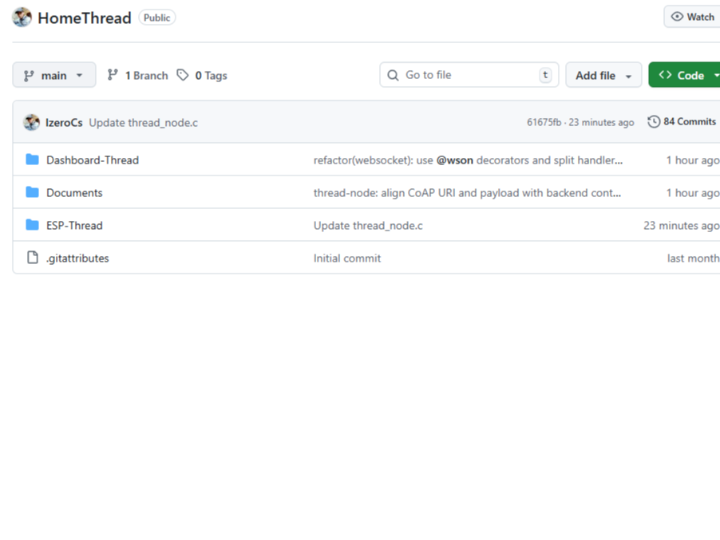
HomeThread is a multi-component embedded networking stack built around a Thread Border Router. It connects a Thread mesh network of low-power IoT devices to an external IP network through Ethernet while providing monitoring and control through a web dashboard.
The repository includes firmware for the border router, a radio co-processor configuration, a backend/frontend dashboard, and documentation defining device registration protocols. Together these components form a practical infrastructure for operating a Thread-based smart-device network.
Main Content
Thread is a low-power wireless mesh networking technology designed for IoT and smart-home devices such as sensors, lighting, and environmental controllers. It operates on IEEE 802.15.4 radios and uses IPv6 networking, allowing Thread devices to integrate naturally with existing IP systems.
Because Thread devices often operate on batteries and communicate small control messages rather than large data streams, the network focuses on reliability, low power consumption, and distributed connectivity.
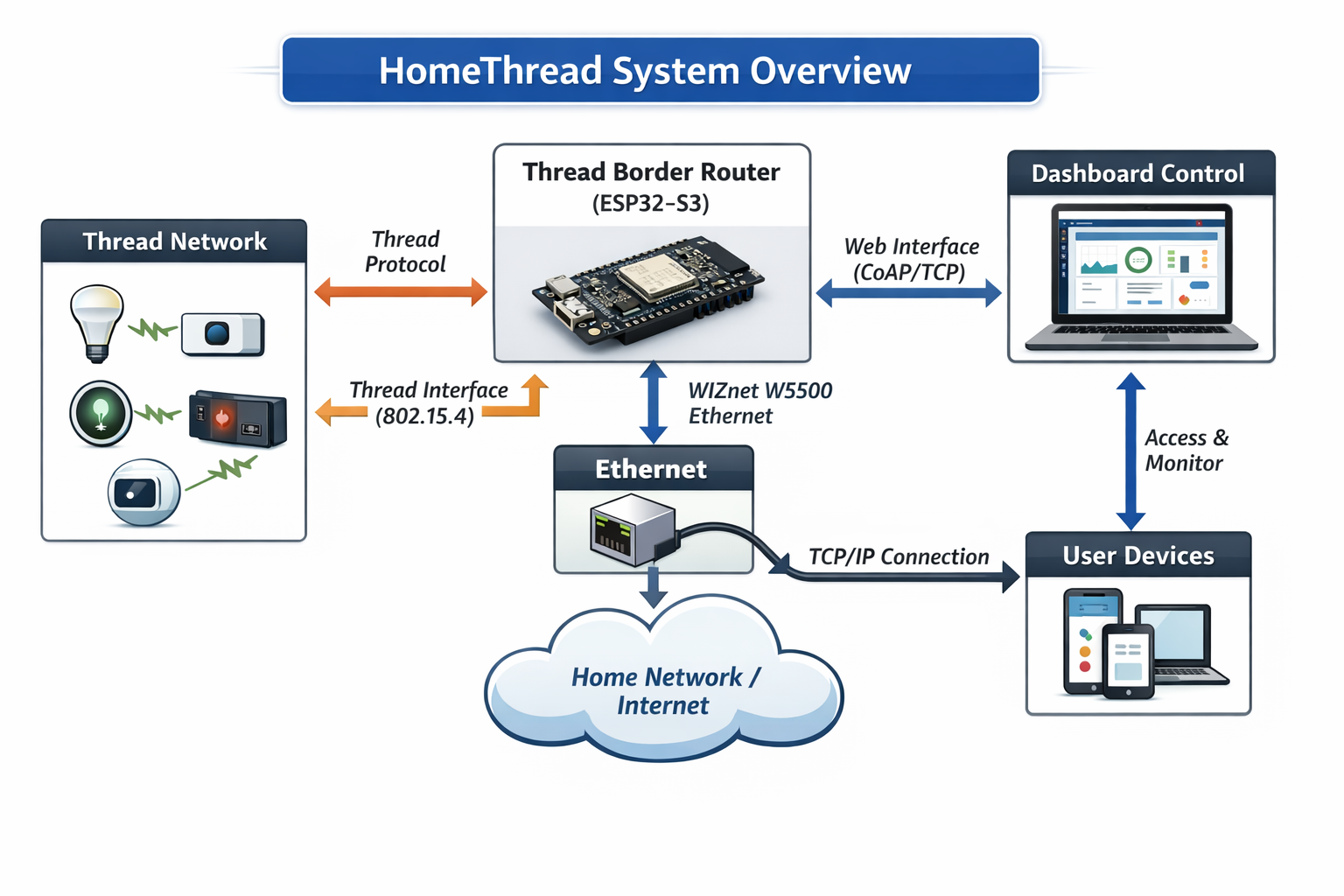
A Thread network typically requires a Border Router to connect the mesh network to other IP networks. This component translates between the Thread mesh and infrastructure networks such as Ethernet or Wi-Fi, enabling device control from applications and dashboards outside the Thread network.
HomeThread implements this concept with an embedded design. The system uses an ESP32-S3 host that runs the border-router logic and communicates with an ESP32-H2 radio co-processor responsible for the 802.15.4 Thread interface. Ethernet connectivity is provided through a WIZnet W5500, which acts as the wired backhaul linking the Thread mesh to the broader LAN.
Alongside the networking components, the project includes a dashboard stack that communicates with the border router using a framed TCP protocol. This dashboard allows monitoring of router state, Thread nodes, and network configuration from a browser interface.
Thread nodes interact with backend services through a registration mechanism using CoAP and CBOR payloads. Devices first send a basic registration message and then submit entity information. This staged approach ensures the backend maintains structured knowledge of devices within the Thread network.
System Context
HomeThread operates at the intersection of three networking layers:
a low-power Thread mesh network
a wired Ethernet infrastructure network
an operator-facing dashboard interface
The border router acts as the gateway between the Thread mesh and the IP backbone. The dashboard provides operational visibility, while the backend coordinates device discovery and registration.
This separation prevents the operational interface from interfering with core network routing while still allowing administrators to inspect and control the system.
Architecture / Design Considerations
One central design choice is the separation between the host processor and the radio co-processor. The ESP32-S3 manages networking logic and system control, while the ESP32-H2 handles the Thread radio. This reduces coupling between wireless protocol handling and application logic.
Another design element is the use of the WIZnet W5500 Ethernet controller as the border router's wired interface. The W5500 integrates MAC, PHY, and TCP/IP support in hardware, allowing an embedded system to provide stable Ethernet connectivity without requiring a full operating system network stack.
The architecture also introduces a dedicated management plane. Instead of exposing direct control within the networking firmware, the dashboard communicates through a defined TCP framing protocol. Thread nodes communicate through CoAP-based device registration. These separate interfaces create clearer boundaries between management operations and device-level messaging.
The most critical failure point occurs at these protocol boundaries. If the backend misinterprets device registration messages or fails to maintain the correct registration sequence, devices may appear reachable in the network while remaining logically absent from the management layer.
Removing certain components significantly changes the system. Without the W5500 Ethernet interface, the system would lose its wired backhaul and operate as a more isolated Thread router. Without the dashboard stack, the system would still function as a border router but would lose operational monitoring and control.
Possible Implications
HomeThread demonstrates how Thread networking can be integrated into a practical embedded system rather than remaining a protocol demonstration. By combining a border router, backend service layer, and user interface, the project illustrates how Thread networks can be monitored and managed within a broader IP infrastructure.
This architecture also highlights the importance of clear boundaries between radio networking, infrastructure networking, and operational control systems when building IoT platforms.
Conclusion
HomeThread presents an embedded architecture for connecting a Thread mesh network to Ethernet infrastructure while providing operational monitoring through a dashboard.
The system combines a Thread Border Router, a WIZnet Ethernet backhaul, and a structured device registration workflow, forming a complete operational stack for managing low-power IoT networks.
전체 개요
HomeThread는 Thread 메시 네트워크를 외부 IP 네트워크와 연결하고 운영할 수 있도록 만든 임베디드 시스템입니다.
프로젝트는 단일 펌웨어가 아니라 다음 구성요소로 이루어져 있습니다.
Thread Border Router 펌웨어
Thread Radio Co-Processor
Ethernet 백홀
Dashboard Backend / Frontend
Device Registration 프로토콜 문서
이 구조를 통해 Thread 기반 IoT 네트워크를 실제 운영 환경에 가깝게 구성할 수 있습니다.
Thread 네트워크 기술적 배경
Thread는 스마트홈과 IoT 기기를 위해 설계된 저전력 무선 메시 네트워크입니다.
전구, 센서, 도어락, 온도조절기처럼 지속적으로 연결되어야 하지만 전력 소모는 낮아야 하는 장치를 주요 대상으로 합니다.
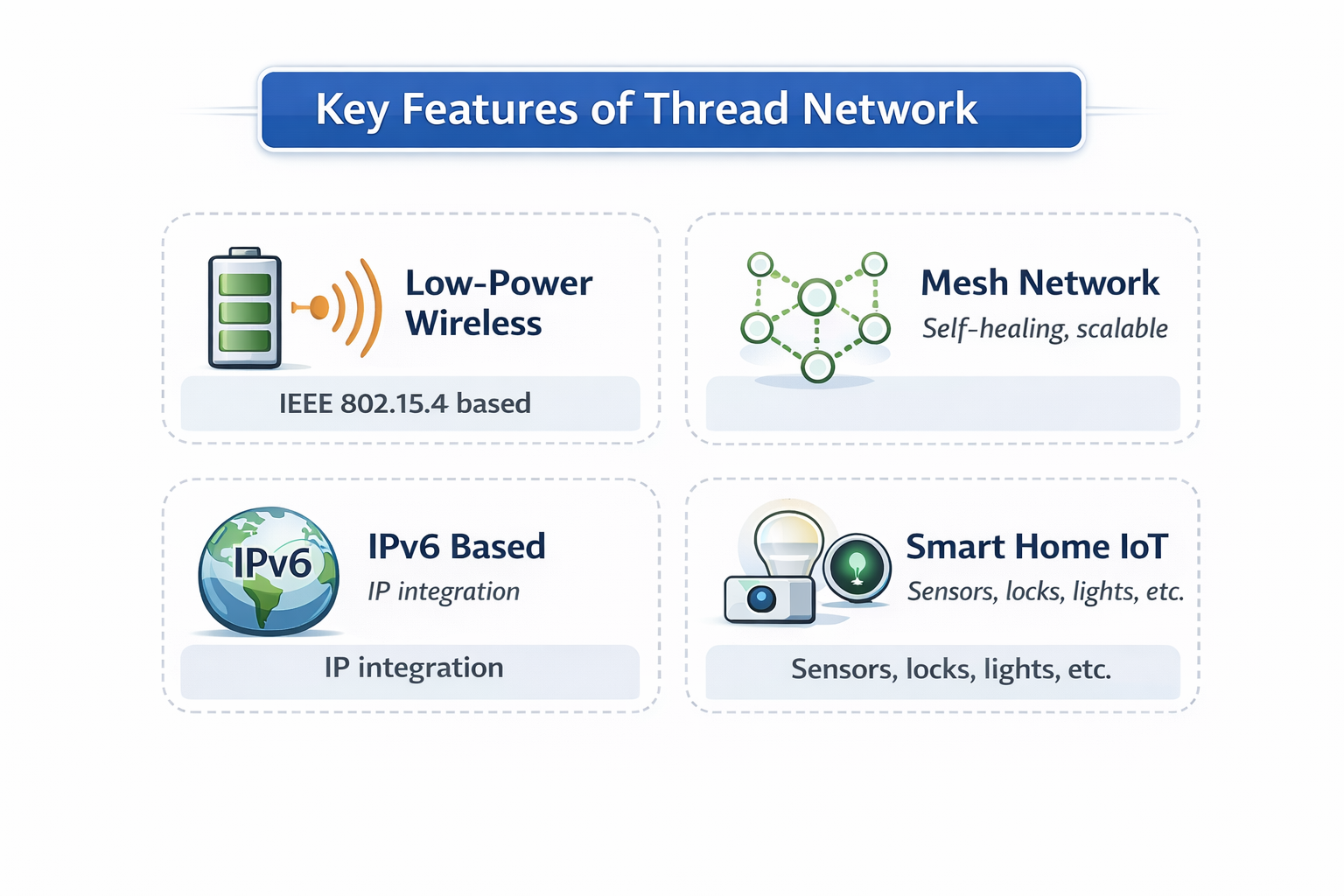
Thread는 다음 특징을 갖습니다.
IEEE 802.15.4 기반 저전력 무선
메시(mesh) 네트워크 구조
IPv6 기반 IP 네트워크
스마트홈 IoT 기기 중심 설계
메시 구조에서는 여러 장치가 서로 연결되어 통신 경로를 구성합니다. 이 구조는 네트워크 일부가 끊어지더라도 다른 경로를 통해 통신을 유지할 수 있게 합니다.
Thread 네트워크가 외부 IP 네트워크와 연결되려면 Thread Border Router가 필요합니다. 이 장치는 Thread 메시망과 Ethernet 또는 Wi-Fi 같은 네트워크를 연결하는 게이트웨이 역할을 합니다.
기술 흐름 설명
HomeThread 시스템의 동작 흐름은 크게 네 단계로 볼 수 있습니다.
Thread 장치들이 메시 네트워크를 구성합니다.
Border Router가 Thread 네트워크와 외부 IP 네트워크를 연결합니다.
Ethernet을 통해 LAN 또는 인터넷과 연결됩니다.
Dashboard 시스템이 Border Router 상태와 Thread 장치 정보를 관리합니다.
데이터 흐름은 다음과 같이 나뉩니다.
Thread Device
→ Thread Mesh Network
→ Thread Border Router
→ Ethernet Network
→ Dashboard Backend
이 흐름을 통해 Thread 기반 IoT 기기를 외부 시스템에서 관리할 수 있습니다.
시스템 구조 해설
HomeThread의 핵심 구성요소는 다음과 같습니다.
Host Processor
ESP32-S3가 Border Router 애플리케이션을 실행합니다.
네트워크 관리, 시스템 제어, Dashboard 연결을 담당합니다.
Radio Co-Processor
ESP32-H2가 Thread 무선 인터페이스를 담당합니다.
802.15.4 기반 Thread 메시 네트워크 통신을 처리합니다.
Ethernet Backhaul
WIZnet W5500이 Ethernet 연결을 제공합니다.
Thread 네트워크가 외부 IP 네트워크와 연결되는 경로입니다.
Dashboard System
Dashboard Backend와 Frontend는 Border Router와 TCP 기반 프로토콜로 통신합니다.
사용자는 웹 인터페이스를 통해 네트워크 상태를 확인하고 설정을 변경할 수 있습니다.
설계 선택 해석
이 프로젝트에서 가장 눈에 띄는 설계 선택은 Host + RCP 분리 구조입니다.
Host는 네트워크 관리와 애플리케이션 로직을 담당하고,
RCP는 무선 프로토콜 처리에 집중합니다.
이 방식은 다음 장점이 있습니다.
무선 프로토콜 처리와 시스템 제어 분리
확장성과 유지보수성 향상
시스템 안정성 향상
또 다른 중요한 선택은 Ethernet 백홀입니다.
Thread 네트워크는 저전력 메시망이지만, 외부 서비스와 연결되기 위해서는 안정적인 IP 네트워크가 필요합니다. W5500 Ethernet 인터페이스는 이 연결을 제공하는 핵심 구성요소입니다.
실패 비용이 큰 구간
이 시스템에서 실패 비용이 가장 큰 구간은 Device Registration 흐름입니다.
Thread 장치가 Backend에 등록되는 과정은 다음 단계로 이루어집니다.
Device information 등록
Entity 정보 등록
이 과정에서 메시지 형식이나 등록 순서가 맞지 않으면 장치가 네트워크에는 존재하지만 관리 시스템에는 나타나지 않는 상태가 발생할 수 있습니다.
시스템 구성 요소 제거 시 변화
특정 구성요소가 제거되면 시스템 성격이 달라집니다.
W5500 Ethernet을 제거하면 Thread Border Router의 외부 네트워크 연결 기능이 사라집니다.
Dashboard 시스템을 제거하면 네트워크 운영과 상태 모니터링 기능이 사라지고 단순 Border Router 형태로 축소됩니다.
내부 관점 시사점
HomeThread는 Thread 네트워크를 실제 시스템으로 운영하는 구조를 보여주는 예입니다.
특히 다음 세 가지 경계가 명확합니다.
무선 네트워크
IP 네트워크
운영 관리 시스템
이러한 경계 구조는 IoT 플랫폼 설계에서 중요한 설계 패턴이 됩니다.
FAQ
Thread는 Wi-Fi와 무엇이 다른가
Thread는 저전력 IoT 기기를 위해 설계된 메시 네트워크입니다.
Wi-Fi는 높은 데이터 속도를 제공하지만 전력 소비가 상대적으로 큽니다.
Thread 네트워크에서 Border Router가 필요한 이유는 무엇인가
Thread 네트워크는 자체적으로 메시망을 구성할 수 있지만 외부 IP 네트워크와 직접 연결되지는 않습니다.
Border Router는 Thread 네트워크와 Ethernet 또는 Wi-Fi 네트워크를 연결하는 게이트웨이 역할을 합니다.
Host와 RCP를 분리하는 이유는 무엇인가
무선 프로토콜 처리와 시스템 제어를 분리하기 위해서입니다.
이 구조는 시스템 안정성과 확장성을 높이는 데 도움이 됩니다.
Ethernet 인터페이스는 왜 필요한가
Thread 네트워크는 저전력 메시망이므로 외부 서비스와 연결하려면 IP 기반 네트워크가 필요합니다.
Ethernet은 안정적인 백홀 연결을 제공하는 역할을 합니다.
Dashboard는 시스템에서 어떤 역할을 하는가
Dashboard는 Border Router의 상태와 Thread 장치 정보를 모니터링하고 설정을 관리하는 운영 인터페이스입니다.
저자 정보
GitHub 저장소 소유자는 IzeroCs로 표시되어 있습니다.
프로필에는 Nguyễn Danh Nam이라는 이름이 나타납니다.
공개된 정보 기준으로 개인 개발 계정으로 보이며 소속 기관이나 조직에 대한 정보는 제한적입니다. 정보 제한입니다.
임베디드 네트워크 및 소프트웨어 프로젝트를 다루는 개발자로 보이지만 구체적인 경력이나 연구 기관 정보는 확인되지 않습니다. 추론임.