


Modbus RTU-to-TCP Gateway with W5500 and STM32
W5500 and STM32 enable seamless Modbus RTU-to-TCP conversion, bridging RS485 devices to Ethernet industrial networks.
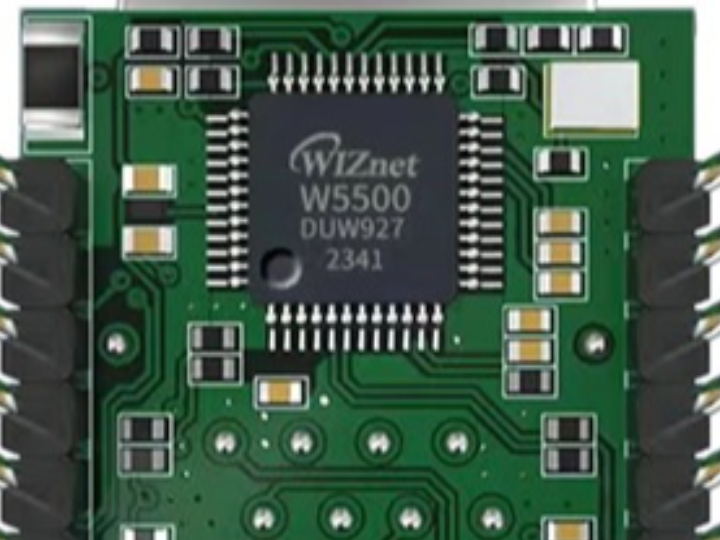
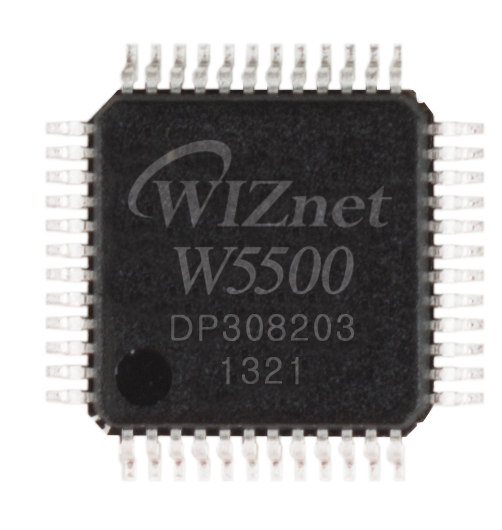
WIZnet - W5500
x 1

Step 1: Understanding the Hardware
This project demonstrates how to convert legacy Modbus RTU devices into Ethernet-connected Modbus TCP devices using an STM32 MCU and the WIZnet W5500 Ethernet controller.
Hardware used:
- W5500io-M Ethernet module
- STM32F103VCT6 development board
- RS485 serial interface
- Ethernet connection
- Modbus RTU slave devices
- Modbus TCP master software (Modbus Poll)
The W5500io-M module offers:
- Integrated MAC + PHY
- Hardwired TCP/IP stack
- 32KB internal buffer memory
- RJ45 Ethernet interface
- SPI host interface
- 8 hardware sockets
- Simplified Ethernet integration without porting a software TCP/IP stack to the MCU
This architecture is particularly valuable for industrial automation systems where thousands of existing RS485 Modbus RTU devices still need connectivity to modern Ethernet networks.
Step 2: Understanding RTU-to-TCP Conversion
The core function of this project is protocol translation between Modbus RTU and Modbus TCP.
Modbus RTU Frame
[Slave Address][Function Code][Data][CRC16]Modbus TCP Frame
[MBAP Header][Unit ID][Function Code][Data]The conversion process works as follows:
RTU → TCP
- Remove CRC16 field
- Add MBAP header
- Preserve Unit ID
- Forward through Ethernet
TCP → RTU
- Remove MBAP header
- Extract Unit ID
- Calculate CRC16
- Rebuild RTU frame
- Send through RS485
This allows existing serial Modbus devices to communicate with Ethernet-based SCADA, PLC, and industrial monitoring systems.
Step 3: W5500 Ethernet Architecture
The W5500 acts as the Ethernet communication engine while the STM32 handles protocol conversion logic.
Architecture:
Modbus TCP Client
        │
        ▼
     Ethernet
        │
        ▼
      W5500
        │ SPI
        ▼
      STM32
        │ UART / RS485
        ▼
 Modbus RTU Device
Unlike software networking solutions, W5500 processes:
- TCP
- UDP
- ARP
- ICMP
- Socket management
in hardware.
This significantly reduces STM32 firmware complexity and frees MCU resources for protocol conversion and industrial control tasks.
Step 4: Firmware Integration
The project modifies WIZnet's loopback TCP server example to perform Modbus protocol translation.
Conceptual initialization:
// Conceptual example based on WIZnet ioLibrary
// Not project-specific source code

uint8_t tx_size[] = {2,2,2,2,2,2,2,2};
uint8_t rx_size[] = {2,2,2,2,2,2,2,2};

void ethernet_init(void)
{
    wizchip_init(tx_size, rx_size);

    wiz_NetInfo netinfo = {
        .ip = {192,168,1,100},
        .sn = {255,255,255,0},
        .gw = {192,168,1,1}
    };

    wizchip_setnetinfo(&netinfo);
}
The implementation extends the TCP server loop to:
- Receive Modbus TCP requests
- Convert TCP frames into RTU frames
- Forward data over UART/RS485
- Receive RTU responses
- Validate CRC16
- Convert RTU responses into TCP packets
- Return data to the Modbus TCP client
Step 5: Industrial Applications
This gateway architecture is ideal for:
- PLC modernization
- Factory automation
- Building automation
- Energy monitoring systems
- EV charging infrastructure
- Smart grid deployments
- Industrial data acquisition
- SCADA integration
Instead of replacing existing Modbus RTU equipment, developers can use W5500-based gateways to connect legacy assets to modern Ethernet networks.
FAQ
Q1: Why use W5500 for Modbus gateways?
A: W5500 provides a hardwired TCP/IP stack that eliminates the need to port and maintain a complex software networking stack. This reduces development time, improves reliability, and allows the STM32 to focus on protocol conversion and application logic.
Q2: What are the benefits of converting Modbus RTU to Modbus TCP?
A: Modbus TCP enables higher-speed Ethernet communication, remote access, and easier integration with SCADA and industrial management systems while preserving compatibility with existing Modbus RTU devices.
Q3: Where is this architecture commonly deployed?
A: Typical deployments include factory automation, smart energy systems, charging stations, industrial monitoring, building management systems, and legacy equipment modernization projects requiring Ethernet connectivity.