


Repozitorij Univerze v Ljubljani
This page is a bibliographic record from the University of Ljubljana repository (RUL) for an undergraduate thesis
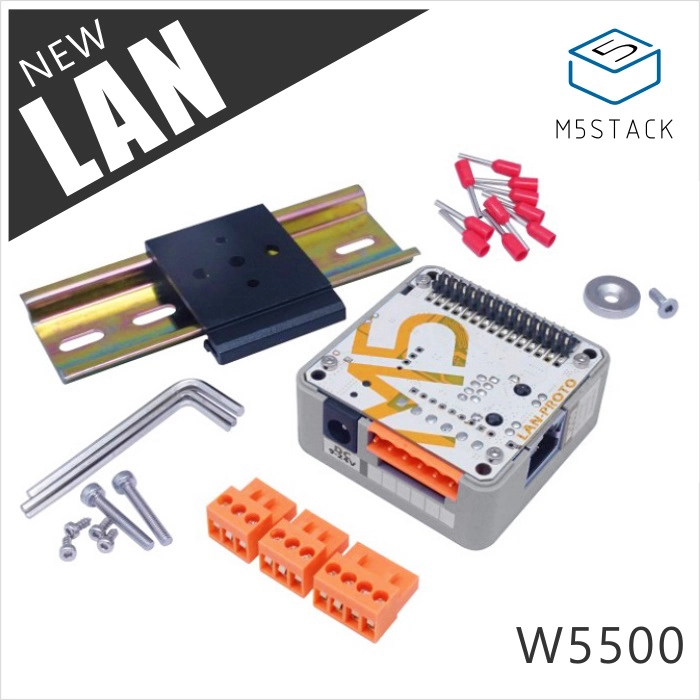
M5Stack - LAN Module with W5500
x 1

1. Paper Overview
Title: Design of a Remote Control System for an Air Conditioning Unit for Temperature Control
Author: Nejc Hudobivnik
Advisor: Marko Jankovec
Institution: Faculty of Electrical Engineering, University of Ljubljana, Slovenia
Year of Publication: 2026
Thesis Type: Bachelor's Thesis
2. Summary of Key Contents
This thesis is a study that designs and implements a system for centrally monitoring and controlling equipment and air conditioners installed in remote facilities of the Slovenian Air Traffic Control Agency.
Since electronic equipment related to communication and control is installed in remote facilities, equipment failure or service disruptions may occur if the indoor temperature rises excessively. However, it is difficult for a manager to be stationed at every facility. Therefore, the objectives of this research are the following two:
Continuously measuring the temperature of remote facilities and detecting abnormal high temperatures early
Remotely controlling air conditioners without requiring a site visit by a manager
Basic Structure of the System
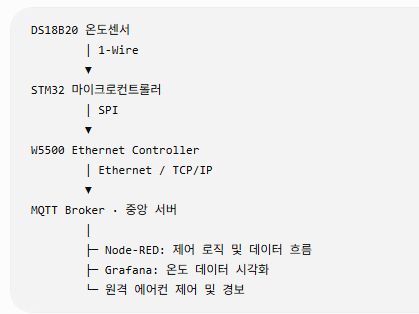
The system implemented in this paper has a structure roughly as follows.
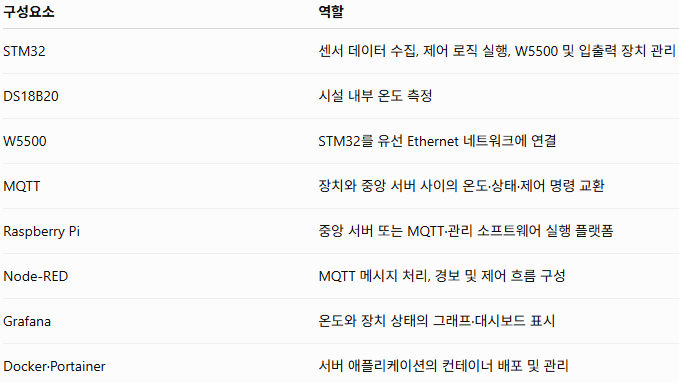
The main components of the system are as follows.
3. Development Details Performed in the Paper
① Selection of Communication Method
The researcher reviewed various communication methods between the remote facilities and the central server. As a result, wired Ethernet was selected because it allows for the utilization of the communication infrastructure already established at the facilities.
In this environment of air traffic and industrial facilities, wired Ethernet has the following implications:
A more predictable communication environment than Wi-Fi
Allows the use of existing network cables and switches
Suitable for continuous operation over long periods
Easy to integrate devices from each remote facility into the central network
② Fabrication of Dedicated Hardware
In this study, instead of simply connecting commercial development boards, a 4-layer PCB was designed in-house, incorporating STM32, W5500, sensors, and control circuits. After the design, a prototype was manufactured, and individual functional blocks of the hardware and software were tested. In particular, the following were the primary design goals:
Communication reliability
System security
Potential for future expansion of sensor and control functions
Stability of long-term unmanned operation
③ Temperature Measurement and Alarm
The DS18B20 sensor measures the internal temperature of the facility, and the STM32 reads the value. If the set threshold temperature is exceeded, the information is transmitted to a central server via the network, allowing the administrator to verify the abnormal condition.
The final system provides the following functions:
Real-time or periodic temperature monitoring
Detection of set temperature exceedance
High temperature alarm
Remote facility status check
Air conditioner control via the network
④ MQTT-based Remote Control
MQTT is used for data exchange between the STM32-based field device and the server.
For example, the following MQTT data structure can be considered.
facility/01/temperature → Transmit temperature data
facility/01/status → Transmit device and air conditioner status
facility/01/alarm → Transmit high temperature alarm
facility/01/ac/command → Turn air conditioner on/off command
facility/01/ac/setpoint → Set target temperature
While the exact topic names require verification within the text, the overall structure appears to be one where field devices publish temperature and status, the server publishes control commands, and the field devices subscribe to them. This interpretation is based on the MQTT-based server data exchange structure specified in the abstract.
4. Research Results and Significance
The completed system allows for centralized monitoring of temperatures in remote facilities, triggers alerts when temperatures exceed thresholds, and enables control of air conditioners via the network.
Consequently, the following effects are achieved:
Reduced field dispatches by managers
Early detection of overheating situations
Reduced risk of failure in communication and control equipment
Centralized management of multiple remote facilities
Improved equipment operational reliability
This paper is not merely about simple smart home air conditioner control, but is closer to an industrial IoT system for environmental management and equipment protection in remote industrial facilities.
5. The Role of the W5500 in This Paper
One-Sentence Definition
The W5500 is a hardware TCP/IP communication interface that connects STM32-based temperature and air conditioner controllers to existing Ethernet networks and MQTT servers.
Specific Functions
① Providing Ethernet Communication Functions to the STM32
While the STM32 is responsible for sensor measurements and air conditioner control, a separate Ethernet controller is required in configurations where it does not inherently provide complete wired Ethernet communication capabilities.
The W5500 is connected to the STM32 via SPI to establish the following path.
STM32 → SPI → W5500 → RJ45/Ethernet → Central Server
In other words, the W5500 serves as the wired network gateway for the field controller.
② TCP/IP Communication Processing
The W5500 is used as a device responsible for processing the following protocols via a hardware-based TCP/IP Offload Engine:
Ethernet
ARP
IPv4
ICMP
TCP
UDP
Therefore, the STM32 can focus on sensor measurements, air conditioning control, and MQTT application logic rather than handling the entire complex network protocol in software.
③ Providing a Sub-communication Base for MQTT Transmission
MQTT generally operates over TCP. In this system, the relationships are as follows:
MQTT
────────────
TCP
IP
Ethernet
────────────
W5500
The W5500 does not interpret MQTT itself or act as an MQTT Broker. The W5500 is responsible for the lower network layer that provides TCP/IP connections to allow MQTT messages to be exchanged.
================================
1. 논문 개요
- 제목: 온도 제어를 위한 에어컨 원격제어 시스템 설계
Design of a Remote Control System for an Air Conditioning Unit for Temperature Control - 저자: Nejc Hudobivnik
- 지도교수: Marko Jankovec
- 기관: 슬로베니아 류블랴나대학교 전기공학부
- 발표 연도: 2026년
- 논문 유형: 학사학위 논문
2. 핵심 내용 요약
이 논문은 슬로베니아 항공교통관제 기관의 원격 시설에 설치된 장비와 에어컨을 중앙에서 감시·제어하는 시스템을 설계하고 구현한 연구입니다.
원격 시설에는 통신·관제 관련 전자장비가 설치돼 있으므로 실내 온도가 과도하게 올라가면 장비 고장이나 서비스 장애가 발생할 수 있습니다. 그러나 시설마다 관리자가 상주하기는 어렵습니다. 따라서 연구의 목표는 다음 두 가지입니다.
- 원격 시설의 온도를 지속해서 측정하고 이상 고온을 조기에 발견하는 것
- 관리자가 현장을 방문하지 않고도 에어컨을 원격으로 제어하는 것
시스템의 기본 구조
논문에서 구현한 시스템은 대략 다음과 같은 구조입니다.
시스템의 주요 구성요소는 다음과 같습니다.
3. 논문에서 수행한 개발 내용
① 통신방식 선정
연구자는 원격 시설과 중앙 서버 사이의 여러 통신방법을 검토했습니다. 그 결과, 해당 시설에 이미 구축된 통신 인프라를 활용할 수 있다는 이유로 유선 Ethernet을 선택했습니다.
유선 Ethernet은 이런 항공교통·산업시설 환경에서 다음과 같은 의미가 있습니다.
- Wi-Fi보다 통신환경이 예측 가능함
- 기존 네트워크 케이블과 스위치 활용 가능
- 장시간 상시운전에 적합
- 원격 시설별 장치를 중앙 네트워크에 통합하기 쉬움
② 전용 하드웨어 제작
연구에서는 단순히 상용 개발보드를 연결한 것이 아니라, STM32·W5500·센서 및 제어회로를 포함하는 4층 PCB를 직접 설계했습니다.
설계 후에는 프로토타입을 제작하고, 하드웨어와 소프트웨어의 개별 기능 블록을 시험했습니다. 특히 다음 사항이 주요 설계 목표였습니다.
- 통신 신뢰성
- 시스템 보안
- 향후 센서·제어 기능 확장 가능성
- 장시간 무인운전 안정성
③ 온도 측정과 경보
DS18B20 센서가 시설 내부 온도를 측정하고 STM32가 값을 읽습니다. 설정된 임계온도를 초과하면 해당 정보가 네트워크를 통해 중앙 서버로 전달돼 관리자가 이상 상태를 확인할 수 있습니다.
최종 시스템은 다음 기능을 제공합니다.
- 실시간 또는 주기적 온도 모니터링
- 설정 온도 초과 감지
- 고온 경보
- 원격 시설 상태 확인
- 네트워크를 통한 에어컨 제어
④ MQTT 기반 원격제어
STM32 기반 현장 장치와 서버 간 데이터 교환에는 MQTT가 사용됩니다.
예를 들어 다음과 같은 MQTT 데이터 구조를 생각할 수 있습니다.
facility/01/temperature     → 온도 데이터 전송
facility/01/status          → 장치 및 에어컨 상태 전송
facility/01/alarm           → 고온 경보 전송
facility/01/ac/command      → 에어컨 켜기·끄기 명령
facility/01/ac/setpoint     → 목표 온도 설정
정확한 토픽 명칭은 본문 확인이 필요하지만, 전체적으로는 현장 장치가 온도와 상태를 publish하고 서버가 제어명령을 publish, 현장 장치가 이를 subscribe하는 구조로 판단됩니다. 이는 초록에 명시된 MQTT 기반 서버 데이터 교환 구조에 따른 해석입니다.
4. 연구 결과와 의미
완성된 시스템은 원격 시설의 온도를 중앙에서 확인하고, 온도가 기준을 초과하면 경고를 발생시키며, 네트워크를 통해 에어컨을 제어할 수 있습니다.
결과적으로 다음과 같은 효과를 얻습니다.
- 관리자의 현장 출동 감소
- 과열 상황의 조기 발견
- 통신·관제 장비의 고장 위험 감소
- 여러 원격 시설의 중앙집중식 관리
- 장비 운용 신뢰성 향상
이 논문은 단순한 스마트홈 에어컨 제어가 아니라, 원격 산업시설의 환경관리와 장비 보호를 위한 산업용 IoT 시스템에 가깝습니다.
5. 이 논문에서 W5500의 역할
한 문장 정의
W5500은 STM32 기반 온도·에어컨 제어장치를 기존 Ethernet 네트워크와 MQTT 서버에 연결해 주는 하드웨어 TCP/IP 통신 인터페이스입니다.
구체적인 기능
① STM32에 Ethernet 통신기능 제공
STM32는 센서 측정과 에어컨 제어를 담당하지만, 자체적으로 완전한 유선 Ethernet 통신기능을 제공하지 않는 구성에서는 별도의 Ethernet 컨트롤러가 필요합니다.
W5500은 STM32와 SPI로 연결돼 다음 경로를 만듭니다.
STM32 → SPI → W5500 → RJ45/Ethernet → 중앙 서버즉, W5500은 현장 제어기의 유선 네트워크 출입구입니다.
② TCP/IP 통신 처리
W5500은 하드웨어 기반 TCP/IP Offload Engine을 통해 다음 프로토콜 처리를 담당하는 장치로 사용됩니다.
- Ethernet
- ARP
- IPv4
- ICMP
- TCP
- UDP
따라서 STM32는 복잡한 네트워크 프로토콜 전체를 소프트웨어로 처리하기보다 센서 측정, 에어컨 제어 및 MQTT 애플리케이션 로직에 집중할 수 있습니다.
③ MQTT 전송의 하위 통신 기반 제공
MQTT는 일반적으로 TCP 위에서 동작합니다. 이 시스템에서 관계는 다음과 같습니다.
MQTT
────────────
TCP
IP
Ethernet
────────────
W5500
W5500이 MQTT 자체를 해석하거나 MQTT Broker 역할을 하는 것은 아닙니다. W5500은 MQTT 메시지가 오갈 수 있도록 TCP/IP 연결을 제공하는 하위 네트워크 계층을 담당합니다.