



MicroMod Ethernet Function Board - W5500 Hookup Guide
MicroMod Ethernet Function Board - W5500 Hookup Guide
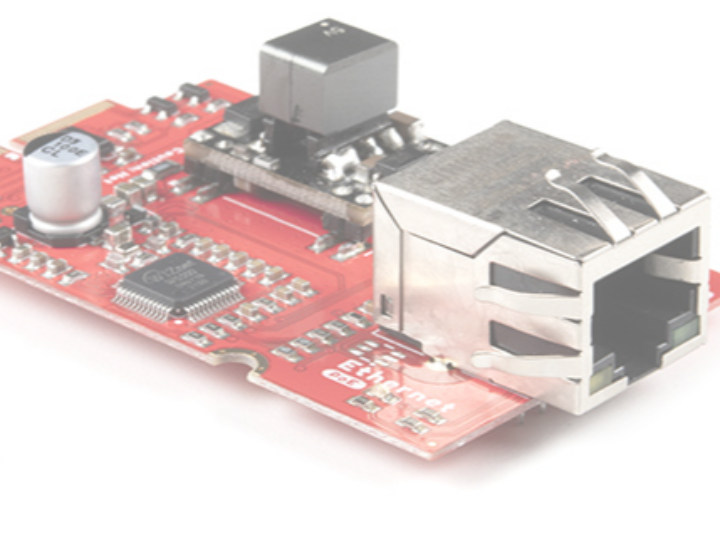
This is a technical tutorial covering the hardware configuration, guide, and usage of the 'MicroMod Ethernet Function Board - W5500,' which adds wired Ethernet and PoE (Power over Ethernet) capabilities to the MicroMod system, a modular hardware ecosystem from SparkFun, a global DIY open-source hardware company.
Here is a summary of the key points of this article and the pivotal role the W5500 plays within this system.
1. Key Summary of the SparkFun Tutorial
Expandability via MicroMod Standards: SparkFun's MicroMod is an ecosystem that utilizes the M.2 slot standard to flexibly combine main processors (Teensy, ESP32, STM32, etc.) with peripheral expansion boards (Function Boards) simply by tightening screws. This guide explains how to instantly expand Ethernet capabilities without complex jumper wire connections.
Simultaneous Communication and Power via a Single Wire (PoE Support): This board not only supports Ethernet communication but is also equipped with a DC/DC converter (Ag9905M) based on the IEEE 802.3af standard (Alternate B Scheme). It receives 36V–57V voltage through the LAN cable’s idle lines (pins 4/5 and 7/8), steps it down internally to 5V (9W equivalent) and 3.3V, and powers the main processor board in a single step.
Jumpers Provided for Hardware Customization: The back of the board features built-in PMODE solder jumpers that allow for forced hardware settings of the W5500’s network operation mode, as well as PoE Isolation jumpers that physically isolate the PoE lines to allow the use of standard USB power, enabling precise hardware troubleshooting.
Integration with Standard Arduino Libraries: After assembling the hardware, the built-in Ethernet.h standard library can be used directly within the Arduino IDE environment, demonstrating through code examples that the barrier to entry for software development is very low. 2. The Core Role of the W5500 in the System
In this modular architecture, the W5500 serves as the core infrastructure that ensures a consistently stable wired network neural network, regardless of which chip is used for the main processor board (whether it is the ARM Cortex-M7 Teensy or the ESP32).
Processor-Independent Network Offloading (Core Engine): It completely offloads the essential Internet protocol stack—including TCP, UDP, IPv4, ICMP, and ARP—to the hardware logic itself, preventing the main MCU from wasting resources handling communication protocols.
High-Speed SPI-Based Multi-Socket Control: It supports high-speed SPI communication at frequencies up to 80 MHz, enabling high-speed data exchange without bottlenecks with the MCU. Additionally, it can operate up to eight independent hardware sockets simultaneously, allowing for seamless multitasking such as sending IoT sensor data to a server while running a local web server. Intelligent Power Management (Wake on LAN): It supports WOL (Wake on LAN) functionality, which wakes up a system from standby when a specific packet (Magic Packet) arrives via a wired network, as well as a Power Down mode. This enables the implementation of an eco-friendly(?) edge controller that severely suppresses unnecessary power consumption within a PoE infrastructure.
10/100Base-T Hardware Auto-Negotiation: Depending on the network environment (factory hubs, routers, etc.), the hardware automatically matches speeds of 10Mbps and 100Mbps and modes between full-duplex and half-duplex, thereby relieving embedded developers of the need to worry about the underlying network layer.
===============
글로벌 DIY 오픈소스 하드웨어 기업인 스파크펀(SparkFun)의 모듈형 하드웨어 생태계인 MicroMod 시스템에 유선 이더넷과 PoE(Power over Ethernet) 기능을 추가해 주는 'MicroMod Ethernet Function Board - W5500'의 하드웨어 구성, 가이드 및 활용법을 다룬 기술 튜토리얼입니다.
해당 글의 핵심 내용과 이 시스템 안에서 W5500이 담당하는 중추적인 역할을 요약해 드립니다.
1. SparkFun 튜토리얼 글 핵심 요약
MicroMod 표준 규격을 통한 확장성: 스파크펀의 MicroMod는 M.2 슬롯 표준을 활용해 메인 프로세서(Teensy, ESP32, STM32 등)와 주변기기 확장 보드(Function Board)를 나사 조임만으로 유연하게 결합하는 에코시스템입니다. 본 가이드는 복잡한 점퍼 와이어 연결 없이 이더넷 기능을 즉각 확장하는 방법을 설명합니다.
선 하나로 통신과 전력을 동시에 (PoE 지원): 이 보드는 단순히 이더넷 통신만 지원하는 것이 아니라, IEEE 802.3af 표준(Alternate B 스키마) 기반의 DC/DC 컨버터(Ag9905M)를 탑재했습니다. 랜 케이블의 유휴 라인(4/5번, 7/8번 핀)을 통해 36V~57V 전압을 받아 내부에서 5V(9W 급) 및 3.3V로 감압하여 메인 프로세서 보드까지 한 번에 구동합니다.
하드웨어 커스텀을 위한 점퍼 제공: 보드 뒷면에는 W5500의 네트워크 작동 모드를 강제로 하드웨어 세팅할 수 있는 PMODE 솔더 점퍼와, PoE 라인을 물리적으로 격리하여 일반 USB 전원만 쓸 수 있게 해주는 PoE Isolation 점퍼 등이 내장되어 있어 정밀한 하드웨어 트러블슈팅이 가능합니다.
표준 아두이노 라이브러리 연동: 하드웨어 조립 후 아두이노 IDE 환경에서 기본 내장된 Ethernet.h 표준 라이브러리를 그대로 가져다 쓸 수 있어, 소프트웨어 개발 진입 장벽이 매우 낮음을 코드 예제를 통해 증명합니다.
2. 해당 시스템 내 W5500의 핵심 역할
이 모듈형 아키텍처에서 W5500은 메인 프로세서 보드가 어떤 칩(ARM Cortex-M7인 Teensy든, ESP32든)으로 바뀌더라도 항상 동일하고 안정적인 유선 네트워크 신경망을 보장하는 핵심 인프라 역할을 합니다.
프로세서 독립적인 네트워크 오프로딩 (Core Engine): 메인 MCU가 통신 프로토콜을 처리하느라 자원을 낭비하지 않도록 TCP, UDP, IPv4, ICMP, ARP 등 인터넷에 필요한 필수 프로토콜 스택을 하드웨어 로직 자체로 완전히 독박 처리(Offload)해 줍니다.
고속 SPI 기반의 멀티 소켓 제어: 최대 80MHz 주파수의 고속 SPI 통신을 지원하여, MCU와 병목 현상 없이 고속 데이터 교환을 수행합니다. 또한, 최대 8개의 독립적인 하드웨어 소켓(Socket)을 동시에 구동할 수 있어, IoT 센서 데이터를 서버로 보내는 동시에 로컬 웹 서버를 구동하는 다중 작업을 매끄럽게 처리합니다.
지능형 전력 관리 (Wake on LAN): 유선 네트워크를 통해 특정 패킷(Magic Packet)이 들어오면 대기 상태에 있던 시스템을 깨우는 WOL(Wake on LAN) 기능과 파워 다운 모드를 지원하여, PoE 인프라 내에서 불필요한 전력 소모를 극도로 억제하는 친환경(?) 에지 컨트롤러 구현을 가능하게 합니다.
10/100Base-T 하드웨어 자동 협상(Auto-Negotiation): 네트워크 환경(공장 허브, 공유기 등)에 따라 10Mbps와 100Mbps 속도 및 전이중/반이중 모드를 하드웨어 단에서 스스로 알아서 매칭해 주므로 임베디드 개발자가 네트워크 하부 단을 신경 쓰지 않게 차단해 줍니다.