



ESP32-S3 + W5500以太网实战:从SPI配置到静态IP设置的完整流程
ESP32-S3 + W5500 이더넷 실습: SPI 설정부터 고정 IP 설정까지 완벽한 과정
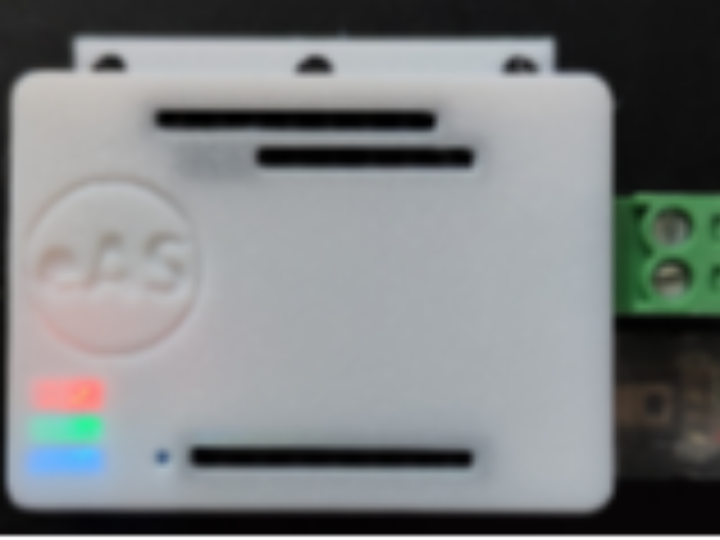
This article is a practical guide on implementing a wired Ethernet connection by combining the ESP32-S3 and W5500. The main contents are as follows:
**Hardware Connection**: Covers SPI interface-based pin mapping (MOSI/MISO/SCLK/CS, etc.), power decoupling capacitor placement, and methods to ensure signal integrity.
**SPI Optimization**: Although the W5500 supports up to 80MHz, it is necessary to lower the frequency to 10–40MHz in practice depending on the PCB environment for stability; a DMA buffer of 4096 bytes is suggested as the optimal balance point.
**MAC Address Management**: Explains three strategies—utilizing the ESP32-S3's built-in native MAC, generating locally, and reading from external storage—and emphasizes that these must be configured before startup after driver installation.
**Static IP Configuration**: You must explicitly stop DHCP first (`esp_netif_dhcpc_stop()`) before applying the static IP; failure to follow this order may result in the system reverting to a dynamic IP after a reboot.
** **Advanced Features**: Interrupt + Polling Hybrid Mode, SPI Clock Dynamic Tuning, and an Automatic Error Recovery Mechanism are introduced, achieving an MTBF of over 8,000 hours in real-world industrial Modbus gateway applications.
---
## Defining the Role of the W5500
In this article, the W5500 is positioned as a **Hardware TCP/IP Offload Ethernet Controller**.
While the ESP32-S3 has built-in Wi-Fi/BLE, it lacks a wired Ethernet MAC/PHY. The W5500 fills this void, and its core role is as follows:
| Role | Content |
|------|------|
| **TCP/IP Hardware Processing** | Processes protocol stacks such as TCP, UDP, IPv4, and ICMP via internal hardware → Minimizes ESP32-S3 CPU load |
| **SPI Bridge** | Serves as a communication channel connected to the ESP32-S3 via an SPI interface to exchange Ethernet frames |
| **Internal Buffer Management** | Packet flow control with a built-in 32KB transmit/receive buffer |
| **Network Interface Expansion** | Serves as an expansion chip that adds a wired Ethernet port to the Wi-Fi-only ESP32-S3 |
In conclusion, the W5500 is a **dedicated network processing offload chip** that enables the ESP32-S3 to reliably operate wired Ethernet without a software stack (such as LwIP). This is also the key differentiating feature of the WIZnet W5500.
========
글 요약
이 글은 ESP32-S3와 W5500을 결합하여 유선 이더넷 연결을 구현하는 실전 가이드입니다. 주요 내용은 다음과 같습니다.
하드웨어 연결: SPI 인터페이스 기반 핀 매핑(MOSI/MISO/SCLK/CS 등), 전원 디커플링 커패시터 배치, 신호 무결성 확보 방법을 다룹니다.
SPI 최적화: W5500은 최대 80MHz를 지원하지만 PCB 환경에 따라 실제로는 10~40MHz 수준으로 낮춰야 안정적이며, DMA 버퍼는 4096바이트가 균형점으로 제시됩니다.
MAC 주소 관리: ESP32-S3 내장 고유 MAC 활용, 로컬 생성, 외부 저장소 읽기의 세 가지 전략을 설명하고, 드라이버 설치 후 시작 전에 반드시 설정해야 한다고 강조합니다.
고정 IP 설정: DHCP를 먼저 명시적으로 중지(esp_netif_dhcpc_stop())한 뒤 고정 IP를 적용해야 하며, 이 순서를 지키지 않으면 재부팅 후 동적 IP로 되돌아가는 문제가 발생합니다.
고급 기능: 인터럽트+폴링 하이브리드 모드, SPI 클럭 동적 조정, 자동 오류 복구 메커니즘이 소개되며, 실제 산업용 Modbus 게이트웨이 사례에서 MTBF 8,000시간 이상을 달성했습니다.
W5500의 역할 정의
이 글에서 W5500은 하드웨어 TCP/IP 오프로드 이더넷 컨트롤러로 포지셔닝됩니다.
ESP32-S3는 Wi-Fi/BLE를 내장하고 있지만 유선 이더넷 MAC/PHY가 없습니다. W5500은 이 빈자리를 채우며, 핵심 역할은 다음과 같습니다.
| 역할 | 내용 |
|---|---|
| TCP/IP 하드웨어 처리 | TCP, UDP, IPv4, ICMP 등 프로토콜 스택을 내부 하드웨어로 처리 → ESP32-S3 CPU 부담 최소화 |
| SPI 브리지 | ESP32-S3와 SPI 인터페이스로 연결되어 이더넷 프레임을 주고받는 통신 채널 역할 |
| 내부 버퍼 관리 | 32KB 송수신 버퍼를 내장하여 패킷 흐름 제어 |
| 네트워크 인터페이스 확장 | Wi-Fi 전용인 ESP32-S3에 유선 이더넷 포트를 추가하는 확장 칩 역할 |
결론적으로 W5500은 ESP32-S3가 소프트웨어 스택(LwIP 등) 없이도 유선 이더넷을 안정적으로 운용할 수 있도록 해주는 전용 네트워크 처리 오프로드 칩입니다. 이것이 WIZnet W5500의 핵심 차별점이기도 하죠.