



ESP32-S3 с Ethernet и PoE для сетевого контроллера
ESP32-S3 с Ethernet и PoE для сетевого контроллера
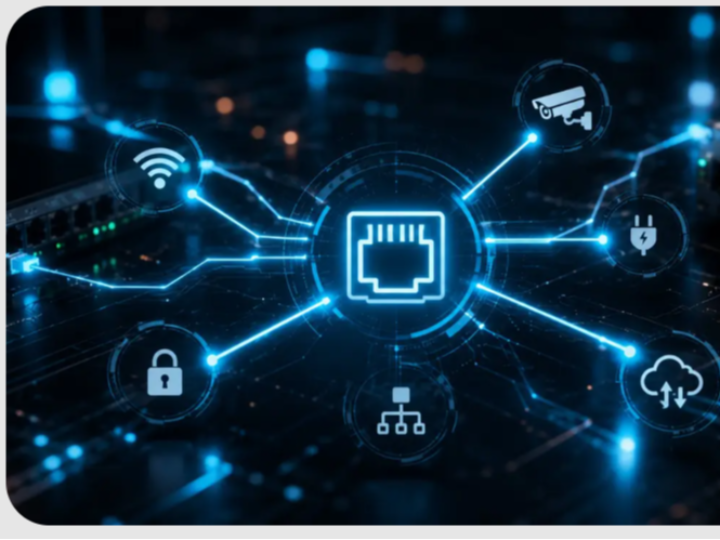
This article explains “how to use an ESP32-S3 + Ethernet + PoE board in a real IoT/network controller.” The target board appears to be the ESP32-S3-ETH PoE Waveshare series, and the core message of the article is to “design it as a wired network node for field installation, rather than a simple Wi-Fi DevKit.” This article was published on June 3, 2026.
1. Summary of the Article
This article explains that when using the ESP32-S3 board as an automation cabinet, access control device, camera, local IoT node, or equipment monitoring device, an Ethernet + PoE configuration can be more stable than Wi-Fi.
While standard ESP32-S3 Wi-Fi boards are convenient for desktop prototypes, their operation can become unstable when installed in the field due to metal cabinets, concrete, power supplies, relays, fans, long wiring, and weak Wi-Fi signals. The article emphasizes that in such environments, Wi-Fi should not be viewed merely as a “basic communication function,” but rather designed as part of system reliability. ([Intel-magazine Clex.kz][1])
This board combines an ESP32-S3 with RJ45 Ethernet, PoE power, a camera interface, TF/microSD cards, PSRAM, and Flash. Therefore, it explains that rather than being a simple sensor node, it is suitable for applications such as local web interfaces, HTTP APIs, MQTT, event log storage, access control, camera-based recording, and automation cabinet monitoring. ([Intel-magazine Clex.kz][1])
PoE is described as a key element that enhances installability. Since separate power outlets may not be available near doors, cameras, server racks, automation boxes, or remote sensors, supplying both communication and power via a single Ethernet cable simplifies wiring. However, it warns that loads such as relays, electronic locks, motors, pumps, and strong lighting should not be powered directly by the ESP32 board, but should instead be equipped with a separate power supply and protection circuitry. ([Intel-magazine Clex.kz][1])
Additionally, the TF card is treated as important for "local event logging." It explains that it is safer to first store access events, failure events, camera images, and configuration values locally, and then synchronize them with a server once the network is restored. The perspective is that if events disappear simply because the network is disconnected, it is insufficient for actual field equipment. ([Intel-magazine Clex.kz][1])
It also advises caution regarding GPIO usage. Although the ESP32-S3 itself has many GPIOs, the actual board already uses some pins for Ethernet, camera, TF card, USB, PSRAM, LED, and buttons; therefore, connecting external modules based solely on the ESP32-S3's general pin map may result in conflicts. It explains that pin conflicts can manifest as abnormalities such as Ethernet failures, camera errors, TF card errors, and boot failures. ([Intel-magazine Clex.kz][1])
Finally, it concludes that this board is not an industrial PLC or a Linux computer, but is suitable for local automation, access control, mid-range cameras, MQTT, HTTP APIs, event logs, and small network nodes. It draws a line, stating that other platforms are required for heavy video analysis, complex server functions, and harsh industrial environments. ([Intel-magazine Clex.kz][1])
2. Summary of the W5500's Role
In this article, the W5500 is the core chip that provides wired Ethernet functionality to the ESP32-S3.
According to the article, the wired network of the ESP32-S3-ETH board is implemented using the W5500 Ethernet controller. The W5500 is connected to the ESP32-S3 via an SPI bus and provides external RJ45 10/100Mbps Ethernet. From a developer's perspective, this offers the advantage of quickly enabling wired network functionality, as developers do not need to design the Ethernet PHY, transformer, RJ45 circuitry, or line matching themselves. ([Intel-magazine Clex.kz][1])
The functions performed by the W5500 can be viewed as follows:
| Category | Role of W5500 |
| ---------- | ----------------------------------------------- |
| Network Interface | Provides 10/100Mbps wired Ethernet to the ESP32-S3 |
| Connection Method | Communicates with the ESP32-S3 via SPI |
| External Connection | Connects to switches/routers/servers via the RJ45 port |
| Main Uses | HTTP API, MQTT, local web server, event transmission, telemetry, receiving control commands | | Advantages | Allows for clearer diagnosis of link/IP/port/routing status in field installation environments compared to Wi-Fi |
| Limitations | As it is SPI-based, it has limitations for high-speed, high-capacity streaming or complex server applications |
The important point is that this article does not view the W5500 as a “chip that turns the ESP32-S3 into a complete network computer.” While the W5500 is very convenient for IoT and local automation, it warns that because it operates via SPI, the overall load must be carefully designed when camera streams, TF card writing, web interfaces, and MQTT communication are running simultaneously. ([Intel-magazine Clex.kz][1])
In other words, the significance of the W5500 in this article can be summarized in the following single sentence:
The W5500 is a wired Ethernet controller that transforms ESP32-S3-based devices from Wi-Fi-dependent prototypes into stable, RJ45-based local IoT/automation controllers.
3. Key Points from WIZnet's Perspective
This article covers the W5500 in a very practical manner. Rather than exaggerating it as a "high-performance network chip," it describes it as a component that provides more stable communication than Wi-Fi in field-installed IoT equipment and reduces development complexity.
In particular, there are three meaningful messages from WIZnet's perspective.
First, the value of the W5500 increases when combined with popular MCUs such as the ESP32-S3. Users gain wired Ethernet while utilizing the existing ESP32 ecosystem.
Second, the strengths of the W5500 lie not merely in speed, but in field reliability, diagnostic capabilities, and installation stability. The article also views the ability to verify "whether a link exists, an IP address is present, whether the switch port is active, and whether there is a path to the server" as a significant advantage for automation equipment. ([Internet-magazine Clex.kz][1])
Third, the W5500 becomes part of a “complete network node” when packaged with PoE, a TF card, a camera, and PSRAM. In other words, marketing centered on actual application scenarios such as “Access Control + Local Logs + MQTT + PoE + RJ45” seems more persuasive than promoting the W5500 alone.
In my judgment, this article is a pretty good example from the perspective of promoting the W5500. This is because it positions the W5500 not as a simple component, but as a reliability layer for an ESP32-S3-based field IoT controller.
==============
이 글은 “ESP32-S3 + Ethernet + PoE 보드를 실제 IoT/네트워크 컨트롤러에 어떻게 써야 하는가”를 설명하는 글입니다. 대상 보드는 ESP32-S3-ETH PoE Waveshare 계열로 보이며, 글의 핵심은 “단순 Wi-Fi DevKit이 아니라 현장 설치용 유선 네트워크 노드로 설계하라”는 것입니다. 이 글은 2026년 6월 3일 게시되었습니다.
1. 글 전체 요약
이 글은 ESP32-S3 보드를 자동화 캐비닛, 출입통제 장치, 카메라, 로컬 IoT 노드, 장비 모니터링 장치로 사용할 때 Wi-Fi보다 Ethernet + PoE 구성이 더 안정적일 수 있다고 설명합니다.
일반 ESP32-S3 Wi-Fi 보드는 책상 위 프로토타입에는 편리하지만, 실제 현장에 설치되면 금속 캐비닛, 콘크리트, 전원장치, 릴레이, 팬, 긴 배선, 약한 Wi-Fi 신호 때문에 동작이 불안정해질 수 있습니다. 글은 이런 환경에서는 Wi-Fi를 단순한 “기본 통신 기능”으로 보지 말고, 시스템 신뢰성의 일부로 설계해야 한다고 강조합니다. ([Интернет-магазин Clex.kz][1])
이 보드는 ESP32-S3에 RJ45 Ethernet, PoE 전원, 카메라 인터페이스, TF/microSD 카드, PSRAM, Flash를 결합한 형태입니다. 그래서 단순 센서 노드보다는 로컬 웹 인터페이스, HTTP API, MQTT, 이벤트 로그 저장, 출입통제, 카메라 기반 기록, 자동화 캐비닛 모니터링 같은 용도에 적합하다고 설명합니다. ([Интернет-магазин Clex.kz][1])
PoE는 설치성을 높이는 핵심 요소로 설명됩니다. 출입문, 카메라, 서버 랙, 자동화 박스, 원격 센서 근처에는 별도 전원 콘센트가 없을 수 있으므로, Ethernet 케이블 하나로 통신과 전원을 함께 공급하면 배선이 단순해집니다. 다만 릴레이, 전자잠금장치, 모터, 펌프, 강한 조명 같은 부하는 ESP32 보드에서 직접 전원을 공급하지 말고 별도 전원부와 보호회로를 두어야 한다고 경고합니다. ([Интернет-магазин Clex.kz][1])
또한 TF카드는 “로컬 이벤트 로그” 용도로 중요하게 다룹니다. 예를 들어 출입 이벤트, 장애 이벤트, 카메라 이미지, 설정값 등을 먼저 로컬에 저장한 뒤, 네트워크가 복구되면 서버와 동기화하는 구조가 더 안전하다고 설명합니다. 네트워크가 끊겼다고 이벤트가 사라지면 실제 현장 장비로는 부족하다는 관점입니다. ([Интернет-магазин Clex.kz][1])
GPIO 사용에도 주의하라고 합니다. ESP32-S3 자체에는 GPIO가 많지만, 실제 보드에서는 Ethernet, 카메라, TF카드, USB, PSRAM, LED, 버튼 등이 이미 일부 핀을 사용하고 있으므로, ESP32-S3 일반 핀맵만 보고 외부 모듈을 연결하면 충돌이 생길 수 있습니다. 핀 충돌은 Ethernet 불량, 카메라 오류, TF카드 오류, 부팅 실패 같은 이상 현상으로 나타날 수 있다고 설명합니다. ([Интернет-магазин Clex.kz][1])
마지막으로 이 보드는 산업용 PLC나 Linux 컴퓨터는 아니며, 로컬 자동화, 출입통제, 중간 수준 카메라, MQTT, HTTP API, 이벤트 로그, 소형 네트워크 노드에 적합하다고 결론 내립니다. 무거운 영상 분석, 복잡한 서버 기능, 혹독한 산업 환경에는 다른 플랫폼이 필요하다고 선을 긋고 있습니다. ([Интернет-магазин Clex.kz][1])
2. W5500의 역할 요약
이 글에서 W5500은 ESP32-S3에 유선 Ethernet 기능을 제공하는 핵심 칩입니다.
글에 따르면 ESP32-S3-ETH 보드의 유선 네트워크는 W5500 Ethernet 컨트롤러로 구현되어 있습니다. W5500은 ESP32-S3와 SPI 버스로 연결되고, 외부로는 RJ45 10/100Mbps Ethernet을 제공합니다. 개발자 입장에서는 별도로 Ethernet PHY, 트랜스포머, RJ45 회로, 라인 매칭 등을 직접 설계하지 않아도 되므로 빠르게 유선 네트워크 기능을 사용할 수 있다는 장점이 있습니다. ([Интернет-магазин Clex.kz][1])
W5500이 맡는 기능은 다음과 같이 볼 수 있습니다.
| 구분 | W5500의 역할 |
| ---------- | ----------------------------------------------- |
| 네트워크 인터페이스 | ESP32-S3에 10/100Mbps 유선 Ethernet 제공 |
| 연결 방식 | ESP32-S3와 SPI로 통신 |
| 외부 연결 | RJ45 포트를 통해 스위치/라우터/서버와 연결 |
| 주요 용도 | HTTP API, MQTT, 로컬 웹서버, 이벤트 전송, 텔레메트리, 제어 명령 수신 |
| 장점 | Wi-Fi보다 현장 설치 환경에서 링크/IP/포트/라우팅 상태를 명확히 진단 가능 |
| 한계 | SPI 기반이므로 고속 대용량 스트리밍이나 복잡한 서버 용도에는 한계 있음 |
중요한 점은 글이 W5500을 “ESP32-S3를 완전한 네트워크 컴퓨터로 만들어 주는 칩”으로 보지는 않는다는 것입니다. W5500은 IoT와 로컬 자동화에는 매우 편리하지만, SPI를 통해 동작하기 때문에 카메라 스트림, TF카드 기록, 웹 인터페이스, MQTT 통신 등이 동시에 동작할 경우 전체 부하를 잘 설계해야 한다고 경고합니다. ([Интернет-магазин Clex.kz][1])
즉, 이 글에서 W5500의 의미는 다음 한 문장으로 정리할 수 있습니다.
W5500은 ESP32-S3 기반 장치를 Wi-Fi 의존형 프로토타입에서 벗어나, RJ45 기반의 안정적인 로컬 IoT/자동화 컨트롤러로 만들어 주는 유선 Ethernet 컨트롤러입니다.
3. WIZnet 관점에서 볼 때 중요한 포인트
이 글은 W5500을 매우 실용적인 방식으로 다룹니다. “고성능 네트워크 칩”이라는 식의 과장보다는, 현장 설치형 IoT 장비에서 Wi-Fi보다 안정적인 통신을 제공하고 개발 복잡도를 낮춰주는 부품으로 설명하고 있습니다.
특히 WIZnet 입장에서 의미 있는 메시지는 세 가지입니다.
첫째, W5500은 ESP32-S3 같은 인기 MCU와 결합될 때 가치가 커집니다. 사용자는 ESP32 생태계를 그대로 쓰면서 유선 Ethernet을 얻습니다.
둘째, W5500의 강점은 단순 속도보다 현장 신뢰성, 진단 가능성, 설치 안정성입니다. 글에서도 “링크가 있는지, IP가 있는지, 스위치 포트가 살아 있는지, 서버까지 경로가 있는지”를 확인할 수 있다는 점을 자동화 장비에서 중요한 장점으로 봅니다. ([Интернет-магазин Clex.kz][1])
셋째, W5500은 PoE, TF카드, 카메라, PSRAM과 함께 패키징될 때 “완성형 네트워크 노드”의 일부가 됩니다. 즉 W5500 단독 홍보보다, “출입통제 + 로컬 로그 + MQTT + PoE + RJ45” 같은 실제 응용 시나리오 중심 마케팅이 더 설득력 있어 보입니다.
제 판단으로는 이 글은 W5500 홍보 관점에서 꽤 좋은 사례입니다. W5500을 단순 부품이 아니라 ESP32-S3 기반 현장형 IoT 컨트롤러의 신뢰성 레이어로 포지셔닝하고 있기 때문입니다.