



Why Use an Async Web Server with W6100 on ESP32?
This article explains how the AsyncWebServer_ESP32_W6100 project enables an event-driven HTTP server on ESP32 using the WIZnet W6100 Ethernet controller.
Why Use an Async Web Server with W6100 on ESP32?
Architecture, TCP Lifecycle Management, and Industrial Reliability
(ESP32 + W6100에서 Async WebServer를 사용하는 이유는 무엇인가?)
Summary (40–60 words)
This article explains how the AsyncWebServer_ESP32_W6100 project enables an event-driven HTTP server on ESP32 using the WIZnet W6100 Ethernet controller. By analyzing async web server architecture, TCP socket lifecycle handling, and comparing it with blocking web servers, it shows why this approach is well suited for reliable industrial IoT systems and embedded diagnostics.
1. Why an Embedded Web Server Still Matters
In many embedded and industrial systems, a local web server is used for:
Device configuration
Status monitoring
Diagnostics and maintenance
Field updates and testing
For engineers, the key requirement is not visual design, but predictable behavior under load.
A web server must respond reliably even when the device is simultaneously handling sensors, control loops, or network traffic.
This is where asynchronous web servers become important.
2. System Architecture: ESP32 + W6100 Async Web Server
High-Level Architecture
Key architectural decision:
ESP32 does not manage TCP retransmission, windowing, or timing.
These are fully offloaded to the W6100 hardware.
The ESP32 focuses on:
HTTP request parsing
Response generation
Application logic
3. Async Web Server Architecture (Event-Driven Model)
Traditional embedded web servers often use a blocking model:
This approach blocks execution while waiting for network events.
Async Web Server Model
In contrast, an async server uses callbacks and events:
No task waits idly.
The server reacts only when events occur.
4. Why Async Matters on Embedded Systems
Non-Blocking by Design
Async servers avoid:
Busy waiting
Long blocking calls
Starvation of other tasks
This is critical when:
Control loops must run on time
Sensors require periodic sampling
Watchdogs must be serviced reliably
Better Scalability
With async handling:
Multiple HTTP clients can connect
Each connection consumes minimal resources
The system remains responsive
5. TCP Lifecycle Management with W6100
HTTP runs over TCP, which is a stateful protocol.
TCP Lifecycle (Simplified)
In this architecture:
W6100 hardware manages all TCP states
ESP32 only observes socket events
AsyncWebServer reacts to connection and data events
This separation greatly reduces firmware complexity.
6. Async TCP vs Blocking TCP (Lightweight Contrast)
Blocking WebServer (Traditional)
Pros
Simple to understand
Easy for demos
Cons
Blocks CPU while waiting
One slow client can delay others
Poor real-time behavior
Hard to scale
Async WebServer (W6100-based)
Pros
Event-driven
Multiple clients handled cleanly
No blocking waits
Predictable timing
Cons
Slightly more complex logic
Requires understanding callbacks
For engineers, the trade-off is clear:
Predictability and reliability outweigh simplicity.
7. Why W6100 Makes Async TCP Practical
Running an async web server on top of a software TCP/IP stack can still be fragile due to:
Memory pressure
Timing jitter
Complex error handling
With W6100:
TCP/IP is implemented in hardware
Retransmissions are deterministic
Socket buffers are isolated per connection
IPv4/IPv6 are supported natively
This makes async TCP not only responsive, but also stable over long runtimes.
8. Industrial IoT Reliability Perspective
In industrial deployments, a web server is often used as a maintenance interface, not a primary workload.
Requirements include:
Months or years of uptime
Predictable response under stress
Safe coexistence with control tasks
The AsyncWebServer + W6100 combination provides:
Deterministic Ethernet behavior
No RF interference (wired Ethernet)
Clean separation between control logic and networking
Easier fault isolation
9. Practical Use Cases
Local configuration pages for gateways
Live status dashboards for machines
REST-style APIs for diagnostics
Commissioning tools during installation
Fallback management UI when cloud is unavailable
These are typical industrial scenarios where async TCP HTTP shines.
10. Key Takeaway
Async WebServer on ESP32, backed by W6100 hardware TCP/IP, turns HTTP from a blocking risk into a predictable, engineer-grade service interface.
By combining:
Event-driven server logic
Hardware TCP/IP offloading
Deterministic Ethernet
Engineers gain a reliable embedded web solution suitable for industrial IoT systems.
FAQ (Engineer-Focused)
Q1. Why not use a blocking WebServer?
Blocking servers can delay critical tasks and reduce system predictability.
Q2. Does W6100 handle HTTP directly?
No. W6100 handles TCP/IP; HTTP is implemented in firmware.
Q3. Is this suitable for production devices?
Yes, especially for diagnostics, configuration, and maintenance interfaces.
Q4. How many clients can connect simultaneously?
Limited by W6100 socket count and memory, but async handling maximizes efficiency.
Q5. Why Ethernet instead of Wi-Fi?
Ethernet offers deterministic timing and easier debugging.
Source
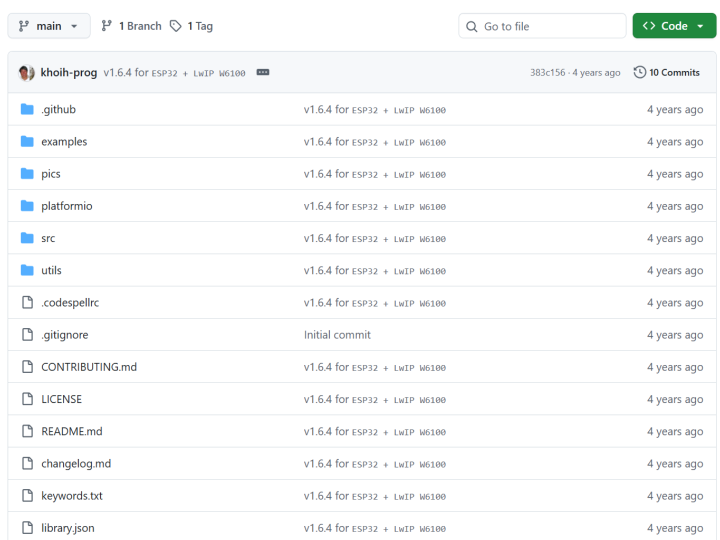
GitHub repository: AsyncWebServer_ESP32_W6100
WIZnet W6100 Datasheet (TCP/IP, IPv4/IPv6)
Tags
W6100, WIZnet, Async WebServer, ESP32 Ethernet, HTTP Server, TCP Lifecycle, Industrial IoT, Embedded Web
🇰🇷 한국어 번역 (1:1 Full Translation)
ESP32 + W6100에서 Async WebServer를 사용하는 이유는 무엇인가?
아키텍처, TCP 생명주기 관리, 산업용 신뢰성 관점
요약
본 문서는 ESP32와 WIZnet W6100 이더넷 컨트롤러를 사용해 비동기 웹 서버를 구현하는 AsyncWebServer_ESP32_W6100 프로젝트를 분석한다. 비동기 웹 서버 아키텍처, TCP 소켓 생명주기 관리, 그리고 블로킹 웹 서버와의 비교를 통해, 이 접근 방식이 산업용 IoT 시스템에 왜 적합한지를 설명한다.
1. 임베디드 웹 서버의 역할
임베디드 웹 서버는 설정, 상태 확인, 유지보수에 널리 사용된다.
산업 환경에서는 응답 예측성이 핵심이다.
2. 시스템 아키텍처
ESP32는 TCP를 처리하지 않는다.
3. 비동기 웹 서버 아키텍처
이벤트 기반 구조로 블로킹을 제거한다.
4. 비동기의 장점
태스크 간 간섭 최소화
실시간성 유지
다중 클라이언트 대응
5. W6100 기반 TCP 생명주기 관리
TCP 상태 관리는 하드웨어가 담당한다.
6. 블로킹 WebServer와 비교
블로킹 방식은 단순하지만
산업 환경에는 부적합하다.
7. 산업용 IoT 신뢰성
장시간 안정성
결정적 이더넷
유지보수 친화성
8. 핵심 메시지
W6100 기반 Async WebServer는 HTTP를 예측 가능한 산업용 인터페이스로 만든다.
태그
W6100, WIZnet, 비동기 웹 서버, ESP32 이더넷, 산업용 IoT