



Why Async UDP over W6100 Matters: Architecture, IPv6, and Reliability
This article explains how the AsyncUDP_ESP32_W6100 project enables event-driven UDP communication using ESP32 and the WIZnet W6100 Ethernet controller.
Why Async UDP over W6100 Matters: Architecture, IPv6, and Reliability
ESP32 + W6100 Integration, UDP vs TCP Contrast, and Industrial IoT Insights
(W6100 기반 Async UDP가 중요한 이유: 아키텍처, IPv6, 신뢰성 관점)
Summary (40–60 words)
This article explains how the AsyncUDP_ESP32_W6100 project enables event-driven UDP communication using ESP32 and the WIZnet W6100 Ethernet controller. It covers the architecture of asynchronous UDP, the IPv4/IPv6 advantage, a contrast with TCP, and why this pattern suits industrial IoT and reliable embedded networking.
1. Introduction: Why Asynchronous UDP over Ethernet?
UDP (User Datagram Protocol) and TCP (Transmission Control Protocol) are the two main transport layer protocols. While TCP focuses on connection-oriented reliability, UDP emphasizes low-latency, lightweight, and stateless communication.
Event-driven (asynchronous) UDP takes this further by:
Eliminating blocking calls
Allowing callback-based packet processing
Supporting highly responsive firmware
For embedded systems and real-time IoT applications, especially in mission-critical or industrial contexts, this matters because:
UDP avoids the connection overhead of TCP
Async callbacks fit well with event loops and RTOS-based task scheduling
UDP broadcast/multicast enables scalable device discovery and group messaging
2. WIZnet W6100: Hardware TCP/IP with Dual IPv4/IPv6
Unlike software TCP/IP stacks, the W6100 implements TCP, UDP, ARP, and IP protocols in hardware. This provides:
True dual-stack support (IPv4 + IPv6)
Hardware protocol processing (offloading)
Deterministic timing behavior
Reduced MCU load
For UDP, this means:
The W6100 handles packet framing, checksums, and addressing
ESP32 firmware interacts only with socket registers and buffers
IPv6 support allows future-proof deployment without heavy software stacks
This is important for IoT products expected to operate over diverse networks and for long lifetimes.
3. Async UDP Architecture (ESP32 + W6100)
Conceptual Flow
Key Layers
1. App Logic (ESP32)
Contains event registration and callbacks for UDP receive/transmit.
2. Async UDP Abstraction
Provides non-blocking interfaces. Instead of looping or waiting, the app registers event handlers:
onPacketReceived(callback)
sendAsync(data, destination)
3. W6100 Driver Layer
Handles:
SPI transactions
Register access
Buffer management
Socket state transitions
4. Hardware Offload (W6100)
Processes:
IPv4/IPv6 headers
UDP checksums
Packet transmission/reception
Execution is deterministic and avoids firmware-level protocol handling.
4. Why Asynchronous UDP Is Useful
No Blocking = Better Responsiveness
In traditional UDP code:
recvfrom() blocks until a packet arrives.
In async UDP:
Data triggers only when available — leading to:
Lower CPU idle time
Better real-time performance
Easier integration with other system tasks
Event-Driven Fit for RTOS
ESP32 often runs FreeRTOS or similar. Event callbacks mesh well with task notifications and queues, reducing complexity.
Simpler Multicast / Broadcast
Many UDP-based IoT discovery protocols rely on broadcast/multicast. Async UDP simplifies handling multiple sources.
5. IPv6 Advantage with W6100
IPv6 adoption is increasing due to address space exhaustion and future-proofing needs.
Why W6100’s IPv6 support is important:
Firmware doesn’t need a software IPv6 stack
Native IPv6 UDP packets are handled in hardware
ESP32 only manages application-level semantics
Example use case:
An industrial sensor subnet can use IPv6 multicast for neighbor discovery without additional stack layers.
6. UDP vs TCP: Lightweight Contrast
TCP Characteristics
Connection-oriented
Acknowledgement and retransmission
Congestion control
Higher latency
Pros:
Reliable data transfer
Ordered delivery
Cons:
Overhead
Latency
Blocking behavior
UDP Characteristics
Connectionless
No ACKs or retransmissions
No ordering guarantees
Very low overhead
Pros:
Minimal latency
Best for broadcast/multicast
Fits event-driven architecture
Cons:
Requires application-level error handling (if needed)
No inherent reliability
Why UDP Makes Sense in IoT
In many IoT scenarios:
Telemetry is periodic
Missing a packet occasionally is acceptable
Devices may broadcast status to many collectors
When TCP Is Still Needed
Large file transfers
Guaranteed order
Session-based services
But for event signals, discovery, telemetry, and real-time alerts, async UDP is superior.
7. Practical Reliability: Deterministic Behavior
Using hardware offloading and async logic provides:
Predictable timing — no OS scheduler jitter affecting reception
Reduced firmware complexity — no need to implement timers or polling
Lower CPU load — W6100 handles network stack
In industrial environments (factories, instrumentation), predictable network behavior is a must.
8. Common Pitfalls & Debugging Tips
8.1 CS Timing and SPI Access
As with any SPI peripheral:
Ensure CS is asserted only during complete frame transactions
Avoid splitting multi-byte register writes across CS toggles
Use mutex or critical sections if running in RTOS
8.2 Buffer Boundary Errors
W6100 uses TX/RX buffers with pointer registers. Bugs often arise from:
Not reading RX size before reading data
Improper pointer updates leading to misaligned reads
Use correct API calls that handle:
Sn_RX_RSR for available data size
sn_RX_RD for pointer updates
8.3 Event Callbacks on Multiple Sockets
When handling multiple UDP sockets:
Ensure each socket has a unique callback
Avoid race conditions in shared context
9. Industrial IoT Use Cases Enabled by Async UDP + W6100
Device discovery (e.g., broadcast “alive” packets)
Real-time telemetry (sensor status with minimal latency)
Time-critical control signals (commands that don’t need reliability)
Multicast group messaging (many devices at once)
Diagnostics & heartbeat (frequent small packets)
10. Key Takeaway
Async UDP over WIZnet W6100 combines hardware-level TCP/IP offload, event-driven responsiveness, and future-proof IPv6 support, making it ideal for engineer-grade embedded and industrial IoT networking.
FAQ (Engineer-Focused)
Q1. Why choose async UDP over traditional UDP?
Async avoids blocking, enabling higher responsiveness and better integration with other system tasks.
Q2. Does W6100 require a software TCP/IP stack for UDP?
No. W6100 implements UDP directly in hardware, so only socket control and buffer access are needed.
Q3. Is IPv6 fully hardware-accelerated on W6100?
Yes. Both IPv4 and IPv6 UDP are supported natively.
Q4. How does UDP compare to TCP in IoT contexts?
UDP is lightweight and low-latency; TCP is reliable but heavier. For telemetry and discovery, UDP often wins.
Q5. What is the biggest reliability risk with async UDP?
Incorrect SPI transactions and pointer mismanagement — solved by deterministic driver design.
Source
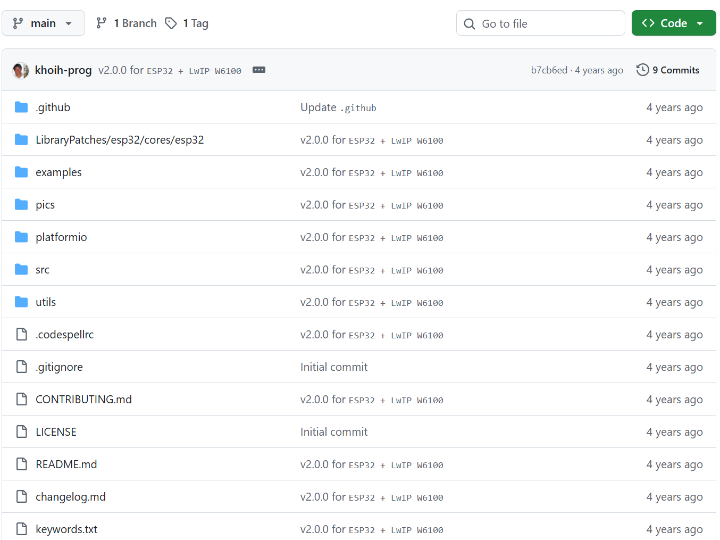
GitHub Repository: AsyncUDP_ESP32_W6100
WIZnet W6100 Datasheet (UDP, SPI registers, buffer architecture)
Tags
W6100, WIZnet, Async UDP, ESP32 Ethernet, IPv6 UDP, TCP vs UDP, Industrial IoT, Hardware TCP/IP
🇰🇷 한국어 번역 (1:1 Full Translation)
W5500 기반 Async UDP는 왜 중요한가: 아키텍처, IPv6, 신뢰성 관점
ESP32 + W6100 통합, UDP vs TCP 비교, 산업 IoT 인사이트
요약
이 문서는 ESP32와 WIZnet W6100 이더넷 컨트롤러를 사용한 Async UDP 통신을 분석한다. UDP 비동기 아키텍처, IPv6 장점, TCP 대비 특성, 신뢰성 관점 등을 다루며, 엔지니어 및 산업 IoT 시스템에 적합한 네트워킹 패턴을 제시한다.
1. 도입: 왜 비동기 UDP인가?
UDP는 낮은 지연 시간과 경량 특성을 갖는다.
비동기 방식은 응답성과 실시간성을 더욱 강화한다.
2. W6100의 IPv4/IPv6 듀얼 스택
W6100은 TCP/UDP/IP를 하드웨어로 처리하며,
IPv6를 네이티브로 지원한다.
3. 아키텍처 개요
4. 비동기 UDP의 장점
블로킹 없음
응답성 향상
멀티태스크 친화
5. IPv6 장점
IPv6는 주소 공간과 멀티캐스트에서 장점이 있다.
6. UDP vs TCP 비교
UDP는 경량, 저지연, 브로드캐스트 지원 등
산업용 IoT 시나리오에 적합하다.
7. 실전 신뢰성
하드웨어 오프로딩으로:
예측 가능한 네트워크
낮은 MCU 부하
8. 주요 디버깅 팁
CS 타이밍은 단일 SPI 트랜잭션으로 처리
RX/RX 포인터 일관성 확보
포인터 업데이트 후 데이터 읽기
9. 산업용 활용 사례
장치 디스커버리
상태 로그
실시간 제어
10. 핵심 메시지
W5500 기반 Async UDP는 TCP/IP 오프로딩과 이벤트 기반 구조로 엔지니어링 요구를 충족한다.
FAQ
Async UDP vs traditional UDP? → 응답성, 비차단
IPv6 지원 방식? → 하드웨어 네이티브
UDP vs TCP 차이? → 경량 vs 신뢰성
태그
W5500, WIZnet, 비동기 UDP, ESP32 이더넷, IPv6 UDP, 산업용 IoT