



How Does Async UDP over W6100 Enable Reliable IPv4/IPv6 Networking on ESP32?
How Does Async UDP over W6100 Enable Reliable IPv4/IPv6 Networking on ESP32?
COMPONENTS
PROJECT DESCRIPTION
# How Does Async UDP over W6100 Enable Reliable IPv4/IPv6 Networking on ESP32?
*(W6100 기반 Async UDP는 ESP32에서 IPv4/IPv6 네트워크 신뢰성을 어떻게 높일까?)*
------
## Summary (40–60 words)
This article explains how the AsyncUDP_ESP32_SC_W6100 project enables reliable UDP communication over IPv4 and IPv6 by combining ESP32 with the WIZnet W6100. By offloading dual-stack TCP/IP to hardware and using asynchronous UDP, the design achieves deterministic, industrial-grade Ethernet networking suitable for long-running IoT systems.
------
## 1. Introduction: Why Async UDP + IPv6 Matters in Industrial IoT
In many Industrial IoT systems, **UDP is preferred over TCP** for reasons such as:
- Low latency
- Minimal overhead
- Broadcast and discovery support
- Deterministic timing behavior
At the same time, modern networks are rapidly moving toward **IPv6** due to address exhaustion, large-scale deployments, and long device lifetimes.
The **AsyncUDP_ESP32_SC_W6100** project demonstrates how to combine:
- **ESP32 application logic**
- **Asynchronous UDP programming**
- **W6100 hardware IPv4/IPv6 TCP/IP offloading**
to create a future-proof and reliable Ethernet solution.
------
## 2. System Architecture Overview
The overall architecture used by this project is shown below:
```
Application Logic (ESP32)
↓ (Async UDP callbacks)
Async UDP Abstraction Layer
↓
W6100 Driver / Socket Interface
↓ (SPI)
W6100 Hardware TCP/IP (IPv4 + IPv6)
↓
Ethernet PHY + RJ45
↓
Industrial Ethernet Network
```
The key design decision is **delegating all IP-layer complexity to the W6100**, allowing the ESP32 to focus solely on application logic.
------
## 3. UDP Communication Model: Asynchronous by Design
### Why Asynchronous UDP?
Traditional blocking UDP models require:
- Polling loops
- Busy waiting
- Tight timing assumptions
The Async UDP approach used in this project instead relies on:
- Event-driven callbacks
- Non-blocking socket operations
- Clear separation between network I/O and application logic
This model is especially well-suited for **industrial firmware**, where responsiveness and stability matter more than raw throughput.
------
## 4. IPv4 and IPv6 Behavior with W6100
### Dual-Stack Support in Hardware
The W6100 is a **hardware dual-stack Ethernet controller**, supporting:
- IPv4
- IPv6
- UDP, TCP, ICMPv4/v6
- Neighbor Discovery (IPv6)
Crucially, these protocols are **implemented in hardware**, not software.
This means:
- No IPv6 stack in ESP32 firmware
- No RAM-heavy protocol structures
- No complex timing logic in the MCU
------
### IPv6 Offloading Advantage
In software-based IPv6 implementations:
- RAM usage increases significantly
- CPU load rises due to header parsing
- Debugging complexity increases
With W6100:
- IPv6 headers are parsed in hardware
- Checksums are handled internally
- Packet filtering is offloaded
For Industrial IoT devices expected to run **10–20 years**, this is a major advantage.
------
## 5. ESP32 ↔ W6100 SPI Integration
The ESP32 communicates with the W6100 over **SPI**, using a memory-mapped register and buffer model.
Key architectural points:
- ESP32 acts as SPI master
- W6100 exposes control registers and RX/TX buffers
- UDP payloads are written to and read from hardware buffers
- SPI transactions are deterministic and bounded
This predictable SPI behavior is critical for **real-time and industrial environments**.
------
## 6. How UDP Is Implemented on W6100 (Conceptual)
> 🧩 **Conceptual explanation based on repository behavior**
A typical UDP receive flow looks like this:
```
UDP Packet arrives on Ethernet
↓
W6100 hardware parses IPv4/IPv6 + UDP headers
↓
Payload stored in RX buffer
↓
Interrupt / event to ESP32
↓
Async callback invoked
↓
Application processes data
```
The ESP32 never parses IP or UDP headers directly—this is all handled inside the W6100.
------
## 7. Industrial IoT Reliability Perspective
### Deterministic Behavior
Because the W6100 handles:
- IP fragmentation
- UDP checksum
- Dual-stack routing
the system behavior is:
- Predictable
- Repeatable
- Resistant to firmware timing bugs
This is essential for:
- Factory automation
- Energy systems
- Infrastructure monitoring
------
### Wired Ethernet vs Wi-Fi
Compared to ESP32 Wi-Fi UDP:
- No RF interference
- No roaming or re-association
- Stable latency
- Better EMC behavior
For industrial deployments, **wired Ethernet with W6100 is far more reliable**.
------
## 8. Why Async UDP + W6100 Is a Strong Combination
| Aspect | Benefit |
| -------------- | --------------------------------- |
| Async UDP | Non-blocking, responsive firmware |
| W6100 Offload | Minimal MCU load |
| IPv6 Support | Future-proof networking |
| SPI Interface | Deterministic timing |
| Hardware Stack | Reduced bug surface |
This combination allows developers to scale from **demo to production** without redesigning the network stack.
------
## 9. Typical Industrial Use Cases
The architecture demonstrated by this project is suitable for:
- Sensor data streaming
- Device discovery (UDP broadcast / multicast)
- Control commands
- Status monitoring
- IPv6-based industrial networks
These use cases benefit directly from **UDP + IPv6 + hardware offloading**.
------
## 10. Key Takeaway for Developers
> **With W6100, UDP over IPv4/IPv6 becomes a hardware feature—not a firmware problem.**
By using asynchronous UDP on ESP32 and delegating protocol complexity to the W6100, developers achieve:
- Cleaner code
- Higher reliability
- Long-term maintainability
------
## FAQ
**Q1. Why use UDP instead of TCP in industrial systems?**
UDP offers lower latency and deterministic timing, which are often more important than guaranteed delivery.
**Q2. Does ESP32 need an IPv6 stack?**
No. The W6100 handles IPv6 entirely in hardware.
**Q3. Is async UDP harder to debug?**
No. Event-driven models are often easier to reason about than polling loops.
**Q4. Can IPv4 and IPv6 run simultaneously?**
Yes. W6100 supports true dual-stack operation.
**Q5. Is this suitable for production Industrial IoT?**
Yes. The architecture emphasizes reliability and predictability.
------
## Source
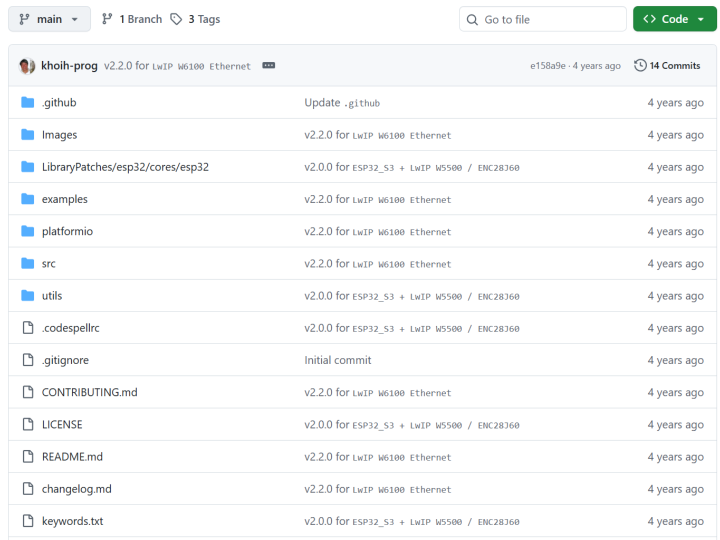
- GitHub repository: **AsyncUDP_ESP32_SC_W6100**
- WIZnet W6100 datasheet and hardware TCP/IP architecture
------
## Tags
W6100, WIZnet, Async UDP, IPv6 Offloading, Embedded Ethernet, Industrial IoT, ESP32 SPI Ethernet, Dual Stack Networking
------
------
# 🇰🇷 한국어 번역 (1:1 Full Translation)
------
# W6100 기반 Async UDP는 ESP32에서 IPv4/IPv6 네트워크 신뢰성을 어떻게 높일까?
------
## 요약
본 문서는 AsyncUDP_ESP32_SC_W6100 프로젝트를 기반으로 ESP32와 WIZnet W6100을 결합하여 IPv4/IPv6 UDP 통신을 구현하는 방식을 설명한다. 하드웨어 듀얼 스택 TCP/IP 오프로딩과 비동기 UDP 모델을 통해 산업용 IoT 환경에 적합한 안정성과 예측 가능한 동작을 제공한다.
------
## 1. 산업 IoT에서 Async UDP와 IPv6가 중요한 이유
산업용 IoT에서는 다음과 같은 이유로 UDP가 자주 사용된다.
- 낮은 지연 시간
- 최소한의 오버헤드
- 브로드캐스트 및 디스커버리
- 결정적인 타이밍 특성
여기에 IPv6까지 결합하면 장기 운용이 가능한 네트워크가 된다.
------
## 2. 시스템 아키텍처 개요
```
ESP32 애플리케이션
↓
비동기 UDP 계층
↓
W6100 소켓 인터페이스
↓
W6100 하드웨어 IPv4/IPv6
↓
Ethernet 네트워크
```
모든 IP 계층 처리를 W6100이 담당한다.
------
## 3. 비동기 UDP 통신 모델
Async UDP는:
- 블로킹 없음
- 이벤트 기반
- 응답성 높은 펌웨어
를 가능하게 하며 산업용 시스템에 적합하다.
------
## 4. W6100의 IPv4 / IPv6 하드웨어 오프로딩
W6100은:
- IPv4와 IPv6 동시 지원
- UDP 체크섬 및 헤더 처리
- 하드웨어 패킷 파싱
을 제공한다.
ESP32는 네트워크 세부 사항을 몰라도 된다.
------
## 5. ESP32 ↔ W6100 SPI 통합
SPI 기반 통신은:
- 예측 가능
- 타이밍 안정적
- 실시간 제어에 유리
하다.
------
## 6. UDP 처리 흐름 (개념)
```
패킷 수신
↓
W6100 하드웨어 처리
↓
RX 버퍼 저장
↓
ESP32 이벤트 콜백
```
------
## 7. 산업용 신뢰성 관점
- RF 간섭 없음
- 낮은 지터
- 장시간 안정 동작
이는 산업 현장에서 매우 중요하다.
------
## 8. 핵심 장점 요약
| 요소 | 장점 |
| --------- | ----------------- |
| Async UDP | 응답성 |
| W6100 | 하드웨어 오프로딩 |
| IPv6 | 미래 대비 |
| SPI | 결정성 |
------
## 9. 적용 사례
- 센서 스트리밍
- 브로드캐스트 디스커버리
- 제어 메시지
- 산업용 IPv6 네트워크
------
## 10. 핵심 메시지
> **W6100을 사용하면 UDP와 IPv6는 펌웨어 문제가 아니라 하드웨어 기능이 된다.**
------
## 태그
W6100, WIZnet, 비동기 UDP, IPv6 오프로딩, 산업용 IoT, ESP32 이더넷
Documents
Comments
Write