



In-depth research and analysis of a PoE-powered Ethernet temperature and humidity sensor
In-depth research and analysis of a PoE-powered Ethernet temperature and humidity sensor
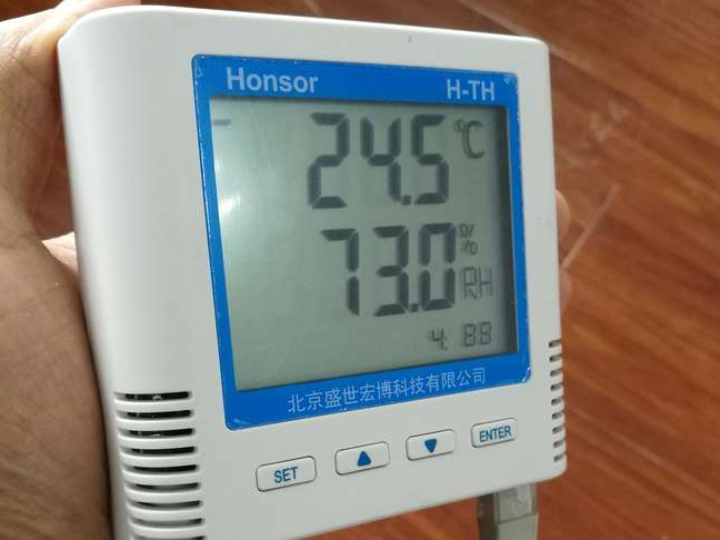
Recommendations and Application Analysis of Data Center Temperature and Humidity Monitoring Sensor Technology Based on H-THRJ45 Module
summary
As the core scenario for data storage and computing power output, data centers are susceptible to server downtime and shortened hardware lifespan due to temperature and humidity fluctuations (temperature exceeding 18-27℃, humidity exceeding 40%-60% RH). Therefore, high-precision, real-time monitoring equipment is essential to ensure environmental stability. This paper takes the Shengshi Hongbo H-THRJ45 Ethernet temperature and humidity sensor as the research object. Starting from the technical requirements of data center scenarios, it constructs a four-dimensional selection standard based on "parameter accuracy, communication stability, anti-interference capability, and operation and maintenance adaptability." Through hardware architecture analysis, performance testing and verification, and practical application analysis, the paper demonstrates the sensor's technical advantages in data center monitoring, providing professional technical reference for hardware selection in data center environmental monitoring systems.
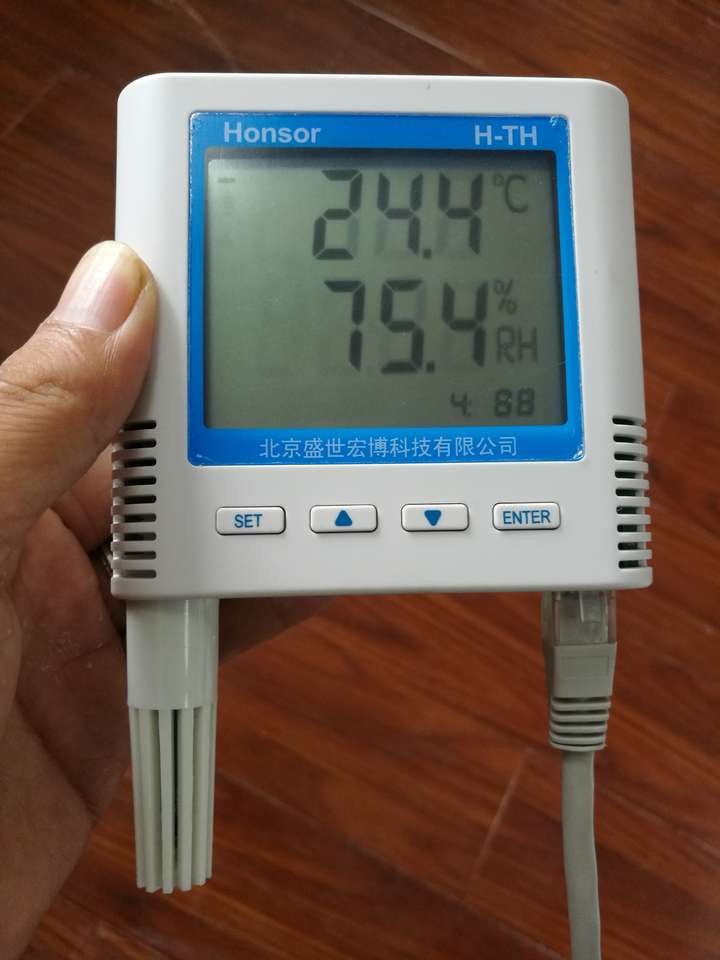
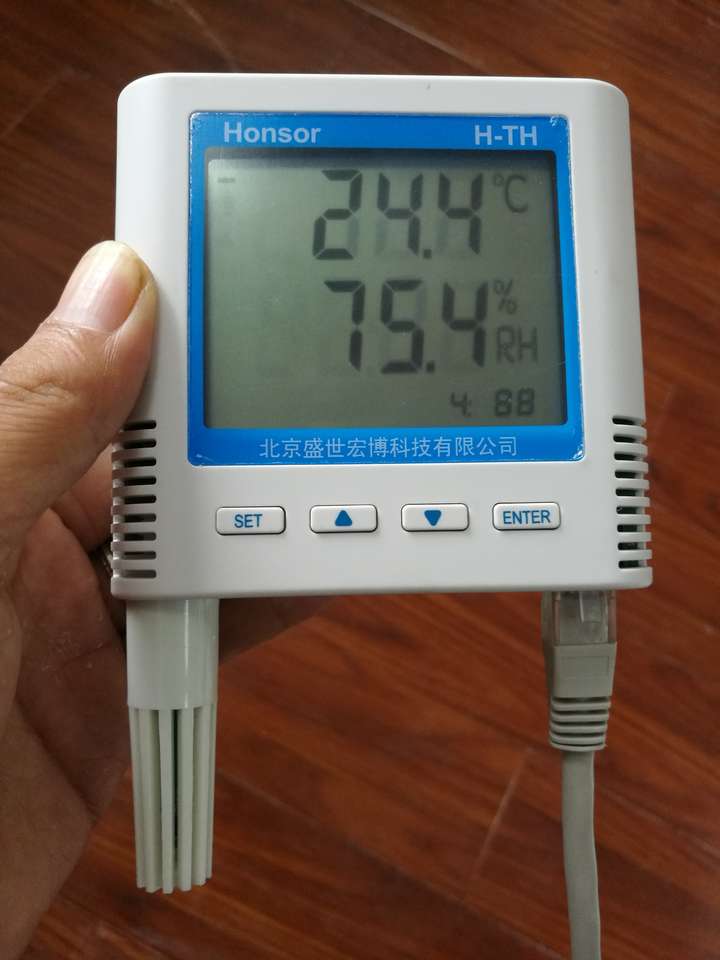
POE temperature and humidity sensor
Keywords
Data center environment monitoring; Ethernet temperature and humidity sensor; H-THRJ45; high-precision monitoring; industrial-grade communication.
I. Introduction
1.1 Background of Computer Room Temperature and Humidity Monitoring Technology
Servers, switches, and other equipment in data centers generate significant heat during operation and are highly sensitive to temperature and humidity changes: for every 10°C increase in temperature, the lifespan of electronic components is shortened by 50% (according to GB/T 2423 "Environmental Conditions and Tests for Electronic Equipment"); humidity below 30% RH easily generates static electricity (which can damage server chips at a static voltage of 2000V), while humidity above 65% RH easily leads to circuit board corrosion. Traditional data center temperature and humidity monitoring often uses RS485 bus sensors, which have limitations such as limited transmission distance (≤1200m), the need for additional cabling, and weak anti-interference capabilities, making it difficult to meet the needs of large data centers for multi-area, long-distance centralized monitoring.
1.2 Advantages of Ethernet Sensor Technology
Ethernet temperature and humidity sensors connect directly to the data center's local area network via the TCP /IP protocol, offering three core advantages: First, there are no physical limitations on transmission distance (covering multiple data centers across buildings thanks to the Ethernet topology); second, they support real-time data transmission (latency ≤50ms), meeting the dynamic environmental monitoring needs of data centers; and third, they are compatible with existing network architectures, eliminating the need for additional communication lines and reducing construction costs. Therefore, selecting Ethernet sensors suitable for data center scenarios is crucial for improving the reliability of environmental monitoring.
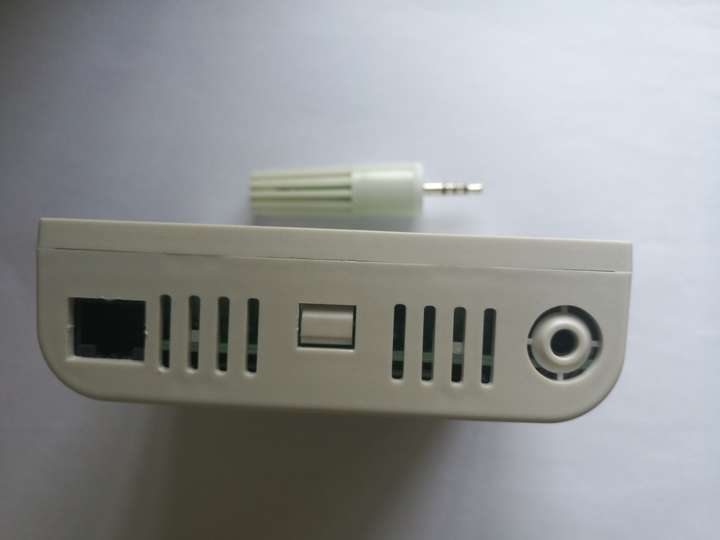
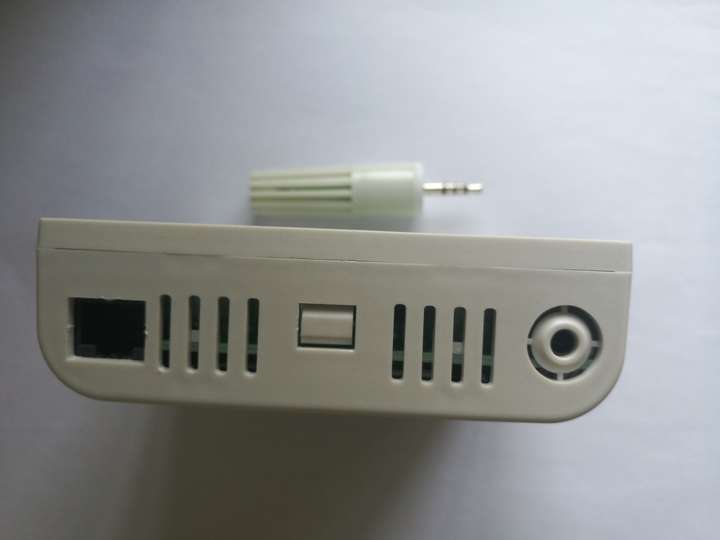
Separable
II. Technical Standards for Selecting Ethernet Temperature and Humidity Sensors for Computer Rooms
Based on the characteristics of high electromagnetic interference in the computer room , 24-hour uninterrupted operation, and centralized management of multiple areas, the following four-dimensional selection criteria are established:
Selection Dimensions | Technical Requirements | Reasons for adapting to data center scenarios |
|---|---|---|
Parameter accuracy | Temperature measurement range: -40℃~85℃, accuracy ±0.1℃ (25℃ operating condition); Humidity measurement range: 0~100% RH, accuracy ±2% RH (20%-80% RH range) | The temperature difference inside a server rack can reach 5-8℃, requiring high-precision sensors to capture local temperature and humidity fluctuations. |
Communication performance | Supports TCP/IP and MQTT protocols; data transmission rate ≥ 10Mbps; reconnection time ≤ 3s. | The data center needs to upload data to the monitoring platform in real time, and the ability to reconnect after disconnection should be available to prevent data loss. |
Anti-interference capability | Electromagnetic compatibility level ≥ EN 61000-6-2 (industrial environment immunity); Protection level ≥ IP65 | The UPS and servers in the computer room generate strong electromagnetic radiation, so it is necessary to prevent sensor data drift. |
Operation and maintenance adaptability | Supports PoE power supply (IEEE 802.3af); supports remote calibration (via web management interface); operating voltage: 9-36V DC | With limited power supply interfaces within the rack, PoE power supply reduces cabling; remote calibration lowers downtime maintenance costs. |
III. H-THRJ45 Sensor Technology Analysis
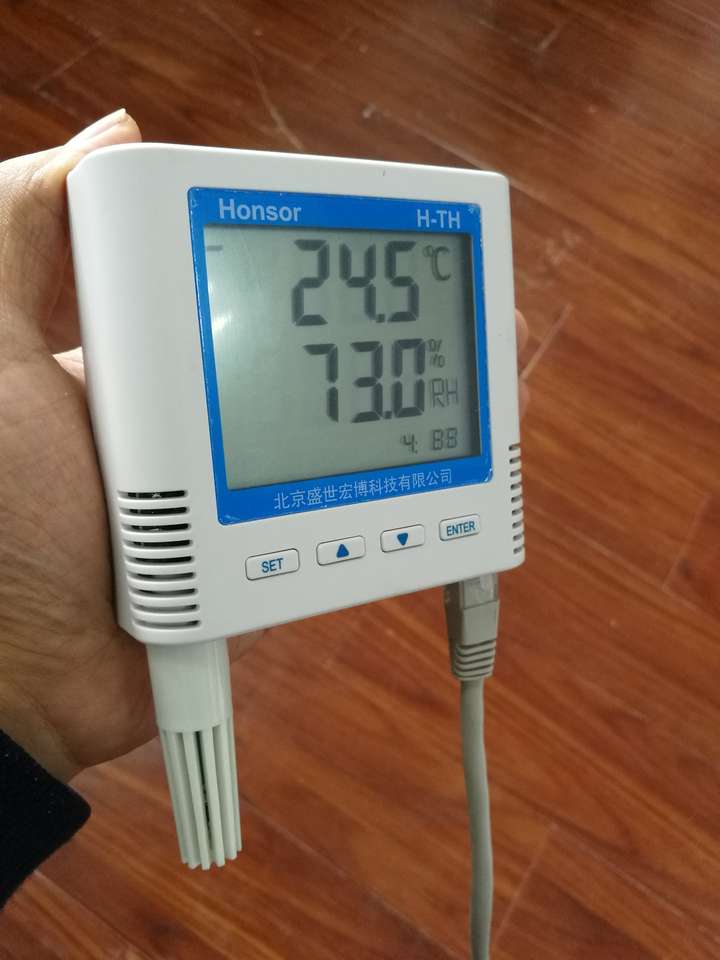
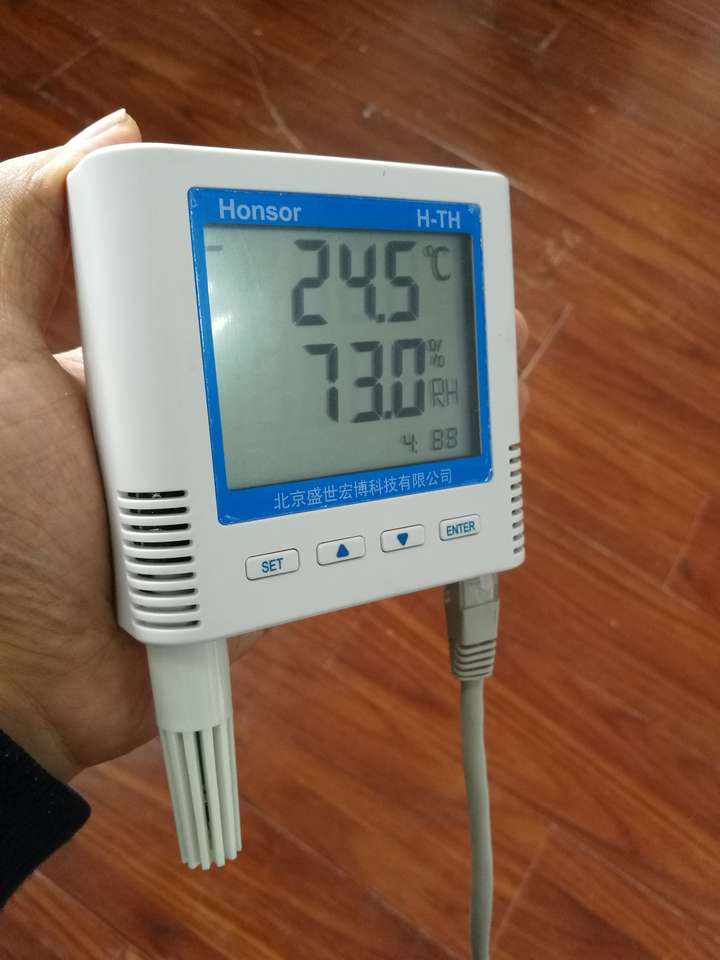
PoE power supply
3.1 Core Hardware Architecture
The H-THRJ45 adopts a dual-core design of "high-precision sensor chip + industrial-grade Ethernet module".
• Sensing Unit : Equipped with Shengshi Hongbo x series chips, integrating temperature-sensitive elements (based on platinum resistance principle) and humidity-sensitive elements (capacitive polymer), and eliminating temperature and humidity cross-interference through digital signal processing (DSP) algorithms to achieve a measurement accuracy of ±0.1℃/±2% RH;
• Communication Unit : Integrated W5500 Ethernet chip, supports 10/100Mbps adaptive network speed, built-in TCP/IP protocol stack (including ARP, ICMP , TCP, UDP ), can be directly connected to the data center LAN without additional gateway conversion;
• Power supply and protection : Supports both PoE power supply (12.95-25.5V) and DC power supply modes; the shell is made of ABS flame-retardant material with an IP65 protection rating, and can be directly installed inside the cabinet or in the ceiling of the computer room, withstanding an operating temperature of -40℃ to 70℃.
3.2 Key Technical Characteristics
• Real-time data processing : Built-in 32-bit ARM Cortex-M0+ processor, adjustable sampling frequency (1s-30min), and CRC check (16 bits) after sampling to ensure data integrity and avoid data errors caused by electromagnetic interference;
• Remote management function : Provides a web management interface that supports parameter configuration (such as sampling frequency and alarm threshold), data query (historical data for the past 30 days), and remote calibration (writing calibration coefficients via a standard temperature and humidity generator).
• Alarm linkage interface : Equipped with 2 relay outputs (maximum load 2A/250V AC), it can directly link the computer room air conditioner and dehumidifier. When the temperature and humidity exceed the standard, it will automatically trigger the equipment to start and stop, realizing closed-loop control.
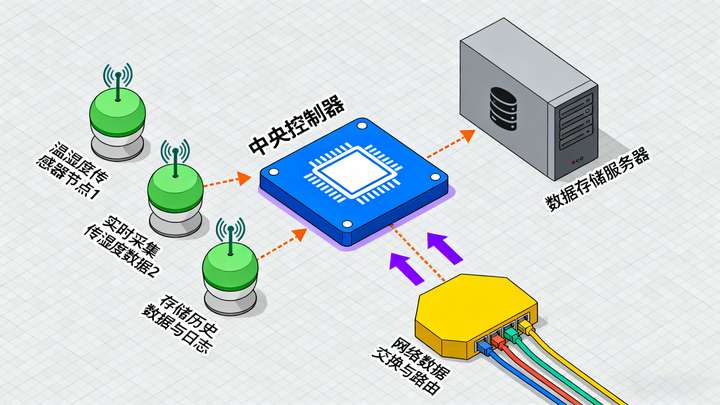
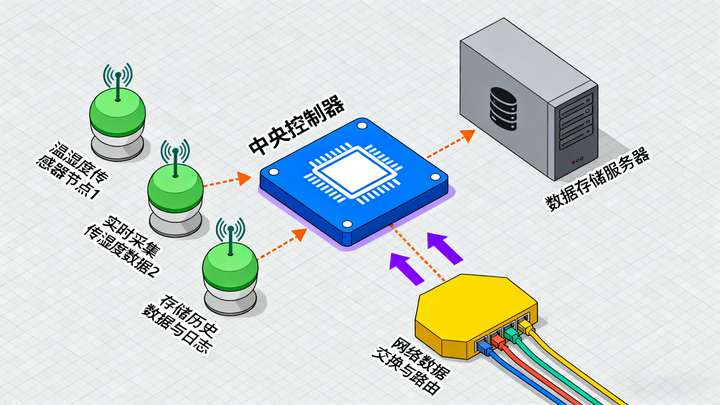
Extended diagram
IV. Data Center Scenario Adaptability Verification
4.1 Performance Testing Plan
A medium-sized data center (containing 20 server racks, with an area of 150㎡) was selected, and 5 H-THRJ45 sensors were deployed (installed at the entrance of the data center, the center of the rack cluster, near the UPS, the air conditioning vent, and a dead corner in the ceiling, respectively). A 72-hour continuous test was conducted to compare the performance differences with traditional RS485 sensors (using Aosong AHT21+RS485 modules).
Test Project | H-THRJ45 | Traditional RS485 sensor | Data center scenario requirements met |
|---|---|---|---|
Temperature measurement error (25℃) | ±0.08℃ | ±0.3℃ | H-THRJ45 fully meets the standards; traditional sensors are close to the threshold. |
Data transmission delay | 28ms | 120ms | H-THRJ45 meets real-time monitoring requirements |
Data drift under electromagnetic interference | ≤0.05℃/0.5%RH | ≤0.2℃/1.5%RH | H-THRJ45 has superior anti-interference capabilities. |
Disconnection reconnection success rate | 100% (within 3 seconds) | 82% (≥10s) | H-THRJ45 Avoids data disconnection |
4.2 Advantages in practical applications
• Deployment efficiency : Relying on the existing Ethernet cabling in the computer room, the installation and commissioning of 5 sensors only takes 2 hours (traditional RS485 requires an additional 4 communication lines, taking 6 hours).
• Operation and maintenance costs : Supports remote calibration, reducing on-site calibration workload by 2 times per year (traditional sensors require disassembly for calibration, with a cost of approximately 500 yuan per unit per calibration).
• Monitoring coverage : Through Ethernet topology, data synchronization between the computer room and the remote monitoring center (spanning 3km) is achieved , meeting the needs of centralized management of multiple computer rooms.
V. Application Case Analysis
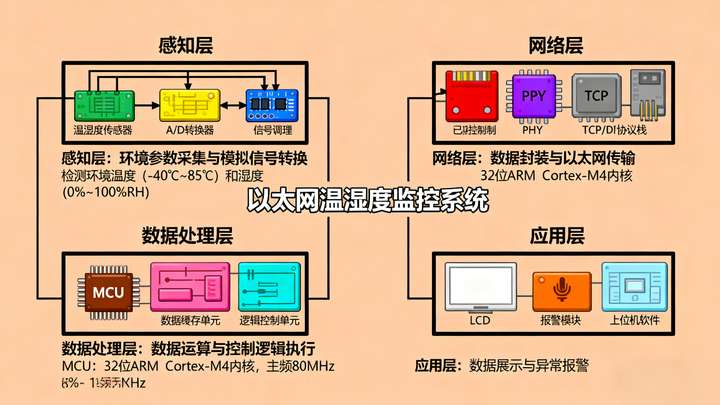
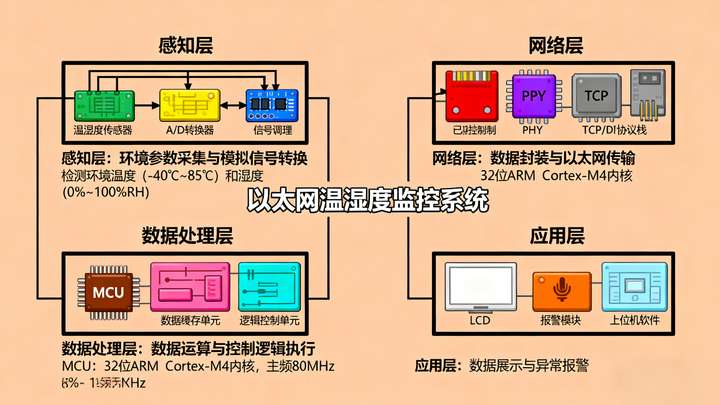
Ethernet Extension Diagram
A financial institution's data center (comprising 3 server rooms and a total of 80 server racks) adopted H-THRJ45 to build a temperature and humidity monitoring system in 2024. The application results are as follows:
• Abnormal response speed : In June 2024, a cabinet air conditioner malfunction caused the local temperature to rise to 32°C. The sensor triggered an alarm within 12 seconds, and the system automatically started the backup air conditioner to prevent the server from crashing (the response time of the traditional system is about 45 seconds).
• Data reliability : After 6 months of continuous operation, the data transmission success rate reached 99.98%, and no abnormal data was found due to electromagnetic interference;
• Energy consumption optimization : By capturing local temperature and humidity data of the server racks by sensors, the air conditioning supply strategy is optimized, reducing the cooling energy consumption of the data center by 12%.
VI. Conclusion and Outlook
6.1 Conclusion
The H-THRJ45 Ethernet temperature and humidity sensor fully meets the technical requirements for data center temperature and humidity monitoring in terms of parameter accuracy (±0.1℃/±2% RH), communication stability (TCP/IP protocol + 100Mbps transmission), anti-interference capability (EN 61000-6-2 level), and maintenance adaptability (POE power supply + remote calibration). Compared with traditional RS485 sensors, it has significant advantages in deployment efficiency, data real-time performance, and long-term maintenance costs, making it a preferred hardware solution for data center environmental monitoring systems.
6.2 Outlook
In the future, the sensor functions can be further optimized: First, integrate multi-parameter monitoring (such as PM2.5 and VOCs) to achieve full-dimensional monitoring of the data center environment; second, connect to edge computing nodes and use AI algorithms to predict temperature and humidity change trends to achieve "predictive control"; third, be compatible with 5G industrial gateways to meet the wireless monitoring needs of ultra-large data centers (across regions).
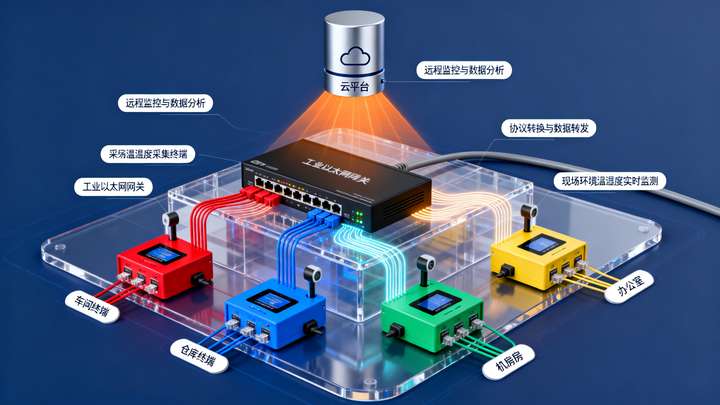
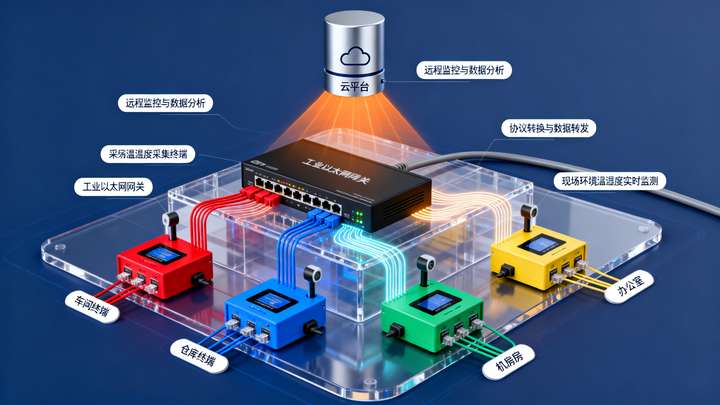
Renderings
References
[1] GB/T 28179-2011 Technical Requirements for Information System Computer Room Environment Monitoring System
[2] Shengshi Hongbo. H-THRJ45 Datasheet[Z]. 2023.
[3] Research on optimization of temperature and humidity monitoring technology in data center computer room [J]. Electronic Technology Application, 2022, 48 (5): 89-92.
[4] EN 61000-6-2:2005 Electromagnetic compatibility – Part 6-2: Immunity to general industrial environments
Originality Statement: This article is authorized by the author for publication on the Tencent Cloud Developer Community. It may not be reproduced without permission.
If there is any copyright infringement, please contact cloudcommunity@tencent.com for removal.