



How to Design an RTOS-Based Ethernet System with W5500 for Education and Makers?
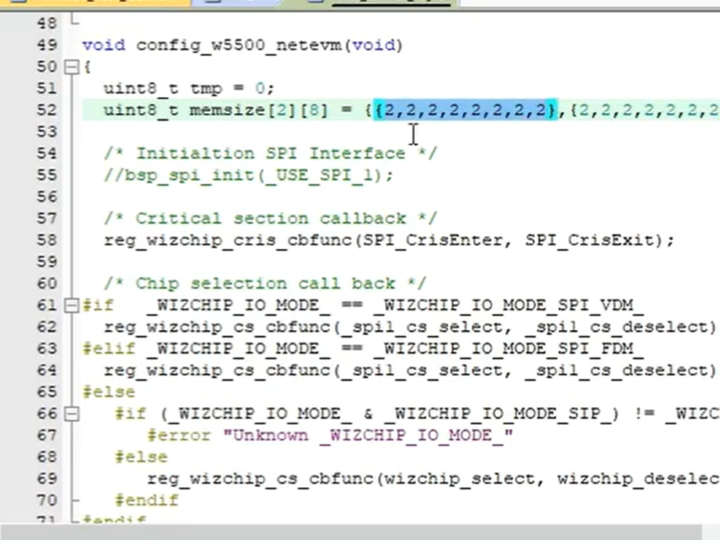
This project showcases an RTOS-based embedded system using the WIZnet W5500 Ethernet controller on a Mikit platform.
How to Design an RTOS-Based Ethernet System with W5500 for Education and Makers?
(교육 및 메이커를 위한 W5500 기반 RTOS 이더넷 시스템 설계 방법)
Project Summary (51 words)
This project showcases an RTOS-based embedded system using the WIZnet W5500 Ethernet controller on a Mikit platform. By combining hardware TCP/IP offloading with deterministic task scheduling, the system demonstrates professional-grade network architecture while remaining accessible for education and maker-level experimentation.
Overall System Architecture
Core Components
Mikit Platform
Educational embedded development board
MCU running an RTOS
WIZnet W5500
Hardware TCP/IP stack
Ethernet communication via SPI
8 independent hardware sockets
RTOS
Task scheduling
Resource isolation
Deterministic execution
Network Architecture & Protocol Flow
Conceptual Data Path
Why This Architecture Works Well
TCP/IP timing is handled in hardware, not software
RTOS tasks are simpler and more deterministic
No dependency on Wi-Fi signal quality
Easier debugging and predictable behavior
This structure is especially effective for teaching how real embedded systems are designed, not just how to make them “work.”
Role of W5500 in an RTOS Environment
In RTOS-based systems, software TCP/IP stacks often become the most complex and error-prone component. By using W5500:
Network processing is fully offloaded
Task priorities are easier to manage
Memory usage is significantly reduced
Timing jitter caused by network interrupts is minimized
This allows students and makers to focus on system design and application logic, not protocol internals.
Conceptual Integration Note
⚠️ Conceptual description only
No public firmware repository is available for this project.
The firmware flow typically includes:
SPI initialization
W5500 network configuration
RTOS task creation
Socket-level data exchange
FAQ (WIZnet-Focused)
Q1: Why use W5500 in an RTOS-based system?
A: W5500 offloads TCP/IP processing to hardware, simplifying RTOS task design and eliminating timing unpredictability caused by software stacks.
Q2: How does W5500 communicate with the MCU?
A: Through an SPI interface, which is easy to integrate into RTOS drivers and tasks.
Q3: What educational value does this project provide?
A: It teaches task separation, deterministic networking, and real-world embedded architecture instead of simplified single-loop firmware.
Q4: Is this suitable for maker or hobby use?
A: Yes. While industrial in concept, the hardware and software complexity remain approachable with basic RTOS and SPI knowledge.
Q5: How does this compare to Wi-Fi-based RTOS projects?
A: Wi-Fi projects introduce RF variability and heavier software stacks, whereas W5500 Ethernet provides stability and architectural clarity.
Tags
#W5500 #RTOS #Mikit #Ethernet #EmbeddedEducation #MakerProject
🇰🇷 KOREAN VERSION
교육 및 메이커를 위한 W5500 기반 RTOS 이더넷 시스템을 설계하는 방법은?
(How to Design an RTOS-Based Ethernet System with W5500 for Education and Makers?)
프로젝트 개요 (51단어)
이 프로젝트는 Mikit 플랫폼에서 RTOS를 실행하고 WIZnet W5500 이더넷 컨트롤러를 사용하는 임베디드 시스템을 소개합니다. 하드웨어 TCP/IP 오프로딩과 결정론적 태스크 스케줄링을 결합하여, 교육 및 메이커 환경에서도 산업 수준의 네트워크 아키텍처를 학습할 수 있도록 설계되었습니다.
전체 시스템 분석
RTOS: 태스크 분리 및 실행 제어
W5500: TCP/IP를 하드웨어에서 처리
Ethernet: 안정적이고 예측 가능한 통신
Wi-Fi 없이도 네트워크 기반 애플리케이션을 구현할 수 있으며, 구조적으로 매우 명확합니다.
네트워크 아키텍처 및 데이터 흐름
RTOS 태스크 → SPI → W5500 → Ethernet
네트워크 타이밍은 MCU가 아닌 W5500이 관리
태스크 간 간섭 최소화
이 구조는 교육용으로 매우 이상적입니다.
산업 설계 관점에서의 의미
이 프로젝트는 메이커 프로젝트처럼 보이지만,
산업용 IoT에서 요구되는 안정성
결정론적 동작
유지보수 가능한 구조
를 그대로 반영하고 있습니다.
FAQ
Q1: 왜 RTOS 환경에서 W5500을 사용하나요?
A: 소프트웨어 TCP/IP 스택 없이 안정적인 네트워크를 구현할 수 있기 때문입니다.
Q2: MCU와 어떻게 연결되나요?
A: SPI 인터페이스로 연결됩니다.
Q3: 교육용으로 적합한가요?
A: 매우 적합합니다. 실제 산업 구조를 그대로 학습할 수 있습니다.
Q4: 메이커도 다룰 수 있나요?
A: RTOS 기초 지식이 있다면 충분히 가능합니다.
Q5: Wi-Fi 프로젝트와 차이점은?
A: 이더넷은 지연시간과 동작이 예측 가능하여 시스템 이해에 유리합니다.