



How to Configure W5500 on ESP32 with ESP-IDF for Commercial Ethernet Applications?
his project shows how to attach a WIZnet W5500 to an ESP32-S3 in ESP-IDF and bring it up as a standard Ethernet interface using Espressif’s esp_eth layer.
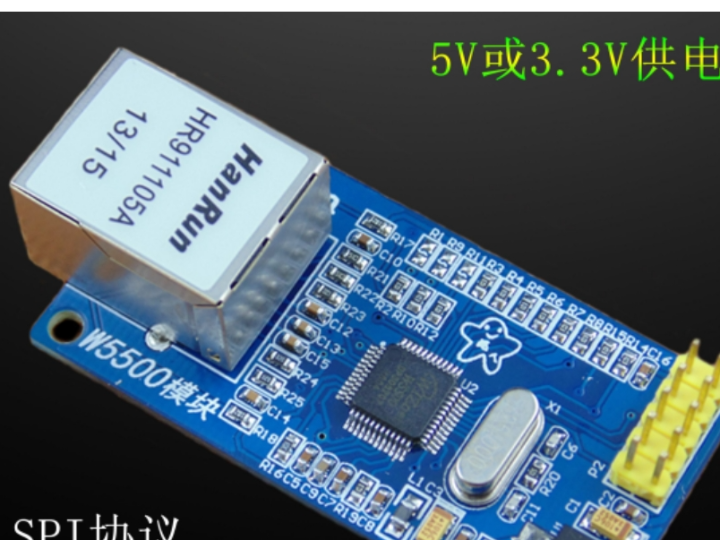
How to Configure W5500 on ESP32 with ESP-IDF for Commercial Ethernet Applications?
Summary
This project shows how to attach a WIZnet W5500 to an ESP32-S3 in ESP-IDF and bring it up as a standard Ethernet interface using Espressif’s esp_eth layer. The important architectural point is that W5500 provides the SPI Ethernet hardware, MAC/PHY, and packet buffering, while ESP-IDF handles the network stack integration through esp_netif and the TCP/IP stack above it. That makes the design relevant for commercial products that want wired connectivity on ESP32 without moving to a dedicated RMII PHY design.
What the Project Does
The source is an ESP32-IDF integration guide for W5500 on ESP32-S3, built around ESP-IDF v5.4 and Espressif’s official Ethernet framework. It explains W5500 basics, Ethernet framing concepts, MAC/PHY configuration, driver installation, and how to bind the Ethernet driver into the ESP32 networking path. The article is closer to a platform integration walkthrough than a finished end-product repository.
For a commercial reader, the useful part is the layering. The design uses W5500 as an SPI Ethernet module under esp_eth, then attaches that driver to esp_netif, registers IP events, and starts the Ethernet state machine. In other words, the application does not talk to W5500 registers directly for every protocol decision. It relies on Espressif’s Ethernet driver model to present a normal network interface to the rest of the system.
That distinction matters because the article discusses W5500’s hardwired TCP/IP capability, but the ESP-IDF driver path used here does not use W5500’s internal TCP/IP stack. Espressif’s own W5500 component explicitly states that the chip provides a complete hardwired TCP/IP stack, but that stack is “not used in the ESP driver.” In this architecture, W5500 is integrated as an Ethernet MAC/PHY device under ESP-IDF’s software network stack, not as a stand-alone hardware socket engine.
Where WIZnet Fits
The exact WIZnet product here is the W5500. Official WIZnet documentation describes it as a hardwired TCP/IP embedded Ethernet controller with integrated 10/100 MAC/PHY, 8 sockets, 32 KB internal buffer memory, and SPI support up to 80 MHz. Those device-level capabilities are real and remain relevant even when the host software stack does not expose the hardware socket model directly.
In this ESP32 design, W5500’s practical role is narrower and more specific. It is the external SPI Ethernet device that gives the ESP32-S3 wired network connectivity without using the ESP32’s RMII path. Espressif’s W5500 driver creates MAC and PHY driver instances with esp_eth_mac_new_w5500() and esp_eth_phy_new_w5500(), then installs them through esp_eth_driver_install(). That means W5500 is being used as a managed Ethernet interface inside the ESP-IDF networking architecture.
For commercial products, this is a sensible position in the system. It gives you wired Ethernet on boards where SPI is easier to route than RMII, while preserving the standard ESP-IDF integration path for DHCP, IP events, sockets, TLS-capable clients, and other application services running above esp_netif. The trade-off is equally important: you are not getting direct benefit from W5500’s native hardware TCP socket engine in this driver model.
Implementation Notes
The article includes real integration snippets that show how W5500 is instantiated under ESP-IDF. One key excerpt is the W5500 configuration and MAC/PHY creation flow:
w5500_config.int_gpio_num = spi_eth_module_config->int_gpio;
w5500_config.poll_period_ms = spi_eth_module_config->polling_ms;
esp_eth_mac_t *mac = esp_eth_mac_new_w5500(&w5500_config, &mac_config);
esp_eth_phy_t *phy = esp_eth_phy_new_w5500(&phy_config);
Source: article excerpt around the W5500 driver setup. This matters because it shows the exact architectural handoff: SPI configuration is wrapped into ETH_W5500_DEFAULT_CONFIG, then ESP-IDF creates W5500-specific MAC and PHY objects rather than exposing raw W5500 socket APIs to the application.
A second important excerpt is the Ethernet driver installation step:
esp_eth_handle_t eth_handle = NULL;
esp_eth_driver_install(&config, ð_handle);
Source: article excerpt around driver installation. This is the point where W5500 stops being just a peripheral configuration and becomes part of the ESP-IDF Ethernet subsystem. For commercial firmware, this is the right seam for maintainability: the low-level device stays behind esp_eth, and the rest of the application can work with a standard network interface model.
The third useful excerpt is the network-stack attachment path:
esp_netif_t *eth_netif = esp_netif_new(&cfg);
esp_netif_attach(eth_netif, esp_eth_new_netif_glue(eth_handle));
esp_event_handler_register(IP_EVENT, IP_EVENT_ETH_GOT_IP, &got_ip_event_handler, NULL);
esp_eth_start(eth_handle);
Source: article excerpt around stack binding. This is the clearest evidence for protocol handling in this project. The Ethernet device is attached to esp_netif, IP events are registered, and the ESP-IDF Ethernet state machine is started. That confirms the actual protocol architecture: W5500 handles the Ethernet-side device role, while the ESP-IDF network stack handles IP-layer integration and application-facing networking.
Practical Tips / Pitfalls
- Do not describe this ESP32 design as “using W5500 hardware TCP/IP sockets” without qualification. Espressif’s own W5500 driver says the chip’s hardwired TCP/IP stack is not used in the ESP driver.
- Treat
esp_eth,esp_netif, and the event loop as part of the product architecture, not boilerplate. They define how Ethernet becomes a usable interface for the rest of the firmware. - SPI is the main hardware integration boundary here. W5500 is attractive when SPI routing is simpler than adding an RMII PHY, especially on compact commercial ESP32 boards. This is an inference from the driver architecture and interface choice.
- Plan for receive-task sizing. Espressif’s W5500 component explicitly notes that you may need a larger
rx_task_stack_sizeto avoid overflow. - Decide early whether you will use the INT pin or polling mode. The ESP-IDF W5500 config supports both, and that choice affects responsiveness and CPU behavior.
- Commercial Ethernet products should validate link behavior, DHCP timing, and IP event handling under switch and router variations, because this integration relies on the host stack and driver state machine rather than direct hardware socket control. This is an engineering inference supported by the documented
esp_ethandesp_netifevent-driven flow.
FAQ
Q: Why use W5500 in this ESP32 project?
A: Because it gives ESP32-S3 a wired Ethernet path over SPI with an integrated MAC/PHY, while keeping the firmware inside the standard ESP-IDF Ethernet model. For commercial designs, that can be easier to integrate than a separate RMII PHY path on small boards.
Q: How does W5500 connect to the ESP32 platform?
A: It connects as an SPI Ethernet device. In this project, the driver is built from ETH_W5500_DEFAULT_CONFIG(...), then MAC and PHY instances are created with esp_eth_mac_new_w5500() and esp_eth_phy_new_w5500().
Q: What role does W5500 play in this specific project?
A: It is the Ethernet hardware endpoint underneath ESP-IDF’s esp_eth framework. It does not expose its native hardware TCP/IP socket engine directly in this design; instead, it serves as the wired interface that feeds the ESP32 software network stack.
Q: Can beginners follow this project?
A: Yes, but it is better suited to developers who already understand ESP-IDF components, event loops, and basic Ethernet concepts. This is more of a platform-integration guide than a beginner wiring tutorial.
Q: How does this compare with using Wi-Fi on ESP32 for a commercial product?
A: W5500 gives you a wired path with more predictable physical connectivity and standard Ethernet deployment patterns, while Wi-Fi simplifies cabling but adds RF dependence and wireless provisioning concerns. The source itself focuses on Ethernet integration, so this comparison is an engineering inference rather than a claim from the article.
Source
Original article: CSDN post “ESP32-IDF笔记 20 - 配置以太网网络(W5500),” first published on April 25, 2025, and updated on May 9, 2025. License follows the CSDN page terms shown on the article page.
Supporting references: WIZnet W5500 official documentation; Espressif W5500 component registry; Espressif esp-eth-drivers W5500 README.
Tags
#W5500 #ESP32 #ESP32S3 #ESP-IDF #Ethernet #SPI #esp_eth #CommercialIoT #ProtocolHandling #NetworkStack
ESP32에서 ESP-IDF와 함께 W5500을 사용해 상업용 Ethernet 애플리케이션을 어떻게 구성할 수 있을까?
Summary
이 프로젝트는 ESP32-S3에 WIZnet W5500을 연결하고, 이를 ESP-IDF의 표준 Ethernet 인터페이스로 bring-up하는 방법을 보여줍니다. 아키텍처 관점에서 핵심은 W5500이 SPI 기반 Ethernet 하드웨어, MAC/PHY, 패킷 버퍼링을 제공하고, 그 위에서 ESP-IDF가 esp_eth, esp_netif, TCP/IP 스택을 통해 네트워크 통합을 처리한다는 점입니다. 그래서 이 설계는 전용 RMII PHY 설계로 가지 않고도 ESP32에 유선 연결을 추가하려는 상업용 제품에 적합합니다.
What the Project Does
이 소스는 ESP32-S3와 W5500을 ESP-IDF v5.4 환경에서 통합하는 가이드이며, Espressif의 공식 Ethernet 프레임워크를 중심으로 설명합니다. 글은 W5500의 기본 개념, Ethernet frame 구조, MAC/PHY 설정, 드라이버 설치, 그리고 Ethernet 드라이버를 ESP32 네트워크 경로에 바인딩하는 절차를 다룹니다. 완성된 제품 저장소라기보다는 플랫폼 통합 워크스루에 가깝습니다.
상업용 관점에서 유용한 부분은 계층 구조가 명확하다는 점입니다. 이 설계는 W5500을 SPI Ethernet 장치로 esp_eth 아래에 두고, 그 드라이버를 esp_netif에 연결한 뒤, IP 이벤트를 등록하고 Ethernet 상태 머신을 시작합니다. 즉 애플리케이션이 모든 프로토콜 결정을 위해 W5500 레지스터를 직접 다루는 구조가 아니라, Espressif의 Ethernet 드라이버 모델을 통해 시스템 전체에 “정상적인 네트워크 인터페이스”를 제공하는 방식입니다.
이 구분은 중요합니다. 글에서는 W5500의 hardwired TCP/IP capability를 언급하지만, 여기서 사용되는 ESP-IDF 드라이버 경로는 W5500 내부 TCP/IP stack을 직접 사용하지 않습니다. Espressif의 W5500 컴포넌트도 W5500이 complete hardwired TCP/IP stack을 갖고 있지만, 그 stack은 “ESP driver에서는 사용되지 않는다”고 설명합니다. 즉 이 구조에서 W5500은 독립형 하드웨어 socket engine이 아니라, ESP-IDF 소프트웨어 네트워크 스택 아래에 매달린 Ethernet MAC/PHY 장치로 통합됩니다.
Where WIZnet Fits
이 프로젝트에서 사용된 정확한 WIZnet 제품은 W5500입니다. WIZnet 공식 문서에 따르면 W5500은 hardwired TCP/IP embedded Ethernet controller이며, 통합 10/100 MAC/PHY, 8개의 소켓, 32 KB 내부 버퍼 메모리, 최대 80 MHz SPI를 제공합니다. 이 칩 차원의 특성은 실제이며, 호스트 소프트웨어가 하드웨어 socket 모델을 직접 노출하지 않더라도 여전히 의미가 있습니다.
다만 이 ESP32 설계에서 W5500의 실제 역할은 더 좁고 구체적입니다. W5500은 ESP32-S3에 유선 네트워크를 제공하는 외부 SPI Ethernet 장치입니다. Espressif의 W5500 드라이버는 esp_eth_mac_new_w5500()과 esp_eth_phy_new_w5500()으로 MAC/PHY 드라이버 인스턴스를 만들고, 이를 esp_eth_driver_install()로 설치합니다. 즉 W5500은 ESP-IDF 네트워킹 아키텍처 안에서 관리되는 Ethernet 인터페이스로 사용됩니다.
상업용 제품에서는 이 위치가 합리적입니다. SPI 배선이 RMII보다 쉬운 보드에서 유선 Ethernet을 제공할 수 있고, 동시에 DHCP, IP 이벤트, 소켓, TLS 기반 클라이언트 등 esp_netif 위의 표준 ESP-IDF 네트워크 경로를 그대로 활용할 수 있습니다. 반대로 트레이드오프도 분명합니다. 이 드라이버 모델에서는 W5500의 native hardware TCP socket engine을 직접 활용하는 이점은 얻지 못합니다.
Implementation Notes
이 글에는 W5500이 ESP-IDF 아래에서 어떻게 인스턴스화되는지를 보여주는 실제 통합 코드가 포함되어 있습니다. 핵심 부분 중 하나는 W5500 설정과 MAC/PHY 생성 흐름입니다.
w5500_config.int_gpio_num = spi_eth_module_config->int_gpio;
w5500_config.poll_period_ms = spi_eth_module_config->polling_ms;
esp_eth_mac_t *mac = esp_eth_mac_new_w5500(&w5500_config, &mac_config);
esp_eth_phy_t *phy = esp_eth_phy_new_w5500(&phy_config);
이 부분이 중요한 이유는 아키텍처 상의 handoff를 정확히 보여주기 때문입니다. SPI 설정은 ETH_W5500_DEFAULT_CONFIG로 감싸지고, 이후 ESP-IDF는 raw W5500 socket API를 애플리케이션에 노출하는 대신 W5500 전용 MAC/PHY 객체를 생성합니다.
두 번째 중요한 부분은 Ethernet 드라이버 설치 단계입니다.
esp_eth_handle_t eth_handle = NULL;
esp_eth_driver_install(&config, ð_handle);
이 지점에서 W5500은 단순한 주변장치 설정을 넘어 ESP-IDF Ethernet 서브시스템의 일부가 됩니다. 상업용 펌웨어에서 이 경계는 유지보수성 측면에서 적절합니다. 저수준 장치는 esp_eth 뒤에 숨기고, 나머지 애플리케이션은 표준 네트워크 인터페이스 모델과 상호작용하면 되기 때문입니다.
세 번째로 유용한 부분은 네트워크 스택 부착 경로입니다.
esp_netif_t *eth_netif = esp_netif_new(&cfg);
esp_netif_attach(eth_netif, esp_eth_new_netif_glue(eth_handle));
esp_event_handler_register(IP_EVENT, IP_EVENT_ETH_GOT_IP, &got_ip_event_handler, NULL);
esp_eth_start(eth_handle);
이 부분은 이 프로젝트의 프로토콜 처리 구조를 가장 명확히 보여줍니다. Ethernet 장치를 esp_netif에 붙이고, IP 이벤트를 등록하고, ESP-IDF Ethernet 상태 머신을 시작합니다. 즉 실제 프로토콜 아키텍처는 W5500이 Ethernet 측 장치 역할을 하고, ESP-IDF 네트워크 스택이 IP 계층 통합과 애플리케이션 측 네트워킹을 담당하는 구조입니다.
Practical Tips / Pitfalls
- 이 ESP32 설계를 “W5500 hardware TCP/IP sockets를 그대로 사용한다”라고 단정해서 설명하면 안 됩니다. Espressif의 W5500 드라이버는 W5500의 hardwired TCP/IP stack이 ESP driver에서는 사용되지 않는다고 명시합니다.
esp_eth,esp_netif, 이벤트 루프는 단순한 boilerplate가 아니라 제품 아키텍처의 일부로 봐야 합니다. 이 계층들이 Ethernet을 실제 애플리케이션에서 사용할 수 있는 인터페이스로 바꿉니다.- 여기서 하드웨어 통합의 핵심 경계는 SPI입니다. 특히 소형 상업용 ESP32 보드에서 RMII PHY 추가보다 SPI 배선이 쉬운 경우 W5500이 매력적입니다.
- 수신 태스크 크기를 미리 고려해야 합니다. Espressif의 W5500 컴포넌트는
rx_task_stack_size를 늘려야 stack overflow를 피할 수 있다고 밝힙니다. - INT 핀을 사용할지 polling mode를 사용할지 초기에 결정하는 편이 좋습니다. ESP-IDF W5500 설정은 둘 다 지원하며, 이 선택은 응답성과 CPU 동작에 영향을 줍니다.
- 상업용 Ethernet 제품이라면 링크 동작, DHCP 타이밍, IP 이벤트 처리를 스위치와 라우터 환경별로 검증해야 합니다. 이 통합 구조는 direct hardware socket control이 아니라 host stack과 driver state machine에 의존하기 때문입니다.
FAQ
Q: 이 ESP32 프로젝트에서 왜 W5500을 사용하나요?
A: W5500은 통합 MAC/PHY를 포함한 SPI 기반 유선 Ethernet 경로를 ESP32-S3에 제공하면서도, 펌웨어는 표준 ESP-IDF Ethernet 모델 안에 머물게 해주기 때문입니다. 소형 보드의 상업용 설계에서는 별도 RMII PHY 경로보다 통합이 쉬울 수 있습니다.
Q: W5500은 ESP32 플랫폼에 어떻게 연결되나요?
A: SPI Ethernet 장치로 연결됩니다. 이 프로젝트에서는 ETH_W5500_DEFAULT_CONFIG(...)로 기본 설정을 만들고, esp_eth_mac_new_w5500()와 esp_eth_phy_new_w5500()로 MAC/PHY 인스턴스를 생성합니다.
Q: 이 프로젝트에서 W5500은 구체적으로 어떤 역할을 하나요?
A: W5500은 ESP-IDF esp_eth 프레임워크 아래에 놓이는 Ethernet 하드웨어 endpoint입니다. 이 설계에서는 W5500의 native hardware TCP/IP socket engine을 직접 노출하지 않고, ESP32 소프트웨어 네트워크 스택에 유선 인터페이스를 공급하는 역할을 합니다.
Q: 초보자도 따라갈 수 있나요?
A: 가능합니다. 다만 ESP-IDF 컴포넌트 구조, 이벤트 루프, 기본 Ethernet 개념을 이미 이해하고 있는 개발자에게 더 적합합니다. 초보용 배선 튜토리얼보다는 플랫폼 통합 가이드에 가깝습니다.
Q: 상업용 제품에서 Wi-Fi 대신 이것과 비교하면 어떤 차이가 있나요?
A: W5500은 더 예측 가능한 물리적 연결과 표준 Ethernet 배치 방식을 제공합니다. 반면 Wi-Fi는 배선이 단순하지만 RF 환경과 무선 프로비저닝 문제를 동반합니다. 원문은 Ethernet 통합 자체에 초점을 맞추므로, 이 비교는 기사 직접 진술이라기보다 공학적 해석에 가깝습니다.
Source
Original article: CSDN post “ESP32-IDF笔记 20 - 配置以太网网络(W5500),” first published on April 25, 2025, and updated on May 9, 2025.
License: article page terms on CSDN.
Supporting references: WIZnet W5500 official documentation; Espressif W5500 component registry; Espressif esp-eth-drivers W5500 README.
Tags
#W5500 #ESP32 #ESP32S3 #ESP-IDF #Ethernet #SPI #esp_eth #CommercialIoT #ProtocolHandling #NetworkStack