



Jastec's uvim-S
Jastec's uvim-S is a vehicle OBD communication module that sits between a vehicle ECU and a PC, carrying diagnostic data over USB, Wi-Fi, or Bluetooth.
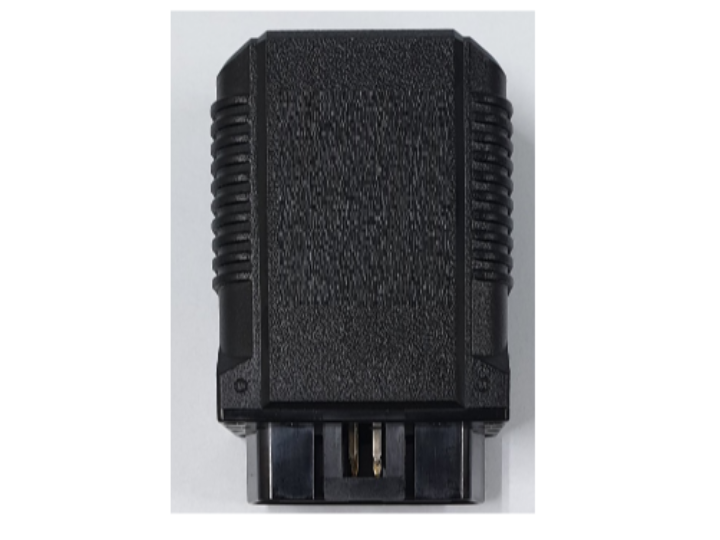
How Does uvim-S Bridge Vehicle ECUs to a PC, and Where Does WizFi360 Fit?
Jastec's uvim-S is a vehicle OBD communication module that sits between a vehicle ECU and a PC, carrying diagnostic data over USB, Wi-Fi, or Bluetooth. Its FCC labeling identifies WIZnet's FCC ID 2ATUB-WIZFI360PA as a contained radio module, while WIZnet's corresponding certification records identify the implemented model as WizFi360-CON.
The interesting point for a WIZnet reader is not simply that a Wi-Fi module appears inside another embedded product. The FCC record ties the end product and the WIZnet module together unusually clearly: Jastec's product label names the contained WIZnet FCC ID, while WIZnet's 2025 Class II Permissive Change adds an external antenna to WizFi360-CON and includes an antenna specification explicitly associated with JAS-U3-2024.
Components
WIZnet WizFi360-CON × 1 — 2.4 GHz Wi-Fi connectivity. The uvim-S label states Contains FCC ID: 2ATUB-WIZFI360PA. The FCC record for that contained ID identifies the device as WIZnet WizFi360, model WizFi360-CON, operating from 2412 to 2462 MHz. The 2025 certification update adds a Taoglas FXP70.07.0053A flexible PCB antenna with a stated peak gain of 3.734 dBi.
STM32F405RGT6 — main processor. Jastec's user manual identifies an STM32F405RGT6 as the CPU and separately states a CPU operating frequency of up to 168 MHz. The public documentation does not state how this processor electrically communicates with WizFi360-CON.
The same product also provides USB 2.0 and Bluetooth connectivity, along with vehicle interfaces for CAN, K-Line, L-Line and RS-232.
A Vehicle Diagnostic Interface Between Two Very Different Networks
Jastec defines uvim-S as a Vehicle OBD (On-board Diagnostic) Communication Module. Its user manual describes the role directly:
“It is a device that transmits vehicle information to an interface terminal via wired (USB) or wireless (WiFi, Bluetooth) connections.”
The following sentence explains that uvim-S converts and transfers data so that the vehicle ECU and interface terminal can communicate.
That makes the system boundary fairly clear.
On one side are the vehicle networks. The manual lists CAN 2.0B, including two High-Speed CAN interfaces and one Single-Wire CAN interface, together with K-Line, L-Line and RS-232. It also states that J1939 data acquisition is possible and names ISO 14230/KWP-2000 and ISO 9141-2 under K-Line support.
On the other side is the diagnostic computer. The PC can connect through USB, Wi-Fi or Bluetooth. Jastec's communication block diagram depicts the architecture simply as vehicle ↔ uvim-S ↔ PC, with the PC side described as wired or wireless.
The WIZnet part belongs on that PC-facing wireless side.
One Piece of OBD Context
Readers who have not worked with vehicle diagnostics need one piece of context. The diagnostic computer generally does not connect directly to every ECU protocol electrically. An interface device sits between the PC application and the vehicle network, translating the PC application's requests into the vehicle-side communication mechanism and returning ECU responses.
Jastec's own sequence diagram shows exactly that pattern. The PC application first sends a uvim-S setting request. The module then sends a vehicle-data request to the ECU over CAN or K-Line, receives the ECU response and returns vehicle data to the PC side.
The manual demonstrates that sequence using USB, but it separately states that the PC connection can also be made wirelessly through Wi-Fi or Bluetooth.
That distinction is important: the public source shows what uvim-S does at the system level, but it does not publish enough information to reconstruct the internal data path between the STM32F405 and WizFi360-CON.
Wired and Wireless Are Alternative Host Paths
The manual documents two basic connection modes.
In wire mode, a USB cable connects uvim-S to a laptop, and the product appears in Windows through a Jastec Virtual COM Port after the appropriate driver is installed. In wireless mode, the manual tells the user to connect the laptop through Wi-Fi or Bluetooth instead.
Jastec also provides separate status LEDs for Power, OBD, Host and Wireless. The Host LED flashes during USB or Wi-Fi/Bluetooth communication, while the wireless indicator flashes at one-second intervals when disconnected and remains lit when a wireless connection is established.
This is therefore not a Wi-Fi-only diagnostic adapter. WizFi360 forms one host-side connection option within a product that also supports USB and Bluetooth.
The manual even encodes that distinction into the serial-number scheme: wireless option 1 indicates WiFi + Bluetooth, while option 2 indicates Only Wire.
The Vehicle Side Is More Than a Generic OBD Connector
The physical connector visible in FCC photographs gives uvim-S the form factor of a vehicle diagnostic interface, but the important details are in the protocol list. Jastec documents CAN 2.0B, J1939 data acquisition, K-Line using ISO 14230 and ISO 9141-2, L-Line and RS-232.
Power can come from the vehicle at 12–24 V or from USB at 5 V. The enclosure is specified as 71 × 47 × 25 mm, made from plastic and rubber, with an operating environment of -10 °C to 60 °C and humidity below 90%.
FCC external photographs show the compact black enclosure and its vehicle-side connector, while the internal photographs show the main PCB and a cabled flexible antenna.
Those photographs document the physical construction but do not by themselves identify every component on the PCB. The WIZnet module identity comes from the regulatory records, not from visual interpretation of the photographs.
The FCC Record Separates Bluetooth from WizFi360 Wi-Fi
There is an unusually useful regulatory distinction in this filing.
FCC ID UK4JTJAS-U3-2024 is Jastec's authorization for uvim-S. The radio test report for that FCC ID is explicitly a Bluetooth test, covering 2402–2480 MHz. It documents Normal, EDR and AFH operation, GFSK/π/4DQPSK/8DPSK modulation and 79 channels. The maximum RF output power listed in that report is 3.749 dBm, or 2.37 mW.
The product's Wi-Fi, however, points to another FCC authorization.
The physical label says:
Contains FCC ID: 2ATUB-WIZFI360PA.
That FCC ID belongs to WIZnet H.K. LTD., whose certification record names the device WizFi360 and the current model WizFi360-CON. It is a single modular approval operating at 2412–2462 MHz.
So the safest regulatory reading is:
uvim-S's own FCC filing covers its Bluetooth radio, while its Wi-Fi function incorporates a separately FCC-authorized WIZnet module.
That is more precise than saying simply that “uvim-S is FCC-certified with WizFi360.”
The Antenna Change Connects the Two FCC Records
This is perhaps the strongest evidence that WizFi360-CON is not merely a generic FCC identifier copied onto the product label.
WIZnet filed a Class II Permissive Change for FCC ID 2ATUB-WIZFI360PA in 2025. The FCC exhibit list includes a document titled “2ATUB-WIZFI360PA_Antenna Specification(JAS-U3-2024)”, directly naming Jastec's product number.
WIZnet's accompanying letter states that it requested the change “for the antenna change in WizFi360-CON.” The added antenna is documented as:
Flexible PCB antenna — Taoglas FXP70.07.0053A — 3.734 dBi peak gain.
That same antenna specification appears in the WizFi360-CON C2PC test report. The tested module operates at 3.3 V and supports 802.11b/g/n, with 20 MHz modes from 2412–2462 MHz and HT40 from 2422–2452 MHz.
This creates a traceable regulatory chain:
JAS-U3-2024 / uvim-S → Contains FCC ID 2ATUB-WIZFI360PA → WizFi360-CON → antenna change specifically associated with JAS-U3-2024.
That is unusually strong evidence for a WIZnet component adoption case.
A Worked Example from the Certification Data
The WIZnet C2PC report provides measured values rather than only marketing specifications.
For the tested WizFi360-CON configuration with the 3.734 dBi FPCB antenna, the report gives maximum peak conducted RF output powers of 6.21 dBm for 802.11b, 15.25 dBm for 802.11g, 14.95 dBm for 802.11n HT20 and 13.65 dBm for HT40. The corresponding average values are 2.98, 7.58, 7.24 and 5.93 dBm.
These numbers should not be presented as uvim-S Wi-Fi range or application throughput. They are FCC laboratory RF measurements for the WizFi360-CON certification configuration.
Similarly, the Bluetooth test for uvim-S measured a maximum RF output of 3.749 dBm. That number belongs to the separate Bluetooth transmitter and should not be attributed to WizFi360.
Keeping those two datasets separate is essential to understanding this certification.
Where the WizFi360 Fits
The public evidence supports a narrow but useful conclusion:
WizFi360-CON provides the 2.4 GHz Wi-Fi function used by uvim-S to establish a wireless connection between the vehicle diagnostic interface and a PC.
Jastec's manual documents Wi-Fi as one of the PC interfaces and identifies 802.11 b/g/n with 20/40 MHz operation from 2412 to 2462 MHz. The product label points to the WIZnet FCC ID, and WIZnet's own FCC filing identifies the associated device as WizFi360-CON.
What the sources do not show is the electrical interface between STM32F405RGT6 and WizFi360-CON, the AT commands or firmware configuration used by Jastec, the TCP/UDP socket architecture, whether the diagnostic application uses a specific application protocol over Wi-Fi, or measured end-to-end vehicle-data throughput.
Those details should therefore not be added to the article without another source.
What Is Published and What Is Not
The public FCC material is unusually complete at the product-behavior level. It provides a 15-page user manual, external and internal photographs, product-label information, Bluetooth test reports, RF-exposure material, antenna specifications and EMC documentation. The user manual documents the CPU, physical dimensions, power sources, host interfaces, vehicle protocols and basic operating sequence.
But several engineering documents remain metadata-only on FCC ID's public index: the detailed block diagram, circuit schematic, PCB layout, operating description and parts list.
That means an engineer can establish that WizFi360-CON is incorporated into the certified product and understand its external role, but cannot reconstruct the complete uvim-S hardware architecture from the currently public filing.
For a WIZnet reader, the useful thread is the use of a pre-certified Wi-Fi module inside a commercial vehicle-diagnostic interface, with the end-product FCC filing and WIZnet's own module C2PC record providing independent, cross-linked evidence of the integration.
It is a stronger product-adoption example than a component photo alone because the certification history documents not only the module identity but also an antenna change made for the JAS-U3-2024 integration.
Related Reading
A useful module-level companion is Getting Started with WizFi360-EVB-Pico, which covers the WizFi360 family and its 2.4 GHz 802.11 b/g/n capabilities from a development-board perspective. It should be read as background on the WIZnet module, not as documentation of Jastec's implementation.
F256-WizFi360 provides another example of an external processor using WizFi360 as its network interface. Unlike uvim-S, that project publishes the host-side code and explicitly documents UART/AT-command operation, making it useful for understanding a pattern that the Jastec FCC filing itself does not expose.
FAQ
What is uvim-S?
It is Jastec's vehicle OBD communication module, model JAS-U3-2024. It connects vehicle ECUs to a PC through USB, Wi-Fi or Bluetooth and supports CAN, K-Line and other documented vehicle interfaces.
Is WizFi360 really used inside uvim-S?
Yes. The certified product label explicitly states “Contains FCC ID: 2ATUB-WIZFI360PA.” The FCC record for that identifier belongs to WIZnet H.K. LTD. and identifies the current module as WizFi360-CON.
Why does the product have two FCC IDs?
The Jastec end-product FCC ID covers uvim-S itself and includes its Bluetooth certification. The label separately declares the FCC ID of the contained WIZnet Wi-Fi module.
Is the WizFi360-CON antenna documented?
Yes. WIZnet's 2025 C2PC filing identifies an additional Taoglas FXP70.07.0053A flexible PCB antenna with 3.734 dBi peak gain. An FCC exhibit for the same module explicitly references JAS-U3-2024.
Does WizFi360 perform CAN or OBD protocol processing?
The public sources do not say that. Jastec documents the product as supporting CAN, K-Line and other vehicle interfaces while documenting WizFi360 through the contained Wi-Fi FCC authorization. The internal division of software responsibilities is not published.
Is the STM32-to-WizFi360 interface available?
Not in the public material used here. The CPU is identified as STM32F405RGT6, but the circuit diagram and detailed internal architecture remain unavailable as public exhibits.
Documents
Jastec uvim-S — FCC ID UK4JTJAS-U3-2024 — End-product FCC record containing the grants, manual, photographs, label and test-document index.
uvim-S User Manual — Product definition, STM32 processor, USB/Wi-Fi/Bluetooth interfaces, CAN/K-Line support, dimensions, power and usage sequence.
uvim-S FCC Label — Explicitly identifies Contains FCC ID: 2ATUB-WIZFI360PA.
uvim-S Bluetooth FCC Test Report — Bluetooth radio configuration and measured RF results for the end product.
WIZnet FCC ID 2ATUB-WIZFI360PA — Separate modular FCC authorization for WizFi360, including the 2025 JAS-U3-2024-related antenna update.
WizFi360-CON Class II Permissive Change Letter — Documents the additional Taoglas FXP70.07.0053A flexible PCB antenna and 3.734 dBi peak gain.
WizFi360-CON FCC C2PC Test Report — 802.11b/g/n operating bands, measured RF power and antenna configuration for WizFi360-CON.