



Introducing the STM32H5 + W6300 High-Speed Ethernet Board(Including Ref.)
A high-speed STM32H562 + W6300 QSPI reference board featuring 1MB Flash, 640KB RAM, RTC support, and hardware TCP/IP for fast, secure Ethernet applications.
WIZnet - W6300
x 1
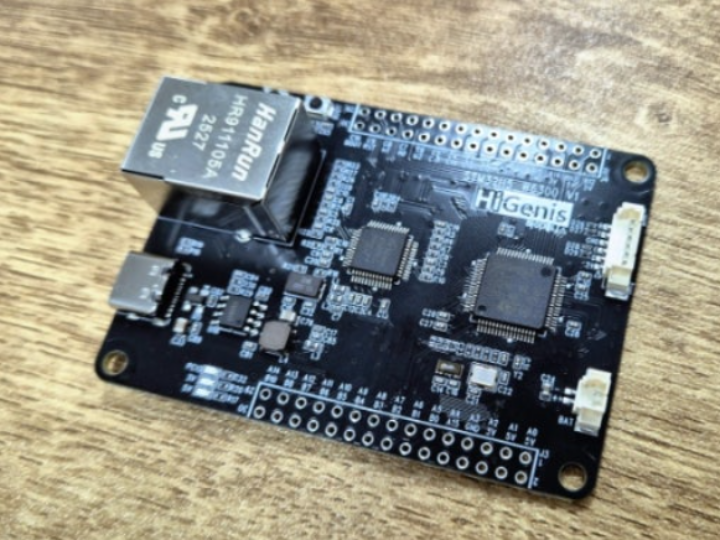
Hi genius recently unveiled their STM32H562RG + W6300 development board, a unique project combining hardware personally designed by the company’s CEO and software bring-up performed by the well-known maker BARAM - BARAM's Verification Posting.
What makes this board truly valuable is that it finally provides a real, working reference design showing the W6300 connected to the STM32H5 via QSPI—a concrete implementation that many makers and engineers have long been looking for.
This curated post includes:
- Verified source code,
- Prototype hardware reference,
- A summary of all bring-up findings and key issues,
allowing you to skip hours of searching and instead start immediately with a compact, practical one-page reference.
1. MCU: STM32H562RG Core Specifications
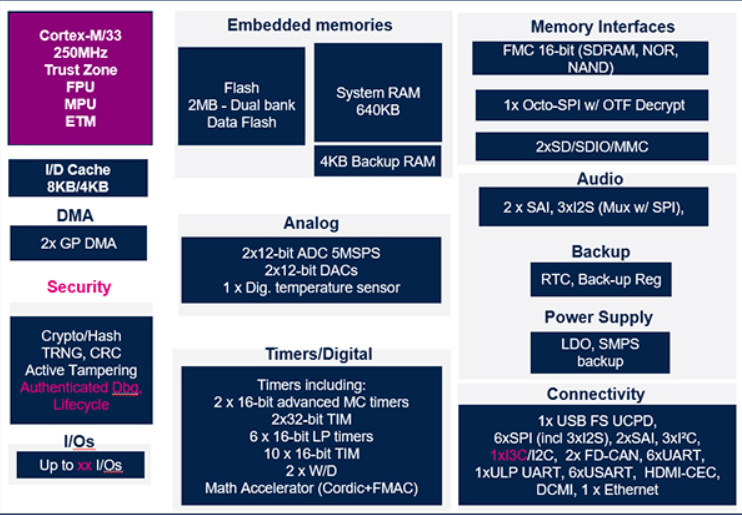
The board features the STM32H562RGT6, a flagship chip from the STM32H5 family designed for secure, high-performance embedded applications.
✅ Key Features
| Specification | Details |
|---|---|
| Flash Memory | 1MB |
| SRAM | 640KB — ideal for buffering images or network packets |
| Core | 250MHz Arm Cortex-M33 with TrustZone |
| Interfaces | QSPI, USB, CAN, ADC/DAC, FMC, and more |
| Real-Time Clock | Built-in RTC with dedicated 32.768kHz crystal |
| Backup Power | VBAT connector for RTC battery backup |
The generous SRAM capacity and high-speed QSPI interface make this MCU an excellent match for demanding networking applications with the W6300.
2. Ethernet Engine: W6300 (QSPI Mode)
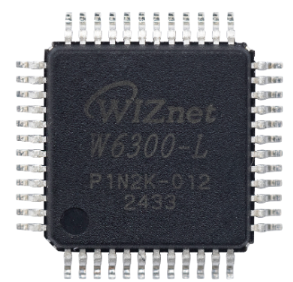
The W6300 serves as the main communication chip on this board, connected via High-Speed QSPI for rapid data transfer between the MCU and Ethernet engine.
✅ Standout Features
- Hardware TCP/IP Stack: TCP, UDP, IPv4/IPv6, ICMPv6, IGMP, ARP, PPPoE
- Eight Independent Sockets: Each with 64KB memory allocation
- QSPI Host Interface: Supports Mode 0/3
- Internal Buffer: 32KB TX/RX buffer
- Integrated PHY: 10/100M Ethernet PHY built-in
- Dual-Stack Support: IPv4/IPv6 compatible
- Power Management: Wake-on-LAN, power-down modes
- Voltage Flexibility: 3V operation with 5V I/O tolerance
This architecture allows the MCU to focus on application logic while the W6300 handles all networking tasks—an optimal division of labor for performance.
3. STM32H5-W6300 Prototype Board Overview
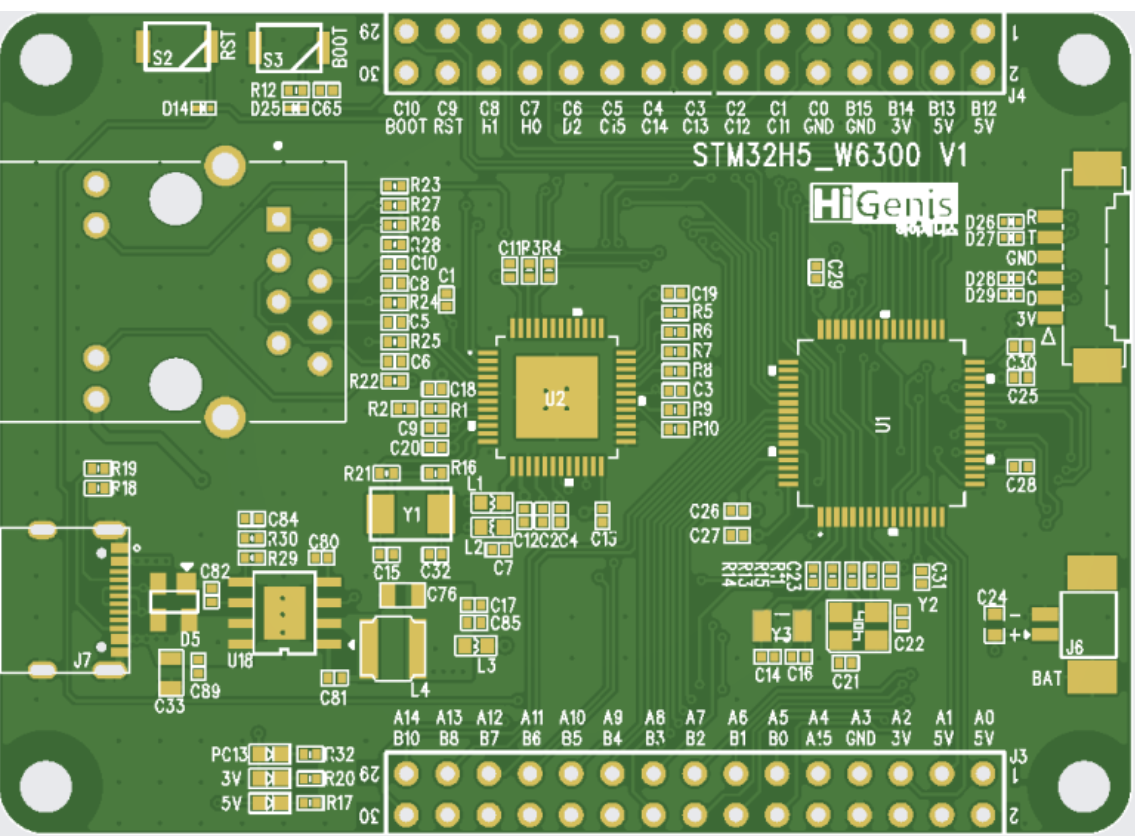
STM32H5 + W6300 HW REF(schematic)
🧩 Board Summary
This prototype board combines the STM32H563 MCU with the WIZnet W6300 Ethernet controller, designed for applications that require high-performance networking, security, and real-time processing.
MCU: STM32H563 (Cortex-M33, TrustZone, 640KB SRAM)
Ethernet: W6300 (Hardware TCP/IP, 32KB Packet Memory, QSPI Interface)
Clock: HSE 8MHz, W6300 requires 25MHz Crystal
Interfaces: SWD, USART1, QSPI, GPIO, etc.
This architecture delivers a balanced and practical platform that supports secure, high-throughput embedded networking—ideal for fast prototyping and product development.
📌 Prototype Notes
Key issues discovered during early bring-up of the prototype board:
MCU Change: STM32H563RGT → STM32H563RIT (pin-compatible, partially FW incompatible)
USART1 RX/TX Swapped: Incorrect routing → can be fixed through firmware pin-swap feature
HSE Clock Mismatch: Schematic shows 25MHz, but actual board uses 8MHz → firmware adjustment required
LSE Initialization Failure: Likely due to missing or different component
W6300 Crystal Issue: 12MHz mounted instead of 25MHz → replaced with correct 25MHz crystal
These issues are typical for early prototype hardware and may be corrected in a production version.
🔍 Why STM32H5 + W6300 Is a Powerful Combination
🚀 1) High-Speed Data Transfers via QSPI
The STM32H5's QSPI interface enables burst-mode and DMA-driven transfers to the W6300, supporting:
- Real-time streaming applications
- Low-latency control systems
- Continuous high-throughput networking
💾 2) Large MCU SRAM + Dedicated W6300 Packet Memory
640KB MCU RAM + 32KB Ethernet buffer makes this platform suitable for:
- Camera streaming
- Sensor fusion applications
- Edge computing tasks
- Packet-intensive applications
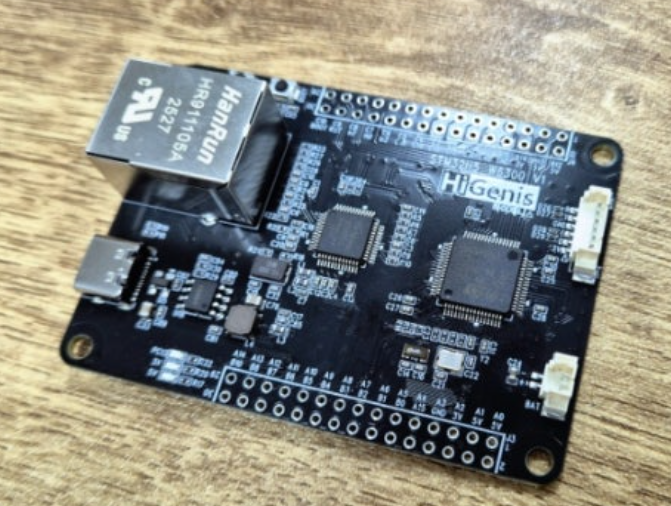
4. Board Hardware Architecture & Pin Configuration
Github Source Code
📌 QSPI Connections (MCU → W6300)
| Signal | MCU Pin |
|---|---|
| QSPI_CLK | PA2 |
| QSPI_CS | PB10 |
| QSPI_D0 | PB8 |
| QSPI_D1 | PB9 |
| QSPI_D2 | PC2 |
| QSPI_D3 | PC3 |
This full 4-line QSPI interface enables maximum bandwidth between devices.
🎛️ Control Pins
- W6300_RST: PC0 (Reset)
- W6300_INT: PC1 (Interrupt)
⏰ Clocking System
- 32.768kHz crystal: RTC operation (PC14, PC15)
- 25MHz crystal: W6300 Ethernet PHY
🔋 VBAT System
- External battery connector for RTC backup
- Ideal for low-power or timestamp-critical applications
🔌 Expansion Capability
The board exposes most remaining STM32H5 pins, providing flexibility for various maker projects and custom extensions.
Conclusion
This development board offers more than just a product—it's a ready-to-use reference design that bridges the gap between datasheets and real-world implementation. Whether you're building industrial IoT devices, networked sensors, or high-performance embedded systems, this STM32H562 + W6300 combination provides a solid foundation with proven hardware and community-backed software support.