



Calculating Battery Life Using the µA-Level Current Measurement Tool NRF-PPK2
Calculating Battery Life Using the µA-Level Current Measurement Tool NRF-PPK2
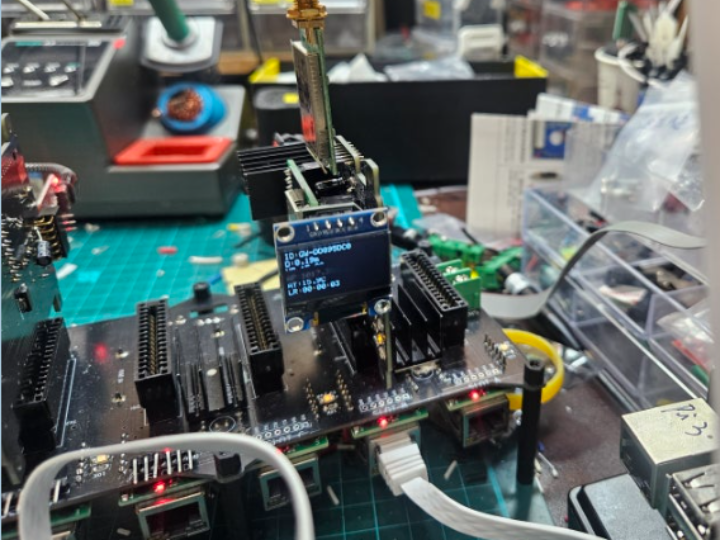
Battery Life Calculator: Precision IoT System Design with NRF-PPK2
Project Overview: Why Precision Current Measurement Matters
For IoT sensor systems deployed in the field, especially in hard-to-reach environments like underwater pressure sensors, the critical question is: "How long will the battery last?" Traditional rule-of-thumb calculations fall short because:
- Actual current consumption ≠ Datasheet specifications
- Sleep mode leakage currents are overlooked
- Wake-up peak currents are missed
NRF-PPK2 (Power Profiler Kit 2) is Nordic Semiconductor's current measurement tool that measures from nA (nano-ampere) to over 1A in real-time and automatically calculates charge consumption (mC).
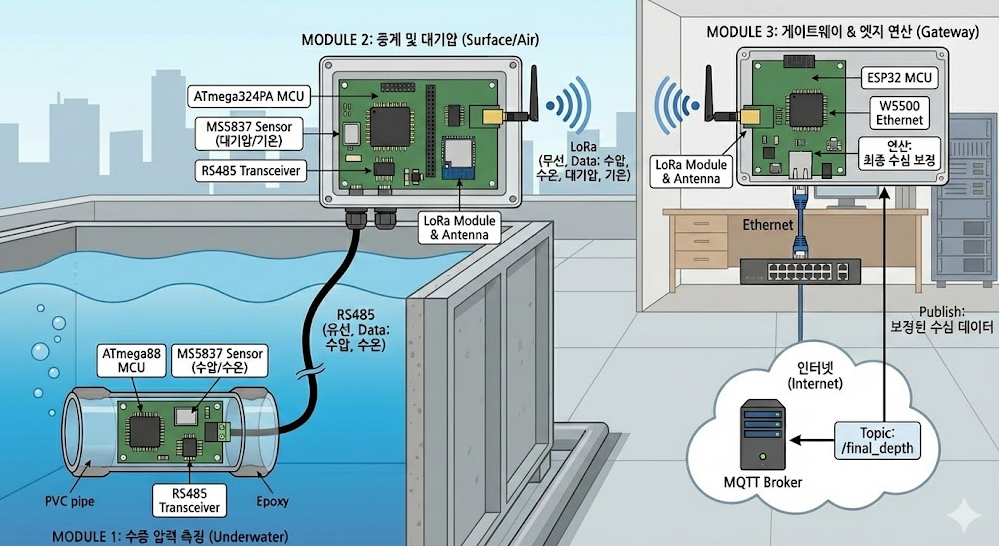
System Architecture: Underwater Pressure Sensor + LoRa + MQTT Gateway
Overall System Design
[Underwater Environment]
    │
    ▼
────────────┐
│  Underwater Module       │
│  ──────────  │
│  • ATmega328P (→88)    │
│  • MS5837 Pressure         │
│  • RS485 TX                       │
│  • Battery: 3xAA                │
└────┬──────┘
            │ RS485
            ▼
┌──────────┐
│  LoRa TX Module          │
│  ────────     │
│  • ATmega324PA         │
│  • MS5837 (Barometer)│
│  • LoRa 930MHz, 10mW │
│  • TPL5110 Timer          │
│  • Battery: 12xAA          │
└────┬──────┘
            │ LoRa (Wireless)
            ▼
┌────────────┐
│  Control Room Gateway    │
│  ──────────     │
│  • ESP32 (ESP-NOW)         │
│  • W5500 (Ethernet)           │
│  • LoRa RX                           │
│  • MQTT Broker Link          │
└────────────┘
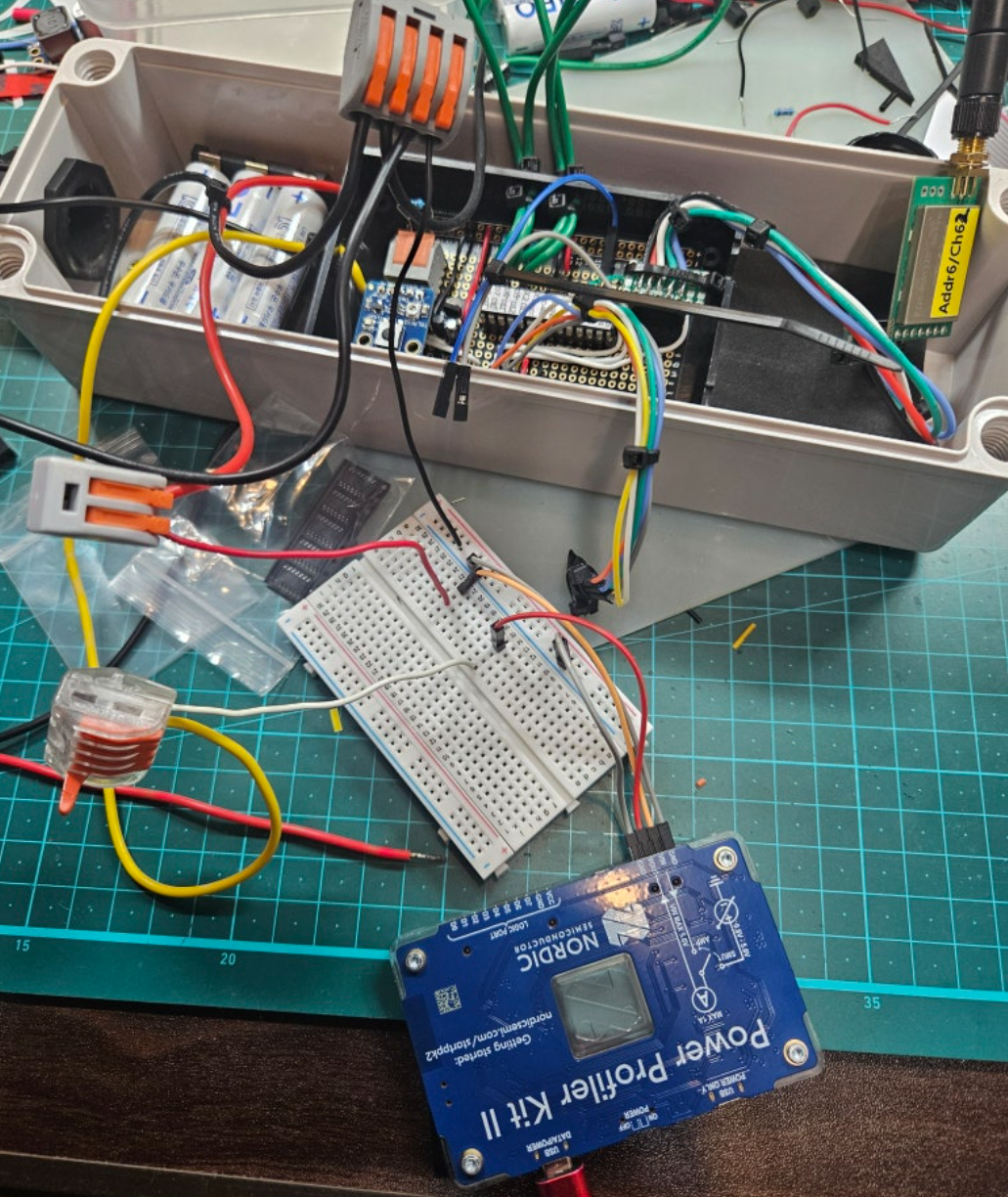
Operation Cycle:
- TPL5110 timer wakes system every 6min 15sec (standby: tens of nA)
- LoRa module powers on underwater module
- Underwater module measures pressure/temp → RS485 transmission
- LoRa module measures barometric pressure + integrates data → LoRa TX
- Immediately enters sleep mode
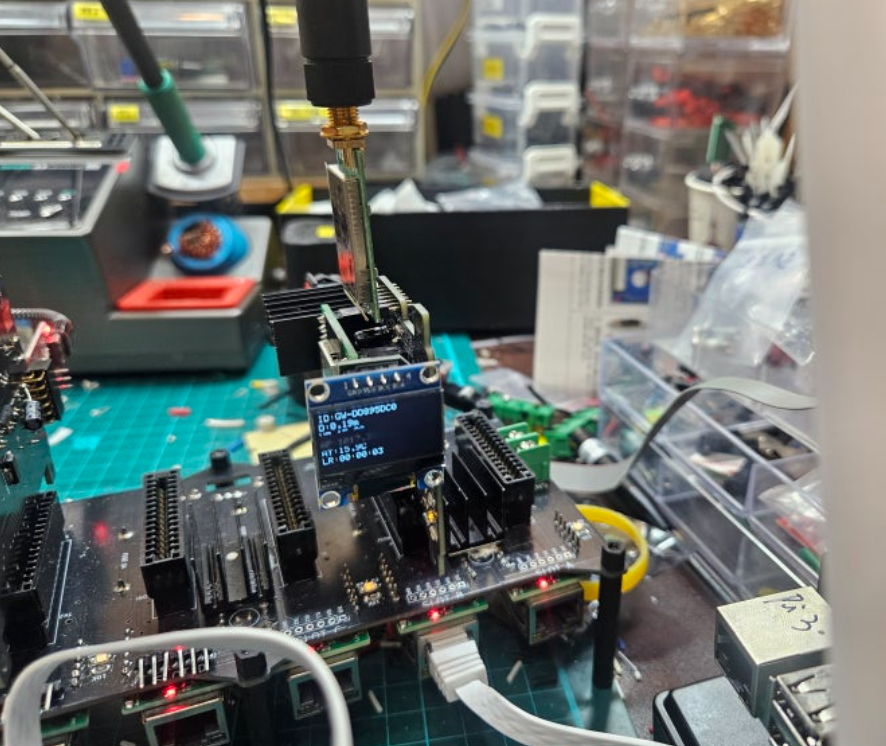
ESP32 + W5500 MQTT Gateway Board
The developer designed a custom slot card expansion board for stable IoT gateway operation.
Hardware Configuration
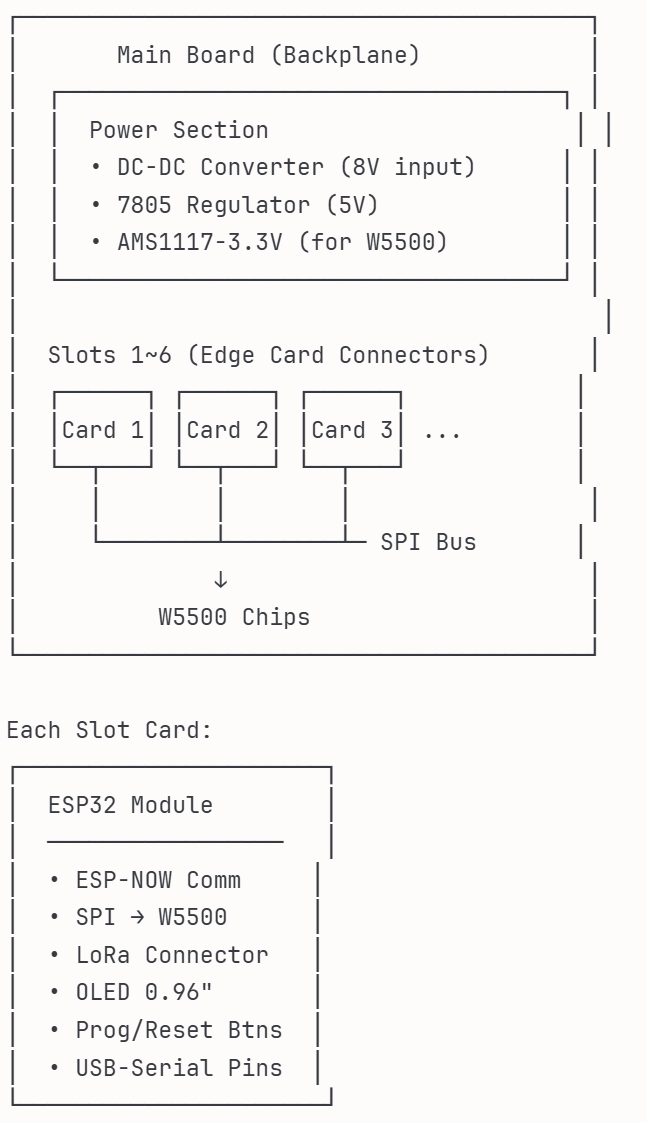
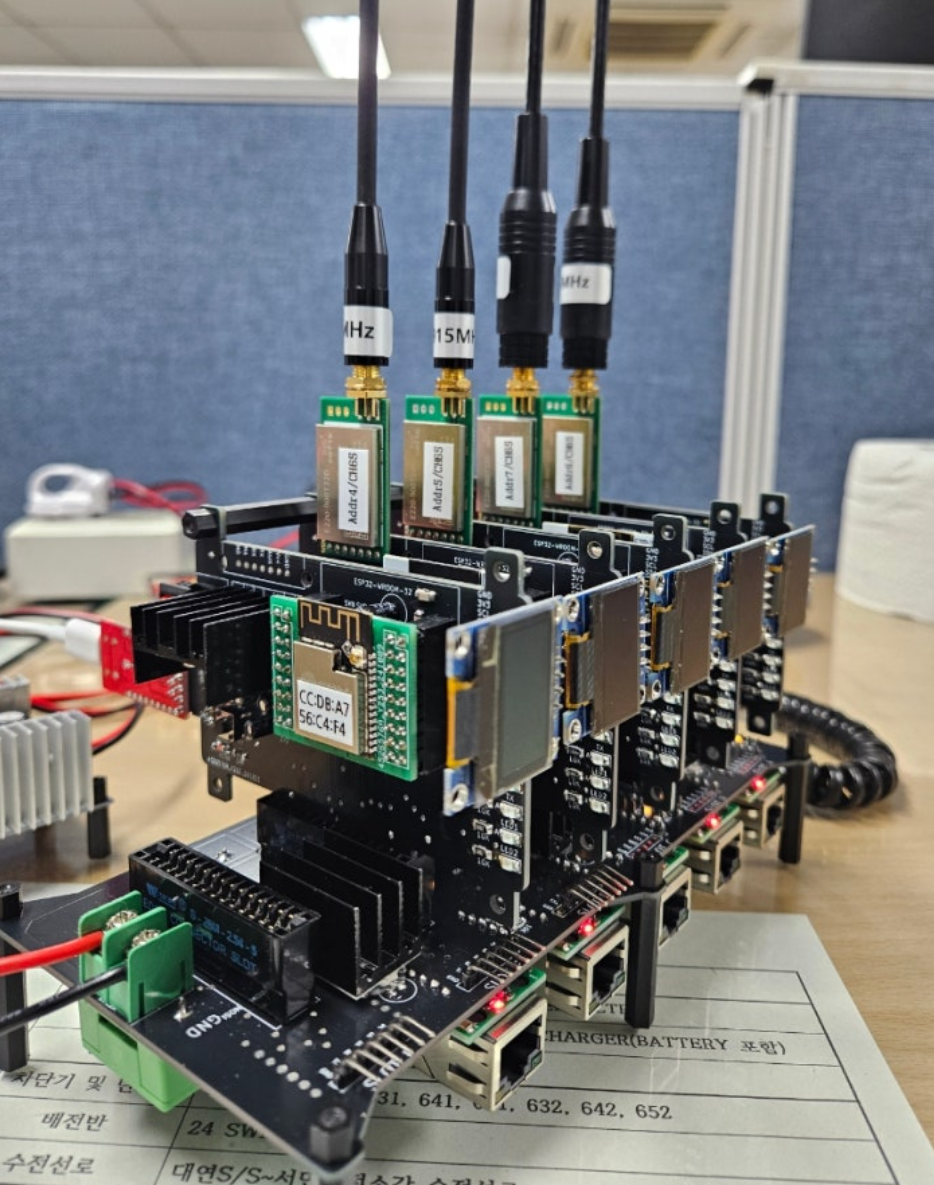
Design Features
1. Power Management Improvement
- Initial: 12V direct supply → 7805 overheating
- Improved: DC-DC step-down to 8V then 7805 → minimal heat
2. W5500 Heat Mitigation
- Problem: 2x W5500 on single AMS1117-3.3V → 60°C
- Solution: Added 9×9×12mm aluminum heatsinks
3. Firmware Update Simplification
Rear header on slot card:
[GND] [VCC] [TX] [RX]
    ↓
Connect FT232RL USB-Serial
    ↓
Hold Prog button → Press Reset → Programming mode
4. Expandability
- Standalone use: External W5500 via slot pins
- LoRa module: E-byte LoRa mountable on each card
- M0, M1 pins: Tied to GND (pre-configuration required)
- Aux pin: For transmission feedback (5sec timeout without)
Measurement Results Analysis
1. Wake-up Cycle Charge Consumption
Measured Values:
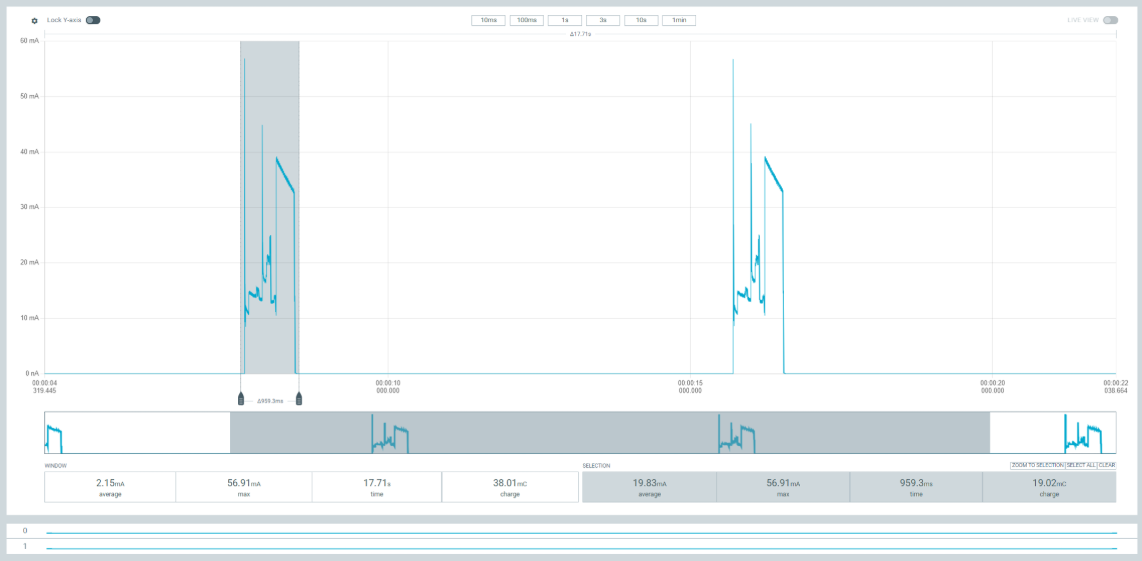
Window Selection: Wake-up period only (~2 seconds)
Total Charge: 19.02 mC (milli-coulombs)
 Window Selection: Full cycle (6min 15sec)
Total Charge: 19.02 mC (same!)
Meaning: Negligible charge consumption during sleep (thanks to TPL5110's tens-of-nA standby)
2. Sleep Mode Average Current
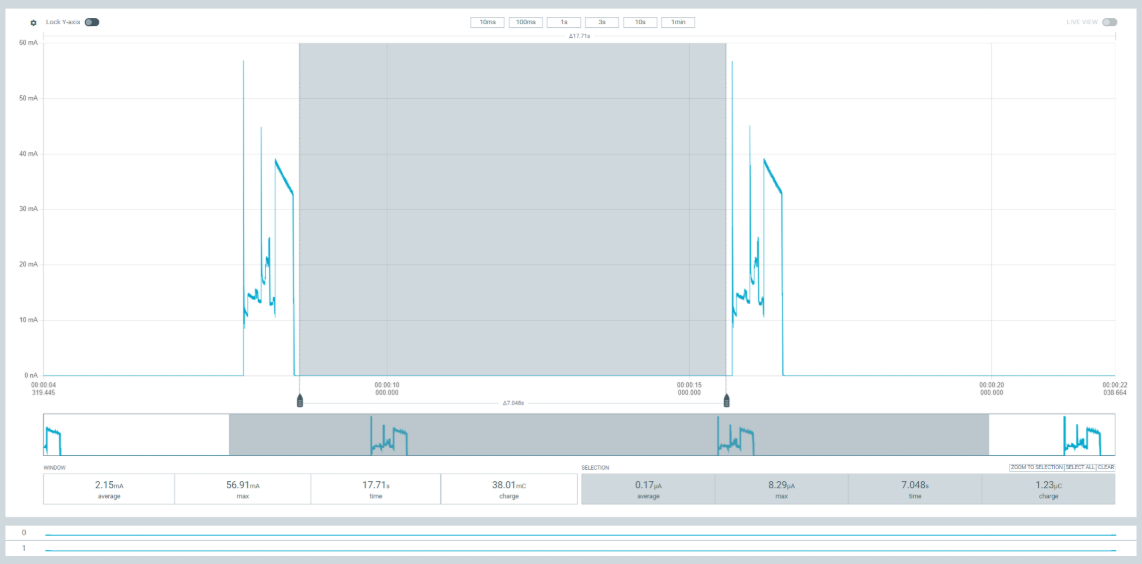
Average Current: 0.17 µA (micro-ampere)Comparison:
- ESP32 Deep Sleep: ~10 µA
- ATmega328P Power-down: ~0.1 µA
- TPL5110 Standby: Tens of nA
→ This system's sleep current is nearly perfect
Battery Life Calculation
Formulas
1. Average Current:
   I_avg = Q_cycle / T_cycle
 2. Battery Life:
   T_survive = C_bat / I_avg
Actual Calculation
Input Values:
Q_cycle = 19.02 mC (charge per cycle)
T_cycle = 6min 15sec = 375 seconds
C_bat = 1,300 mAh × 4 banks = 5,200 mAh
ChatGPT Result:
Step 1: Average Current
I_avg = 19.02 mC / 375 sec
     = 0.0507 mC/s
     = 0.0507 mA
     = 50.7 µA
 Step 2: Battery Lifetime
T_survive = 5,200 mAh / 0.0507 mA
          = 102,564 hours
          = 4,273 days
          = 11.7 years
Conclusion: 12x AA batteries (4 banks) enable approximately 11.7 years of operation!
Practical Tips: Using NRF-PPK2
1. Measurement Mode Selection
Source Meter Mode (Power Supply + Measurement)
- Voltage range: 0.8V ~ 5V
- Max current: 1A
- Advantage: No external battery needed
Ampere Meter Mode (Measurement Only)
- External battery required
- Voltage range: 0.8V ~ 5.5V
- Advantage: Reflects actual battery characteristics
2. Window Setup (Charge Calculation)
PPK2 Software:
1. Start data collection
2. Mouse drag to select measurement range
3. Auto-calculation:
   - Average Current
   - Max Current
   - Total Charge (mC)
3. Important Considerations
Voltage Drop Check:
- Initial battery voltage vs end-of-life voltage
- Verify system minimum operating voltage
Environmental Variables:
- Temperature: Battery capacity varies (drops sharply below 0°C)
- Aging: Consider 20% capacity reduction in real operation
Circuit Design Reference
Underwater Measurement Module
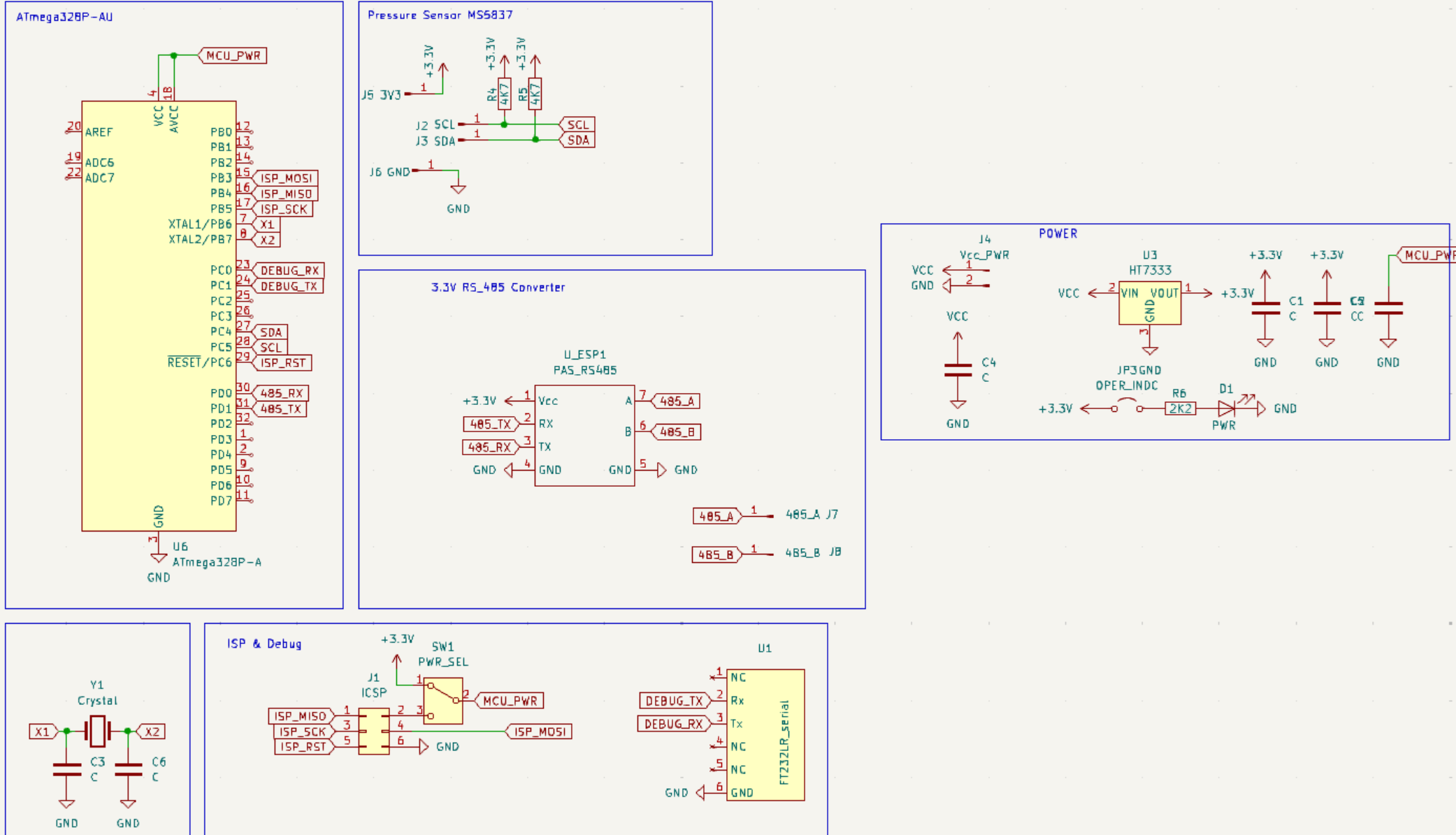
ATmega328P (→ Switching to ATmega88)
    │
    ├─ I2C → MS5837 (Pressure/Temperature)
    ├─ UART → RS485 Transceiver (MAX485)
    └─ Power → 3xAA Series
 Critical: Epoxy molding inside PVC pipe required!
LoRa Transmission Module
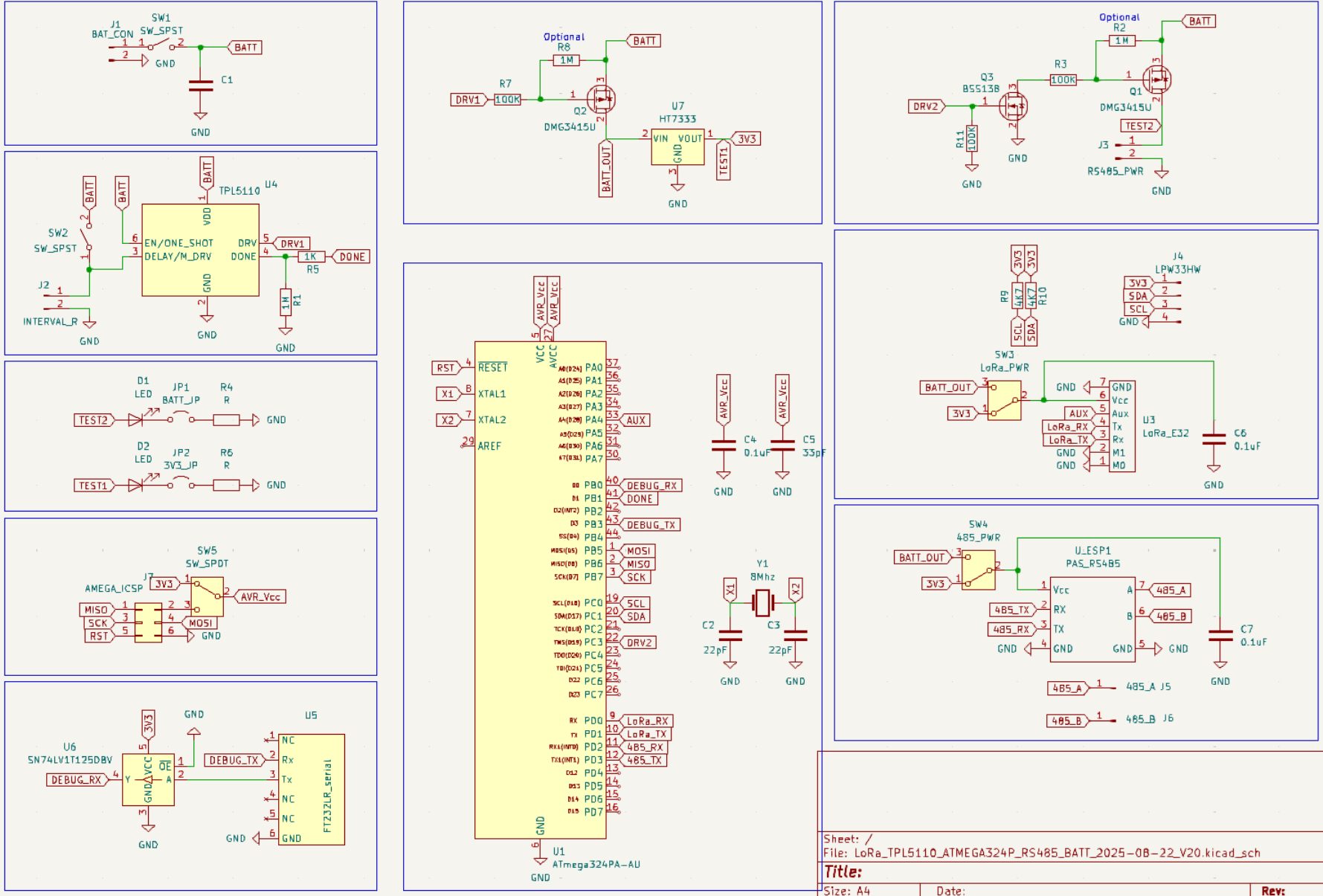
ATmega324PA (2x Hardware UART)
    │
    ├─ I2C → MS5837 (Barometric pressure)
    ├─ UART1 → RS485 RX (underwater module)
    ├─ UART2 → LoRa Module (E-byte E32)
    └─ EN → TPL5110 Done Pin
 TPL5110 (Timer)
    │
    ├─ DRV → System Power MOSFET Gate
    ├─ DELAY → Resistor sets period (6min 15sec)
    └─ DONE ← ATmega completion signal
Final System Specifications
Power Consumption:
- Wake-up: 19.02 mC (2 seconds)
- Sleep: 0.17 µA
- Average: 50.7 µA
Battery Life:
- 12xAA (5,200mAh): 11.7 years
- 18xAA (7,800mAh): 17.5 years
Communication Range:
- LoRa 930MHz: ~1-3km (with obstacles)
- MQTT via Ethernet: Unlimited (with internet)