


AASun-V2
AASun-V2

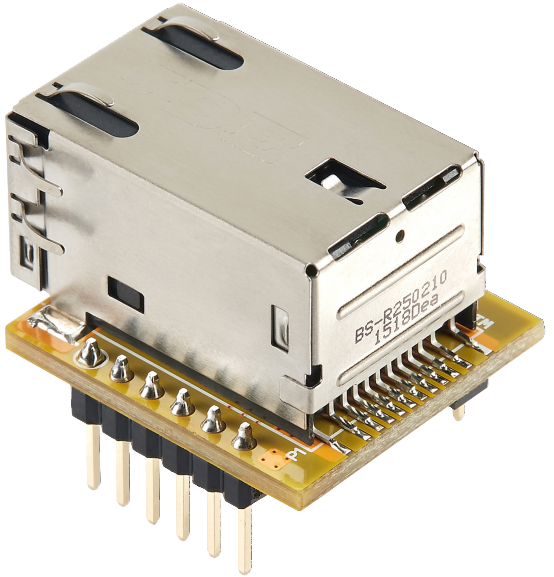
WIZnet - WIZ850io
x 1

Version Reference
This document describes AASun V2 (final hardware revision).
The original prototype (V1) is available at:
https://github.com/Nikitarc/AASunV2 is not an iteration—it is a hardware and system-level redesign based on real deployment constraints observed in V1.
V1 vs V2 — Upgrade Comparison
| Category | AASun V1 (Prototype) | AASun V2 (Final Hardware) |
|---|---|---|
| Design Goal | Concept validation | Deployable product |
| PCB | Breadboard / undefined | 10×10 cm, DIN rail mount |
| CT Inputs | 2–4 channels | 1–3 channels (optimized) |
| Current Sensing | CT only (AC) | CT + optional Hall sensor (DC) |
| DC Measurement | Not supported | 12V / 24V / 48V battery input |
| Network | Ethernet + Wi-Fi (simultaneous) | Ethernet OR Wi-Fi (selectable) |
| Power Supply | External required | Integrated HLK-PM01 AC-DC module |
| Voltage Measurement | External module | Integrated ZMPT101B / DL-PT202D |
| Connectors | Pin headers | Industrial detachable (HT396 + PE) |
| Status Indicators | None | Multi-LED status (I/O + power + system) |
| Grounding (CT Shield) | Not supported | Dedicated PE grounding |
| Grid Support | 50 Hz only | 50 Hz + 60 Hz (software selectable) |
| Installation | Lab setup | Electrical panel (DIN rail) |
| System Maturity | Prototype | Field-deployable system |
Key Evolution: From Prototype to Deployable System
1. Hardware Integration
V1 relied heavily on external modules:
- External power supply
- External voltage transformer
- Loose wiring (breadboard-style)
V2 consolidates these into a single PCB system:
- Integrated AC-DC module (HLK-PM01)
- Embedded voltage sensing (ZMPT101B / DL-PT202D)
- EMI filtering and protection circuitry
Impact:
- Reduced wiring complexity
- Improved electrical safety
- Consistent measurement reliability
2. Measurement Architecture Expansion
V1 Limitations
- AC current only (via CT sensors)
- No visibility into battery systems
V2 Enhancements
- Maintains CT-based AC measurement
- Adds:
- DC voltage sensing (12/24/48V)
- Optional Hall-effect current sensing
System-Level Impact:
- Enables hybrid solar systems (PV + battery)
- Allows rule-based energy routing:
- Battery priority charging
- Load balancing based on SOC
3. Network Architecture Simplification
V1 Approach
- Ethernet + Wi-Fi both mounted
- Increased:
- PCB complexity
- EMI risk
- Power consumption
V2 Decision
- Mutually exclusive network selection
- WIZ850io (W5500 Ethernet)
- OR ESP32-C3 (Wi-Fi)
Engineering Trade-off:
- Sacrifices flexibility
- Gains:
- PCB space
- Signal integrity
- Reduced noise near analog front-end
4. Electrical Installation Readiness
V1:
- Not suitable for electrical panels
- No standardized mounting or connectors
V2:
- DIN rail form factor
- Industrial connectors:
- HT396 detachable terminals
- Protective Earth (PE) integration
Result:
- Direct installation inside breaker panels
- Safer handling of high-voltage lines
- Maintainable wiring (field service ready)
5. Power System Redesign
V1:
- Required external regulated 5V
V2:
- Fully integrated power stage:
- HLK-PM01 (AC → 5V DC)
- Common-mode choke
- Filtering capacitors
- Fuse protection
Why this matters:
- Eliminates external PSU dependency
- Improves reliability under grid noise
- Reduces installation errors
6. Observability and Debugging
V1:
- No visual system feedback
V2:
- Multi-channel LED indicators:
- Green LEDs → I/O state
- Yellow LED → 5V power
- Blue LED → system running
Impact:
- Faster debugging during installation
- Immediate fault detection without tools
7. Grid Compatibility Upgrade
V1:
- Fixed 50 Hz assumption
V2:
- Software-selectable:
- 50 Hz
- 60 Hz
Impact:
- Global deployment compatibility
- No hardware redesign required
System Architecture (V2 Perspective)
[ AC Grid + Solar Inverter ]
              │
              ▼
     Voltage + Current Sensing
     (ZMPT101B + CT / Hall)
              │
              ▼
     STM32G071 (Control Core)
     - ADC + DMA (50 kHz sampling)
     - Energy computation (50 Hz sync)
     - Routing logic (PID / rules)
              │
      ┌───────┴────────┐
      ▼                ▼
 Load Control      Network Interface
 (SSR / Relay)     (W5500 or Wi-Fi)
      │                │
      ▼                ▼
 Local Loads      Web UI / Remote Access
Why the V2 Upgrade Matters (Engineering Perspective)
Deterministic Control vs System Complexity
V1 proved:
- Real-time energy routing is feasible
V2 solves:
- How to make it deployable and stable
Key improvements:
- Reduced EMI sources
- Controlled grounding strategy
- Hardware-level integration
WIZnet Context (Ethernet Variant)
When using W5500 (via WIZ850io) in V2:
- Network processing is fully offloaded
- MCU remains dedicated to:
- ADC processing
- Control loops
- Energy computation
This becomes more critical in V2 because:
- System complexity increased (battery + rules + logging)
- Timing requirements remain strict (AC synchronization)
Summary
AASun V1 demonstrated the concept of real-time solar energy routing.
AASun V2 transforms that concept into a deployable embedded system by:
- Integrating power, sensing, and protection into a single board
- Expanding measurement to include DC battery systems
- Simplifying network architecture for signal integrity
- Adopting industrial design constraints (DIN rail, connectors, grounding)
The result is not just an improved version, but a transition from prototype to product-grade architecture.
FAQ
Q: Why was AASun redesigned from V1 to V2 instead of incremental updates?
A: V1 validated the energy routing concept, but it was not suitable for real installation. V2 addresses deployment constraints such as electrical safety, wiring complexity, EMI, and enclosure requirements by integrating power supply, sensing, and industrial connectors into a single system.
Q: What is the most important technical improvement in V2 compared to V1?
A: The addition of DC measurement (12/24/48V) alongside AC sensing is the key upgrade. This allows V2 to operate in hybrid solar systems with batteries, enabling more advanced energy routing strategies such as prioritizing battery charging before load diversion.
Q: Why does V2 use Ethernet OR Wi-Fi instead of both like V1?
A: Running both interfaces increased PCB complexity, noise, and space usage. V2 simplifies this by selecting one interface, which improves signal integrity—especially important for accurate analog measurements from CT sensors—and reduces EMI in mixed-signal environments.
Q: How does W5500 improve system stability in AASun V2?
A: The W5500 provides hardware TCP/IP offload, meaning all network processing runs independently of the MCU. This prevents network activity from interfering with the real-time control loop (50 Hz synchronized), ensuring stable and deterministic energy calculations.
Q: Is AASun V2 suitable for beginners or only advanced users?
A: V2 targets advanced users or installers. It involves AC measurement, high-voltage handling, and embedded firmware configuration. Basic knowledge of electrical systems, SPI communication, and MCU development is required for safe and effective use.
Source
- V1 Repository: https://github.com/Nikitarc/AASun
- V2 Draft Documentation:
Tags
AASun, W5500, WIZnet, STM32, Solar Energy, Energy Router, Embedded Ethernet, DIN Rail, Industrial IoT, Power Electronics