



Look Inside the CloudFridge
Look Inside the CloudFridge

📌 overview
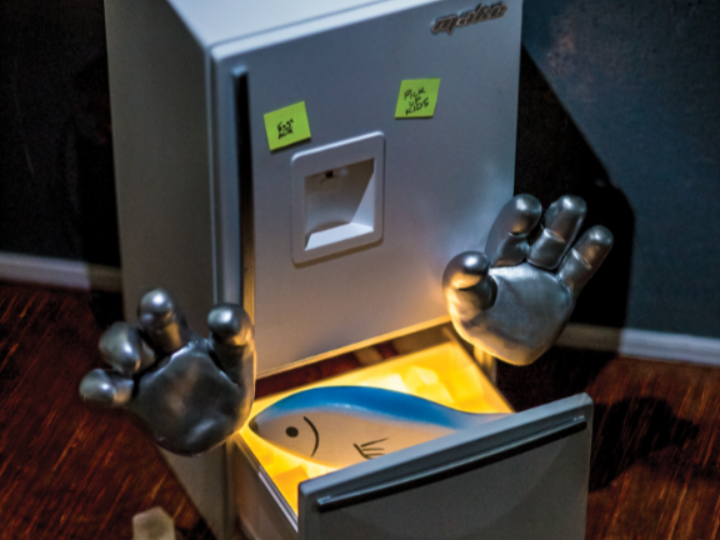
CloudFridge is a small IoT project that records when, how often, and how long a refrigerator door is opened, then sends that data to the cloud.
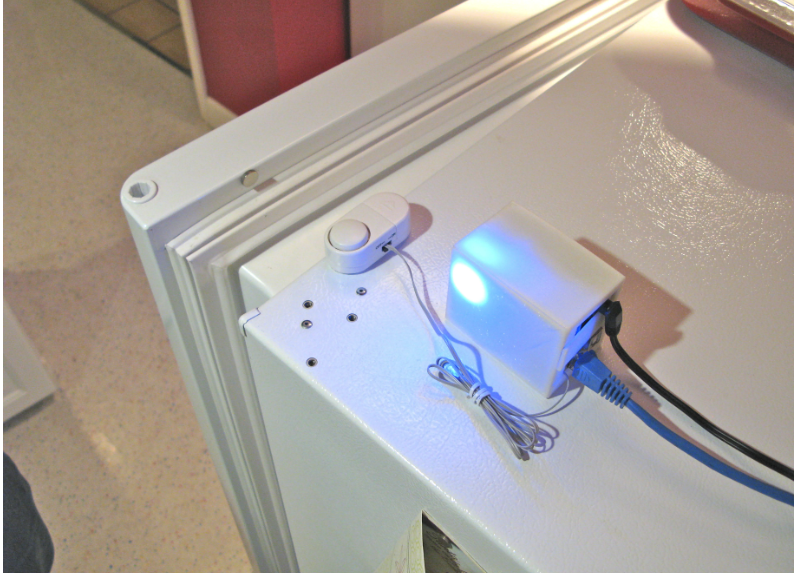
With only: a magnetic reed switch on the fridge door,
an Arduino + WIZnet-based Ethernet shield (W5100/W5500), and a wired LAN connection,
the system turns everyday fridge usage into time-series data that can be visualized and analyzed.
Because the refrigerator is one of the biggest energy consumers in a home, this data helps you see where door-open behavior may be wasting energy and gives a concrete basis for behavior change.
📌 Key Functions
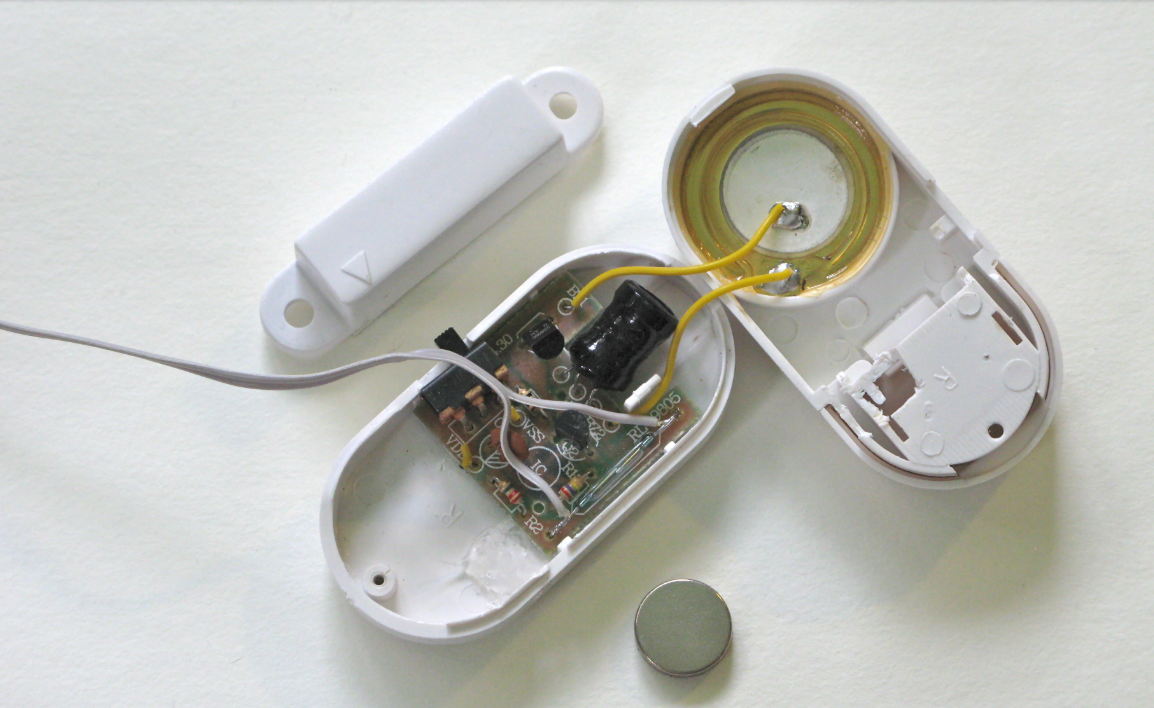
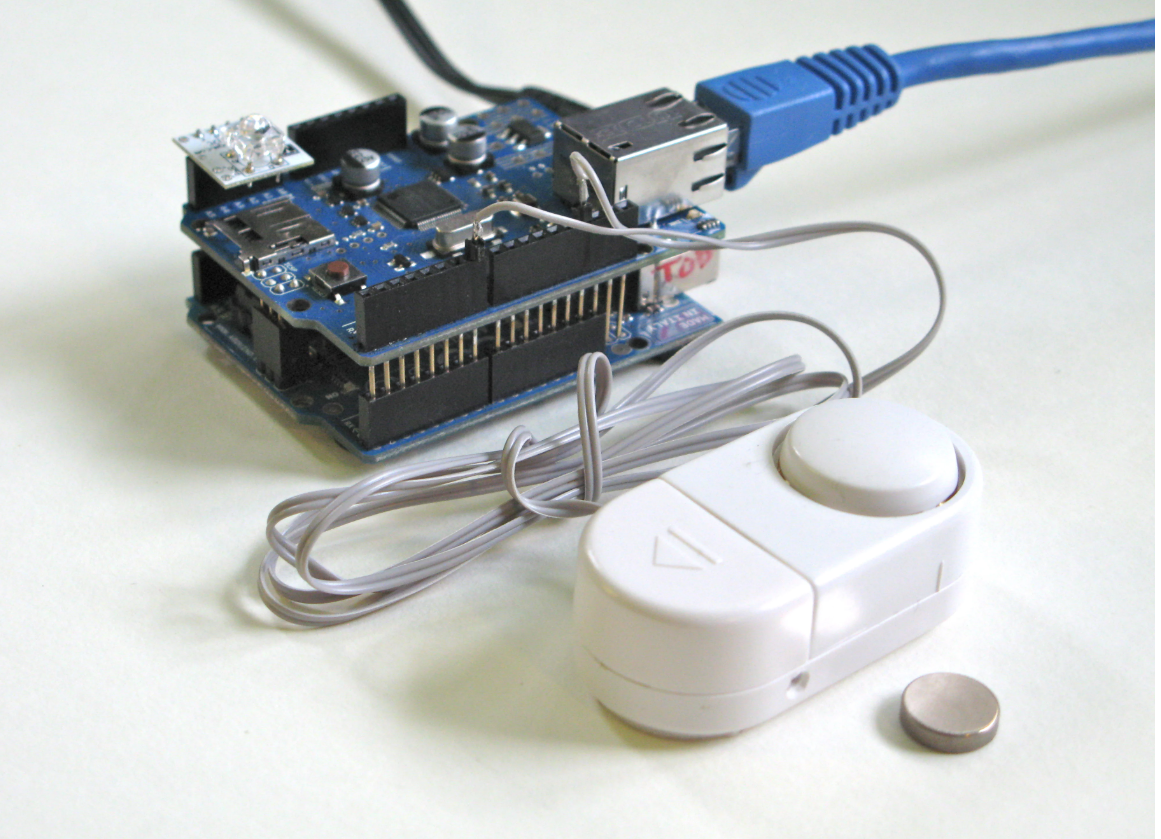
A reed switch detects door open/close events.
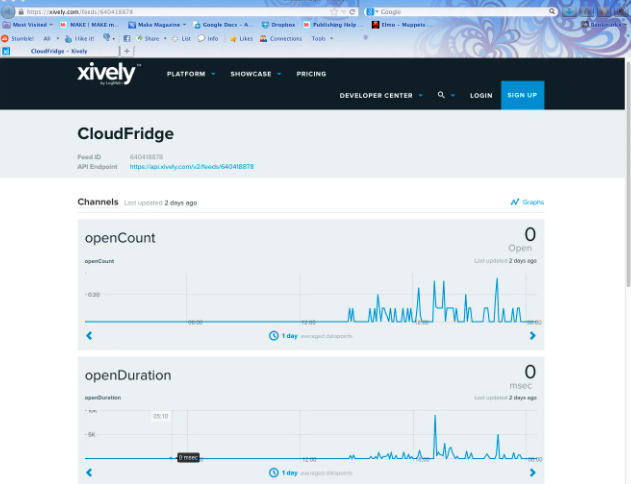
For each reporting interval, the Arduino calculates:
openCount – how many times the door was opened
openDuration – total time the door stayed open
Cloud upload via HTTP
At fixed intervals (e.g., every 30 seconds), these values are sent as a simple HTTP PUT/POST to a server.
Any HTTP-capable backend can be used: legacy Xively, modern services (ThingSpeak, InfluxDB, etc.), or a custom REST API.
The result is a fridge “usage timeline” you can graph over hours, days, or months.
Local visual status (RGB LED)
A small RGB LED (e.g., BlinkM) shows system state at a glance:normal operation,door currently open,network or upload error.
Power-use awareness
The design explicitly notes that the monitor itself consumes power (a few watts) and suggests reducing upload rate or using sleep modes when long-term logging is the goal.
 📌 System Architecture
Sensor layer
A magnetic reed switch + magnet pair detects whether the door is open or closed.
The Arduino tracks transitions and measures how long each opening lasts, then aggregates this into openCount and openDuration per interval.
Edge device: Arduino + WIZnet Ethernet
Arduino Uno (or similar) plus a W5100/W5500-class Ethernet shield.
Responsibilities:Obtain IP configuration (typically via DHCP)
Aggregate door events over time
Periodically send an HTTP request with the latest metrics
Drive the status LED
Cloud service
Receives the HTTP payload, stores it with timestamps, and exposes:dashboards/graphs for quick visualization, APIs for further analysis and integration,simple alert rules (e.g., “door open longer than N seconds”).
📌 W5100 / W5500 Role
In CloudFridge, the WIZnet Ethernet controller is essentially the wired gateway that puts the refrigerator on the internet.
Wired Ethernet link
Stable and predictable latency via RJ45 and a home router.
Better suited than Wi-Fi for small devices that log continuously, 24/7.
Hardwired TCP/IP stack
DHCP, ARP, TCP session management and retransmissions are handled inside the chip.
The microcontroller just opens a socket, sends an HTTP string, and reads the response.
W5100 vs W5500 in this pattern
W5100
4 sockets, 16 KB buffer
Classic Arduino Ethernet Shield controller
More than enough for one CloudFridge node uploading to a single cloud endpoint.
W5500
8 sockets, 32 KB buffer, faster SPI
Makes it easier to add:a built-in web configuration page,multiple upload targets (local server + cloud),additional monitored appliances on the same device.
📌 WIZnet Perspective
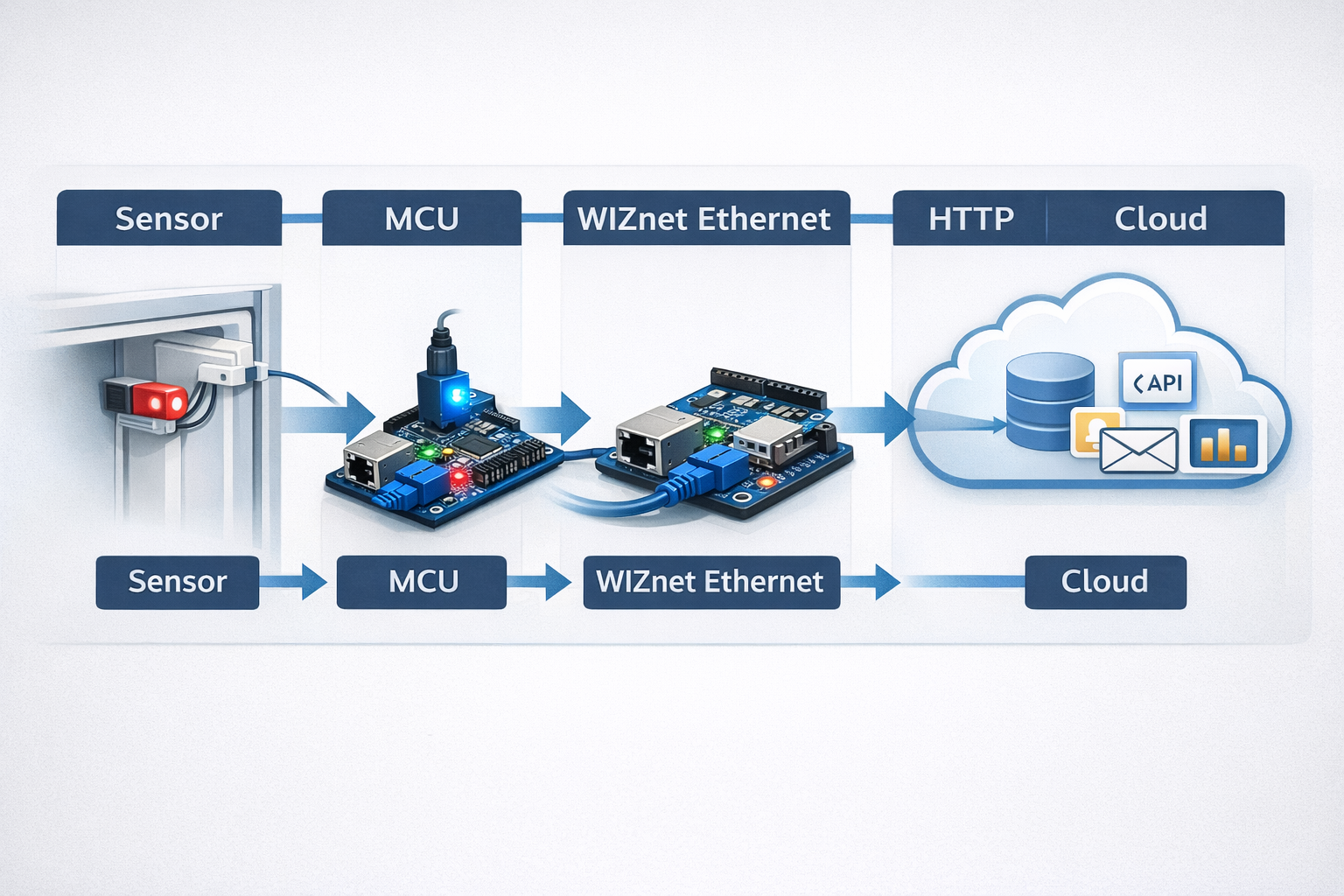
CloudFridge is a clear example of the pattern:
Sensor → MCU → WIZnet Ethernet → HTTP → Cloud
applied to a refrigerator.
The local side (Arduino + W5100/W5500) handles real-time sensing, aggregation, and upload timing.
The cloud side provides long-term storage, visualization, and alerting.
This pattern generalizes naturally to other cold-chain and appliance scenarios—freezers, display fridges, lab refrigerators—where door activity matters. In all of these, a WIZnet Ethernet chip can act as the simple, reliable, always-on network bridge between very small hardware and internet-scale data and services.
📌 Short Summary
CloudFridge uses a reed switch, an Arduino, and a WIZnet Ethernet controller to measure refrigerator door openings and send the results to the cloud over HTTP.
It’s a compact reference design for:door-event–based energy and habit tracking on refrigerators, andsmall wired-Ethernet IoT nodes that rely on WIZnet’s hardwired TCP/IP to stay simple, reliable, and always connected.