



Design of Computer Room Environment Monitoring System
Design of Computer Room Environment Monitoring System Based on Ethernet
Overview
Design of Computer Room Environment Monitoring System Based on Ethernet is a research paper that presents an Ethernet-based intelligent monitoring system for computer rooms and equipment rooms. The system is designed to monitor environmental parameters in real time and support remote control of related equipment.
Computer rooms are critical spaces where servers, network devices, storage systems, power equipment, and communication infrastructure operate continuously. If the room temperature rises abnormally, humidity becomes unstable, smoke is detected, or power-related issues occur, the entire information system can be affected. In severe cases, equipment failure, data loss, service interruption, or safety accidents may occur.
To solve these issues, this project proposes a monitoring system based on an embedded controller, environmental sensors, Ethernet communication, and the Modbus TCP protocol. The system uses an STM32 microcontroller as the main controller and a WIZnet W5500 Ethernet controller to provide stable wired network communication.
This is not a simple Ethernet communication example. It is a practical monitoring system designed for real computer room management, where environmental data must be collected, transmitted, displayed, and used for remote equipment control.
Why Computer Room Monitoring Matters
A computer room is not just a place where computers are stored. It is the physical foundation of an organization’s information system.
Servers and network devices often run 24 hours a day. These devices generate heat continuously and require a stable operating environment. If the temperature becomes too high, equipment can slow down, shut down, or suffer permanent damage. If humidity is too high, condensation and corrosion can occur. If humidity is too low, static electricity can become a risk. Smoke, water leakage, abnormal power conditions, and unauthorized access can also threaten the safety of the room.
Traditional computer room management often depends on manual inspection. However, manual inspection has several limitations.
First, it cannot provide continuous real-time monitoring. Second, it is difficult to respond immediately when an abnormal event occurs at night or during holidays. Third, human inspection can miss small changes that gradually lead to serious problems. Finally, as the number of devices increases, manual management becomes inefficient and unreliable.
An Ethernet-based monitoring system solves these problems by collecting sensor data automatically and sending it to a host computer or monitoring platform in real time. This allows administrators to check the status of the computer room remotely and respond quickly when abnormal conditions are detected.
System Concept
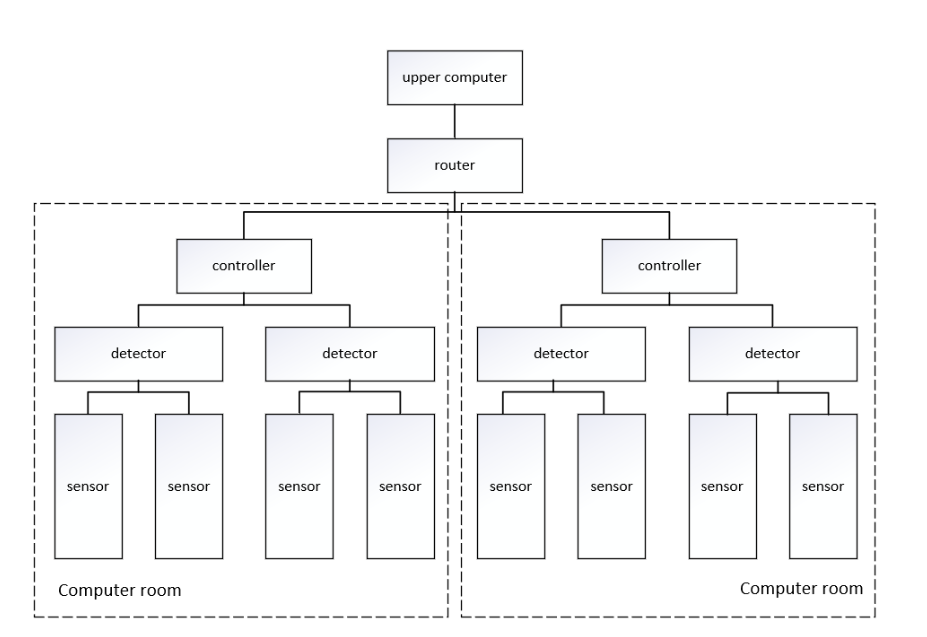
The proposed system can be understood as an embedded environmental monitoring node for a computer room.
The system collects environmental data from sensors, processes the data through an STM32 microcontroller, and transmits the information through Ethernet. The WIZnet W5500 Ethernet controller provides the wired network interface, while Modbus TCP is used as the communication protocol between the monitoring node and the host system.
The overall flow can be summarized as follows.
Environmental sensors collect data from the computer room.
The STM32 microcontroller reads and processes the sensor data.
The W5500 Ethernet controller provides TCP/IP network communication.
The monitoring data is transmitted through Ethernet using Modbus TCP.
The host computer receives, displays, stores, and analyzes the data.
Remote control commands can be sent back to the monitoring node when needed.
Through this structure, the system can monitor the computer room environment in real time and support remote operation of related equipment.
Hardware Architecture

The hardware architecture is based on an embedded controller, sensors, an Ethernet communication module, and control interfaces.
STM32 Microcontroller
The STM32 microcontroller acts as the main control unit of the system. It is responsible for reading sensor values, processing environmental data, managing communication with peripheral devices, and exchanging data with the Ethernet controller.
STM32 is widely used in embedded monitoring systems because it provides enough performance for sensor processing, communication control, and real-time operation while maintaining low power consumption and high reliability.
In this system, the STM32 performs the following roles:
Sensor data acquisition
Data processing
Communication control
Modbus TCP data handling
Remote control command execution
Equipment status management
The STM32 is therefore the central brain of the monitoring node.
WIZnet W5500 Ethernet Controller
The WIZnet W5500 is used as the Ethernet communication controller. It connects the STM32-based monitoring node to the computer room network.
The W5500 is important because it includes a hardware TCP/IP stack. This means that many TCP/IP communication tasks are handled inside the chip instead of being fully processed by the microcontroller. As a result, the STM32 can focus more on sensor data processing and control logic, while the W5500 handles Ethernet communication.
In this project, the W5500 is used to provide a stable wired network connection for real-time monitoring. Compared with Wi-Fi, wired Ethernet is more suitable for computer room environments because it is generally more stable, less affected by interference, and easier to integrate into existing network infrastructure.
The role of the W5500 can be summarized as follows:
Providing Ethernet connectivity
Handling TCP/IP communication
Supporting Modbus TCP communication over the network
Reducing the network processing burden on the STM32
Enabling real-time data transmission to the host computer
Supporting long-term stable operation in an equipment room
In this system, the W5500 is not just an optional network module. It is the key component that turns the embedded monitoring device into a network-connected computer room monitoring node.
Environmental Sensors
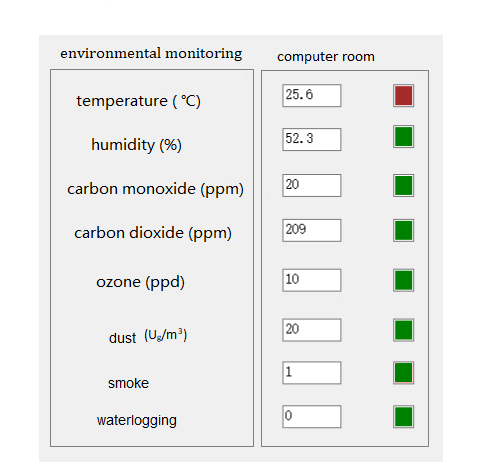
The system uses sensors to collect environmental parameters from the computer room. Although the exact sensor configuration may vary depending on the implementation, a computer room monitoring system commonly includes sensors for parameters such as temperature, humidity, smoke, water leakage, and equipment status.
The purpose of these sensors is to detect abnormal conditions before they cause serious damage.
For example, temperature sensors can detect overheating. Humidity sensors can detect unsafe humidity conditions. Smoke sensors can help identify potential fire risks. Water leakage sensors can detect flooding or air-conditioner drainage problems. Door or access sensors can help monitor physical access.
By combining multiple sensors, the system can provide a more complete view of the computer room environment.
Control Equipment
The system is not limited to passive monitoring. It can also support remote control of equipment.
For example, when the temperature is too high, the system may control a fan, air conditioner, or alarm device. When smoke or water leakage is detected, the system can trigger warnings or send control commands to connected safety equipment.
This makes the system more useful than a simple data logger. It can become part of an active computer room safety management system.
Communication Protocol: Modbus TCP
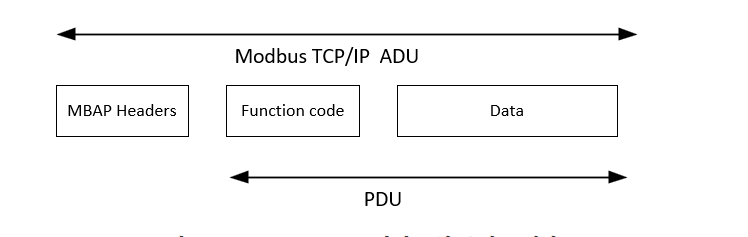
One of the key features of this system is the use of Modbus TCP.
Modbus is widely used in industrial automation and monitoring systems. Modbus TCP extends Modbus communication over Ethernet networks, making it suitable for distributed monitoring systems.
Using Modbus TCP has several advantages.
It is simple and widely supported.
It is suitable for industrial monitoring.
It works well over Ethernet.
It can be integrated with host computers, SCADA systems, and monitoring software.
It allows sensor values and control states to be mapped into registers.
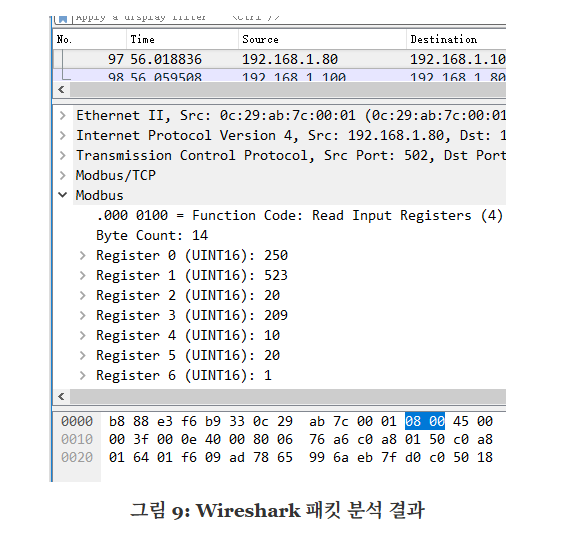
In this project, Modbus TCP allows the host computer to read environmental data from the monitoring node and send control commands when necessary.
This is an important point from a WIZnet perspective. The W5500 provides the Ethernet and TCP/IP communication foundation, while Modbus TCP operates on top of that network connection. Together, they allow the embedded STM32 system to communicate with the monitoring platform in a standardized way.
Software Architecture
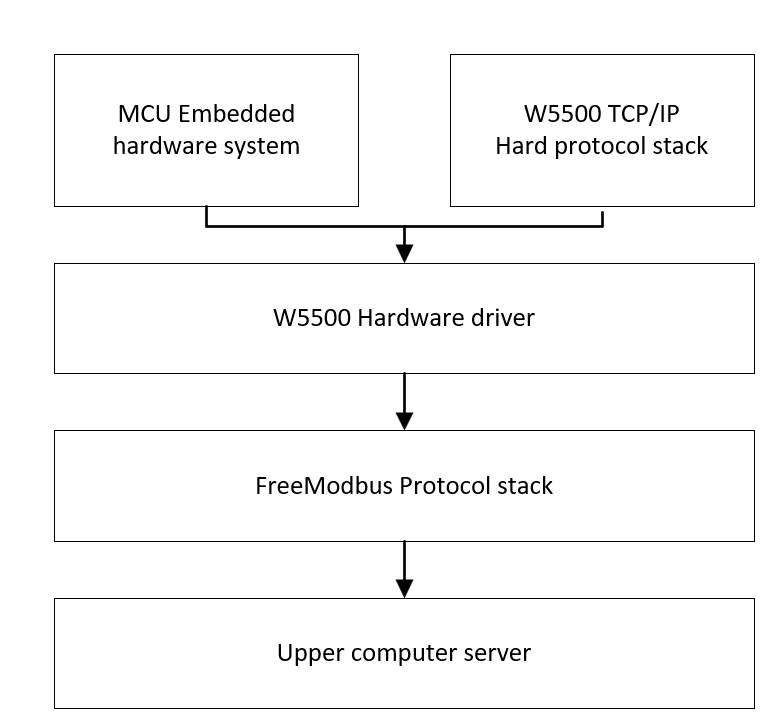
The software architecture can be divided into three main layers.
1. Sensor Acquisition Layer
This layer reads data from environmental sensors. The STM32 collects raw sensor values and converts them into meaningful monitoring data.
Examples include:
Temperature value
Humidity value
Smoke detection status
Water leakage status
Equipment running status
Alarm status
The accuracy and reliability of this layer are important because all monitoring decisions depend on the sensor data.
2. Communication Layer
The communication layer handles Ethernet data exchange. The STM32 communicates with the W5500 through SPI, and the W5500 handles the Ethernet TCP/IP communication.
This layer is responsible for maintaining network communication and supporting Modbus TCP data exchange with the host computer.
The use of the W5500 simplifies this part of the system because TCP/IP processing is handled by the hardware Ethernet controller.
3. Monitoring and Control Layer
This layer manages the logic of the monitoring system.
It determines whether sensor values are within safe ranges, updates the status information, and responds to commands from the host computer. If abnormal conditions are detected, the system can trigger alarms or control external equipment.
The host computer or monitoring platform can display the collected data, store historical records, and help administrators make decisions.
Role and Application of WIZnet’s Chip
In this project, the WIZnet W5500 Ethernet controller is used as the wired network communication interface between the STM32-based monitoring node and the computer room monitoring network.
The STM32 reads environmental sensor data and manages the control logic. The W5500 handles the Ethernet and TCP/IP communication required to send that data to the host computer through Modbus TCP.
The role of the W5500 can be summarized as follows.
Application point: Between the STM32 microcontroller and the Ethernet network
Applied chip: WIZnet W5500 Ethernet controller
Main role: Provides wired TCP/IP communication for environmental monitoring data
Communication method: Ethernet-based Modbus TCP
System benefit: Allows real-time monitoring data to be sent to the host computer
Technical benefit: Hardware TCP/IP stack reduces the communication burden on the MCU
Application value: Long-term operation in computer rooms, server rooms, and equipment rooms
The W5500 is especially suitable for this type of system because computer room monitoring requires stable and continuous network communication. Unlike short-term demonstration projects, monitoring systems must run for long periods without interruption.
In this system, W5500’s hardware TCP/IP processing helps the embedded controller maintain reliable Ethernet communication while focusing on sensor processing and control tasks.
Use of TOE
The W5500 includes a hardware TCP/IP stack, also known as TOE, or TCP/IP Offload Engine.
In this project, the TOE function is used indirectly through the Ethernet communication structure. The developer does not need to manually implement the full TCP/IP stack inside the STM32. Instead, the STM32 communicates with the W5500, and the W5500 handles the lower-level TCP/IP communication in hardware.
This provides several benefits.
It reduces the firmware complexity of the STM32.
It lowers the processing load on the microcontroller.
It improves communication stability.
It makes Ethernet implementation easier.
It is suitable for embedded monitoring systems that require long-term operation.
Therefore, this project is a good example of using WIZnet’s hardware TCP/IP technology in an industrial-style environmental monitoring system.
Application Value
This project has practical value in many types of facilities.
1. Computer Rooms
The most direct application is computer room environmental monitoring. The system can monitor temperature, humidity, smoke, water leakage, and equipment status, helping administrators maintain a safe operating environment.
2. Server Rooms
Server rooms require continuous monitoring because servers generate heat and often run critical services. An Ethernet-based monitoring system can detect abnormal conditions and help prevent service interruptions.
3. Data Centers
In larger data centers, environmental monitoring is essential. Although this project is relatively small in scale, the same architecture can be expanded and integrated into a larger monitoring platform.
4. Network Equipment Rooms
Network equipment rooms contain switches, routers, fiber equipment, and communication devices. Environmental failure in these rooms can directly affect network availability. A monitoring node based on STM32 and W5500 can help detect risks early.
5. Industrial Control Rooms
Industrial sites also require stable environmental conditions for control panels, PLCs, and communication equipment. Ethernet-based monitoring with Modbus TCP is especially suitable because Modbus is already common in industrial environments.
Market and Industry Meaning
From a market perspective, this project shows how WIZnet Ethernet chips can be used in facility monitoring and industrial IoT applications.
Many embedded devices need reliable network connectivity, but implementing a full software TCP/IP stack can increase development complexity. WIZnet’s W5500 provides a practical solution by integrating the TCP/IP stack into hardware.
For computer room monitoring, this is especially useful because the system must operate continuously and reliably. The monitoring device does not need high-end computing power, but it does need stable network communication. This is exactly where a hardware TCP/IP Ethernet controller such as W5500 fits well.
The project also shows that WIZnet chips can be applied beyond maker-style IoT projects. They can be used in monitoring systems for facilities, equipment rooms, industrial sites, and infrastructure environments.
Summary
Design of Computer Room Environment Monitoring System Based on Ethernet presents an embedded monitoring system for computer rooms using STM32, environmental sensors, WIZnet W5500 Ethernet communication, and Modbus TCP.
The STM32 handles sensor data acquisition and control logic, while the W5500 provides stable wired Ethernet communication. Through Modbus TCP, the monitoring node can send real-time environmental data to a host computer and support remote equipment control.
From WIZnet’s perspective, this project is a meaningful example of W5500 being used in a practical monitoring system. The chip provides hardware TCP/IP communication, reduces the burden on the microcontroller, and enables reliable Ethernet-based data transmission.
This makes the project a strong example of WIZnet technology being applied to computer room monitoring, server room safety, facility management, and industrial IoT systems.