



Yaugi 4: GPIB Ethernet PoE Adapter
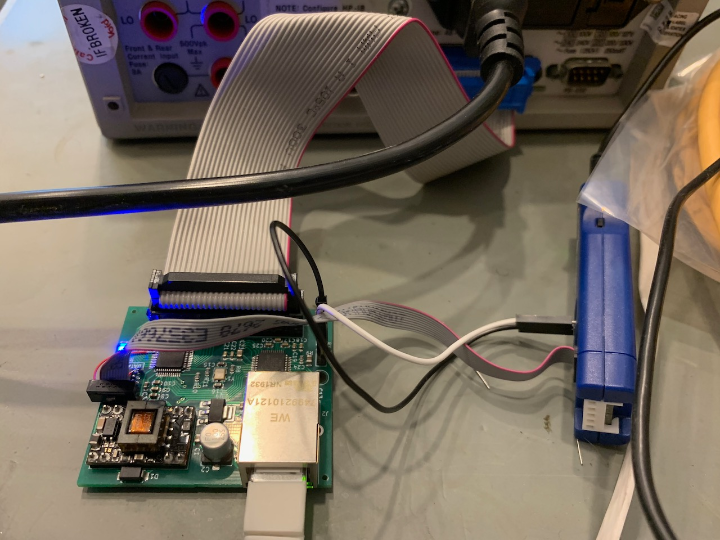
The W5500-powered ‘Yaugi 4’ PoE GPIB adapter brings legacy instruments online via Ethernet, enabling integration with modern control systems through
English Version
1. Project Overview: Transcending Time and Space in the Lab
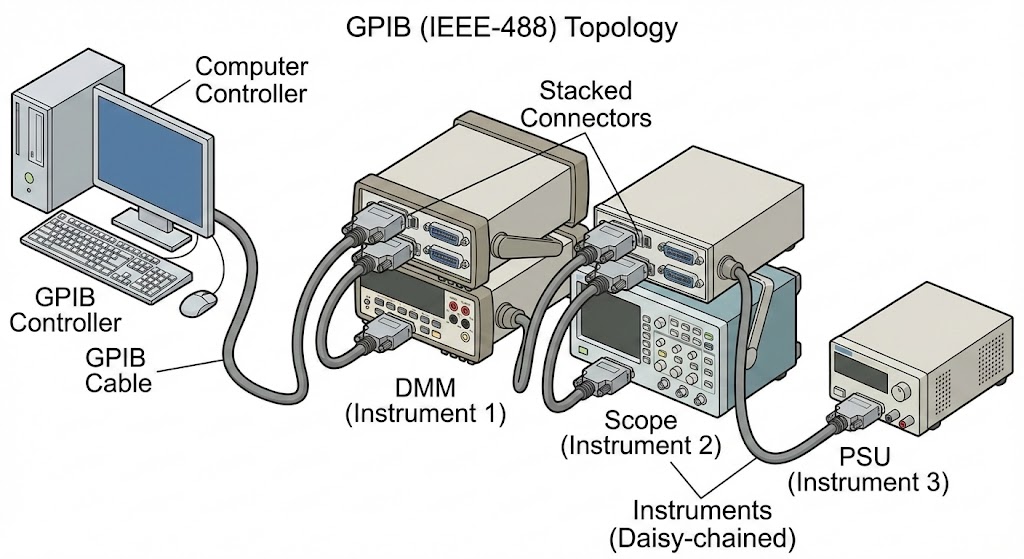
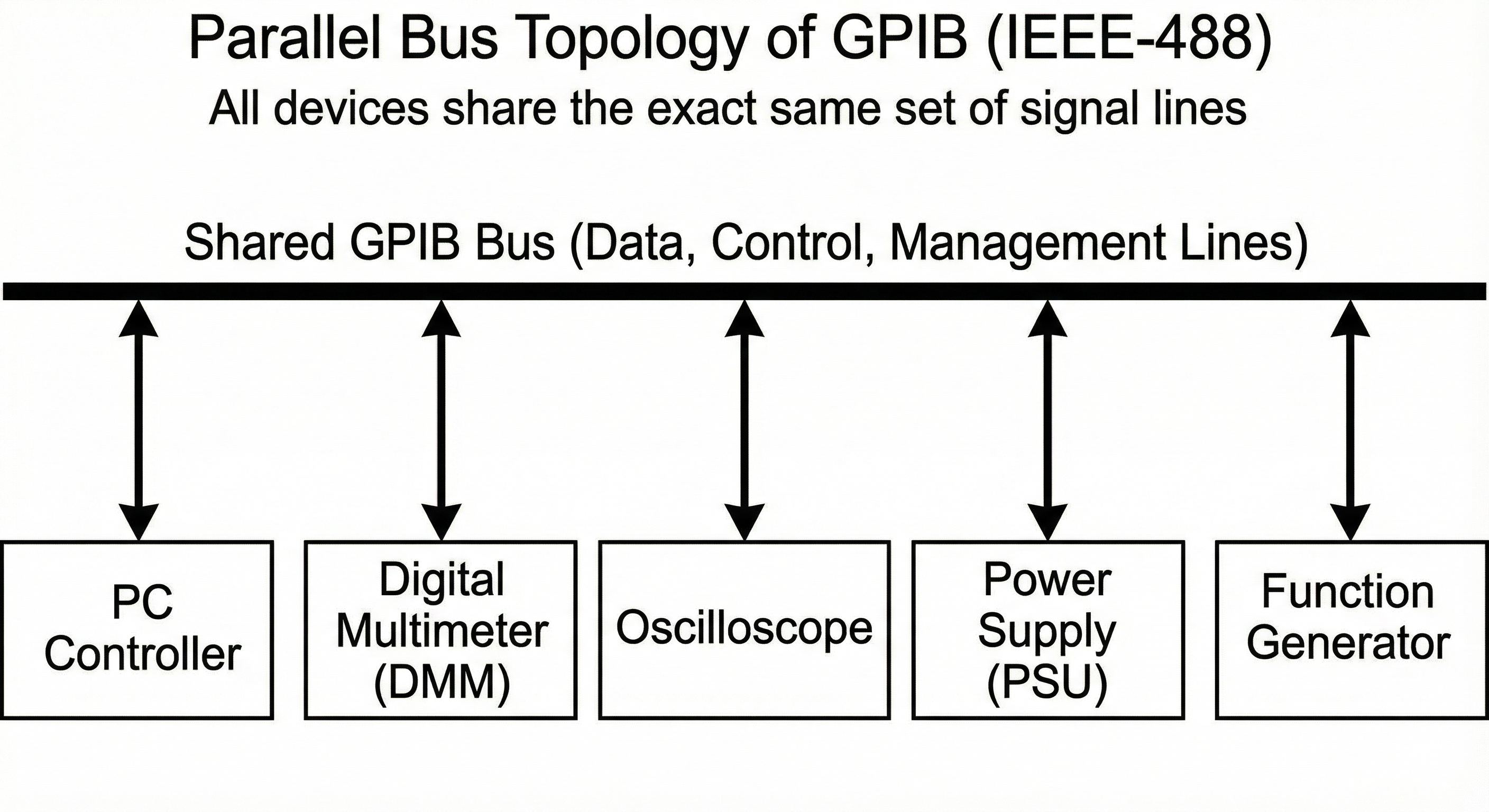
For decades, GPIB (IEEE-488) has been the standard interface in electronic test and measurement. However, it has fatal flaws: heavy cables, limited distance, and the need for expensive dedicated dongles.
The 'YAUGI 4' (Yet Another Universal GPIB Interface) project was born to solve these inconveniences. Simply put, it acts as a "Translator and Wireless Transmitter for Instruments." Here are the key transformations this project brings:
① Liberating from Distance: "A 2-meter Leash" vs. "Halfway Across the Globe"
Legacy GPIB: Cable length is limited to about 2 meters. You are forced to place your PC right next to noisy equipment to work.
YAUGI 4: Connects equipment to the Internet via the WIZnet W5500. You can leave the noisy gear in a server room and monitor data comfortably from a quiet office or even from home. Controlling a device in Busan from Seoul becomes possible.
② Innovation in Wiring: "Thick & Complex" vs. "Single Cable (PoE)"
Legacy Method: Thick GPIB cables combined with separate power adapters create a mess of wires behind the desk.
YAUGI 4: Adopts PoE (Power over Ethernet) technology. A single LAN cable carries both 'Data' and 'Power'. No power cords required—just click in the LAN cable, and the device powers up and starts communicating.
2. WIZnet Chip Focus: Why W5500 over USB?
While the initial version (YAUGI) used USB, the creator (essele) boldly switched to Ethernet and the WIZnet W5500 for version 4. From WIZnet's technical perspective, this is an excellent choice.
🚩 The Limitations of USB (Pain Point)
Distance Limit: USB cables struggle to reliably exceed 5 meters.
Driver Hell: Every OS update can break drivers, and some operating systems may not be supported at all.
💡 The W5500 Solution
The designer adopted the WIZnet W5500 Hardware TCP/IP Controller to solve these issues simultaneously.
Zero MCU Load: GPIB communication requires precise timing. Since the W5500 handles complex TCP/IP packet processing via hardware, the main MCU (PSoC) can focus entirely on the precise handshaking required by the instrument.
Standard Protocol (VXI-11): Thanks to W5500's stable socket communication, the project implements the industry-standard VXI-11 protocol. Tools like LabVIEW, Python, and MATLAB recognize the device immediately without proprietary drivers.
Perfect Match for PoE: The W5500 operates with low power consumption, making it easy to integrate with PoE modules.
3. Technical Deep Dive
This section analyzes the core technology blocks for engineers and developers.
A. Network & Protocol (W5500 & VXI-11)
W5500: Connects to the PSoC MCU via SPI. It opens TCP/UDP sockets to act as an RPC (Remote Procedure Call) server.
Features: DHCP client, mDNS (device discovery), and a Web Server (for configuration and firmware updates) are all stably implemented on top of the chip's hardware stack.
B. Power Management (PoE - Power over Ethernet)
802.3af Standard: Uses a Silvertel Ag9900 module (or isolated DC/DC converter) to convert the 48V from the Ethernet cable to system voltage.
Isolation: The biggest technical benefit of PoE is Galvanic Isolation. Separating the ground of the Device Under Test (DUT) from the network equipment prevents expensive instruments from being damaged by electrical shocks and significantly reduces measurement noise.
C. Control Logic (PSoC)
Uses the Programmable Logic (similar to FPGA) within the MCU to handle complex GPIB hardware handshaking at high speeds. This is much faster and more error-free than software bit-banging.
4. Value & Potential Derivatives
This project accurately demonstrates the huge market need for "Modernization of Legacy Equipment."
💎 WIZnet Value Proposition
Power of Standards: Ethernet communication implemented via W5500 is not OS-dependent. It can be accessed via standard sockets from Windows, Linux, Mac, or Raspberry Pi.
Cost Efficiency: It proves that functionality equivalent to commercial GPIB-LAN converters (Keysight, NI, etc.) costing hundreds of dollars can be achieved at 1/10th the price using a W5500 and a low-cost MCU.
🚀 Derivative Projects
Based on this design, the following industrial solutions can be developed:
RS-232/485 to Ethernet Server: Converting serial ports of old PLCs or CNC machines to Ethernet for Smart Factory data collection.
Remote Firmware Updater: Connecting JTAG/SWD ports of embedded devices in hard-to-reach locations to Ethernet for remote debugging.
Multi-Channel Sensor Gateway: Aggregating data from multiple low-speed sensors and transmitting it to a central server at high speed via W5500.
한글 버전
1. 프로젝트 개요: 실험실의 시공간을 초월하다
전자 계측 분야에서 **GPIB(IEEE-488)**는 수십 년간 표준 인터페이스였습니다. 하지만 치명적인 단점들이 존재합니다. 케이블이 무겁고, 거리가 제한적이며, 연결하려면 비싼 전용 동글이 필요하다는 점입니다.
'YAUGI 4' (Yet Another Universal GPIB Interface) 프로젝트는 이 불편함을 해결하기 위해 탄생했습니다. 쉽게 말해 **"계측기를 위한 통역사 겸 무선 송신기"**입니다. 이 프로젝트의 핵심 변화는 다음과 같습니다.
① 거리의 제약 해방: "2미터의 목줄" vs "지구 반대편"
기존 GPIB: 케이블 길이가 2미터 내외로 제한적입니다. 시끄러운 팬 소리가 나는 계측기 바로 옆에 PC를 두고 작업해야만 했습니다.
YAUGI 4: 위즈네트 W5500을 통해 장비를 인터넷에 연결합니다. 계측기는 시끄러운 서버실에 두고, 엔지니어는 조용한 사무실이나 집에서 편안하게 데이터를 모니터링할 수 있습니다. 부산에 있는 장비를 서울에서 제어하는 것이 가능해집니다.
② 배선의 혁신: "두껍고 복잡함" vs "선 하나로 끝(PoE)"
기존 방식: 손가락만큼 두꺼운 GPIB 케이블에, 별도의 전원 어댑터까지 연결해야 하여 멀티탭과 책상 뒤가 엉망이 됩니다.
YAUGI 4: PoE(Power over Ethernet) 기술을 적용했습니다. 랜선 하나에 **'데이터'**와 **'전기'**가 같이 흐릅니다. 전원 코드를 꽂을 필요 없이, 랜선 하나만 '딸깍' 꽂으면 장비가 켜지고 통신이 시작됩니다.
2. WIZnet Chip Focus: 왜 USB가 아닌 W5500인가?
초기 버전(YAUGI)은 USB 방식이었지만, 제작자(essele)는 버전 4에서 이더넷(Ethernet)과 WIZnet W5500으로 과감히 전환했습니다. 위즈네트의 기술적 관점에서 이는 탁월한 선택입니다.
🚩 USB 방식의 한계 (Pain Point)
거리 제한: USB 케이블은 5m를 넘기기 힘듭니다.
드라이버 지옥: PC OS가 바뀔 때마다 드라이버를 다시 잡아야 하고, 특정 OS에서는 아예 작동하지 않기도 합니다.
💡 W5500의 솔루션 (Solution)
설계자는 WIZnet W5500 하드웨어 TCP/IP 컨트롤러를 채택하여 이러한 문제들을 한 번에 해결했습니다.
MCU 부하 제로: GPIB 통신은 타이밍이 매우 중요합니다. W5500이 복잡한 TCP/IP 패킷 처리를 전담하므로, 메인 MCU(PSoC)는 계측기와의 정밀한 핸드셰이킹(Handshaking)에만 집중할 수 있습니다.
표준 프로토콜 (VXI-11): W5500의 안정적인 소켓 통신 덕분에, 산업 표준인 VXI-11 프로토콜을 구현했습니다. 별도의 드라이버 없이도 LabVIEW, Python, MATLAB에서 바로 장비를 인식합니다.
PoE와의 완벽한 궁합: W5500은 저전력으로 동작하며 PoE 모듈과 함께 구성하기 쉽습니다.
3. 핵심 기술 분석 (Technical Deep Dive)
엔지니어와 개발자를 위해 시스템의 핵심 기술을 블록별로 분석합니다.
A. 네트워크 & 프로토콜 (W5500 & VXI-11)
W5500: SPI 인터페이스를 통해 PSoC MCU와 연결됩니다. TCP/UDP 소켓을 열어 RPC(Remote Procedure Call) 서버 역할을 수행합니다.
기능: DHCP 클라이언트, mDNS(장치 자동 발견), 웹 서버(설정 및 펌웨어 업데이트) 기능을 모두 칩의 하드웨어 스택 위에서 안정적으로 구현했습니다.
B. 전원 관리 (PoE - Power over Ethernet)
802.3af 표준: Silvertel Ag9900 모듈(또는 절연 DC/DC 컨버터)을 사용하여 이더넷 케이블의 48V를 시스템 전압으로 변환합니다.
절연(Isolation): PoE의 가장 큰 기술적 이점은 갈바닉 절연입니다. 측정 대상(DUT)의 접지와 네트워크 장비의 접지가 분리되어, 고가의 계측기가 전기적 쇼크로 파손되는 것을 방지하고 측정 노이즈를 획기적으로 줄입니다.
C. 제어 로직 (PSoC)
MCU 내의 프로그래머블 로직(FPGA와 유사)을 사용하여 GPIB의 복잡한 하드웨어 핸드셰이킹을 고속으로 처리합니다. 소프트웨어 방식보다 훨씬 빠르고 에러가 없습니다.
4. 위즈네트 측면의 가치와 확장 가능성
이 프로젝트는 **"레거시 장비의 현대화(Modernization)"**라는 거대한 시장의 니즈를 정확히 보여줍니다.
💎 WIZnet의 가치 (Value Proposition)
표준의 힘: W5500을 통해 구현된 이더넷 통신은 특정 OS에 종속되지 않습니다. 윈도우, 리눅스, 맥, 라즈베리 파이 어디서든 표준 소켓으로 접근 가능합니다.
비용 효율성: 수십만 원을 호가하는 상용 GPIB-LAN 컨버터(Keysight, NI 등)와 대등한 기능을 W5500과 저렴한 MCU 조합으로 약 1/10 가격에 구현 가능함을 증명했습니다.
🚀 파생 가능한 프로젝트 (Derivatives)
이 설계를 응용하여 다음과 같은 산업용 솔루션 개발이 가능합니다.
RS-232/485 to Ethernet 서버: 구형 PLC나 공작 기계의 시리얼 포트를 이더넷으로 변환하여 스마트 팩토리 데이터 수집.
원격 펌웨어 업데이터: 접근이 어려운 곳에 설치된 임베디드 장비의 JTAG/SWD 포트를 이더넷으로 연결하여 원격 디버깅 수행.