



STM32-based Ethernet-MIDI-USB Converter
low latency MIDI interface using STM32 & WIZnet hardware TCP/IP. Bridges USB, Ethernet, and 5-pin DIN for real-time, long-distance transmission over LAN.
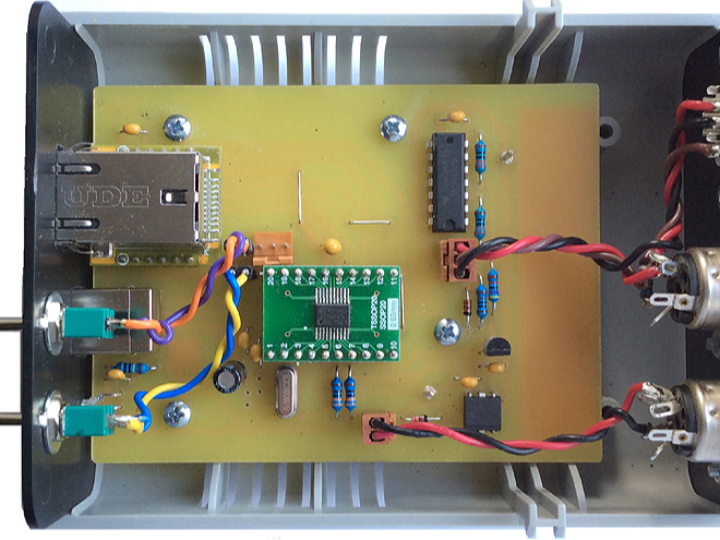
STM32-based Ethernet-MIDI-USB Converter
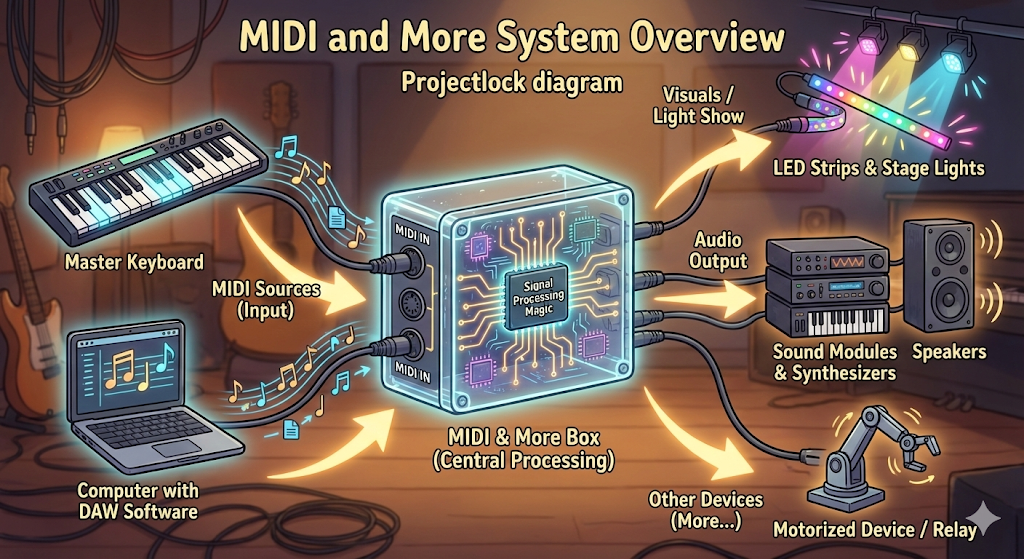
1. Introduction: Concept and Role of MIDI
The core of this project, MIDI (Musical Instrument Digital Interface), is a global digital language that allows electronic instruments, computers, and lighting equipment to communicate with each other.
Digital Sheet Music: Unlike actual sound (Audio), MIDI transmits Performance Information (Data) such as "which key was pressed and how hard."
The Core of Modern Music: Today, 99% of modern music—from Billboard chart-topping Pop, Hip-hop, and EDM to film scores—is created by playing virtual instruments based on MIDI data. It remains an irreplaceable technology due to the ease of timing correction (Quantize) and the ability to switch instrument sounds with a single click.
2. Comparison of MIDI (5-pin) vs. USB Connection
Currently, there are two main ways to transmit MIDI signals to a PC, each with distinct pros and cons depending on the environment.
| Category | MIDI (Legacy 5-pin DIN) | USB (USB-MIDI) |
|---|---|---|
| Pros | Electrical Isolation: Uses optocouplers to completely block electrical noise between the instrument and PC. 100% compatible with 40-year-old legacy gear. | Convenience: Connects with a single cable without needing a separate interface or power. Hardware data transfer speed is significantly faster. |
| Cons | Speed and Standard Limits: Transfer speed is fixed at 31.25kbps; connectors are bulky, and a separate MIDI interface device is mandatory. | Ground Loops: Lack of electrical isolation can cause "buzzing" noise in speakers; cable length is limited to within 5m. |
3. The Truth about Bandwidth and the Necessity of Ethernet
MIDI Bandwidth Requirements
By modern standards, the volume of MIDI data is "incredibly low."
Standard Speed: 31,250 bits per second (31.25kbps). This is approximately 1/3000th the speed of 100Mb Internet (100Mbps).
Data Size: A message for a single key press is only 3 bytes. Even with thousands of performances per second, the data size remains within a few dozen KB.
Why 'Ethernet (LAN)' Despite This?
It is not because of a lack of bandwidth. The keys are Latency and distance.
Aiming for Zero Latency: While performance data is tiny, a delay of even 0.01 seconds creates a sense of latency for the performer. Ethernet provides a wide bandwidth to fundamentally block bottlenecks, ensuring Real-time responsiveness.
Resolving Distance Constraints: While USB is limited to 5m, Ethernet can transmit data over 100m without loss, making it essential for large concert halls or remote studio control.
4. Engineering Deep Dive: System Architecture and Implementation Details
This project is a high-level engineering feat that goes beyond simple data conversion to maximize real-time performance and reliability.
A. MCU Embedded Design Strategy (Low-Latency Engineering)
Register-Level Optimization: By manipulating registers directly instead of using the HAL library, interrupt delay (Jitter) was minimized. This maximizes the speed of immediate forwarding upon data reception.
Dual Implementation of USB Class: Using the internal USB PHY, it switches between USB-MIDI Class (for real-time performance) and USB-CDC Class (for device configuration and Virtual COM) as needed.
B. WIZnet W5500 Hardware Stack Analysis
The use of the W5500 hardware TCP/IP chip instead of a software stack is the core engineering point of this project.
Hardware Acceleration: Since TCP/IP layer processing is handled by dedicated logic, the MCU's CPU cycles can be 100% focused on MIDI data merging.
UDP Multicast Filtering: Hardware-level filtering of multicast packets required for the ipMIDI protocol significantly reduces system load.
C. Data Merging and Physical Layer Design
Byte-by-Byte Merging: Independent FIFO buffers are operated for each interface, and real-time interleaving transmission is implemented through sophisticated queuing logic that ensures message integrity.
Electrical Noise Blocking: The legacy input section uses Opto-Isolators (such as 6N138) and the Ethernet port uses magnetic transformers to double-protect the circuit from ground loops and surges.
5. [Analysis] Ethernet-MIDI-USB Converter Project Details
All the technical elements above combine to meet the following specific specifications.
A. Hardware Configuration
MCU: STM32F042/070 (USB processing and central control)
Ethernet: WIZnet WIZ850io module (based on W5500 hardware processing)
Interface: Triple bridge structure supporting 5-pin MIDI (Legacy) + USB + Ethernet simultaneously.
B. Operating Mode and Logic
This device can completely change its character through jumper settings.
MIDI Mode: Recognized by the PC as a "USB Audio Device" and communicates via UDP Multicast (ipMIDI) over Ethernet, establishing a network composition environment without complex setup.
Data Priority Setting: Jumpers determine whether to use Ethernet or USB as the hub. This allows flexible operation, such as merging multiple instruments on stage into a single LAN cable or controlling remote instruments centered around a PC.
STM32 기반 Ethernet-MIDI-USB 컨버터
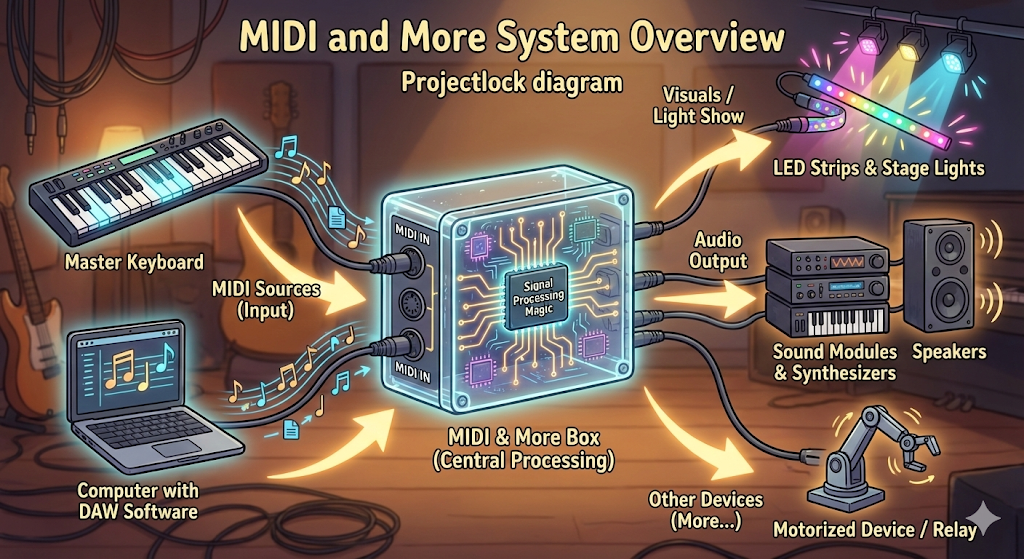
1. 서론: MIDI(미디)의 개념과 역할
이 프로젝트의 핵심인 **MIDI(Musical Instrument Digital Interface)**는 전자 악기, 컴퓨터, 조명 장비 등이 서로 소통하기 위해 만들어진 세계 공통의 디지털 언어입니다.
디지털 악보: MIDI는 실제 소리(Audio)가 아닌, "몇 번 건반을 얼마나 세게 눌렀다"와 같은 **연주 정보(Data)**를 전달합니다.
현대 음악의 핵심: 오늘날 빌보드 차트의 팝, 힙합, EDM부터 영화 음악에 이르기까지 현대 음악의 99%는 MIDI 데이터를 기반으로 가상 악기를 연주하여 만들어집니다. 박자 수정(Quantize)이 쉽고 악기 소리를 클릭 한 번으로 바꿀 수 있다는 점 때문에 대체 불가능한 기술로 자리 잡고 있습니다.
2. MIDI(5핀) vs USB 연결의 장단점 비교
현재 일반적으로 MIDI 신호를 PC에 전달하는 방식은 크게 두 가지로 나뉩니다. 각 방식은 환경에 따라 뚜렷한 장단점을 가집니다.
| 구분 | MIDI (기존 5핀 DIN) | USB (USB-MIDI) |
|---|---|---|
| 장점 | 전기적 격리(Isolation): 광커플러를 사용하여 악기와 PC 사이의 전기적 노이즈를 완벽히 차단합니다. 40년 된 구형 명기들과도 100% 호환됩니다. | 편의성: 별도의 인터페이스나 전원 없이 케이블 하나로 연결이 끝납니다. 데이터 전송 속도가 하드웨어적으로 훨씬 빠릅니다. |
| 단점 | 속도 및 규격 제한: 전송 속도가 31.25kbps로 고정되어 있으며, 단자가 크고 투박하여 별도의 미디 인터페이스 장비가 반드시 필요합니다. | 그라운드 루프: 전기적 격리가 되지 않아 스피커에서 '지지직'하는 전기 노이즈가 발생할 수 있으며, 케이블 길이가 5m 이내로 제한됩니다. |
3. 대역폭의 진실과 이더넷의 필요성
MIDI의 대역폭 요구량
현대적인 기준에서 MIDI의 데이터 양은 "말도 안 되게 낮습니다."
표준 속도: 초당 **31,250비트(31.25kbps)**입니다. 이는 100Mb 인터넷(100,000kbps)의 약 3000 분의 1 수준에 불과합니다.
데이터 크기: 건반 하나를 누르는 메시지는 단 3바이트입니다. 1초에 수천 번 연주를 쏟아부어도 데이터 크기는 몇십 KB 내외입니다.
그럼에도 불구하고 왜 '이더넷(랜선)'인가?
대역폭(데이터의 양)이 부족해서가 아닙니다. 핵심은 **지연 시간(Latency)**과 거리입니다.
지연 시간 제로 지향: 연주 데이터는 아주 작지만, 전송이 단 0.01초만 늦어져도 연주자는 이질감을 느낍니다. 이더넷은 넓은 대역폭을 바탕으로 병목 현상을 원천 차단하여 실시간(Real-time) 응답성을 보장합니다.
거리 제약 해소: USB는 5m가 한계이지만, 이더넷은 100m 이상 손실 없이 데이터를 보낼 수 있어 대형 공연장이나 스튜디오 원격 제어에 필수적입니다.
4. 엔지니어링 심화 분석: 시스템 아키텍처 및 구현 디테일
본 프로젝트는 단순한 데이터 변환을 넘어 실시간성과 신뢰성을 극대화한 고도의 엔지니어링 결과물입니다.
A. MCU 임베디드 설계 전략 (Low-Latency Engineering)
직접 레지스터 제어 (Register-Level Optimization): HAL 라이브러리 대신 레지스터를 직접 조작하여 인터럽트 지연(Jitter)을 최소화했습니다. 이는 데이터 수신 즉시 포워딩하는 속도를 극대화합니다.
USB Class의 이중 구현: 내부 USB PHY를 통해 상황에 따라 USB-MIDI Class(실시간 연주)와 USB-CDC Class(장치 설정 및 Virtual COM)를 스위칭하여 제공합니다.
B. WIZnet W5500 하드웨어 스택 분석
소프트웨어 스택 대신 하드웨어 TCP/IP 칩인 W5500을 사용한 것이 본 프로젝트의 핵심 엔지니어링 포인트입니다.
하드웨어 가속: TCP/IP 계층 처리를 전용 로직이 수행하므로 MCU의 CPU 사이클을 MIDI 데이터 병합(Merging)에만 100% 집중시킬 수 있습니다.
UDP Multicast 필터링: ipMIDI 프로토콜에 필수적인 멀티캐스트 패킷을 하드웨어 레벨에서 필터링하여 시스템 부하를 획기적으로 낮췄습니다.
C. 데이터 병합 및 물리 계층 설계
Byte-by-Byte Merging: 각 인터페이스별 FIFO 버퍼를 운영하며, 메시지 완결성을 보장하기 위한 정교한 큐잉(Queuing) 로직을 통해 실시간 인터리빙 전송을 구현했습니다.
물리적 노이즈 차단: 레거시 입력부의 **Opto-Isolator(6N138 등)**와 이더넷 포트의 마그네틱 트랜스포머를 통해 그라운드 루프와 서지로부터 회로를 이중으로 보호합니다.
5. [분석] Ethernet-MIDI-USB 컨버터 프로젝트 상세
위의 모든 기술적 요소들이 결합되어 다음과 같은 구체적인 사양을 갖춥니다.
A. 하드웨어 구성 (Hardware)
MCU: STM32F042/070 (USB 처리 및 중앙 제어)
Ethernet: WIZnet WIZ850io 모듈 (W5500 기반 하드웨어 처리)
인터페이스: 5핀 MIDI(레거시) + USB + 이더넷을 동시에 지원하는 트리플 브리지 구조
B. 작동 모드 및 로직 (Operation)
이 장치는 점퍼 설정을 통해 기기의 성격을 완전히 바꿀 수 있습니다.
MIDI 모드: PC에서 "USB 오디오 장치"로 인식되며, 이더넷으로는 UDP Multicast (ipMIDI) 방식으로 데이터를 주고받아 복잡한 설정 없이 네트워크 작곡 환경을 구축합니다.
데이터 우선순위 설정: 점퍼를 통해 이더넷을 허브로 쓸지, USB를 허브로 쓸지 결정합니다. 이는 무대 위 여러 악기를 랜선 하나로 모으거나, PC를 중심으로 원격 악기를 제어하는 등 유연한 운용을 가능하게 합니다.