


How Nextraf Implements AI Smart Traffic Control with WIZnet WIZ750SR
Nextraf automates traffic lights using WIZnet WIZ750SR and OpenCV. This AI IoT system optimizes city traffic through real-time density analysis and stable Ether
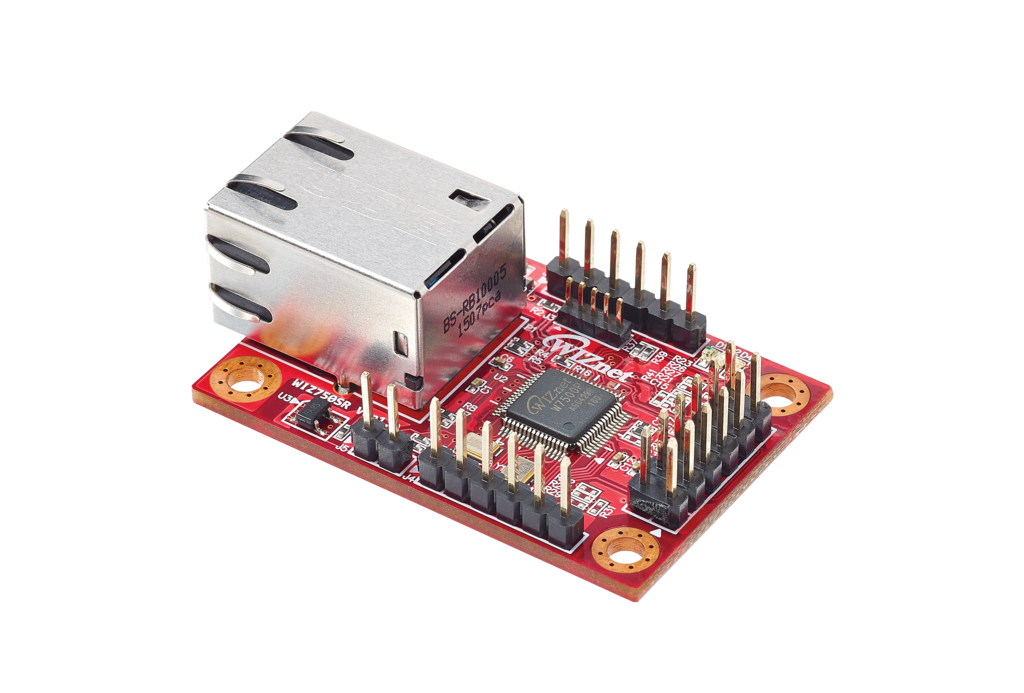
WIZnet - WIZ750SR
x 1

[Author Information]
The authors are affiliated with a research institution in India.
Christ University: Bangalore, Karnataka, India
1. Overview
Nextraf is an automated traffic management system designed to reduce congestion on Bangalore's busy streets. It uses computer vision to measure vehicle density in real-time and utilizes a central server to adjust traffic light durations dynamically.
1.1 Core HW Chips
WIZnet WIZ750SR-TTL-EVB: Serial-to-Ethernet Gateway.
Arduino Uno: Local Traffic Light Controller.
2. Core Technology or Environment
The project is built to handle high-density traffic junctions where static timers fail.
Vision Library: OpenCV (Python-based) for real-time edge analysis.
Backend: Django 2.0 acting as the central management hub.
Communication: PAHO MQTT for low-latency messaging between the server and the hardware.
3. Development Story
Driven by the daily traffic struggles in Bangalore, students from Christ University sought an IoT solution. They researched over several months to bridge the gap between high-level image processing and low-level hardware control, ultimately deciding on a cloud-linked architecture.
4. Core Purpose & WIZnet’s Contribution
The primary goal is to prioritize lanes with higher traffic density to keep the city moving.
WIZnet's Contribution: The WIZ750SR serves as the Communication Gateway. While the Arduino Uno manages the physical LEDs, it isn't designed to handle complex web requests or MQTT protocols on its own. The WIZ750SR bridges this gap by receiving MQTT messages from the server and passing them to the Arduino via a simple Serial connection, effectively making the hardware "internet-aware".
5. Detailed Tech Deep Dive: Image Processing Algorithm
The core of the system is the Canny Edge Detection algorithm. Instead of trying to identify individual cars (which is computationally expensive), the system looks for "edges" or outlines.


The 4-Step Process:
Grayscale Conversion: The color image is turned into shades of gray to simplify the data.
Gaussian Blur: A filter is applied to smooth the image and remove "noise" (random pixels) that might look like fake edges.
Canny Edge Extraction: The computer finds areas where the brightness changes sharply (the outlines of cars).
Density Comparison:
The system compares the "mean" (average number of lines) of the current image to a Reference Image of an empty road.
More lines = Higher traffic density.
6. What is the Django Server?
In this project, Django acts as the "Brain" of the entire operation.
Data Hub: It hosts a REST API that receives processed density data from cameras stationed at junctions.
Decision Maker: It analyzes data from all four junctions to decide which light should be green and for how long.
The Command Center (MQTT): Once a decision is made, Django uses the MQTT Publish function to send a command to the WIZnet board.
User Interface: It provides a web dashboard for human operators to monitor traffic stats and junction status in real-time.
7. Strategic Value & Why WIZnet?
The students chose the WIZ750SR to maximize efficiency. Instead of writing thousands of lines of code to implement an Ethernet stack on a raw W5500 chip, they used the WIZ750SR as a "Transparent Bridge". This allowed them to focus 100% of their energy on the OpenCV algorithm and Django server logic, ensuring the project was completed successfully within their timeframe.
[저자 정보]
저자들은 인도의 교육 및 연구 기관에 소속되어 있습니다.
크라이스트 대학교 (Christ University): 인도 카르나타카주 방갈로르
1. 개요
Nextraf 프로젝트는 방갈로르의 극심한 교통 정체를 해결하기 위해 대학생들이 고안한 자동 교통 관리 시스템입니다. 컴퓨터 비전을 통해 실시간 교통 밀도를 측정하고, 중앙 서버를 통해 신호등 주기를 유동적으로 조절합니다.
1.1 핵심 HW 칩
WIZnet WIZ750SR-TTL-EVB: 시리얼-투-이더넷 게이트웨이.
Arduino Uno: 신호등 제어기.
2. 핵심 기술 및 환경
고정된 타이머가 비효율적인 고밀도 도심 환경을 위해 설계되었습니다.
비전 라이브러리: 실시간 외곽선 분석을 위한 OpenCV.
백엔드: 중앙 관리 허브 역할을 하는 Django 2.0.
통신 프로토콜: 서버와 하드웨어 간의 저지연 메시징을 위한 PAHO MQTT.
3. 개발 스토리
방갈로르의 일상적인 교통 체증에서 영감을 얻은 크라이스트 대학교 학생들은 IoT 솔루션을 연구했습니다. 수개월간의 연구 끝에 영상 처리 로직과 하드웨어 제어 사이의 간극을 메우기 위해 클라우드 연동 아키텍처를 선택했습니다.
4. 핵심 목적 및 위즈네트의 기여
가장 큰 목적은 차량 밀도가 높은 차선에 우선권을 부여하여 도심 흐름을 원활하게 만드는 것입니다.
위즈네트의 기여: WIZ750SR은 이 시스템의 통신 게이트웨이 역할을 합니다. 아두이노 우노는 신호등을 켜고 끄는 제어는 잘하지만, 복잡한 웹 요청이나 MQTT 통신을 직접 처리하기에는 메모리가 부족합니다. WIZ750SR은 서버에서 오는 MQTT 메시지를 수신하여 아두이노가 바로 이해할 수 있는 시리얼 신호로 전달함으로써 하드웨어가 인터넷과 대화할 수 있게 해줍니다.
5. 핵심 기술 파헤치기: 영상 처리 알고리즘
이 프로젝트의 핵심은 Canny Edge Detection 알고리즘입니다. 개별 차량을 인식하는 대신, 화면에 나타나는 "외곽선"의 양을 계산하여 밀도를 측정합니다.
4단계 프로세스:
그레이스케일 변환: 색상 정보를 제거하고 흑백으로 만들어 데이터 처리량을 줄입니다.
가우시안 블러 (Gaussian Blur): 이미지를 살짝 흐리게 하여 외곽선으로 오인될 수 있는 작은 노이즈들을 제거합니다.
Canny 외곽선 추출: 밝기가 급격히 변하는 부분(차량의 테두리)을 찾아냅니다.
밀도 비교:
차가 한 대도 없는 기준 이미지와 현재 촬영 중인 이미지의 외곽선 '평균값'을 비교합니다.
외곽선이 많다 = 차량이 많다 = 교통 밀도가 높다.
6. Django(장고) 서버란 무엇인가?

이 프로젝트에서 Django는 전체 시스템의 "두뇌" 역할을 수행합니다.
데이터 허브: 교차로에 설치된 카메라들이 보내는 교통 밀도 데이터를 REST API를 통해 수집합니다.
의사결정: 4개 교차로의 데이터를 분석하여 어떤 차선에 녹색 신호를 줄지, 몇 초 동안 줄지 결정합니다.
명령 전달 (MQTT): 결정된 명령은 MQTT Publish 기능을 통해 위즈네트 보드로 즉시 전송됩니다.
사용자 인터페이스: 관리자가 실시간 교통 통계와 신호 상태를 모니터링할 수 있는 대시보드 웹사이트를 제공합니다.
7. 위즈네트 제품 사용 이유
학생들은 개발 효율성을 극대화하기 위해 WIZ750SR을 선택했습니다. W5500 칩을 직접 써서 복잡한 이더넷 드라이버 코드를 짜는 대신, 완제품 형태인 WIZ750SR을 **"투명한 가교(Transparent Bridge)"**로 활용했습니다. 덕분에 학생들은 네트워크 통신 구현에 시간을 뺏기지 않고, 프로젝트의 핵심인 OpenCV 알고리즘과 Django 서버 로직 개발에 100% 집중하여 성공적으로 프로젝트를 완성할 수 있었습니다.