


A Matter Water-Tank Controller That Never Drops: W5500 Wired/Wi-Fi Redundancy
Matter water-tank refill controller on ESP32-S3 with WIZnet W5500 — wired-first Ethernet, auto Wi-Fi fallback. Works with Apple, Google, HA, Alexa.
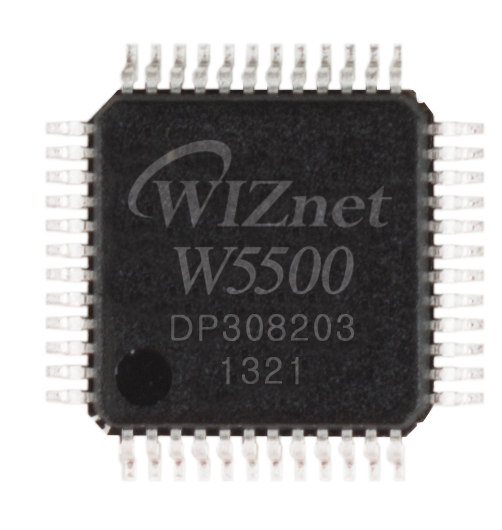
WIZnet - W5500
x 1

Water Keeps Flowing Even When the Power or Wi-Fi Drops — WL-01, a Matter Water-Tank Controller Built on W5500 Wired/Wireless Redundancy
One-Line Summary
A Matter water-tank auto-refill controller that pairs WIZnet W5500 wired Ethernet with Wi-Fi on an ESP32-S3, guaranteeing an unbroken connection through wired-first operation with automatic wireless fallback. It connects to Apple Home, Google Home, Home Assistant, and Alexa simultaneously.
What Is This Project?
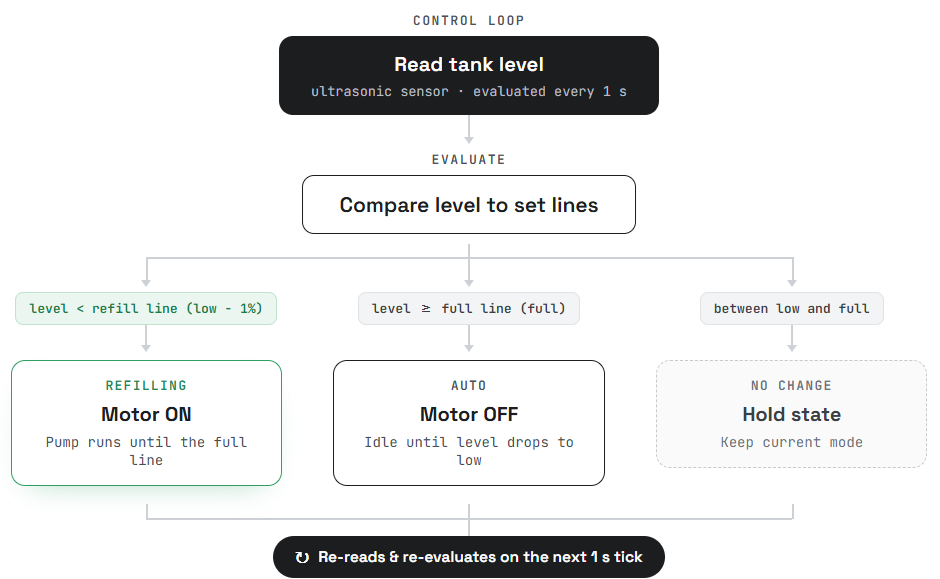
WL-01 is a water-tank auto-refill controller from the AUTOMATE brand. An ultrasonic level sensor reads the tank level; when the water drops below a set refill line, the controller runs the pump to refill automatically, then stops at the full line.
The heart of this product isn't the refill automation itself — it's connection reliability. Because it's an always-on piece of equipment, a dropped network is a real problem. WL-01 solves this by making W5500 wired Ethernet and Wi-Fi redundant. On top of that, Matter support lets it connect to every major smart-home platform at once, with no dedicated hub.
About the Repository
This article is based on the GitHub repository Billtou/public. The repository holds not source code, but the distribution and support materials for the WL-01 product, released under the AUTOMATE brand. It contains three main things:
- Firmware binaries (
.bin) — version-stamped executables accumulated over time (currently up to v0.2.9) - OTA manifests — config files that let the device pull the latest firmware automatically
- User manual (
README.md) — covering specs, wiring, pairing, setup, and troubleshooting
In other words, it isn't something to "read the code and build from" — it's best seen as a technical case study of how a product-grade controller combined W5500 wired/wireless redundancy with Matter. The fact that firmware has climbed steadily to v0.2.9 shows it's a still in active development and maintenance.
What WIZnet Brings: The Lifeline of a Device That Must Not Disconnect
A water-tank refill controller is a device that must stay powered on and connected at all times. You need to check and control it remotely while away from home or out of the country — and if the network is down at that moment, the device is meaningless.
This is where the WIZnet W5500 plays its key role.
Why Wi-Fi Alone Isn't Enough
Wi-Fi is convenient, but in equipment environments it carries many sources of instability — router reboots, channel interference, weakening signal, DHCP lease-renewal failures, and so on. For a device controlling core infrastructure like a building's water tank, that instability is fatal.
WL-01 solves this by making W5500 wired Ethernet the primary connection. Whenever a LAN cable is plugged in, wired is always used first; Wi-Fi is dropped and only comes back automatically when the wired link fails.
Wired-First + Automatic Wireless Fallback
WL-01's network-switching logic works as follows.
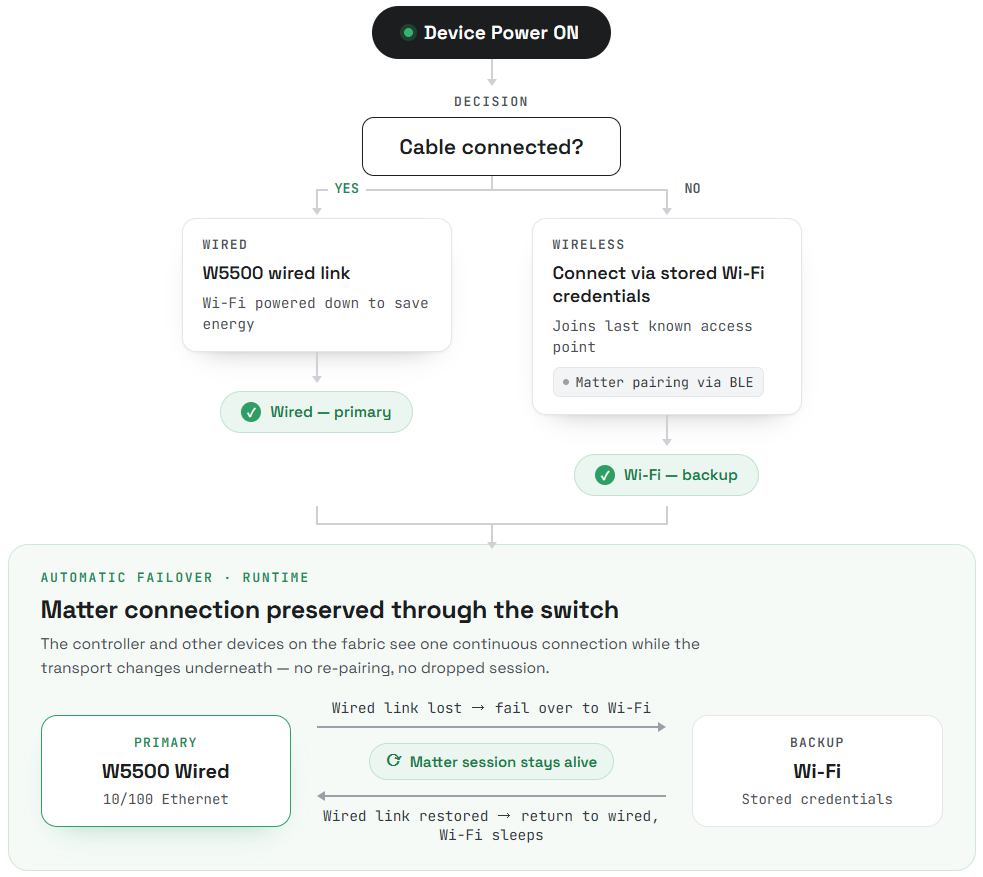
| State | Behavior |
|---|---|
| Cable only | Use W5500 wired, block Wi-Fi |
| Wi-Fi only | Use Wi-Fi (Matter pairing goes through BLE) |
| Both present | Wired first, Wi-Fi auto-blocked to save power |
| Wired lost | Auto-fallback to Wi-Fi, Matter connection uninterrupted |
| Wired restored | Back to wired, Wi-Fi blocked |
This "turn wireless off while wired is alive, bring wireless up when wired dies" default-route switching is the core of WL-01's reliability — and W5500 carries that wired axis.
How W5500 Is Connected
W5500 connects to the ESP32-S3 over SPI and provides 10/100 Mbps wired Ethernet. Because W5500 embeds its TCP/IP stack in hardware, it secures a stable wired link while easing the load on the ESP32-S3. This becomes the network foundation that Matter communication, the local Web UI, and OTA updates all depend on.
How It Works: From Sensor to Smart Home
WL-01's overall operation breaks into three axes.
1) Level Sensing (ModBus RS485) An ultrasonic level sensor connects over ModBus RTU (RS485). It measures a 0.75–3 m range and derives a stable level by averaging multiple readings. If the sensor disconnects, the system automatically enters an "abnormal" mode and force-stops the motor to prevent the pump from running dry.
2) Auto-Refill Logic
3) Network & Smart Home (W5500 + Wi-Fi + Matter) It runs the Matter protocol on top of the W5500/Wi-Fi redundancy. Matter's Multi-Admin feature lets it connect to up to five ecosystems (Apple Home, Google Home, Home Assistant, Alexa) at once — set it up once and state syncs across multiple apps.
The device exposes five Matter entities.
| Entity | Endpoint | Role |
|---|---|---|
| Automation | EP1 | ON = auto mode / OFF = stop mode (motor force-off) |
| Refill | EP2 | Mirrors motor state; ON = start refill |
| Aux Relay (Relay 02) | EP3 | Directly controls a separate GPIO relay (no safety logic) |
| Level Sensor | EP4 | Borrows the humidity cluster to show 0–100% level |
| Abnormal Alert | EP5 | Borrows a Contact sensor; Closed = normal / Open = abnormal, triggers push notifications |
A 128×64 SH1106 OLED shows the current state (auto/stop/refill/abnormal) and level data in real time, and physical buttons allow manual control even without a network.
What's Worth Noting
- A textbook network design for an "always-on device": A tank refiller is equipment that can't drop its connection for even a moment. Making W5500 wired the primary and Wi-Fi the backup is a model structure for this kind of mission-critical IoT. It directly implements the highest-value combination from an evaluation standpoint: "the stability of wired + the convenience of wireless."
- Combining Matter + W5500: It's distinctive in carrying Matter traffic — the core smart-home standard of 2026 — over wired (Ethernet) as the first-priority transport rather than wireless. With Matter over Wi-Fi being the norm, devices that put Ethernet first are rare. See the section "Carrying Matter Traffic over Wired (Ethernet) as First Priority" below for details.
- A finished, commercially sold product: Firmware v0.2.9, automatic OTA updates, OEM white-label capability, and Multi-Admin support across five ecosystems — this is a product-grade, finished design, not a sample, built to product level.
- Industrial sensor integration: By integrating a ModBus RTU RS485 ultrasonic sensor, it reaches beyond typical smart-home gear into equipment-automation territory.
- Safety-oriented design: Motor defaults to OFF after power is restored, force-stop on sensor anomaly — the pump-protection logic is thorough.
Use Cases
- Home / building water-tank auto-refill: Automatically manage rooftop tank levels and check or control status from a phone while away
- Agricultural reservoir management: Auto-replenish irrigation reservoirs on a smart farm with instant alerts on anomalies
- Commercial-facility water management: Monitor multiple tanks centrally from a building office via Home Assistant
- Equipment rooms with wired infrastructure: Leverage wired stability directly in cabled machine and pump rooms
- Any auto-refill setting where network reliability matters: Wi-Fi if wired drops, safe even through a power outage
Carrying Matter Traffic over Wired (Ethernet) as First Priority
Matter is an application-layer protocol through which smart-home devices exchange commands and state. But Matter doesn't fix which physical path (the transport layer) carries those messages — it allows all three of Wi-Fi, Thread, and Ethernet. WL-01's most technically distinctive choice is carrying this Matter traffic over wired (Ethernet) as the first-priority transport rather than wireless. Market Matter devices are essentially all Wi-Fi or Thread, and devices that put Ethernet first are very rare. WL-01 layers Matter on top of a dual-transport structure with W5500 wired as the primary path and Wi-Fi as backup.
This design brings four practical benefits.
- Separation of commissioning and operation: Initial pairing goes through BLE, but once paired, day-to-day communication shifts straight to W5500 Ethernet whenever a cable is present. Even in equipment rooms with messy wireless conditions, you can pair briefly over wireless and run operations over stable wired.
- Uninterrupted path switching: Even as wired↔Wi-Fi switch automatically, the Matter session (Fabric) is preserved. The device stays continuous as seen from the app, and the user never notices the switch.
- mDNS local discovery: Exposed under the hostname
automate-wl01-XXXXXX.local, it's discovered and controlled locally — without the cloud — on the same network, wired or wireless. Matter's local-first philosophy meets wired stability here. - Synergy with Multi-Admin: Stable wired backs the traffic of up to five ecosystems (Apple/Google/HA/Alexa) controlling the same device at once. When multiple hubs poll and control simultaneously, wired beats wireless on latency and packet loss.
In short, putting "Matter over Ethernet first, with Wi-Fi as automatic fallback" is a design rarely seen on the market, achieving at once the reliability an always-on equipment device demands and the multi-ecosystem convenience of Matter.
Tech Stack Summary
| Item | Details |
|---|---|
| MCU | ESP32-S3-WROOM-1-N4 |
| Ethernet chip | WIZnet W5500 (SPI, 10/100 Mbps, hardware TCP/IP) |
| Network redundancy | W5500 wired (primary) + Wi-Fi 2.4 GHz (backup), wired-first auto-fallback |
| Smart-home standard | Matter 1.x over Wi-Fi/Ethernet, Multi-Admin up to 5 Fabrics |
| Compatible platforms | Apple Home, Google Home, Home Assistant, Amazon Alexa (no dedicated hub) |
| Level sensor | Ultrasonic ModBus RTU RS485 (0.75–3 m) |
| Relays | 2-channel, up to 10 A 250 VAC (motor + aux) |
| Power | DC 12 V / 1 A |
| Brand / Firmware | AUTOMATE (brand), v0.2.9 |
FAQ
Q. Which takes priority, wired or Wi-Fi? Wired (W5500 Ethernet) always takes priority. When a cable is plugged in and connected, Wi-Fi automatically drops to save power. Only when the wired link fails does Wi-Fi auto-switch in as backup — and the Matter connection stays up through that switch.
Q. Does W5500 use a hardware TCP/IP stack? Yes. W5500 is a controller that embeds its TCP/IP stack in hardware inside the chip. The ESP32-S3 talks to W5500 over SPI, securing a stable wired link at low overhead. That wired link becomes the common foundation for Matter communication, the local Web UI, and OTA.
Q. Does Matter require a separate hub? No. Because WL-01 supports the Matter standard, it connects directly to Apple Home, Google Home, Home Assistant, and Alexa without a dedicated hub. With Multi-Admin, it can connect to up to five ecosystems at once.
Q. If the network goes down completely, does it stop working? No. The core auto-refill logic (level sensing → motor control) runs inside the device, independent of the network. Manual refill/stop is also possible via physical buttons. The network is for remote monitoring, control, and alerts — refilling itself continues even if it drops.
Q. If the sensor fails, does the pump keep running? No. If the level sensor fails to read repeatedly, the system automatically enters "abnormal" mode and force-stops the motor. This is a safety design that prevents the pump from running dry and burning out. At the same time, the Matter Contact sensor goes "Open," sending a push notification to your phone.
Project Links
- GitHub: Billtou/public — WL_01b
- WL-01 Matter manual: WL_01b/matter/README.md
- WIZnet W5500: https://docs.wiznet.io/Product/Chip/Ethernet/W5500