


All Aboard The Hack Train: Nottingham’s LED Revival
A retro UK railway LED departure board was restored using an Arduino Uno R4 WiFi and upgraded with a WIZnet W5500 Ethernet module to create a stable, real-time,
WIZnet - W5500
x 1

Restoring a Railway LED Departure Board with WIZnet W5500 Ethernet
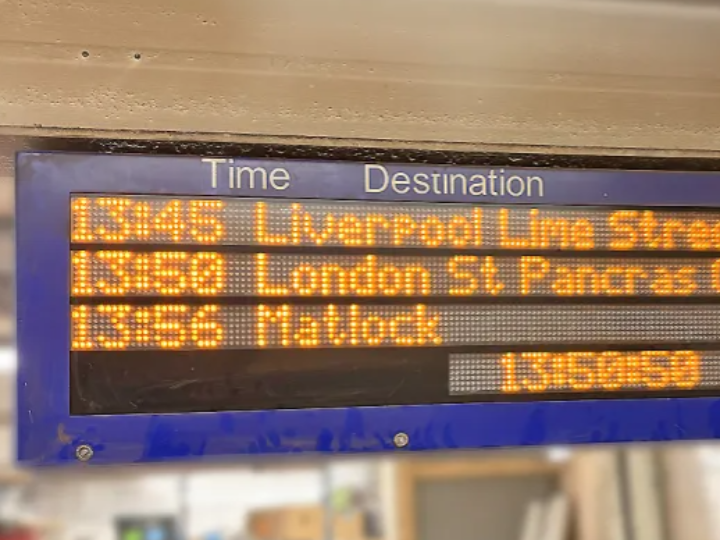
This project revives a decommissioned UK railway LED departure board using modern hardware, transforming it into a real-time, network-connected information display. Interestingly, the controller chosen for the restoration was an Arduino Uno R4 WiFi — a board that already includes built-in wireless connectivity.
So why did the team end up adding a WIZnet W5500 Ethernet module instead of relying on the onboard Wi-Fi?
That question became one of the more intriguing aspects of the restoration, and exploring the reasoning reveals how the project evolved into a much more robust, wired-network design.
Why WIZnet?
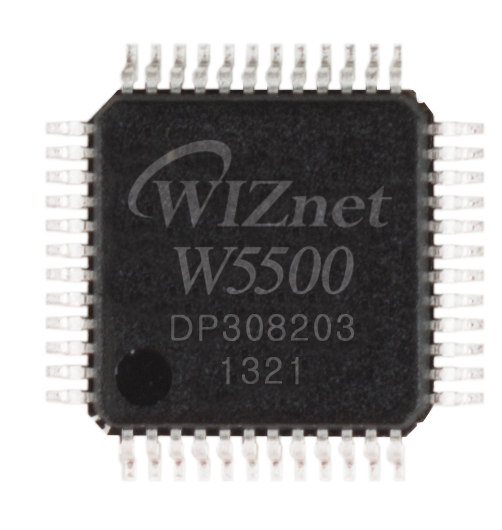
To drive the LED panel, the team designed a new Arduino-based controller board and needed a way to feed it live data. Because the display is intended to run continuously and reflect real-time updates, a dependable wired network interface was essential. This is where the W5500 shines.
1) Built for Reliable, Real-Time Display Updates
The board displays fast-changing information such as:
- Railway departure data
- Discord messages from the community
While Wi-Fi struggled with unstable latency and intermittent disconnects, the W5500’s hardware TCP/IP engine ensured consistently smooth updates.
Wired Ethernet allowed the display to remain responsive and predictable regardless of surrounding RF interference—crucial for a public-facing installation.
2) Offloads Networking from the MCU
Driving thousands of LEDs is already demanding on the microcontroller.
With the W5500 handling TCP/IP in hardware:
- The MCU can focus entirely on LED driving and formatting
- Network operations do not interrupt display timing
- The system remains responsive even under heavy LED workloads
This separation is critical for a large industrial display with strict timing requirements.
3) Perfect Match for MQTT-Based Architectures
The restored board receives commands and text to display via MQTT.
W5500’s stable Ethernet connection makes it ideal for persistent MQTT sessions.
In practice, the system forms a clean pipeline:

The W5500 acts as the gateway between modern network services and the retro hardware.
4) Maker-Friendly: Easy to Integrate, Easy to Build With
- Fully supported in the Arduino ecosystem
- Plenty of libraries, examples, and documentation
- SPI-based interface keeps wiring simple
- Ideal for rapid prototyping and community projects
This made development faster and far more accessible to the Hackspace team.
What WIZnet Made Possible
✔ 24/7 Rock-Solid Operation
In a public or community space, the display must stay online without frequent rebooting.
W5500’s wired approach eliminates Wi-Fi instability entirely.
✔ Instantaneous Data Display
Railway updates change constantly, and Discord messages need to appear immediately.
Ethernet ensures fast, predictable message delivery.
✔ Smooth LED Control + Networking
The W5500 removes all network overhead from the MCU, making it possible to:
- Drive 4,480+ LEDs per chain
- Handle long, complex update cycles
- Maintain a stable MQTT connection simultaneously
✔ Natural System Expansion
Because the network link is stable and MQTT-based, adding more features or data sources requires no changes to the network layer—something Wi-Fi never guaranteed.
Conclusion: A Great Example of WIZnet Ethernet in Real Projects
The Nottingham LED departure board revival showcases how WIZnet’s Ethernet technology can breathe new life into old industrial hardware.
By combining a reliable W5500 network layer with custom electronics and modern microcontrollers, the team turned a discarded railway sign into a fully modern IoT display. WIZnet’s stability, hardware TCP/IP stack, and maker-friendly ecosystem were key enablers that made this restoration both possible and practical.