


Novel Readout Electronics for Large Field-of-View Gamma Camera (Physica Medica 2024)
Development of novel low-cost readout electronics for large field-of-view gamma camera detectors
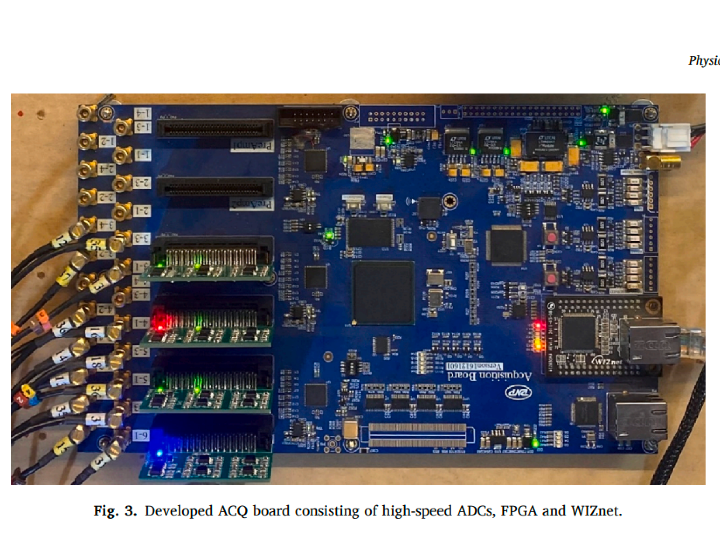
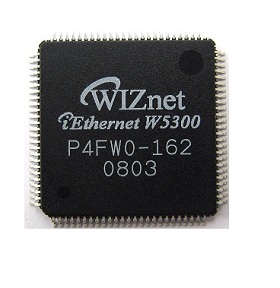
WIZnet - W5300
x 1

Source Mention & Context
Original Research by Geneva University Hospital (Aram Radnia et al.)
Published in the prestigious Q1 Journal Physica Medica (2024), this paper presents a breakthrough in "Low-cost Readout Electronics" for nuclear medicine. The research explicitly cites the use of WIZnet W5300 as a critical component to replace expensive commercial data acquisition systems, proving that cost-effective hardware can meet clinical standards.
1. What is a Gamma Camera Readout System?
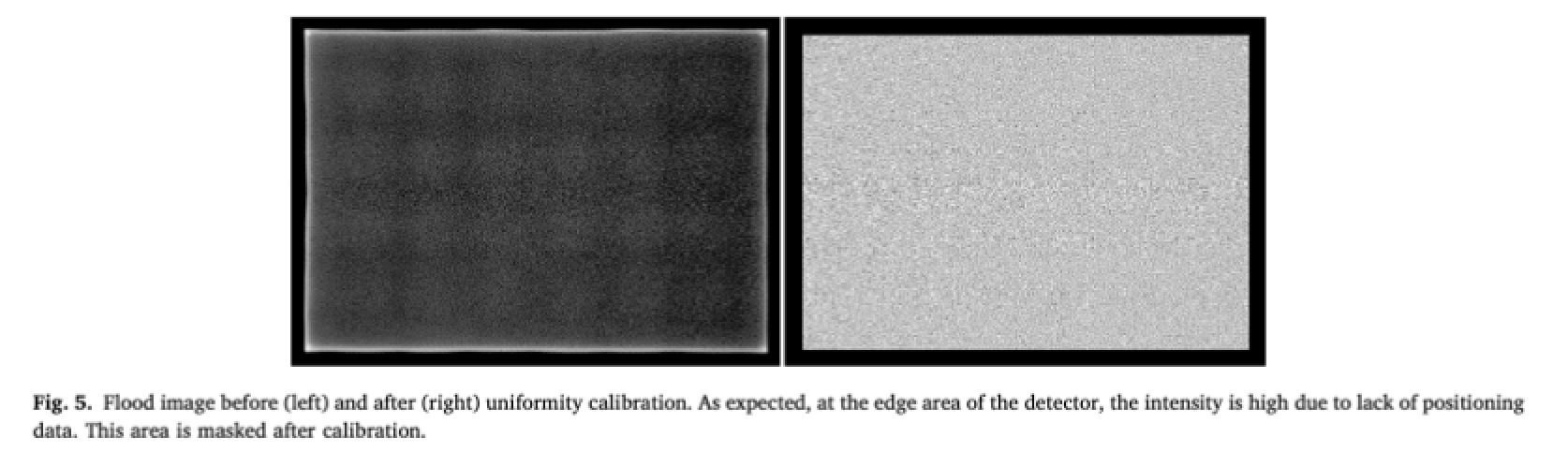
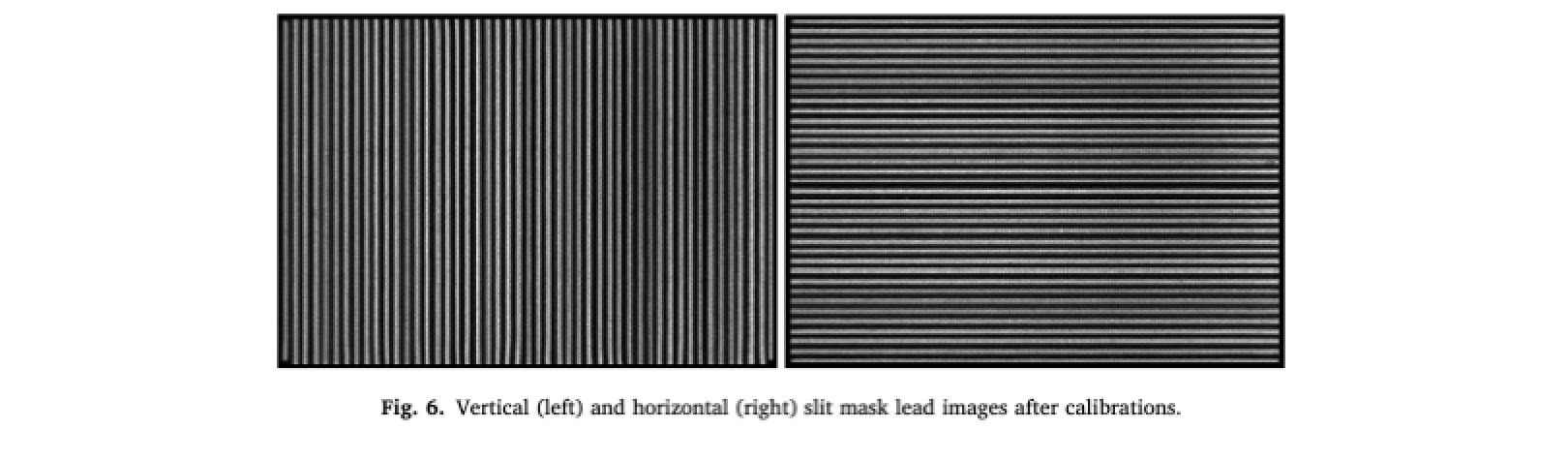
A gamma camera images radiation from a patient's body to diagnose diseases like cancer. The "Readout System" is the brain that calculates exactly where a gamma photon hit the detector based on faint light signals from 48+ Photomultiplier Tubes (PMTs). It requires processing massive amounts of data in microseconds with zero latency.
2. Why WIZnet W5300? (Technical Necessity) The researchers faced a bottleneck: How to transmit high-speed positioning data from a Spartan-6 FPGA to a PC without consuming all the FPGA's logic gates?
- Parallel Bus Interface: Unlike the SPI-based W5500, the W5300 offers a 16-bit direct data bus, allowing the FPGA to dump data into the network buffer at memory-access speeds.
- FPGA Resource Optimization: Implementing a full TCP/IP stack in VHDL (FPGA code) is complex and resource-heavy. W5300's hardware TOE handled the networking off-chip, allowing the small Spartan-6 to focus entirely on advanced signal processing (DC rejection, Anger logic).
3. Development Highlights: Engineering Excellence
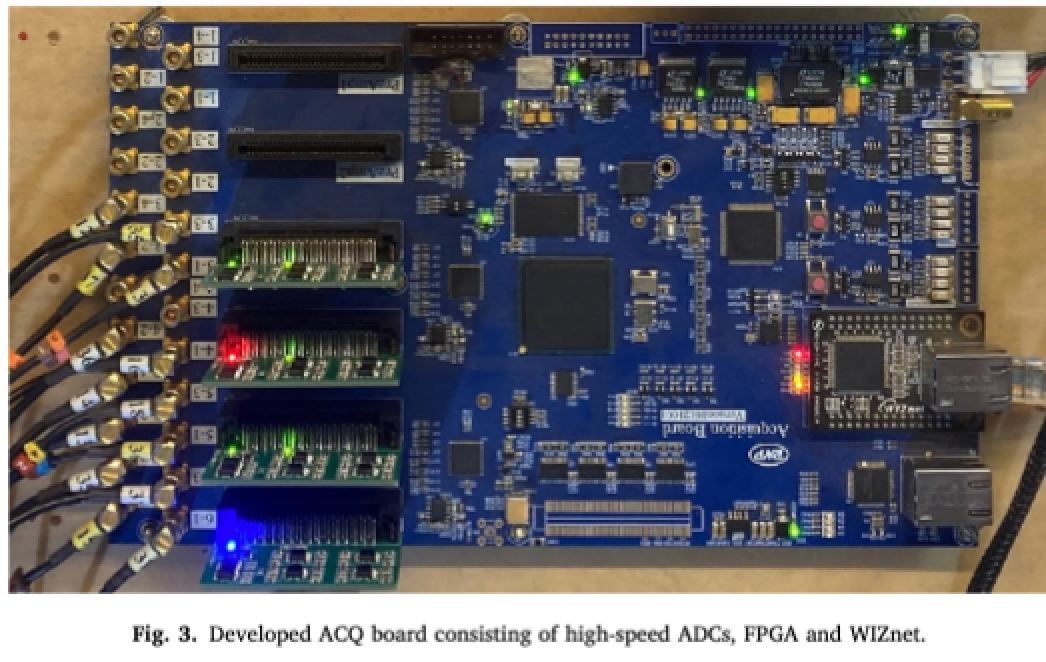
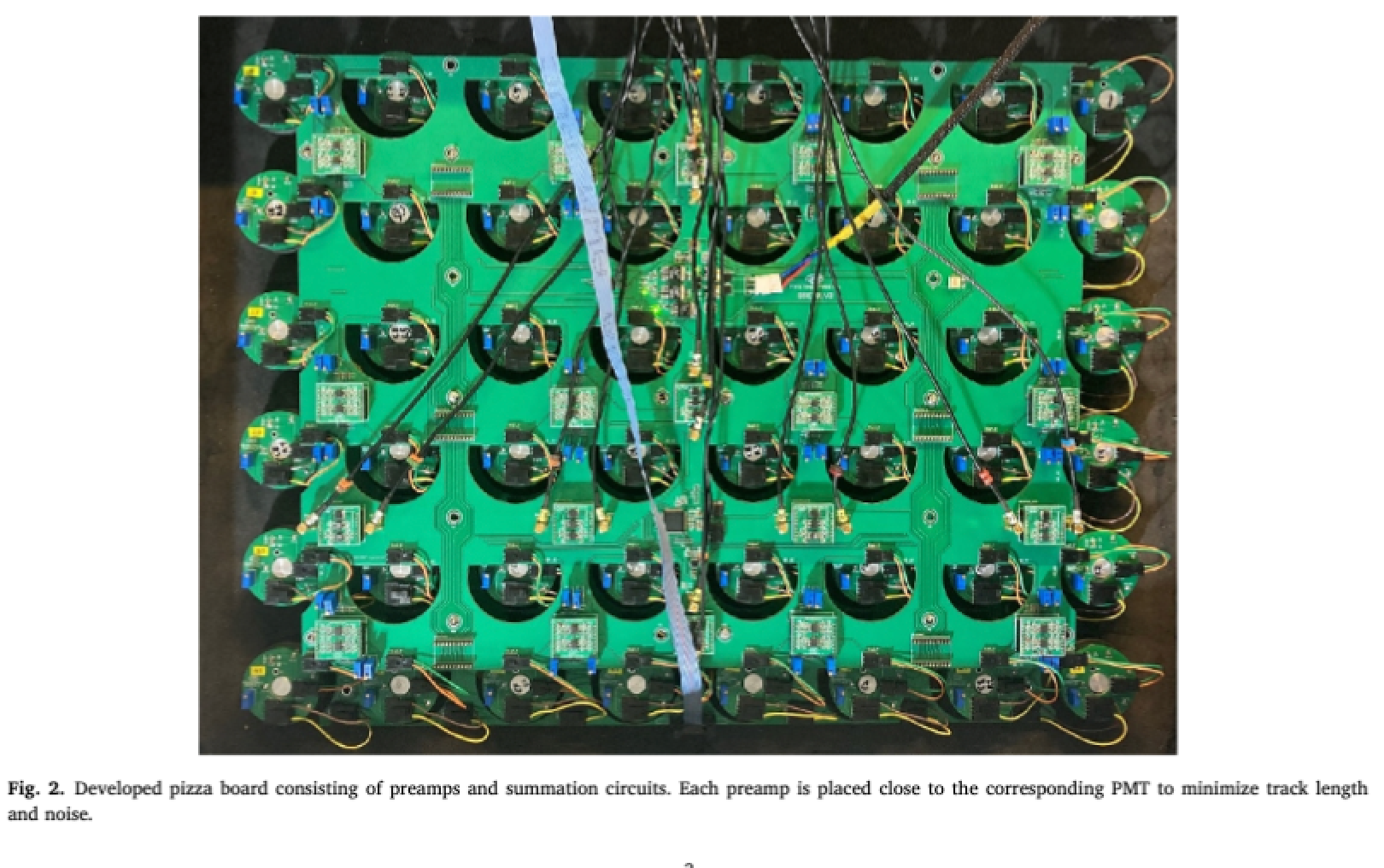
- Hardware Design: A custom 4-layer PCB integrating 48 analog channels, high-speed ADCs, and digital logic on a single board.
- Performance: Achieved 3.1mm spatial resolution, comparable to commercial systems costing significantly more.
- Signal Processing: Implemented a "Digital CSE" (Current Sensitive Event) algorithm on the FPGA to handle pulse pile-up and improve image clarity.
4. Strategic Alignment: IoMT & Medical Imaging This project validates WIZnet's role in High-End Medical Devices. It demonstrates that WIZnet chips are not just for simple IoT sensors but are robust enough for the rigorous demands of Nuclear Medicine, where precision and speed are matters of life and death.
5. Conceptual Implementation: FPGA-to-W5300 Interface This VHDL snippet concept illustrates how the FPGA writes image data to the W5300's TX memory via the parallel bus.
-- Conceptual VHDL: Writing Gamma Event Data to W5300
process(clk)
begin
    if rising_edge(clk) then
        if event_detected = '1' then
            -- 1. Enable W5300 Write
            W5300_CS <= '0';
            W5300_WR <= '0';

            -- 2. Put Positioning Data on 16-bit Bus
            W5300_DATA <= X_POS & Y_POS; -- Packed 16-bit Coordinate

            -- 3. Trigger UDP Send Command
            state <= SEND_PACKET;
        end if;
    end if;
end process;
6. FAQ (Technical Deep Dive)
- Q: Why utilize W5300 instead of W5500?
- A: Bandwidth. W5500 uses SPI (max ~80Mbps theoretical), whereas W5300 uses a 16-bit parallel bus matching the FPGA's internal data width, essential for the high data rate of raw gamma imaging.
- Q: Can this be used for PET scanners too?
- A: Ideally, yes. The architecture (Scintillator -> FPGA -> Ethernet) is similar. Upgrading to W5300-TOE allows scalable detector blocks.
[Korean Version]
출처 및 배경 (Context)
제네바 대학 병원(HUG) 연구진의 쾌거
이 연구는 Q1급 저널 Physica Medica (2024)에 게재된 논문으로, 고가의 핵의학 장비 부품을 "Low-cost"로 대체하면서도 임상 성능을 유지하는 방법을 제시했습니다. 연구진은 FPGA의 복잡한 네트워크 구현 문제를 해결하기 위해 WIZnet W5300을 핵심 부품으로 채택했습니다.
1. 감마 카메라 판독 시스템이란?
감마 카메라는 체내 방사성 물질의 분포를 영상화하여 암 등을 진단하는 장비입니다. 48개 이상의 광증배관(PMT)에서 쏟아지는 아날로그 신호를 100만분의 1초 단위로 분석하여 감마선이 충돌한 정확한 위치(X, Y)를 계산해내야 하는 고난이도 시스템입니다.
2. 왜 위즈넷 W5300인가? (기술적 필연성)
연구진은 Spartan-6 FPGA에서 처리된 방대한 영상 데이터를 PC로 전송하는 과정에서 병목을 겪었습니다.
- 16-비트 병렬 버스 인터페이스: SPI 방식의 W5500과 달리, W5300은 FPGA 내부 데이터 폭과 동일한 16비트 병렬 버스를 제공하여 메모리에 쓰듯이 초고속으로 데이터를 넘길 수 있습니다.
- FPGA 리소스 최적화: FPGA 내부 로직(VHDL)으로 복잡한 TCP/IP 스택을 구현하는 대신, 통신 기능을 W5300에 전담(Offload)시켜 저사양 FPGA로도 고도의 신호 처리 알고리즘을 구동할 수 있게 했습니다.
3. 개발 하이라이트: 엔지니어링의 정점
- 하드웨어 설계: 48채널 아날로그 입력과 디지털 로직을 단일 4층 PCB에 집적한 고밀도 설계.
- 성능 입증: 상용 장비와 대등한 3.1mm의 공간 분해능(Spatial Resolution)을 달성하여 실제 임상 활용 가능성을 입증했습니다.
- 신호 처리: 펄스 중첩(Pile-up) 현상을 해결하기 위한 디지털 CSE 알고리즘을 FPGA 내부에 성공적으로 구현했습니다.
4. 전략적 가치: IoMT와 의료 영상 기술
이 프로젝트는 위즈넷 기술이 단순한 IoT 센서를 넘어 첨단 의료 영상 장비(Medical Imaging)의 핵심 데이터 파이프라인으로 사용될 수 있음을 증명했습니다. 생명과 직결되는 환자 데이터의 무결성을 보장하는 '신뢰의 통로'로서 WIZnet 칩의 가치를 보여줍니다.
5. 개념적 구현: FPGA-W5300 인터페이스
이 VHDL 가상 코드는 FPGA가 계산한 감마선 위치 좌표를 W5300의 병렬 버스를 통해 전송하는 과정을 보여줍니다.
-- 개념적 VHDL: W5300 병렬 버스를 통한 감마 이벤트 전송
process(clk)
begin
    if rising_edge(clk) then
        if event_detected = '1' then
            -- 1. W5300 쓰기 모드 활성화
            W5300_CS <= '0';
            W5300_WR <= '0';

            -- 2. 16비트 버스에 좌표 데이터 실기
            W5300_DATA <= X_POS & Y_POS; -- X, Y 좌표 패킹

            -- 3. UDP 전송 시작 트리거
            state <= SEND_PACKET;
        end if;
    end if;
end process;
6. FAQ (심층 분석)
- Q: 왜 W5500이 아닌 W5300을 사용했나요?
- A: 대역폭 때문입니다. W5500의 SPI 통신만으로는 수십 개의 PMT에서 발생하는 실시간 영상 데이터를 감당하기 어렵습니다. W5300의 병렬 버스(Parallel Bus)는 FPGA와 가장 궁합이 잘 맞는 고속 인터페이스입니다.
- Q: 이 기술이 PET 스캐너에도 적용될 수 있나요?
- A: 구조적으로 유사하므로 적용 가능합니다. W5300을 통해 각 검출기 블록을 모듈화하면 확장 가능한 PET 시스템을 구축할 수 있습니다.