



Vehicle Speed Enforcement System with WIZ750SR-TTL
Vehicle Speed Enforcement System with WIZ750SR-TTL

Overview

DNO developed a vehicle speed enforcement system using WIZnet WIZ750SR-TTL.
Vehicle speed enforcement systems are usually installed on roads, highways, school zones, and industrial sites to measure vehicle speed and transmit violation data to a control server or monitoring system.
In this type of system, reliable communication is very important. The speed measurement unit, camera controller, display controller, or local control board often uses a serial interface such as UART/TTL. However, the central monitoring system usually communicates through Ethernet or an IP network.
To solve this gap, DNO used WIZ750SR-TTL, a Serial to Ethernet module from WIZnet.
WIZ750SR-TTL converts TTL-level serial data into Ethernet packets and allows the existing serial-based equipment to communicate with a remote server over a wired network.
Background
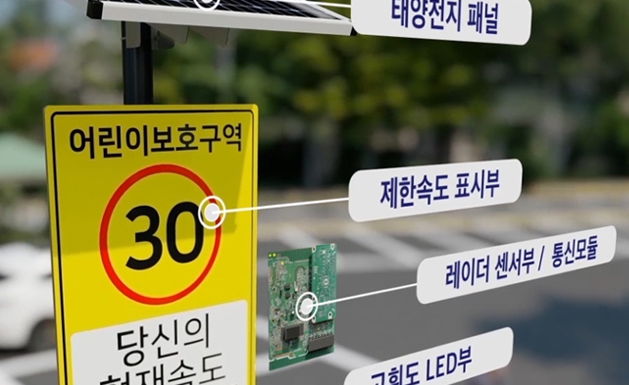
Many traffic enforcement and monitoring devices are built around embedded controllers that communicate through serial interfaces.
Serial communication is simple and reliable for short-distance communication inside a device, but it has limitations when the system needs to send data to a remote control center.
Typical issues include:
- Limited communication distance
- Difficult remote monitoring
- Harder integration with IP-based servers
- Additional gateway hardware requirement
- Maintenance complexity in field installations
For a vehicle speed enforcement system, measured speed data, vehicle detection data, event logs, and system status need to be transmitted reliably.
By using Ethernet, the system can be connected to a local network, control server, or remote monitoring platform more easily.
Solution
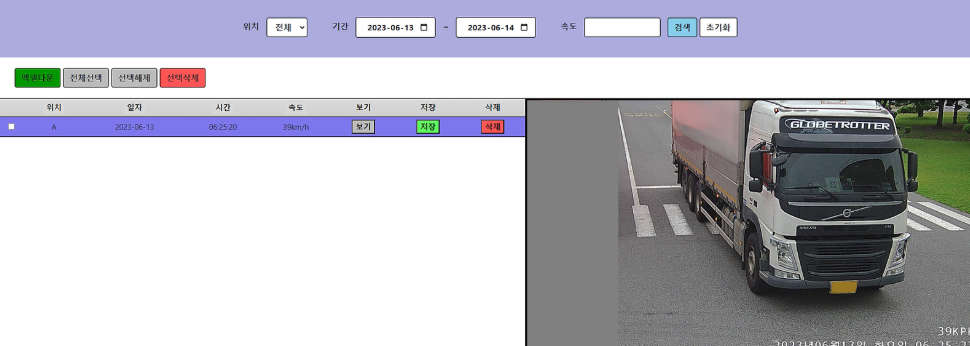
DNO applied WIZ750SR-TTL as the communication bridge between the speed enforcement controller and the Ethernet network.
The system can be structured as follows:
Speed Detection Controller
        |
   TTL Serial UART
        |
   WIZ750SR-TTL
        |
     Ethernet
        |
Control Server / Monitoring System
The speed enforcement controller sends serial data through TTL UART.
WIZ750SR-TTL receives the serial data, converts it into TCP/IP or UDP packets, and transmits it through Ethernet.
In the opposite direction, commands or configuration data from the server can be received through Ethernet and converted back to serial data for the controller.
This allows the vehicle speed enforcement system to support network-based communication without redesigning the entire embedded controller hardware.
Why WIZ750SR-TTL?
WIZ750SR-TTL is suitable for this application because it is designed for equipment that already has a serial interface.
According to WIZnet documentation, WIZ750SR can be connected to devices that provide a serial interface and used to control and monitor them through an Ethernet network. It supports several operation modes including TCP server, TCP client, TCP mixed mode, and UDP mode.
1. Easy Serial to Ethernet Conversion
The main role of WIZ750SR-TTL is to convert serial data into Ethernet data.
This makes it possible to add Ethernet connectivity to an existing serial-based speed enforcement controller without changing the core controller design.
2. TTL Interface Support
The TTL version is especially useful when the host controller already uses TTL-level UART.
This removes the need for additional RS-232 or RS-485 transceiver circuitry when the internal controller interface is TTL.
3. TCP / UDP Network Modes
WIZ750SR supports multiple network operation modes such as TCP server, TCP client, TCP mixed mode, and UDP.
This gives system developers flexibility depending on the server architecture.
For example:
- TCP client mode can be used when the device connects to a central server.
- TCP server mode can be used when the monitoring system connects directly to the device.
- UDP mode can be used for simple packet-based transmission.
4. Remote Monitoring and Control
By adding Ethernet communication, the speed enforcement system can be monitored and controlled remotely.
This is useful for checking device status, collecting speed measurement data, updating configuration, and maintaining roadside equipment.
Application Architecture
The complete system may include:
- Vehicle speed detection sensor
- Camera or image capture unit
- Local embedded controller
- WIZ750SR-TTL Serial to Ethernet module
- Ethernet switch or router
- Control server
- Monitoring software
The WIZ750SR-TTL works as a communication module between the local embedded controller and the network.
It does not need to replace the existing controller. Instead, it adds network capability to the system.
This is an important advantage for industrial and traffic systems because many existing devices already use stable serial-based control boards.
Benefits
Using WIZ750SR-TTL in a vehicle speed enforcement system provides several benefits:
- Adds Ethernet to existing serial equipment
- Reduces hardware redesign effort
- Enables remote monitoring
- Supports wired network reliability
- Allows connection to control servers
- Supports TCP and UDP communication
- Simplifies field maintenance
- Suitable for embedded industrial systems
For traffic enforcement equipment, these benefits are important because the system must operate continuously and reliably in outdoor or roadside environments.
Conclusion
DNO’s vehicle speed enforcement system is a practical example of how WIZ750SR-TTL can be used in real industrial equipment.
By applying WIZ750SR-TTL, a serial-based traffic enforcement controller can be connected to an Ethernet network. This allows speed data, event information, and device status to be transmitted to a server or monitoring system.
This case shows that WIZnet Serial to Ethernet modules are useful not only for general embedded networking, but also for field-deployed systems such as traffic monitoring, vehicle speed enforcement, industrial control, and remote equipment management.
Q1: What problem does WIZ750SR-TTL solve in this system?
A1:
It converts TTL serial data from the vehicle speed enforcement controller into Ethernet communication, allowing the system to connect to a network server.
Q2: Why is Ethernet useful for vehicle speed enforcement systems?
A2:
Ethernet allows measured data, event logs, and system status to be transmitted to a remote monitoring or control system more reliably than short-distance serial communication.
Q3: Does WIZ750SR-TTL require the existing controller to be redesigned?
A3:
No. If the existing controller already provides TTL UART, WIZ750SR-TTL can be connected as a communication module, reducing redesign effort.
Q4: What network modes can be used?
A4:
WIZ750SR supports TCP server, TCP client, TCP mixed mode, and UDP operation modes, so developers can choose the mode that fits their server architecture.
Q5: What other applications can use this structure?
A5:
The same Serial to Ethernet structure can be used in:
- Traffic monitoring systems
- Parking control systems
- Industrial controllers
- Remote sensors
- Factory equipment
- Security devices
- Data logging systems
- Legacy serial equipment networking