



Tripwire. Know when drones enter your airspace.
Solar- or PoE-powered Remote ID receiver. Detects compliant drones up to twelve kilometres. Installs in under ten minutes. No radar. No cameras.
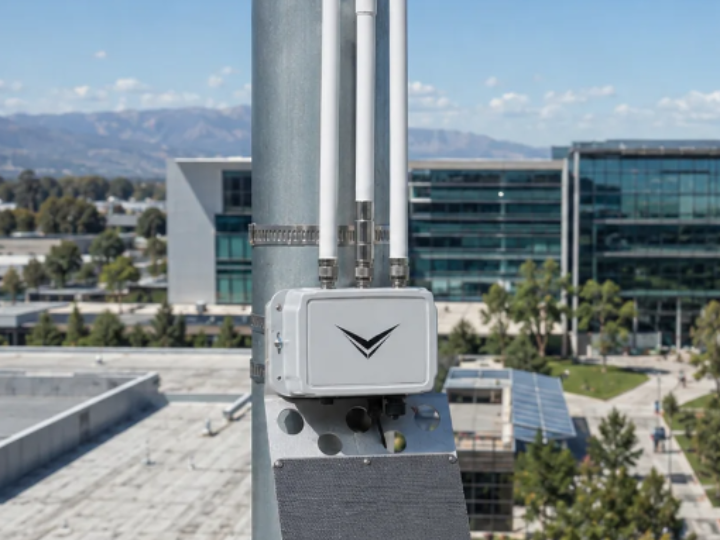
Overview
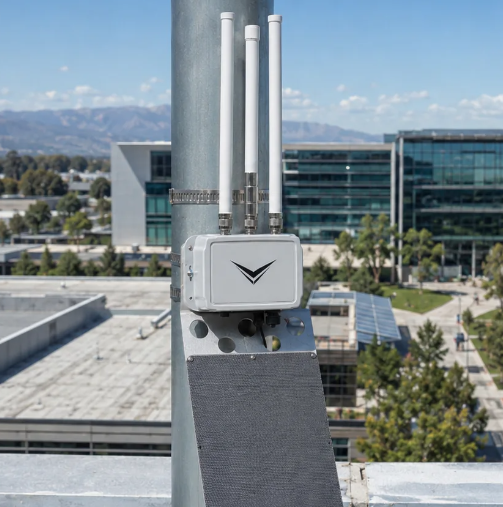
Tripwire is a Remote ID-based drone detection sensor developed by Thalrix.
It is designed to help organizations detect drones entering their airspace by receiving Remote ID broadcast signals from compliant drones.
Tripwire uses WIZnet W5500 for Ethernet connectivity and supports Power over Ethernet (PoE) for simplified installation. By combining Ethernet communication and PoE power delivery, the device can be deployed as a reliable outdoor airspace monitoring sensor with only a single Ethernet cable.
The system is suitable for professional monitoring applications such as:
- Corporate campuses
- Airports
- Prisons
- Critical infrastructure
- Industrial sites
- Government facilities
- Private properties
- Remote perimeter monitoring
When a Remote ID-compliant drone enters the monitored area, Tripwire receives the broadcast signal, parses the drone information, and sends detection data to a dashboard, email, webhook, or existing command-and-control system.
Background
Drones are increasingly used for photography, inspection, delivery, surveying, mapping, and industrial operations.
However, unauthorized drone activity can create security, privacy, and safety concerns in sensitive areas.
Traditional drone detection systems often rely on radar, cameras, or complex RF analysis equipment. These systems can be expensive, difficult to install, and may require dedicated infrastructure.
Tripwire takes a practical approach by focusing on drones that broadcast Remote ID information.
Remote ID allows compliant drones to broadcast information such as:
- Drone location
- Altitude
- Speed
- Identifier
Operator position, where available
By receiving this information, Tripwire can provide airspace awareness without requiring radar or camera systems.
For fixed outdoor installations, reliable network communication and simple power delivery are important. This is where W5500 Ethernet and PoE are useful.
Solution
Tripwire is a compact outdoor sensor node that receives Remote ID broadcasts from drones and sends detection data over the network.
The basic structure can be described as follows:
Remote ID-Compliant Drone
        |
        | Wi-Fi / Bluetooth Remote ID Broadcast
        |
Tripwire Sensor Node
        |
        | WIZnet W5500 Ethernet
        | Power over Ethernet
        |
Ethernet Network
        |
Dashboard / Email / Webhook / Existing C2 System
Tripwire listens for Remote ID signals from nearby drones.
When a drone is detected, the sensor parses the received information and transmits the detection data through the network.
The use of W5500 provides reliable wired Ethernet communication, while PoE allows both power and data to be delivered through a single Ethernet cable.
This makes the device easier to install in outdoor security and perimeter monitoring environments.
Why W5500?
W5500 is a hardwired TCP/IP Ethernet controller from WIZnet.
It is suitable for Tripwire because the device needs reliable network communication in a compact embedded system.
1. Reliable Wired Ethernet
Drone detection sensors are often installed in fixed outdoor locations such as rooftops, poles, fences, or facility perimeters.
For these installations, wired Ethernet provides stable communication compared with wireless-only connectivity.
W5500 enables Tripwire to transmit detection data through a reliable Ethernet connection.
2. Hardwired TCP/IP Stack
W5500 includes a hardwired TCP/IP stack.
This reduces the network processing burden on the main controller and simplifies Ethernet implementation.
For a compact sensor device that must receive signals, parse drone data, and send alerts, offloading Ethernet communication is useful.
3. Compact Embedded Design
W5500 integrates Ethernet MAC, PHY, and TCP/IP stack in a single chip.
This helps keep the hardware compact while still providing 10/100 Ethernet connectivity.
4. Suitable for PoE-Based Sensor Nodes
Tripwire supports PoE, allowing power and Ethernet data to be delivered through one cable.
W5500 is well suited for this type of PoE-powered embedded sensor because it provides the Ethernet communication interface needed for wired network deployment.
Why PoE?
PoE is important for Tripwire because the device is designed for fixed monitoring locations.
1. Single-Cable Installation
With PoE, Tripwire can receive both power and network connectivity through one Ethernet cable.
This reduces installation complexity and eliminates the need for a separate power adapter near the sensor.
2. Better Outdoor Deployment
Drone detection sensors are often mounted in locations where AC power is not convenient.
PoE allows the sensor to be installed on poles, walls, rooftops, or perimeter structures more easily.
3. Centralized Power Management
PoE allows power to be supplied from a PoE switch or injector.
This makes power management easier in multi-node deployments and allows the system to be managed from a central network cabinet.
4. Reliable 24/7 Operation
Airspace monitoring sensors need to operate continuously.
PoE provides a stable power source for always-on monitoring applications.
How It Works
Tripwire operates in four main steps.
1. Drone Enters the Airspace
When a Remote ID-compliant drone powers on, it begins broadcasting identification information.
This broadcast can include location, altitude, speed, identifier, and operator position where available.
2. Signal is Received
Tripwire listens for Remote ID signals.
The device receives Wi-Fi or Bluetooth Remote ID broadcasts from compliant drones.
3. Data is Parsed
Tripwire parses the received Remote ID information.
The detected data can include:
- Drone location
- Drone altitude
- Drone speed
- Drone identifier
Operator position, where available
4. Data is Sent Through Ethernet
After the drone information is parsed, Tripwire sends the detection data through the W5500 Ethernet interface.
Alerts can be delivered to:
- Dashboard
- Webhook
Existing command-and-control system
Main Features
Remote ID Drone Detection
Tripwire detects drones that broadcast Remote ID information.
It is designed to receive Remote ID data from compliant drone platforms and provide airspace awareness.
WIZnet W5500 Ethernet
Tripwire uses WIZnet W5500 for Ethernet communication.
W5500 provides stable wired network connectivity, making the device suitable for fixed security installations.
Power over Ethernet
Tripwire supports PoE.
This allows power and Ethernet communication to be supplied through a single cable, simplifying installation and improving reliability.
Outdoor Deployment
Tripwire is designed for outdoor use.
It can be mounted on a pole, wall, rooftop, or perimeter structure to monitor nearby airspace.
Long-Range Detection
Tripwire is designed for wide-area drone detection.
Detection range depends on line-of-sight conditions, installation height, antenna performance, and the Remote ID broadcast signal from the drone.
Dashboard and Alert Integration
Tripwire can send detection data to a monitoring dashboard or alerting system.
This allows security teams or operators to respond quickly when a drone is detected.
Webhook and C2 Integration
Detection events can be forwarded to external systems through webhook or command-and-control integration.
This makes Tripwire suitable for integration into existing security workflows.
Detection Scope
Tripwire is focused on Remote ID-based drone detection.
Detects
Tripwire can detect:
- Remote ID-compliant drones
- Wi-Fi Remote ID broadcasts
- Bluetooth Remote ID broadcasts
- Drone location data
- Drone altitude data
- Drone speed data
- Drone identifier data
Operator position data, where available
Does Not Detect
Tripwire is not intended to detect every possible drone.
It may not detect:
- Drones with Remote ID disabled
- Modified drones that do not broadcast Remote ID
- Drones exempt from Remote ID requirements
- RF-silent drones
- Military-grade encrypted systems
For environments that require detection of non-compliant or RF-silent drones, Tripwire may need to be combined with additional detection technologies such as radar, optical detection, or RF analysis systems.
System Architecture
A typical Tripwire deployment can be structured as follows:
Airspace Layer
---------------------------------
Remote ID-Compliant Drones
Wi-Fi / Bluetooth Broadcast Signals

Detection Layer
---------------------------------
Tripwire Sensor Node
Remote ID Receiver
Signal Parsing

Network and Power Layer
---------------------------------
WIZnet W5500 Ethernet
Power over Ethernet
PoE Switch / Injector

Monitoring Layer
---------------------------------
Dashboard
Email Alerts
Webhook
Existing C2 System
Security Team
Tripwire acts as the detection node between drone activity in the airspace and the organization’s monitoring system.
W5500 provides the Ethernet communication path, while PoE simplifies power delivery for outdoor installation.
Installation Flow
A typical Tripwire installation can be described as follows:
Choose a mounting location with good visibility of the monitored airspace.
Mount the device on a pole, wall, rooftop, or perimeter structure.
Connect the Ethernet cable from a PoE switch or PoE injector.
The device receives power through PoE.
W5500 provides wired Ethernet connectivity.
The device starts monitoring Remote ID broadcasts.
Detection data is sent to the dashboard, webhook, email, or command system.
This installation model is practical because it requires only one cable for both communication and power.
Applications
Tripwire can be used in many airspace monitoring and security applications, including:
Corporate campus security
Airport perimeter awareness
Prison airspace monitoring
Critical infrastructure protection
Utility facility monitoring
Industrial plant security
Government site monitoring
Event venue airspace awareness
Private property drone detection
Remote perimeter monitoring
Multi-node security deployments
The combination of Remote ID detection, W5500 Ethernet, and PoE makes Tripwire suitable for fixed outdoor monitoring applications.
Benefits
Tripwire provides several practical benefits.
Reliable Network Communication
W5500 enables stable wired Ethernet communication for detection data and alert delivery.
Simple Power Delivery
PoE allows power and data to be delivered through a single Ethernet cable.
Easy Outdoor Installation
The device can be installed in fixed locations such as poles, rooftops, walls, or perimeter structures.
Remote Airspace Awareness
Tripwire helps operators know when Remote ID-compliant drones enter monitored airspace.
Integration with Existing Systems
Detection events can be sent to dashboards, email, webhooks, or existing command-and-control systems.
Practical Sensor Node Design
By using W5500 and PoE, Tripwire can operate as a reliable network-connected sensor node for airspace monitoring.
Conclusion
Tripwire is a Remote ID-based drone detection sensor designed for professional airspace monitoring.
It receives Wi-Fi and Bluetooth Remote ID broadcasts from compliant drones, parses drone information, and sends detection data to monitoring systems.
By using WIZnet W5500, Tripwire provides reliable wired Ethernet connectivity. With PoE, the device can receive both power and network communication through a single Ethernet cable.
This makes Tripwire suitable for outdoor fixed installations such as corporate campuses, critical infrastructure, industrial sites, airports, prisons, government facilities, and private properties.
The project shows how W5500 and PoE can be used together to build a practical Ethernet-connected sensor node for security and monitoring applications.
Q1: What is Tripwire?
A1:
Tripwire is a Remote ID-based drone detection sensor developed by Thalrix.
Q2: Which WIZnet product is used?
A2:
Tripwire uses WIZnet W5500 for Ethernet connectivity.
Q3: Does Tripwire support PoE?
A3:
Yes. Tripwire supports Power over Ethernet, allowing power and data to be delivered through a single Ethernet cable.
Q4: What does Tripwire detect?
A4:
Tripwire detects drones that broadcast Remote ID information through Wi-Fi or Bluetooth.
Q5: What information can Tripwire receive?
A5:
Tripwire can receive drone information such as location, altitude, speed, identifier, and operator position where available.
Q6: Why is W5500 useful in this product?
A6:
W5500 provides reliable wired Ethernet connectivity for sending detection data to dashboards, webhooks, email alerts, or command systems.
Q7: Why is PoE useful in this product?
A7:
PoE simplifies installation by allowing both power and network communication through a single Ethernet cable.
Q8: Does Tripwire detect all drones?
A8:
No. Tripwire is focused on Remote ID-compliant drones. It may not detect drones with Remote ID disabled, modified drones, exempt drones, RF-silent drones, or military-grade encrypted systems.
Q9: What applications can use Tripwire?
A9:
Tripwire can be used for corporate campus security, airport monitoring, prison airspace monitoring, critical infrastructure protection, industrial site security, government facilities, event venues, and private property monitoring.