



Redundant Subway Lighting Control System Designed with Dual W5500
Redundant Subway Lighting Control System Designed with Dual W5500
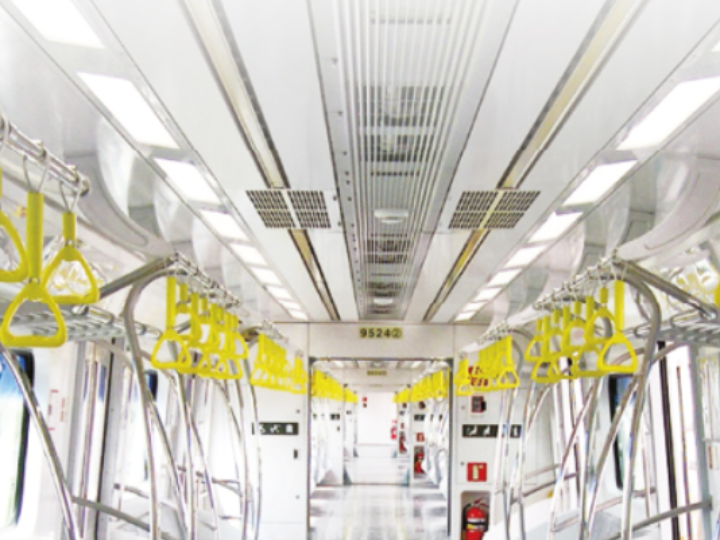
Overview
JKA is a specialist in railway vehicle LED lighting, supplying lighting products for railway applications including passenger room lamps, head lamps, reading lamps, and controllers. In this project, JKA designed a subway interior lighting control system using WIZnet’s W5500 to achieve stable Ethernet communication for onboard lighting control.
A key feature of this design is its redundant dual-line Ethernet architecture. Although the product uses a single RJ-45 connector, it is internally configured to operate with two W5500 devices through a switching component. Under normal conditions, communication runs through one line, but if that line becomes unresponsive, the system can switch to the other line at any time. Based on the project details you shared, this architecture was adopted to improve communication reliability for lighting control equipment installed inside subway cars.
Background
Lighting systems inside subway vehicles require reliable control and communication. Since these systems are installed in operating rail environments, communication stability is critical for maintaining continuous lighting control and minimizing operational risk.
For onboard subway lighting applications, the communication design must support:
- Stable Ethernet communication inside railway vehicles
- Reliable control of onboard lighting equipment
- Fault tolerance in the event of a communication line failure
- Compact hardware integration suitable for in-vehicle installation
JKA, a company focused on railway LED lighting products and related controllers, needed a communication structure that could provide both Ethernet connectivity and higher reliability for railway lighting control.
Solution
In this system, WIZnet’s W5500 was used as the Ethernet connectivity core for the subway lighting controller. Based on your description, the most distinctive part of the design is the dual-line configuration using two W5500 devices.
The architecture works as follows:
- The lighting control system is installed inside the subway vehicle
- The product uses one RJ-45 port for external Ethernet connection
- Internally, the system is built with two W5500 communication lines
- A switching device is used so that the system can select between the two W5500 paths
- If communication on one side becomes unavailable, the system can switch over to the opposite side
This structure enables a more fault-tolerant communication design without requiring multiple external Ethernet connectors. For railway applications, this offers an effective balance between installation simplicity and communication redundancy.
System Architecture
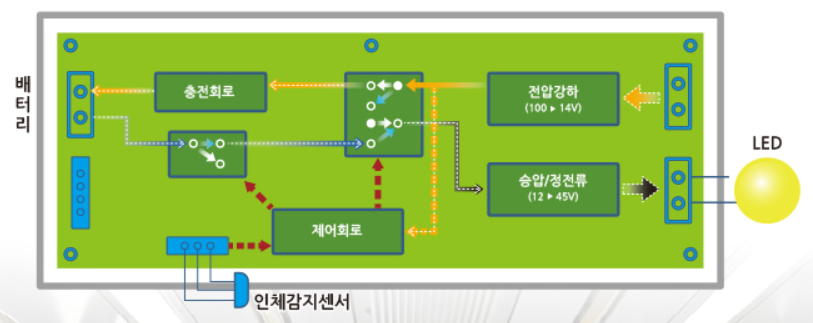
The system can be understood in the following way:
1. Subway Interior Lighting Control
The controller is installed inside the subway car and manages lighting-related functions.
2. Ethernet-based Communication
The controller communicates over Ethernet to support onboard lighting control and system integration.
3. Dual W5500 Design
Two W5500 devices are configured as two internal communication lines.
4. Single RJ-45 Interface
Although the system uses only one external RJ-45 connector, the internal communication structure supports dual-line operation.
5. Failover Switching
A switching component enables the controller to move from one communication line to the other whenever one path becomes unresponsive.
Key Technologies
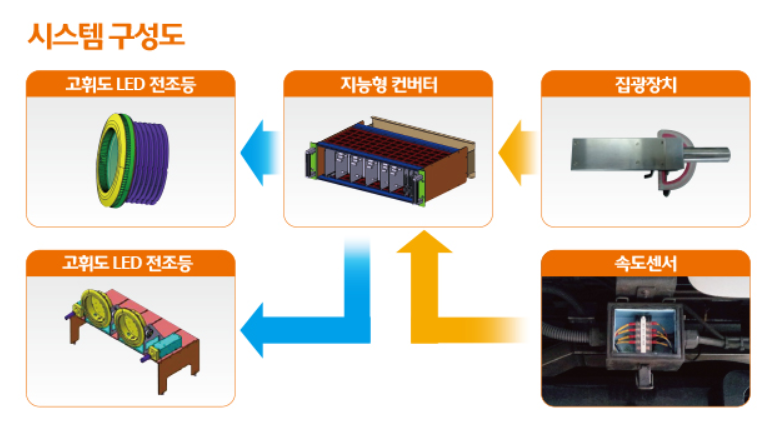
W5500
The W5500 is a hardwired TCP/IP Ethernet controller that enables embedded systems to implement Ethernet communication efficiently. In this project, it was used as the networking core of the subway lighting control system.
Redundant Ethernet Line Design
The use of two W5500-based communication lines improves reliability by providing an alternate communication path in case of failure.
Switching-based Failover
By combining dual W5500 devices with a switching element, the system can maintain communication continuity while keeping the external interface compact with a single RJ-45 port.
Railway Lighting Control
In railway vehicle lighting systems, communication reliability is especially important. A redundant Ethernet design helps improve operational robustness for onboard control equipment.
Benefits
This W5500-based subway lighting control system provides several advantages:
- Improved communication reliability
Dual internal communication lines allow the system to respond to a line failure more effectively. - Failover capability
If one communication path becomes unresponsive, the system can switch to the other line. - Compact external interface design
A single RJ-45 port can be maintained while still supporting a dual-line internal structure. - Suitable for railway environments
The architecture is well matched to subway onboard systems, where stable control communication is important. - Practical Ethernet implementation
The W5500 provides an efficient Ethernet foundation for embedded railway control applications.
Conclusion
This JKA project demonstrates how WIZnet’s W5500 can be applied to a subway interior lighting control system with a strong focus on communication reliability. As a specialist in railway LED lighting and controller products, JKA designed a solution that combines dual W5500 communication lines, a single RJ-45 interface, and switching-based failover to support robust onboard operation.
For railway applications, where uninterrupted control is highly important, this kind of redundant Ethernet architecture offers a practical and effective design approach. By using the W5500 in a dual-line configuration, JKA created a lighting control system that improves resilience while maintaining a compact product form.