


WIZnet Success Stories: Motor Sensing and Step Motor Control Board for Automotive Manufacturing
Motor Sensing and Step Motor Control Board for Automotive Manufacturing
Overview
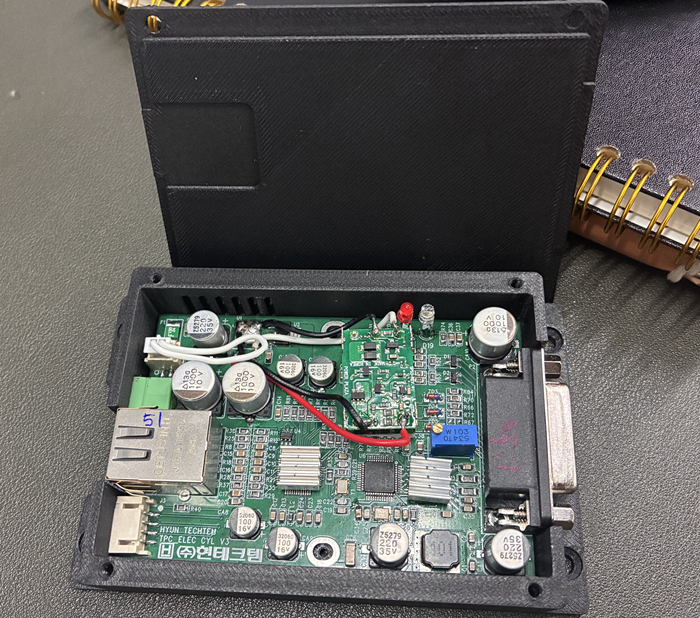
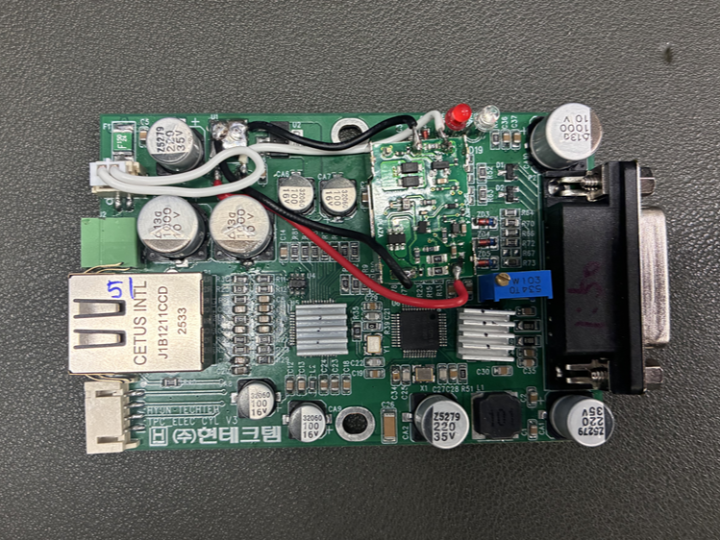
This project involved the development of a control board used in Hyundai Motor’s automotive manufacturing process. The board is designed to sense motor status while controlling a step motor, supporting automated operation in an industrial production environment. Hyundai Motor is officially described by Hyundai Motor Group as a major automotive company that has driven the development of Korea’s automobile industry.
The control board was built with:
- 6-channel DI
- 6-channel DO
- An Atmel MCU
- Firmware developed using the Arduino environment
Based on your description, the board combines motor sensing and actuator control in a compact embedded design, making it suitable for use in automotive process equipment where reliable signal handling and step motor control are required.
Background
In automotive manufacturing environments, many process stations require precise motion control together with continuous sensing of motor-related conditions. These systems must interact with field signals, monitor device states, and control actuators in a stable and repeatable way.
For this type of application, the control board needs to support:
- Reliable sensing of motor-related signals
- Stable step motor control
- Multiple digital input and output channels
- Compact embedded implementation for industrial equipment
- Flexible firmware development for process-specific logic
To meet these requirements, a dedicated embedded board was designed using an Atmel MCU, with firmware implemented in the Arduino development environment.
Solution
In this application, the control board was developed to perform two main roles at the same time:
- Motor sensing
- Step motor control
The hardware was configured with 6 digital inputs and 6 digital outputs, allowing the board to interface with external sensors, switches, and control signals used in the manufacturing process.
The use of an Atmel MCU provided a practical control platform for embedded motion and I/O handling, while Arduino-based development made it easier to implement and adjust application logic during development.
This architecture enables the board to monitor motor-related conditions from the field and respond by controlling the step motor according to process requirements.
System Architecture
The system can be understood as follows:
1. Motor Sensing
The board receives status or sensing signals related to the motor and surrounding process equipment.
2. Digital Input Processing
With 6 DI channels, the system can collect multiple field inputs such as sensor triggers, status signals, or limit conditions.
3. Embedded Control with Atmel MCU
The Atmel MCU processes the input signals and executes the control logic required by the application.
4. Step Motor Control
The board controls a step motor as part of the manufacturing process, enabling motion or positioning functions.
5. Digital Output Interface
With 6 DO channels, the board can drive external control signals or coordinate with other devices in the process system.
Key Technologies
Atmel MCU
The control board uses an Atmel microcontroller as its main processing core, handling signal processing, logic execution, and step motor control.
Arduino-based Firmware Development
The firmware was written in the Arduino environment, providing a simple and flexible development approach for embedded industrial control logic.
Multi-channel DI/DO
The 6 DI / 6 DO configuration supports practical integration with manufacturing equipment that requires multiple sensing and control signals.
Step Motor Control
By combining sensing and motion control on one board, the system can respond directly to process inputs and operate the step motor in a coordinated way.
Benefits
This control board provides several practical advantages:
- Integrated sensing and motion control
The board handles both motor sensing and step motor actuation in one embedded platform. - Flexible field interfacing
With 6 DI and 6 DO, the system can connect to a variety of industrial sensors and control devices. - Compact embedded architecture
Using a single MCU-based design helps simplify system integration. - Efficient development workflow
Arduino-based coding supports faster implementation and easier modification of application logic. - Suitable for automotive process equipment
The combination of signal handling and step motor control is well matched to manufacturing automation tasks.
Conclusion
This project demonstrates how an embedded control board can be used in an automotive manufacturing process to combine motor sensing and step motor control in one practical design.
With 6 DI, 6 DO, an Atmel MCU, and Arduino-based firmware, the board provides a compact and flexible solution for industrial process equipment. In production environments where stable sensing and precise actuator control are both essential, this architecture offers an effective approach for process automation.