


MINDMESH GATEWAY
MINDMESH GATEWAY
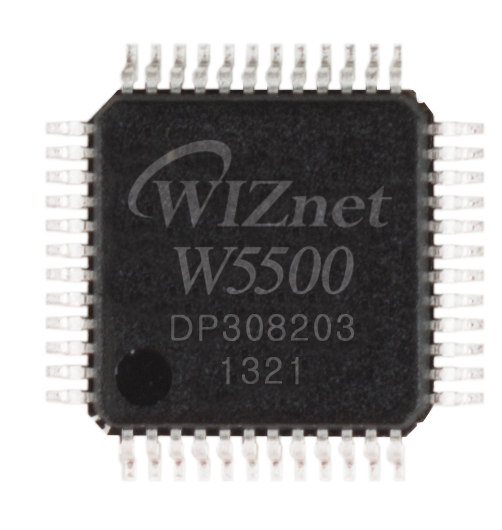
WIZnet - W5500
x 1

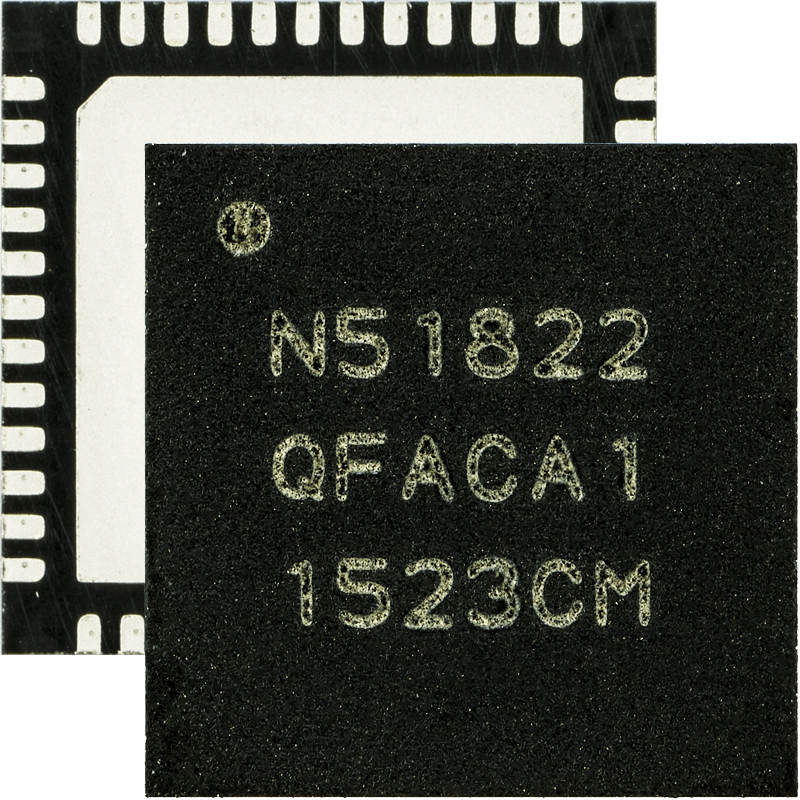
nordic-semiconductor - nRF51822 Bluetooth Low Energy and 2.4 GHz SoC
x 1
Overview
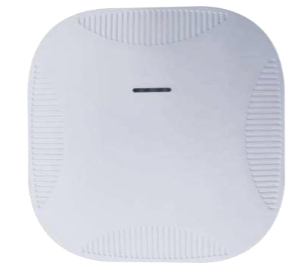
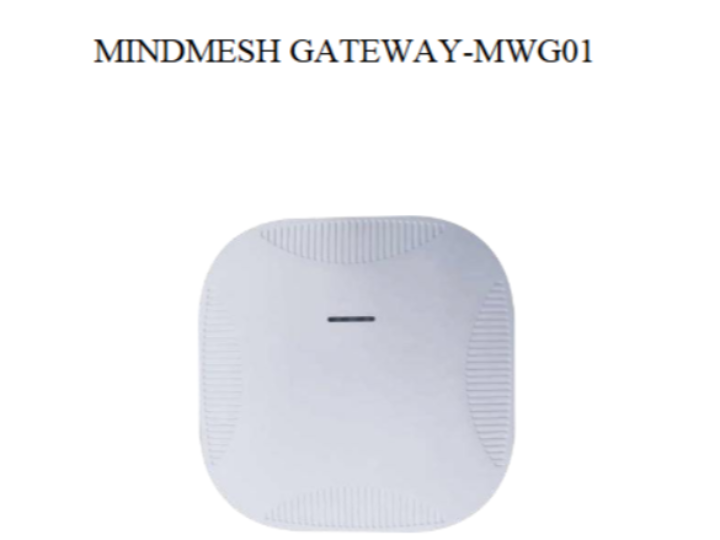
MINDMESH GATEWAY-MWG01 is a BLE mesh gateway developed by Shenzhen Macrotellect Limited.
The gateway is designed to collect Bluetooth Low Energy mesh data and forward it to an upper network through Ethernet and other communication channels.
The hardware architecture combines:
- STM32H743 main controller
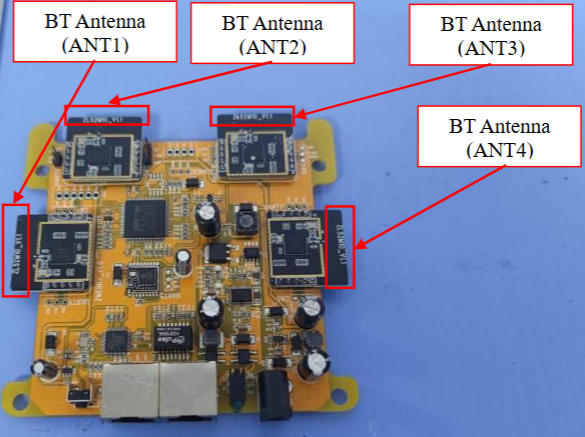
- Four Nordic nRF52840 BLE coprocessors
- WIZnet W5500 Ethernet controller
- IEEE 802.3af PoE power input
- 12–24V DC power support
- BLE mesh communication
- Static IP or DHCP configuration
This makes MWG01 a good example of a gateway design where multiple BLE radios are connected to a reliable Ethernet backbone using WIZnet W5500.
What Problem Does This Gateway Solve?
BLE mesh systems are useful for connecting many low-power wireless devices.
However, BLE mesh networks usually need a gateway to connect the local wireless network to an IP-based network.
Without a gateway, BLE mesh data remains inside the local wireless network.
A gateway is needed to:
- Receive BLE mesh data
- Manage multiple BLE channels
- Forward data to Ethernet or IP networks
- Connect wireless devices to backend systems
- Support centralized monitoring and management
- Provide stable network access for installed systems
MWG01 solves this by combining multiple BLE coprocessors with a wired Ethernet interface.
The BLE side handles wireless mesh communication.
The Ethernet side, based on WIZnet W5500, provides the wired network connection.
How Is the Hardware Structured?
MWG01 uses a layered gateway architecture.
The main controller is an STM32H743, a high-performance Arm Cortex-M7 microcontroller.
The BLE communication side uses four Nordic nRF52840 devices. These work as BLE coprocessors and are divided into different roles for mesh data transmission and reception.
The Ethernet side uses WIZnet W5500.
The basic structure can be described as follows:
BLE Mesh Devices
        |
        | Bluetooth Low Energy Mesh
        |
Nordic nRF52840 x 4
        |
        | BLE Mesh Data Processing
        |
STM32H743 Main Controller
        |
        | Ethernet Interface
        |
WIZnet W5500
        |
        | Ethernet / PoE
        |
IP Network / Server / Management System
This design separates the gateway into three clear functions:
BLE mesh radio handling
Main gateway processing
Ethernet network communication
That separation makes the gateway easier to scale and more suitable for professional installations.
What Does W5500 Add to the Gateway?
The W5500 provides the Ethernet interface for MWG01.
In a gateway product, Ethernet is important because the device must reliably forward data from the local wireless network to a backend or management system.
Wired Network Reliability
BLE is used on the device side, but the uplink to the server or network infrastructure benefits from wired Ethernet.
Ethernet provides stable communication for gateways installed in buildings, facilities, offices, factories, and infrastructure environments.
Hardware TCP/IP Processing
W5500 includes a hardwired TCP/IP stack.
This helps reduce the network processing burden on the main MCU and makes Ethernet implementation more straightforward.
In MWG01, the STM32H743 already manages gateway logic and BLE data processing. Using W5500 allows Ethernet communication to be handled more efficiently.
Compact Ethernet Implementation
W5500 integrates Ethernet MAC, PHY, and TCP/IP stack into a single chip.
This makes it suitable for compact gateway hardware where Ethernet must be added without increasing system complexity too much.
Good Fit for Gateway Products
A BLE mesh gateway must operate continuously and reliably.
W5500 provides the wired Ethernet connection needed for always-on gateway operation.
Why Are Four nRF52840 Devices Used?
MWG01 uses four Nordic nRF52840 BLE coprocessors.
This is important because BLE mesh gateways often need to receive and process wireless packets across multiple BLE channels and roles.
The MWG01 manual describes the BLE coprocessors as being divided into groups:
- One group for sending mesh network data
- Another group for receiving Bluetooth standard channels
This multi-radio structure helps the gateway handle BLE mesh communication more effectively than a single-radio design.
The nRF52840 supports Bluetooth 5 and provides:
- BLE communication
- 1 Mbps and 2 Mbps data rates
- Configurable transmit power
- RSSI measurement
- Low-power wireless operation
- Arm Cortex-M4F processing
- Hardware security features
By combining four BLE coprocessors, MWG01 can operate as a stronger BLE mesh gateway node.
What Is the Role of the STM32H743?
The STM32H743 is the main controller of the gateway.
It coordinates the BLE coprocessors, manages system behavior, and handles upstream communication through Ethernet or other possible communication paths.
The STM32H743 is a high-performance MCU based on an Arm Cortex-M7 core running up to 480 MHz.
In this gateway, it is suitable for:
- BLE mesh data coordination
- Gateway protocol handling
- Ethernet communication management
- Device configuration
- Local system control
- Data forwarding
- Application-level processing
The STM32H743 gives the gateway enough processing capability to manage multiple BLE radios and network communication at the same time.
How Does PoE Improve the Gateway Installation?
MWG01 supports IEEE 802.3af PoE.
This is an important feature for gateway products because these devices are often installed on ceilings, walls, or fixed infrastructure locations.
PoE allows the gateway to receive both power and Ethernet connectivity through a single cable.
This provides several benefits:
- Cleaner installation
- No separate DC adapter required
- Easier ceiling or wall mounting
- Centralized power from a PoE switch
- Better fit for commercial and facility deployments
- Reduced wiring complexity
The gateway also supports 12–24V DC input, giving installers flexibility depending on the site power environment.
How Does the System Connect to the Network?
MWG01 supports network configuration through an app.
During setup, the device can be configured with either:
- Static IP
- DHCP
This is useful because different installation environments require different network settings.
For managed networks, static IP may be preferred.
For simpler deployments, DHCP allows the gateway to automatically receive network settings from the router or DHCP server.
The reset key can restore factory settings, which is useful during maintenance or redeployment.
System Architecture
The complete system can be described in four layers.
Device Layer
---------------------------------
BLE Mesh Devices
Sensors
Wireless Nodes
Bluetooth Devices

Wireless Gateway Layer
---------------------------------
Nordic nRF52840 x 4
BLE Mesh Send / Receive
Bluetooth Channel Coverage

Control Layer
---------------------------------
STM32H743 Main Controller
Gateway Logic
Data Processing
Configuration

Network and Power Layer
---------------------------------
WIZnet W5500 Ethernet
IEEE 802.3af PoE
12–24V DC Input
Static IP / DHCP
This layered structure shows how MWG01 bridges BLE mesh communication to Ethernet.
The BLE radios collect and exchange wireless data.
The STM32H743 manages gateway logic.
The W5500 provides the wired Ethernet connection.
PoE simplifies installation by combining power and data in one cable.
What Applications Can Use This Design?
A gateway architecture like MWG01 can be used in many BLE mesh and building-network applications.
Possible applications include:
- BLE mesh gateway systems
- Smart building networks
- Indoor sensing systems
- Asset tracking gateways
- Bluetooth sensor aggregation
- Facility monitoring
- Lighting control gateways
- Environmental monitoring gateways
- Wireless device management
- Commercial building automation
- Retail or office Bluetooth infrastructure
- Ceiling-mounted gateway systems
The combination of BLE mesh, Ethernet, and PoE makes the design suitable for fixed infrastructure deployments.
Why Is This a Good W5500 Use Case?
MWG01 shows how W5500 can be used in a real gateway product.
The product does not use Ethernet as the only feature.
Instead, Ethernet is the stable uplink that connects a wireless BLE mesh system to an IP network.
This is an important role for W5500.
In this type of product, W5500 helps the gateway:
- Connect BLE mesh data to Ethernet
- Provide stable wired network communication
- Reduce network processing complexity
- Support fixed infrastructure installation
- Work with PoE-based deployment
- Operate as an always-on network gateway
This makes MWG01 a practical example of W5500 being used in a BLE mesh gateway architecture.
Conclusion
MINDMESH GATEWAY-MWG01 is a BLE mesh gateway built around a high-performance STM32H743 controller, four Nordic nRF52840 BLE coprocessors, WIZnet W5500 Ethernet, and IEEE 802.3af PoE.
The four BLE coprocessors allow the gateway to handle mesh communication roles, while the STM32H743 manages gateway processing and system control.
W5500 provides the wired Ethernet connection that links the BLE mesh network to the IP network.
PoE makes installation easier by delivering both power and data through a single Ethernet cable.
This design shows how W5500 can be used as the Ethernet backbone in a professional BLE mesh gateway, especially for smart building, facility monitoring, wireless sensor aggregation, and infrastructure networking applications.
Q&A
What is MINDMESH GATEWAY-MWG01?
MINDMESH GATEWAY-MWG01 is a BLE mesh gateway developed by Shenzhen Macrotellect Limited.
Which WIZnet product is used?
The gateway uses WIZnet W5500 for Ethernet connectivity.
What is the main controller?
The main controller is STM32H743, an Arm Cortex-M7 microcontroller.
What BLE chipset is used?
The gateway uses four Nordic nRF52840 BLE coprocessors.
Why are multiple BLE coprocessors used?
Multiple BLE coprocessors allow the gateway to handle BLE mesh sending and receiving roles more effectively.
Does the gateway support PoE?
Yes. MWG01 supports IEEE 802.3af PoE and can also support 12–24V DC input.
Why is W5500 useful in this gateway?
W5500 provides reliable wired Ethernet connectivity, allowing BLE mesh data to be forwarded to an IP network.
What applications can use this design?
This design can be used for BLE mesh gateways, smart building systems, wireless sensor aggregation, facility monitoring, indoor device networks, and infrastructure gateway applications.
-
internal photos
internal photos

-
External photos
External photos