


Building an LTE-to-Ethernet Gateway with nRF9160 and W5500
Building an LTE-to-Ethernet Gateway with nRF9160 and W5500
nordic - nRF9160
x 1
nordic ic
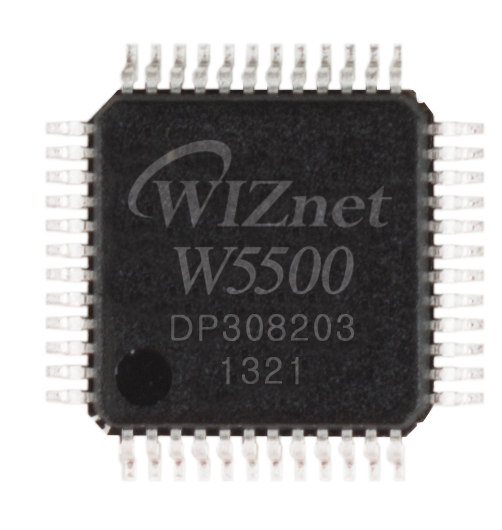
WIZnet - W5500
x 1

How Does nRF9160 Use W5500 to Bridge Ethernet Devices to LTE?
Overview
This project introduces an LTE Ethernet Gateway built with Nordic nRF9160 and WIZnet W5500.
The project was created as a sample program that allows communication devices connected on the Ethernet side to access a server through LTE.
In this architecture, W5500 provides the Ethernet interface on the LAN side, while nRF9160 provides the LTE-M / NB-IoT cellular uplink.
The key concept is simple: an Ethernet device connects to the gateway through W5500, and the gateway forwards communication to the server through LTE.
This makes the project a useful reference for cellular Ethernet gateway applications where a wired LAN-side device needs to communicate over a mobile network.
What Problem Does This Project Solve?
Many embedded and industrial devices still use Ethernet as their main communication interface.
However, some installation environments do not have fixed wired Internet access.
Examples include remote sites, temporary installations, outdoor systems, mobile equipment, and field monitoring devices.
In these cases, LTE can be used as the uplink network.
This project solves the problem by creating a bridge between Ethernet and LTE.
The Ethernet-side device communicates with the gateway through W5500.
The nRF9160 then forwards the communication to the server through LTE.
This allows Ethernet devices to communicate with remote servers even when only cellular connectivity is available.
How Is the System Structured?
The system uses nRF9160 as the cellular gateway processor and W5500 as the Ethernet controller.
The basic structure can be described as follows:
Ethernet Device
        |
        | Ethernet
        |
WIZnet W5500
        |
        | SPI
        |
Nordic nRF9160
        |
        | LTE-M / NB-IoT
        |
Remote Server
The Ethernet device is connected to the LAN side of the gateway.
W5500 handles the wired Ethernet interface.
nRF9160 handles cellular communication through LTE.
The gateway performs port mapping so that multiple communication devices can be connected on the Ethernet side.
What Does W5500 Add to the Gateway?
W5500 provides the Ethernet interface for the LAN side of the gateway.
In this project, W5500 is one of the supported SPI LAN chips.
The project also mentions support for other Ethernet chips such as ENC28J60, ENC424J600, and ENC624J600, but W5500 is the WIZnet-based Ethernet option.
Ethernet Interface for LAN Devices
The LAN-side device communicates with the gateway through Ethernet.
W5500 provides this Ethernet connection and allows the nRF9160 gateway to communicate with wired devices.
SPI-Based Connection to nRF9160
W5500 connects to the host through SPI.
This makes it practical for an embedded gateway design because the nRF9160 can control the Ethernet interface without needing a built-in Ethernet MAC or PHY.
Compact Ethernet Gateway Design
W5500 integrates Ethernet MAC, PHY, and hardwired TCP/IP functions.
This helps simplify the Ethernet hardware structure and makes it suitable for compact cellular gateway applications.
Practical Fit for LTE Gateway Applications
The gateway needs to connect a local Ethernet device to a remote server through LTE.
W5500 provides the LAN-side Ethernet interface, while nRF9160 provides the LTE uplink.
Together, they form a compact Ethernet-to-LTE gateway structure.
What Is the Role of nRF9160?
The nRF9160 is the cellular communication side of the gateway.
It provides LTE-M / NB-IoT connectivity, allowing the gateway to communicate with a remote server through a mobile network.
In this project, nRF9160 handles the LTE uplink and gateway processing.
It works together with the Ethernet controller to forward communication from the Ethernet side to the cellular network.
The project targets Nordic Connect SDK and nRF9160-based boards.
Target boards include:
- Switch Science nRF9160 LTE-M / NB-IoT / GNSS IoT development board
- Actinius Icarus SoM DK
This makes the project useful for developers working with Nordic cellular IoT platforms.
How Does the LTE Ethernet Gateway Work?
The gateway allows a device on the Ethernet side to communicate with a server through LTE.
The basic operation flow is:
- An Ethernet device connects to the gateway through the W5500 LAN side.
- The gateway receives Ethernet-side communication.
- nRF9160 forwards the communication through LTE.
- The remote server communicates back through the LTE link.
- The gateway maps the communication back to the Ethernet-side device.
Because port mapping is implemented, multiple communication devices can be connected on the Ethernet side.
This makes the gateway more flexible than a simple one-to-one bridge.
Why Is Port Mapping Important?
Port mapping is one of the important features of this project.
Without port mapping, the gateway would be limited to a simpler communication structure.
With port mapping, multiple LAN-side devices can be connected and forwarded through the LTE side.
This is useful when several Ethernet devices need to share one LTE uplink.
Possible use cases include:
- Remote Ethernet sensor systems
- Field monitoring devices
- Industrial controllers
- Temporary network devices
- Remote equipment gateways
- Cellular backup communication
- Ethernet device testing over LTE
Port mapping makes the gateway more practical for real field applications.
Important Implementation Notes
The project includes several important implementation notes.
The LAN-side device MTU should be set to 1280.
The gateway IP address is written in the project configuration file.
The project does not include DHCP-related functions.
The MAC address can be specified in the overlay device tree file.
Changing the LAN chip requires changes to both the project configuration and overlay device tree.
The project is provided as an implementation example, and FOTA-related functions were omitted to keep the code simpler.
These notes make the project useful as a technical reference rather than a finished commercial gateway product.
Target Environment
The project targets the following environment.
Target SDK:
- Nordic Connect SDK v2.5.2
Target boards:
- Switch Science nRF9160 LTE-M / NB-IoT / GNSS IoT development board
- Actinius Icarus SoM DK
Supported SPI LAN chips:
- WIZnet W5500
- Microchip ENC28J60
- Microchip ENC424J600
- Microchip ENC624J600
Target SIM:
- SORACOM PLAN-D
This makes the project especially relevant for developers building LTE-connected gateway prototypes with nRF9160 and SPI Ethernet controllers.
System Architecture
The complete system can be divided into four layers.
LAN Device Layer
---------------------------------
Ethernet communication device
Static network configuration
MTU set to 1280

Ethernet Interface Layer
---------------------------------
WIZnet W5500
SPI LAN controller
LAN-side Ethernet connection

Gateway Processing Layer
---------------------------------
Nordic nRF9160
Port mapping
Gateway logic
LTE communication control

Network Uplink Layer
---------------------------------
LTE-M / NB-IoT
SORACOM SIM
Remote server communication
This architecture shows how W5500 and nRF9160 work together.
W5500 handles the Ethernet-side interface.
nRF9160 handles cellular communication and gateway processing.
The result is an Ethernet-to-LTE gateway that can connect wired communication devices to a remote server through LTE.
What Applications Can Use This Design?
This gateway structure can be used in many embedded and industrial applications.
Possible applications include:
- Ethernet-to-LTE gateway
- Cellular backup gateway
- Remote Ethernet device access
- Industrial field monitoring
- Remote sensor gateway
- Temporary network installation
- Outdoor monitoring equipment
- Mobile equipment communication
- LTE-connected Ethernet controller
- Field device testing over cellular networks
- Remote data collection systems
The design is especially useful when the local device uses Ethernet but the installation site only has LTE connectivity.
Why Is This a Good W5500 Use Case?
This project shows W5500 being used as the Ethernet side of a cellular gateway.
The main value of W5500 is not just adding Ethernet to an MCU.
In this design, W5500 creates the LAN-side interface for Ethernet devices, while nRF9160 provides the LTE uplink.
This gives W5500 an important role in the gateway architecture.
W5500 helps the system:
- Connect Ethernet devices to an LTE gateway
- Provide a wired LAN-side interface
- Work with nRF9160 through SPI
- Support compact gateway hardware
- Enable Ethernet-to-cellular communication
- Build field-ready LTE gateway prototypes
This makes the project a practical example of W5500 being used in cellular IoT gateway development.
Conclusion
This project demonstrates how Nordic nRF9160 and WIZnet W5500 can be combined to build an LTE Ethernet Gateway.
W5500 provides the Ethernet interface for LAN-side devices.
nRF9160 provides LTE-M / NB-IoT connectivity for communication with a remote server.
By using port mapping, the gateway can support multiple communication devices on the Ethernet side.
Although the project is presented as a sample implementation, it is a valuable reference for developers who want to connect Ethernet-based devices to LTE networks using nRF9160 and W5500.
This design is useful for remote monitoring, field equipment access, cellular backup networking, and Ethernet-to-LTE gateway applications.
Q&A
What is this project?
This project is an LTE Ethernet Gateway sample program for Nordic nRF9160.
Which WIZnet product is used?
The project supports WIZnet W5500 as the Ethernet controller.
What is the role of W5500?
W5500 provides the Ethernet interface for LAN-side communication devices.
What is the role of nRF9160?
nRF9160 provides LTE-M / NB-IoT cellular communication and gateway processing.
What does the gateway allow Ethernet devices to do?
It allows Ethernet-side devices to communicate with a remote server through LTE.
Does the project support multiple Ethernet-side devices?
Yes. The project implements port mapping, so multiple communication devices can be connected on the Ethernet side.
Does the project include DHCP?
No. The project notes that DHCP-related functions are not included.
What MTU setting is required on the LAN-side device?
The LAN-side device MTU should be set to 1280.
What SDK is used?
The project targets Nordic Connect SDK v2.5.2.
What applications can use this architecture?
This architecture can be used for Ethernet-to-LTE gateways, remote monitoring systems, cellular backup gateways, field device access, and LTE-connected Ethernet devices.
-
github
github code
