



AI Water Meter Reading for Axioma Qalcosonic W1
A Practical AI-On-The-Edge-Cam Solution with ESP32-S3, W5500 Ethernet, and PoE
PROJECT DESCRIPTION
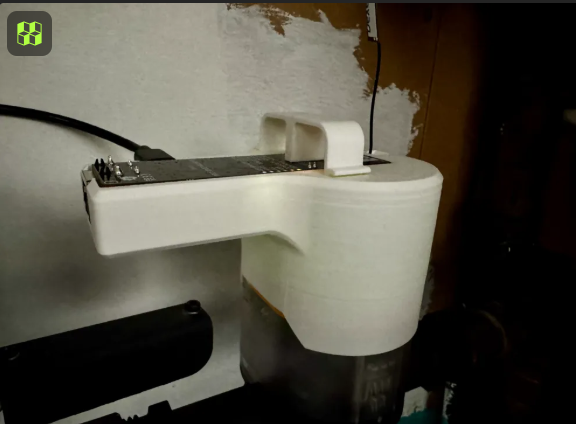
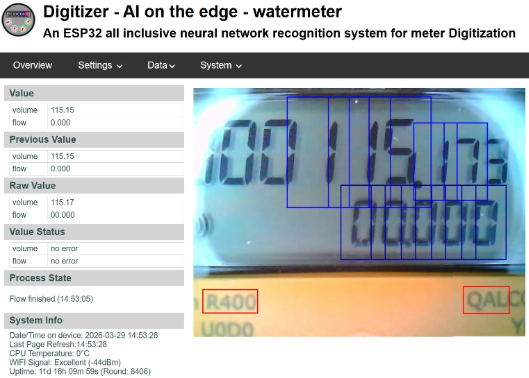
In many real-world installations, water meters are located in places where direct digital integration is difficult, inconvenient, or simply unavailable. In such cases, camera-based AI reading becomes a practical way to collect meter values without modifying the meter itself. The AI-On-The-Edge approach makes it possible to capture the meter display with a camera, process the image locally, and send the recognized value to external systems.
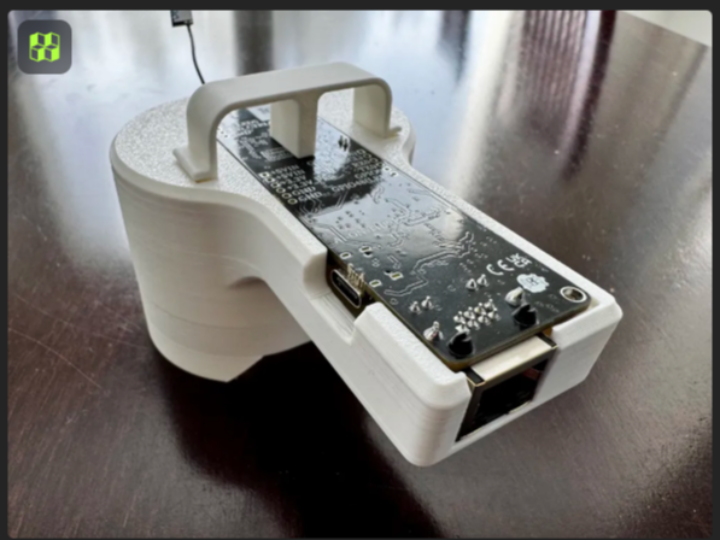
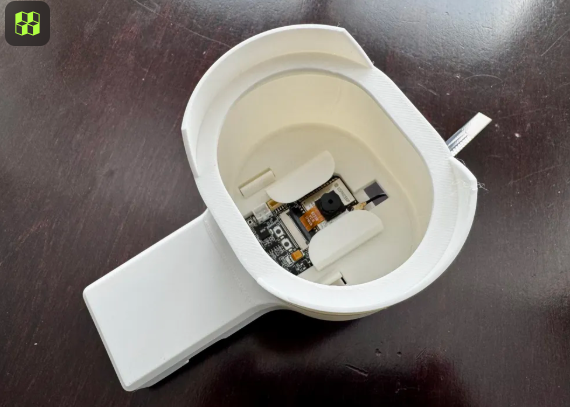
This project is centered around a dedicated mounting solution for the Axioma Qalcosonic W1, designed to hold an AI-On-The-Edge-Cam device in the correct position for reliable water meter reading. Rather than being just a generic camera holder, this setup turns the Qalcosonic W1 into a smart, connected metering point by combining a purpose-built mechanical mount with a more capable AI camera module.
What makes this especially interesting is the hardware behind the camera system. The module uses both ESP32-S3 and W5500 Ethernet, and even adds PoE support, making it much more suitable for stable field deployment than a typical Wi-Fi-only ESP32-CAM approach.
OVERVIEW
This solution is built around a simple but powerful concept:
- attach a dedicated mount to the Axioma Qalcosonic W1
- install the AI-On-The-Edge-Cam module
- capture the meter display with the camera
- process the reading locally on the device
- send the result over the network for monitoring or automation
The real strength of this design is that it is not only about AI-based image reading, but also about practical installation in the field. Water meters are often installed in utility shafts, mechanical rooms, or enclosed spaces where Wi-Fi is unreliable. In those conditions, Ethernet becomes a major advantage. With W5500-based wired networking and PoE, the module can receive both data connectivity and power through a single cable, making deployment cleaner and more robust.
For the Axioma Qalcosonic W1 specifically, the dedicated mount helps position the camera consistently over the meter face, which is critical for stable AI recognition. This makes the entire setup more than just an experiment — it becomes a realistic smart metering solution.
KEY FEATURES
Designed for the Axioma Qalcosonic W1
The main product in this setup is the mounting solution for the Axioma Qalcosonic W1, designed to securely hold the AI camera module in place for automatic meter reading. This gives the project a clear real-world application: turning an existing water meter into an AI-readable networked device.
AI-based meter reading
Instead of relying on direct protocol access from the meter, the system reads the displayed value visually using an AI-enabled edge device. This is especially useful when the display is accessible but electrical or digital integration is limited.
ESP32-S3 for edge processing
The module uses ESP32-S3, providing better memory and processing capability than older ESP32-CAM style designs. This makes it a strong foundation for image-based meter reading and embedded networking tasks.
W5500 Ethernet for reliable connectivity
One of the most important points of this hardware is the inclusion of W5500 Ethernet. Metering devices are often installed where wireless coverage is weak or unstable, so wired Ethernet is a major benefit for long-term reliability.
PoE for simplified deployment
The addition of Power over Ethernet makes the system even more practical. A single Ethernet cable can provide both power and communication, which is ideal for utility environments where extra power wiring is inconvenient.
HARDWARE HIGHLIGHTS
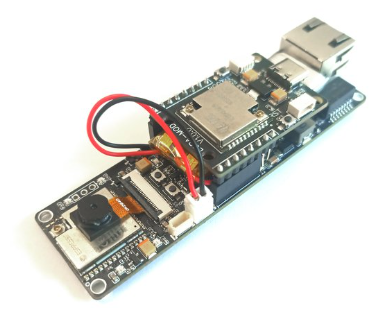
This AI camera module is much more than a simple ESP32 camera board. Its hardware configuration is designed for real deployment:
- ESP32-S3
- W5500 Ethernet
- PoE support
- camera interface for AI-based reading
- microSD storage
- field-friendly installation potential
- suitable for fixed monitoring applications such as water meter reading
This combination makes it particularly attractive for industrial, utility, and building automation scenarios where reliability matters more than minimal cost.
WHY THIS PROJECT STANDS OUT
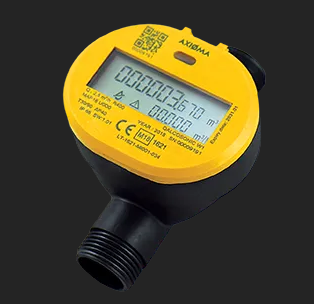
What makes this project notable is the balance between mechanical practicality and network-ready embedded design.
On one side, the Axioma Qalcosonic W1 mount solves the physical problem: how to place the camera correctly and consistently on the meter. On the other side, the electronics solve the system problem: how to run AI-based reading reliably in the field.
A typical camera-based meter reader may work well in a lab, but real installations demand more:
- stable positioning
- reliable network communication
- simplified power delivery
- long-term operation in difficult environments
By combining a dedicated mount with an ESP32-S3 + W5500 + PoE platform, this project addresses those practical deployment concerns directly.
APPLICATION IDEAS
This setup can be useful in many real-world scenarios, including:
- remote water usage monitoring
- building and facility management
- smart utility metering
- integration with monitoring dashboards or home/building automation systems
- installations where Wi-Fi is unreliable but Ethernet is available
CONCLUSION
This project is a great example of how an existing water meter can be upgraded into a smarter connected system without invasive modification. The Axioma Qalcosonic W1 mounting solution provides the mechanical foundation, while the AI-On-The-Edge-Cam hardware with ESP32-S3, W5500, and PoE provides the intelligence and connectivity needed for practical deployment.
Rather than being just another ESP32 camera experiment, this is a more deployment-oriented solution for AI-based water meter reading — especially for environments where reliable Ethernet communication and simplified cabling are important.
-
Github

-
Github2
-
Case