


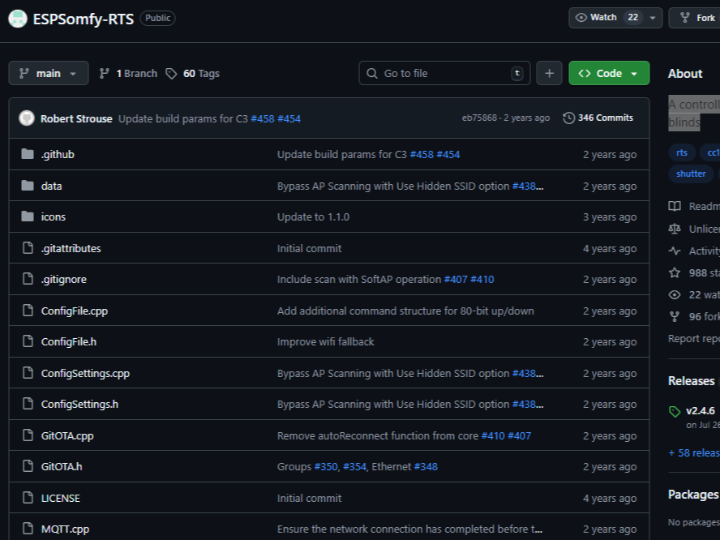
ESPSomfy-RTS
A controller for Somfy RTS shades and blinds
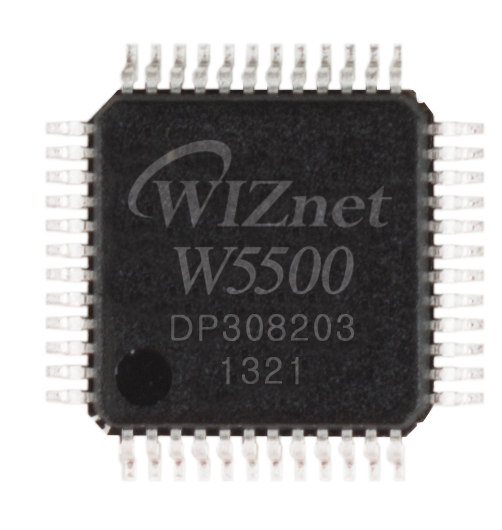
WIZnet - W5500
x 1

📌 Overview
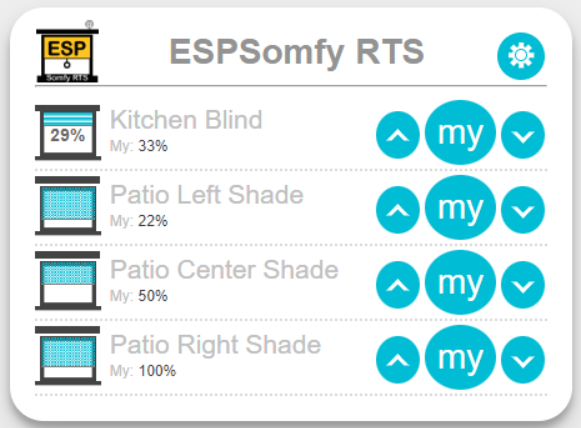
ESPSomfy-RTS는 Somfy RTS(433MHz 계열) 전동 블라인드/커튼/어닝 등을 ESP32 기반 컨트롤러로 제어하고, 웹 UI·소켓·MQTT로 홈 오토메이션(예: Home Assistant)과 연동하는 오픈소스 프로젝트입니다.
특히 “기존 리모컨도 계속 쓰고 싶다”는 요구를 반영해, 단순 송신만이 아니라 외부 리모컨 조작을 감지(수신)해 위치/상태를 함께 관리하려는 방향성이 강조됩니다.
이번 PR #633에서 WIZnet W5500(SPI Ethernet) 기반 유선 이더넷 지원 추가로, Wi-Fi가 불안정하거나 PoE/유선망이 필요한 설치 환경까지 범위를 넓혔습니다.
📌 Features
- Somfy RTS/RTx(433MHz) 다수 커버 제어
- 최대 개별 32개, 그룹 16개까지 제어를 목표로 설명됩니다.
- 웹 UI + 소켓 + MQTT 제공
- 로컬 웹 화면에서 직접 조작 가능하고, 자동화 시스템은 MQTT/소켓으로 연동합니다.
- Home Assistant 연동(HACS 기반 통합) 생태계 확장
- Home Assistant 커뮤니티에서 장기 스레드로 운영될 정도로 실제 사용/문의가 활발합니다.
- CC1101 트랜시버(SPI) 기반 송·수신 중심의 설계
- ESP32 + CC1101 조합으로 RTS 신호를 다루며, “기존 리모컨도 병행 사용” 시나리오를 고려합니다.
- (신규 포인트) W5500 기반 유선 Ethernet 지원(보드 프리셋 포함)
- PR에서 W5500을 ESP-IDF
esp_eth_*API로 직접 초기화, DHCP/DNS 수동 관리, 웹 UI에서 SPI 핀 설정 및 Waveshare ESP32-S3 W5500 PoE 보드 프리셋까지 포함합니다.
- PR에서 W5500을 ESP-IDF
📌 System Architecture
구성 요소
- MCU: ESP32/ESP32-S3 계열
- RF(433MHz): CC1101 트랜시버(ESP32와 SPI 연결)
- 네트워크: Wi-Fi 또는 Ethernet(W5500, SPI)
- 서비스 인터페이스: 내장 Web UI, Socket, MQTT
- 연동 플랫폼(선택): Home Assistant(HACS)
📌 Role and Application of the WIZnet's Chip
사용된 WIZnet 칩: W5500
네트워크에서의 역할
- ESP32-S3 등 MCU가 애플리케이션을 수행하고, W5500이 유선 이더넷 링크(물리/하위 계층) 및 TCP/IP 오프로딩을 담당하는 구조입니다. (본 프로젝트 PR 설명 기준: W5500을 SPI로 붙여 ESP-IDF 이더넷 스택으로 구동)
- 상위 애플리케이션 인터페이스는 HTTP(웹 UI), 소켓, MQTT 형태로 제공됩니다.
W5500 적용 과정
W5500 지원 요구
- Issue #471 : https://github.com/rstrouse/ESPSomfy-RTS/issues/471
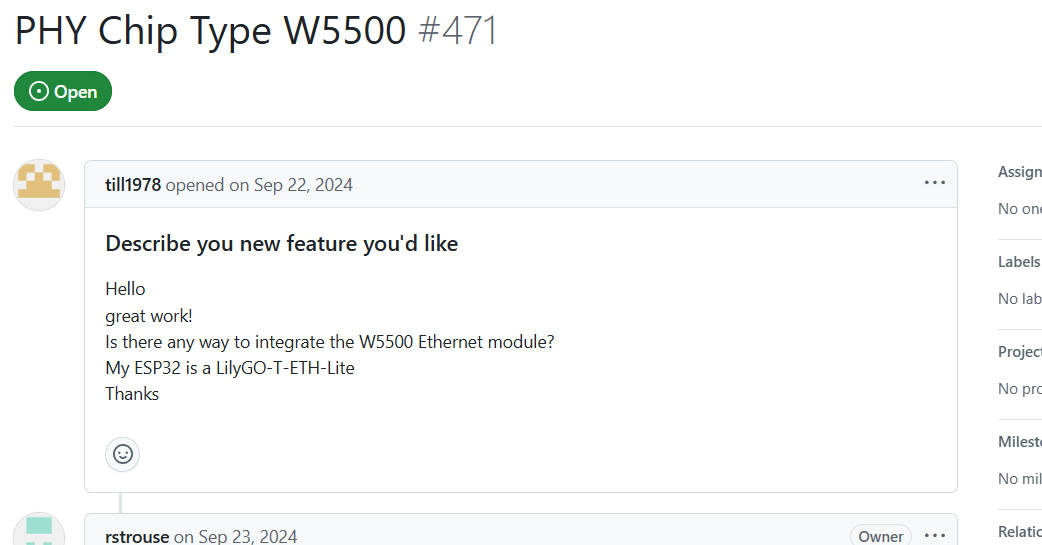
- Issue #629 : https://github.com/rstrouse/ESPSomfy-RTS/issues/629
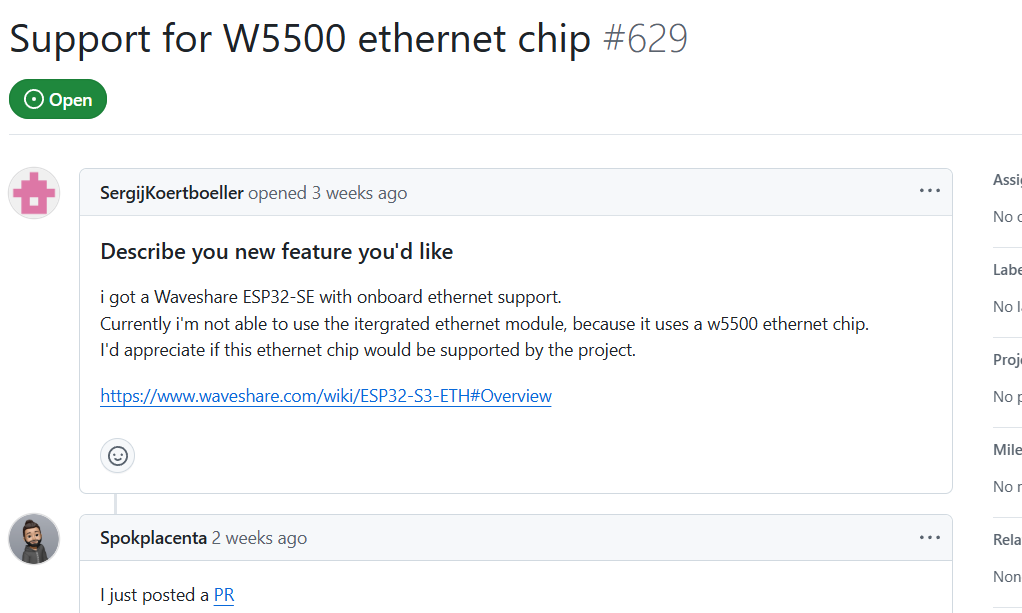
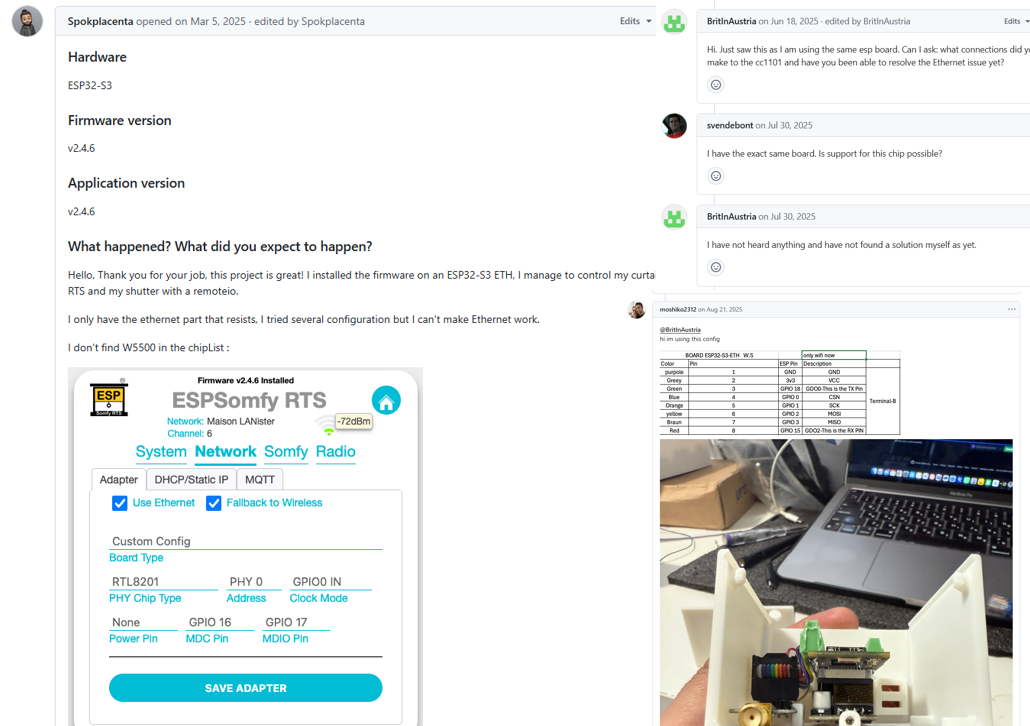
원래 ESPSomfy-RTS는 Wi-Fi 기반 통신만 지원했으며, 일부 사용자는 Waveshare ESP32-S3 ETH/PoE 보드를 사용하는데 이더넷이 동작하지 않는다는 issue와 반응 생성됨.
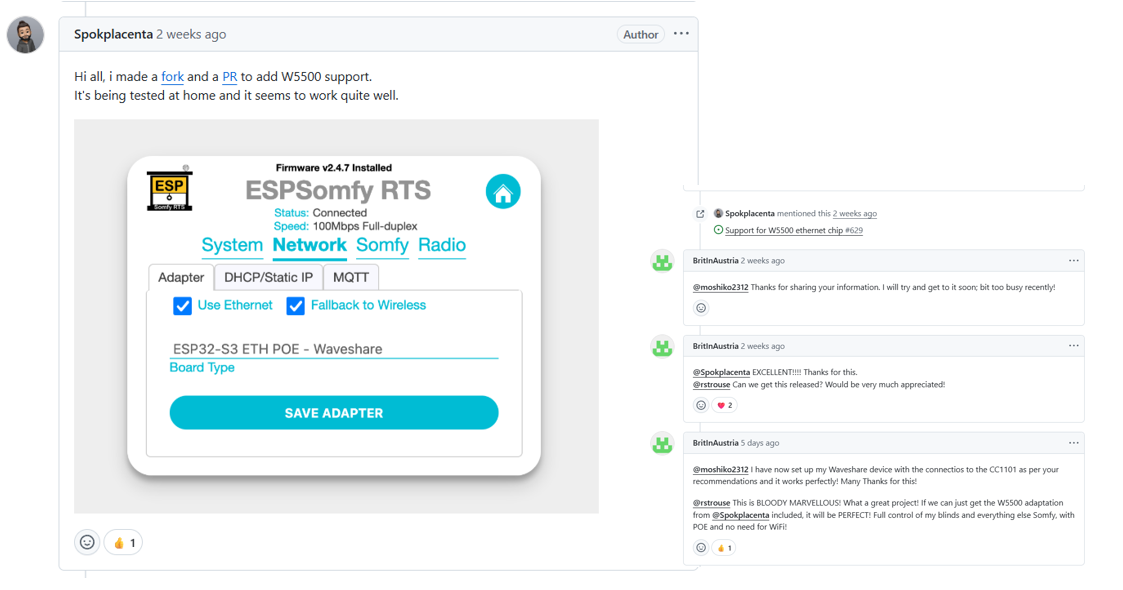
Issue 제기한 Spokplacenta가 직접 W5500 지원하도록 기능 추가하고 PR #633으로 생성. 반응 긍정적.
W5500 지원 적용
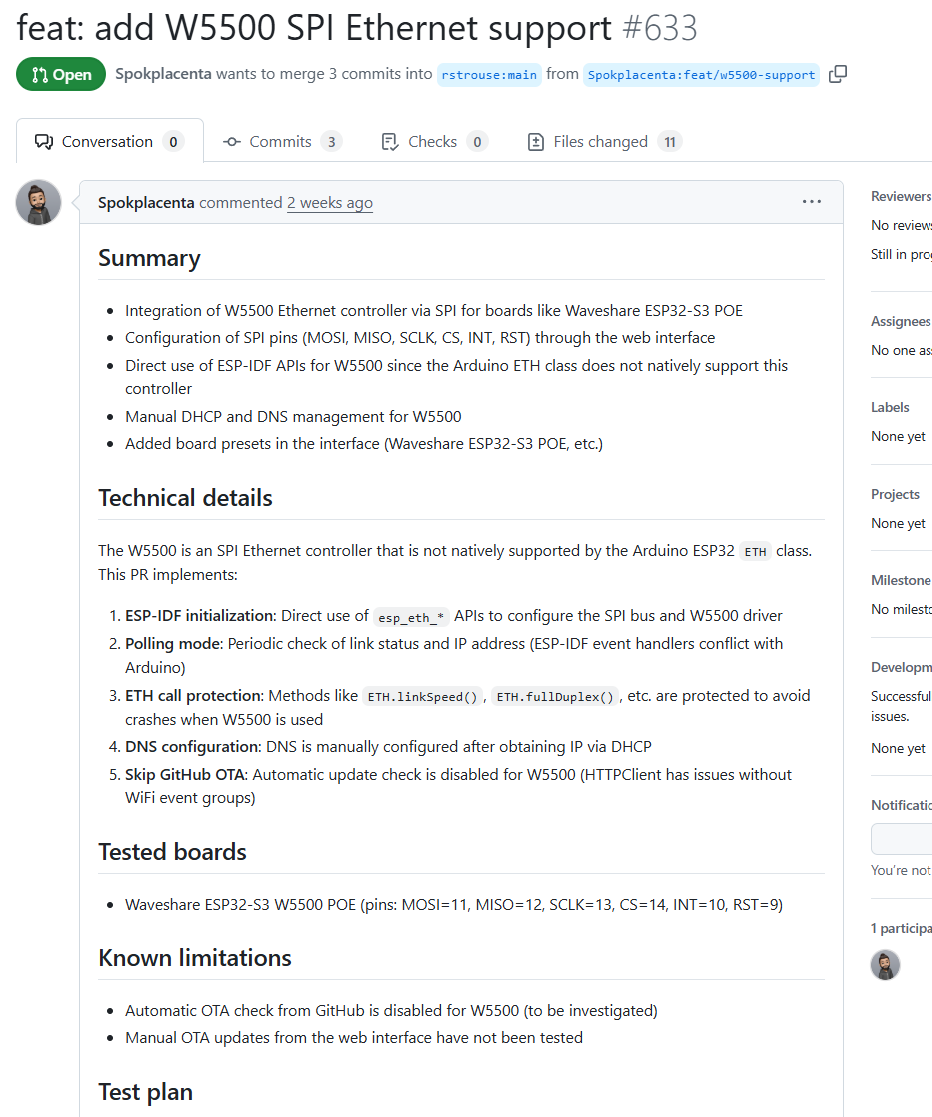
Waveshare ESP32-S3 W5500 PoE 보드에서 ESP32의 SPI 버스를 이용해 W5500 과 직접 연결하도록 확장.
📌 External Indicators
GitHub 리포지토리 지표
- Stars: 988, Forks: 96, Issues: 157
커뮤니티 반응
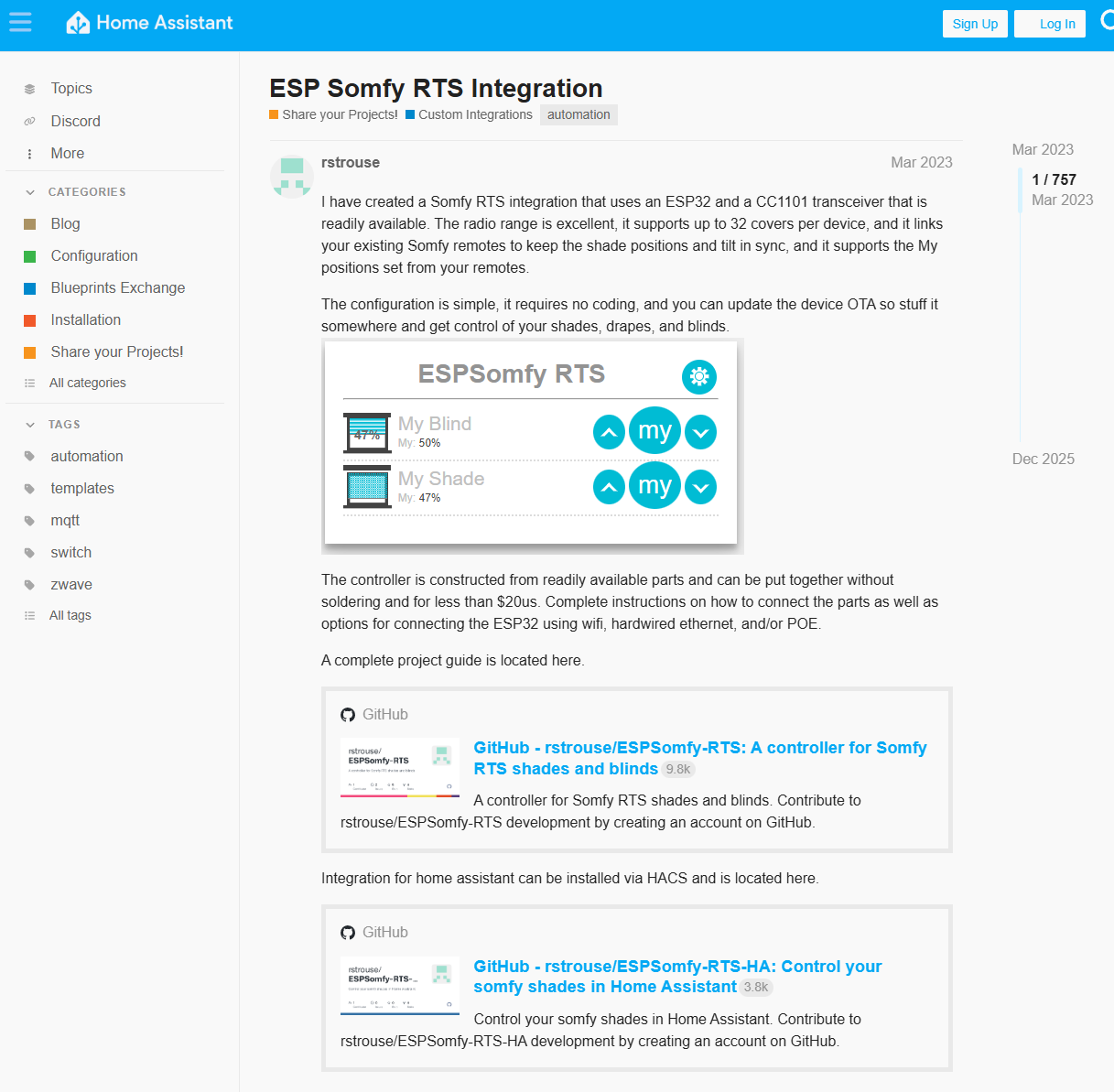
https://community.home-assistant.io/t/esp-somfy-rts-integration/543401?
📌 WIZnet Strategic Value
(by ChatGPT)
“스마트홈 레트로핏”이라는 대중적 시장에서, W5500이 ESP32 생태계의 실제 요구(유선/PoE/설치 안정성)를 해결하는 사례로 제시됩니다.
W5500은 단순히 MCU에 이더넷을 붙이는 부품이 아니라, 오픈소스 홈오토메이션 프로젝트가 채택할 만큼 보편적이고 확장 가능한 네트워크 옵션이라는 메시지를 전달할 수 있습니다.
같은 패턴(ESP32 + SPI Ethernet + 상위 프로토콜 MQTT/HTTP)은 게이트/차고문, 조명, HVAC, 센서 허브 등으로 재사용 가능성이 큽니다. (단, 각 도메인별 실시간성/보안/OTA 요구사항을 재정의해야 합니다.)
📌 Summary
ESPSomfy-RTS는 Somfy RTS(433MHz) 기반 전동 블라인드·커튼·어닝과 같은 커버 시스템을 ESP32 기반 컨트롤러로 통합 제어할 수 있도록 만든 오픈소스 프로젝트입니다. 사용자는 웹 UI를 통해 직접 조작할 수 있고, MQTT나 소켓 통신을 통해 Home Assistant 같은 스마트홈 플랫폼과도 자연스럽게 연동할 수 있습니다. 단순히 RF 신호를 송신하는 수준을 넘어, 기존 리모컨 조작을 병행하면서도 상태와 동작 흐름을 함께 관리하려는 구조를 갖추고 있어 실제 주거 및 상업 공간 자동화에 적용 가능성이 높습니다.
특히 Issue #541에서 제기된 “W5500 기반 Ethernet 보드가 지원되지 않는다”는 요구를 계기로, Pull Request #633에서는 WIZnet W5500을 SPI 인터페이스로 ESP32에 연결해 유선 Ethernet 기능을 확장하는 과정이 본격적으로 진행되었습니다. 이 적용은 Arduino 기본 ETH 클래스의 한계를 넘어 ESP-IDF 네이티브 Ethernet API를 활용해 초기화, DHCP, DNS 구성, 링크 상태 관리까지 포함하는 형태로 구현되며, Wi-Fi가 불안정한 환경이나 PoE 기반 설치 시나리오에서 시스템 신뢰성을 크게 높일 수 있는 방향성을 보여줍니다.
📌 FAQ
Q1. ESPSomfy-RTS 프로젝트는 어떤 네트워크 방식을 사용하나요?
A: ESPSomfy-RTS는 ESP8266 또는 ESP32의 내장 Wi-Fi 기능과 LwIP 소프트웨어 TCP/IP 스택을 사용해 네트워크 통신을 수행합니다. 웹 UI, MQTT, REST API, Home Assistant 연동 등 모든 제어 경로가 Wi-Fi 기반으로 동작하며, 공유기 및 무선 환경의 품질에 직접적인 영향을 받습니다. 이는 설치가 간편하다는 장점이 있지만, 지연 시간과 연결 안정성은 네트워크 환경에 따라 달라질 수 있습니다.
Q2. PR #633은 이 프로젝트에서 어떤 의미를 가지나요?
A: PR #633은 ESPSomfy-RTS의 네트워크 및 시스템 동작 안정성 개선과 관련된 변경을 포함하고 있으며, 장시간 실행 환경에서의 예외 처리, 상태 관리, 또는 통신 신뢰성과 같은 실사용 이슈를 다루는 흐름에 속합니다. 이는 이 프로젝트가 단순한 데모 수준을 넘어 항시 동작하는 홈 오토메이션 컨트롤러로 사용되고 있음을 보여주며, 네트워크 안정성이 핵심 요구사항임을 간접적으로 드러냅니다.
Q3. 이런 홈 오토메이션 프로젝트에서 왜 WIZnet W5500 같은 Ethernet 칩을 고려할 수 있나요?
A: 블라인드·셔터 제어는 “빠름”보다 확실한 전달과 예측 가능한 응답이 더 중요합니다. WIZnet W5500은 하드웨어 TCP/IP 스택을 내장한 Ethernet 컨트롤러로, ESP32가 LwIP 처리, 재전송 타이머, 소켓 관리를 직접 수행하지 않아도 됩니다. 그 결과 CPU 부하가 줄고, 무선 간섭이나 AP 재연결 문제 없이 항상 동일한 네트워크 품질을 유지할 수 있어, 고정 설치형 홈 오토메이션 허브에 적합한 선택지가 됩니다.
Q4. Wi-Fi 기반 ESPSomfy-RTS와 Ethernet(W5500) 기반 설계의 핵심 차이는 무엇인가요?
A: Wi-Fi 기반 설계는 설치가 간편하지만, RSSI 변화·채널 간섭·공유기 재부팅 등으로 인해 지연 시간과 연결 상태가 비결정적입니다. 반면 Ethernet + W5500 설계는 링크 업 상태가 유지되는 한 지연이 매우 안정적이며, 패킷 손실 가능성이 낮습니다. 특히 여러 개의 RTS 장치를 동시에 제어하거나, Home Assistant 자동화 트리거에 정확히 반응해야 하는 환경에서는 Ethernet 기반 설계가 더 예측 가능한 동작을 제공합니다.
Q5. ESPSomfy-RTS에 WIZnet을 실제로 적용하려면 어떤 구조가 적합한가요?
A: 이 프로젝트에 WIZnet을 적용한다면, ESP32 + W5500(SPI) 또는 W55RP20(RP2040 + W5500 통합 칩) 구조가 현실적입니다. W5500은 네트워크 전송 계층만 담당하고, 기존 ESPSomfy-RTS의 애플리케이션 로직(Web UI, MQTT, Somfy RTS 송신 로직)은 그대로 유지할 수 있습니다. 이 경우 Wi-Fi 관련 코드(LwIP, WiFi 이벤트 처리)는 제거되고, 시스템은 유선 네트워크 기반의 항상 연결된 RTS 컨트롤러로 성격이 바뀝니다.
Q6. 초보자에게는 Wi-Fi와 Ethernet 중 어떤 접근이 더 적합한가요?
A: 초기 테스트와 빠른 설정에는 Wi-Fi 기반 ESPSomfy-RTS가 훨씬 접근성이 좋습니다. 하지만 시스템을 24/7로 운용하고, 자동화 실패가 곧 사용자 불편으로 이어지는 환경이라면 Ethernet 기반 설계가 장기적으로 더 안정적입니다. 즉, 학습·프로토타입 단계는 Wi-Fi, 실사용·고정 설치 단계는 WIZnet Ethernet이 명확한 역할 분담을 가집니다.
📌 Overview
ESPSomfy-RTS is an open-source project that controls Somfy RTS (433 MHz series) motorized blinds, curtains, and awnings using an ESP32-based controller, and integrates with home automation systems (e.g., Home Assistant) via a web UI, sockets, and MQTT.
In particular, it emphasizes a direction that reflects the requirement of “wanting to keep using existing remotes,” focusing not only on simple transmission but also on detecting (receiving) external remote control actions and managing position and state accordingly.
With PR #633, support for wired Ethernet based on the WIZnet W5500 (SPI Ethernet) was added, expanding the project’s applicability to installation environments where Wi-Fi is unstable or where PoE / wired networks are required.
📌 Features
- Somfy RTS/RTx (433MHz) multi-cover control
- It is described with the goal of supporting control of up to 32 individual devices and up to 16 groups.
- A web UI, socket interface, and MQTT are provided.
- Direct operation is possible from the local web interface, while automation systems integrate through MQTT or sockets.
- Ecosystem expansion through Home Assistant integration (HACS-based component)
- Real-world usage and inquiries are very active, to the extent that it has been maintained as a long-term thread in the Home Assistant community.
- A transmit/receive–focused design based on the CC1101 transceiver (SPI)
- The ESP32 + CC1101 combination is used to handle RTS signals, with consideration for scenarios where “existing remotes are used in parallel.”
- (New point) Wired Ethernet support based on W5500
- In the PR, the W5500 is directly initialized using the ESP-IDF esp_eth_* API, with manual management of DHCP/DNS, SPI pin configuration through the web UI, and even presets included for the Waveshare ESP32-S3 W5500 PoE board.
📌 System Architecture
Components
- MCU: ESP32 / ESP32-S3 series
- RF (433 MHz): CC1101 transceiver (SPI connection to ESP32)
- Network: Wi-Fi or Ethernet (W5500, SPI)
- Service interfaces: Built-in Web UI, Socket, MQTT
- Integration platform (optional): Home Assistant (HACS)
📌 Role and Application of the WIZnet's Chip
WIZnet chip used: W5500
Role in the network
- The architecture is such that an MCU like the ESP32-S3 runs the application, while the W5500 handles the wired Ethernet link (physical/lower layers) and TCP/IP offloading. (According to the project PR description: the W5500 is connected via SPI and operated through the ESP-IDF Ethernet stack.)
- The higher-level application interfaces are provided in the form of HTTP (web UI), sockets, and MQTT.
W5500 integration process
Request for W5500 support
- Issue #471 : https://github.com/rstrouse/ESPSomfy-RTS/issues/471
- Issue #629 : https://github.com/rstrouse/ESPSomfy-RTS/issues/629
Originally, ESPSomfy-RTS supported only Wi-Fi–based communication, and some users reported issues and feedback indicating that Ethernet did not work when using Waveshare ESP32-S3 ETH/PoE boards.
The user Spokplacenta, who raised the issue, directly added functionality to support the W5500 and created it as PR #633. The response has been positive.
Expanded to directly connect the W5500 using the ESP32’s SPI bus on the Waveshare ESP32-S3 W5500 PoE board.
📌 External Indicators
GitHub repository metrics
- Stars: 988, Forks: 96, Issues: 157
Community response
https://community.home-assistant.io/t/esp-somfy-rts-integration/543401?
📌 WIZnet Strategic Value
(by ChatGPT)
In the popular “smart home retrofit” market, this is presented as a case where the W5500 addresses real needs within the ESP32 ecosystem, such as wired connectivity, PoE support, and installation stability.
The message can be conveyed that the W5500 is not merely a component for adding Ethernet to an MCU, but rather a universal and scalable networking option adopted by open-source home automation projects.
The same pattern (ESP32 + SPI Ethernet + higher-level protocols like MQTT/HTTP) has strong potential for reuse across applications such as gates/garage doors, lighting, HVAC, and sensor hubs. (However, real-time requirements, security considerations, and OTA update needs must be redefined for each domain.)
📌 Summary
ESPSomfy-RTS is an open-source project that enables integrated control of Somfy RTS (433 MHz)–based cover systems such as motorized blinds, curtains, and awnings using an ESP32-based controller. Users can operate devices directly through a web UI, and seamlessly integrate them with smart home platforms such as Home Assistant via MQTT or socket communication. Going beyond simple RF signal transmission, the project is designed to manage state and operation flows while continuing to support existing physical remote controls, making it highly applicable to real residential and commercial automation scenarios.
In particular, a request raised in Issue #541—stating that “W5500-based Ethernet boards are not supported”—became the trigger for more substantial development. In Pull Request #633, support for wired Ethernet was actively expanded by connecting the WIZnet W5500 to the ESP32 via an SPI interface. This implementation goes beyond the limitations of the Arduino default ETH class and instead leverages the ESP-IDF native Ethernet API, covering initialization, DHCP, DNS configuration, and link status management. As a result, it demonstrates a direction that significantly improves system reliability in environments with unstable Wi-Fi or in PoE-based installation scenarios.
📌 FAQ