


DOMIX — Open Source Modular Home Automation System
DOMIX — Open Source Modular Home Automation System
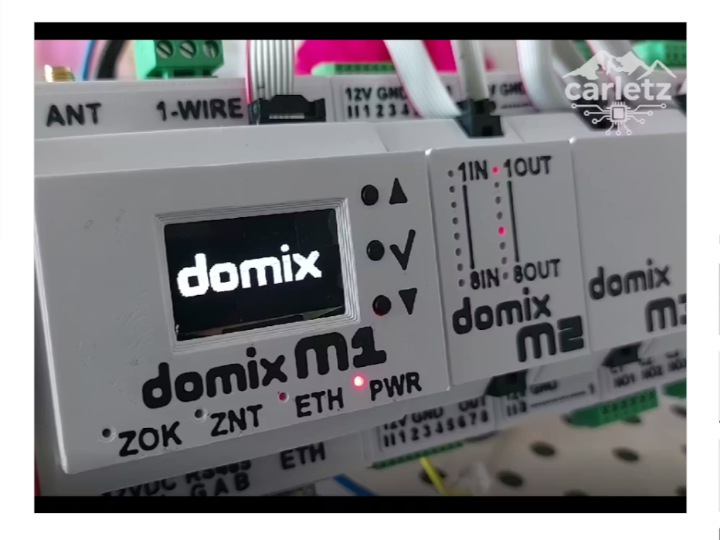
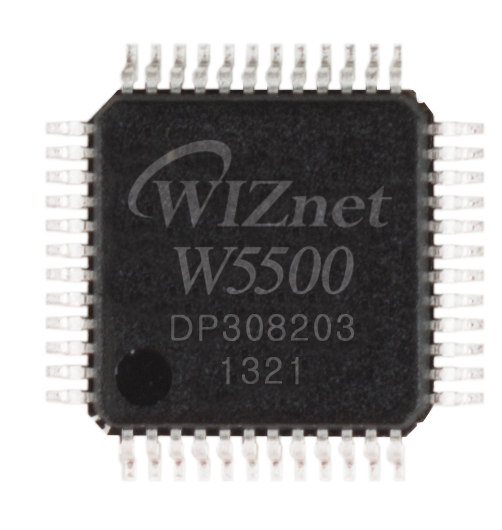
WIZnet - W5500
x 1

📌 Overview
DOMIX는 중앙 집중형 제어반(cabinet) 안에 핵심 제어기와 I/O 모듈을 모아 두고, 집 안의 버튼·스위치·도어 센서·릴레이·밸브·환경 센서를 하나의 구조로 통합하는 오픈소스 모듈형 홈 오토메이션 시스템입니다. 일반적인 DIY 스마트홈처럼 개별 Wi-Fi 장치를 여기저기 흩뿌리는 방식이 아니라, DIN 레일 장착형 하드웨어 + 유선 Ethernet + I2C 확장 + RS485 센서 네트워크를 결합해 구조적으로 관리 가능한 형태를 지향합니다. Hackster 소개문과 GitHub README 모두 이 프로젝트를 “no cloud, no vendor lock-in” 성격의 개방형 시스템으로 설명하고 있습니다.
📌 Features
모듈형 DIN 레일 구조
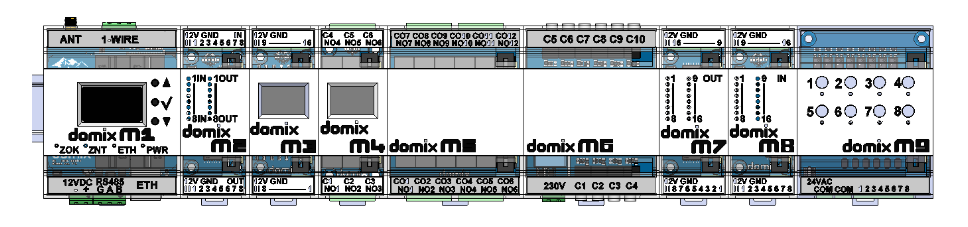
M1 코어를 중심으로 M2~M9 확장 모듈을 필요에 따라 추가하는 방식입니다. 설치하지 않은 기능은 제외할 수 있어, 단순 릴레이 제어부터 에너지 계측·스프링클러·입출력 확장까지 유연하게 구성할 수 있습니다.
유선 Ethernet 중심 설계
M1 코어는 W5500 기반 10/100 Ethernet을 사용합니다. README에서 “Ethernet first”를 명시하고 있고, MQTT·OTA 업데이트·ESPHome 연동을 유선망 위에서 처리합니다. 무선 불안정성보다 신뢰성과 유지보수성을 우선한 설계입니다.
센서 네트워크의 분리 구조
실내 센서 노드는 RP2040 기반 S 시리즈로 분리되어 있고, M1과는 RS485/Modbus RTU로 통신합니다. 즉, 캐비닛 내부 제어와 실내 분산 센서를 역할별로 분리해 확장성과 배선 안정성을 높였습니다.
오픈소스 생태계 친화성
Home Assistant, Node-RED, OpenHAB, MQTT 플랫폼과의 연동을 공식적으로 제시합니다. 또한 GitHub 저장소에는 BOM, 3D 프린트 파일, 소프트웨어, 회로 자료가 포함되어 있어 재현성과 학습성이 높습니다.
비용 대비 높은 시스템 통합도
Hackster 설명 기준 전체 시스템 BOM은 약 420유로 수준으로 제시됩니다. 상용 빌딩 자동화 시스템과 비교하면 저비용이며, DIY 단품 조합보다 구조화된 제어 구성이 가능하다는 점이 장점입니다. 다만 이 수치는 작성자 제시값이며, 양산 기준 원가로 검증된 수치는 아닙니다.
📌 System Architecture
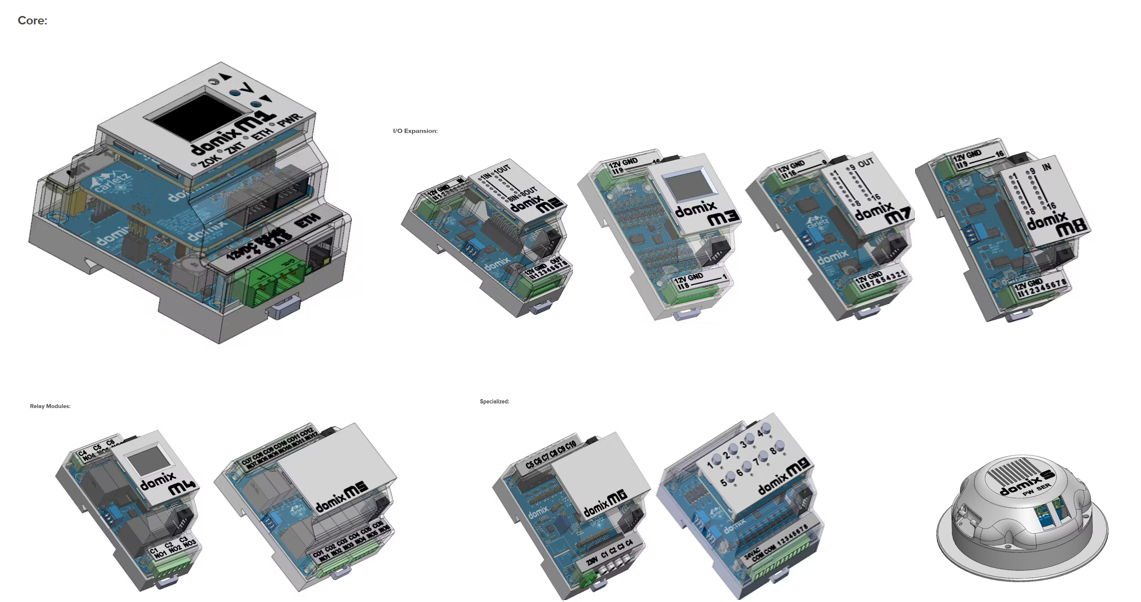
중앙 제어부(M1)
- ESP32-S3가 메인 애플리케이션 프로세서로 동작하고, W5500 Ethernet 컨트롤러, CC2652 기반 Zigbee 모듈, MAX13487E RS485 트랜시버, I²C 확장 버스를 함께 관리합니다.
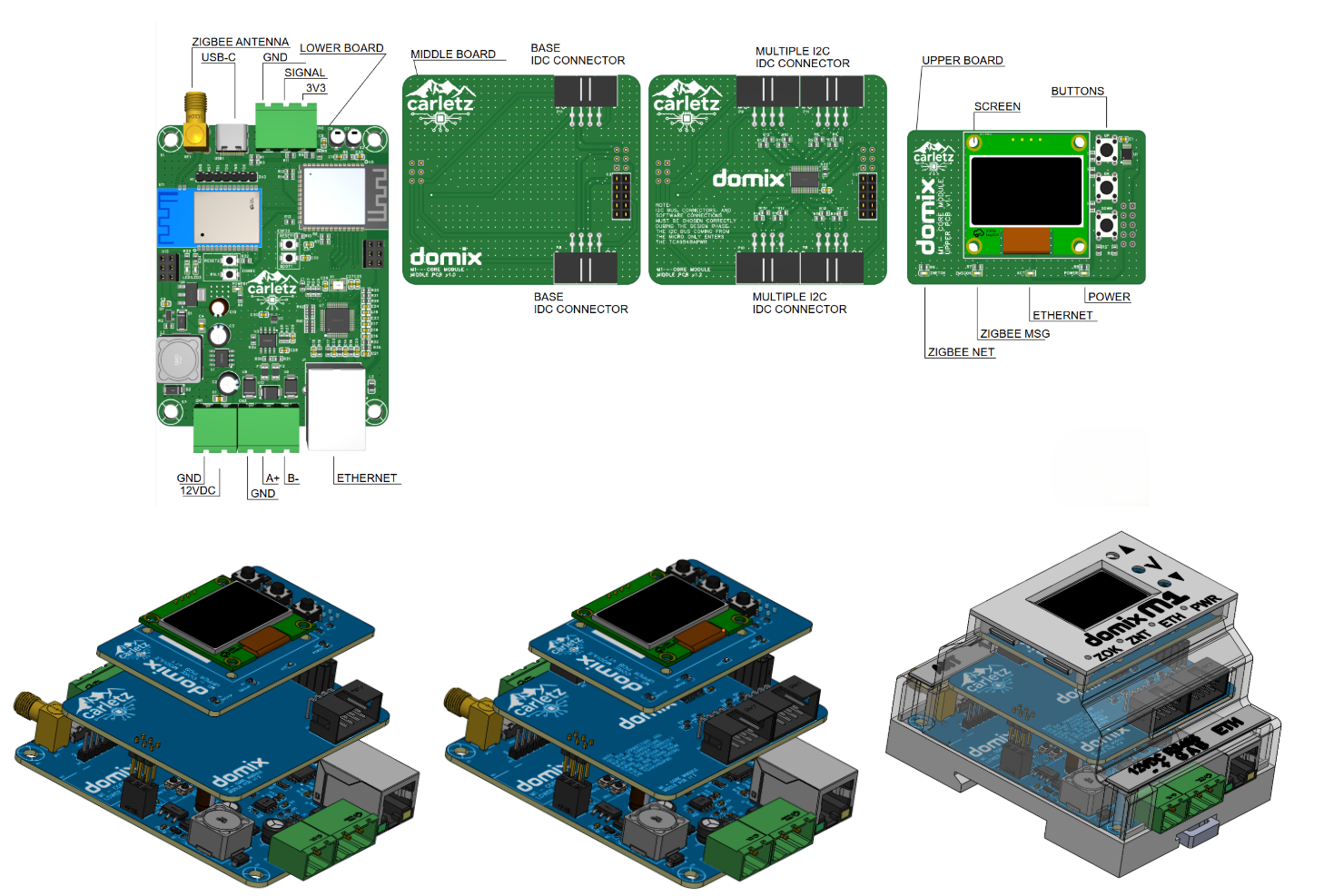
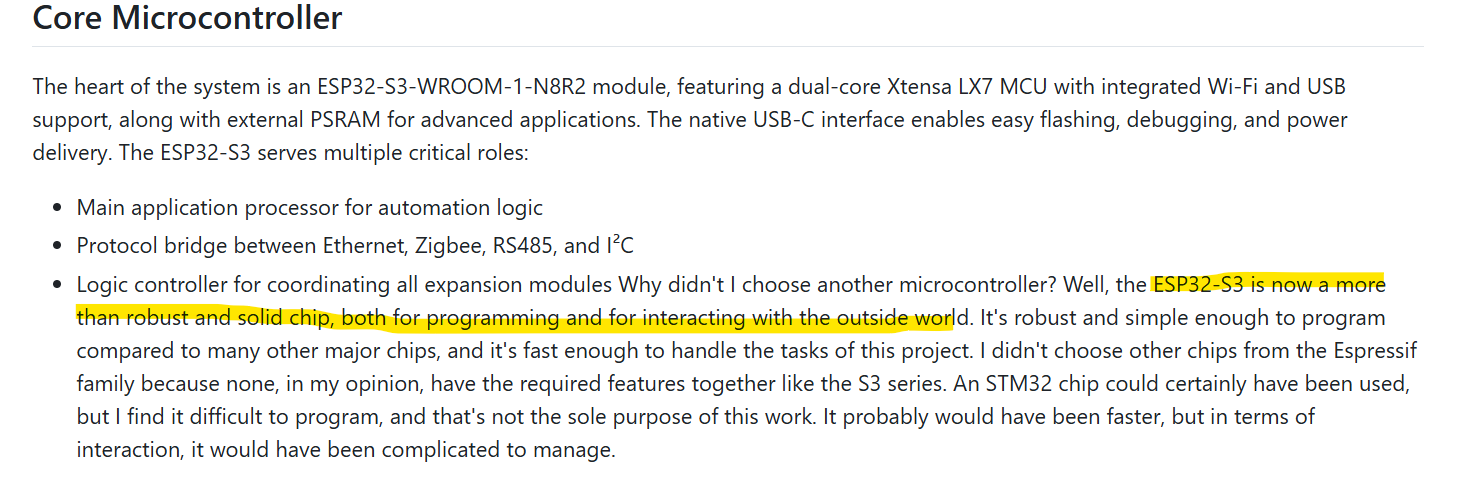
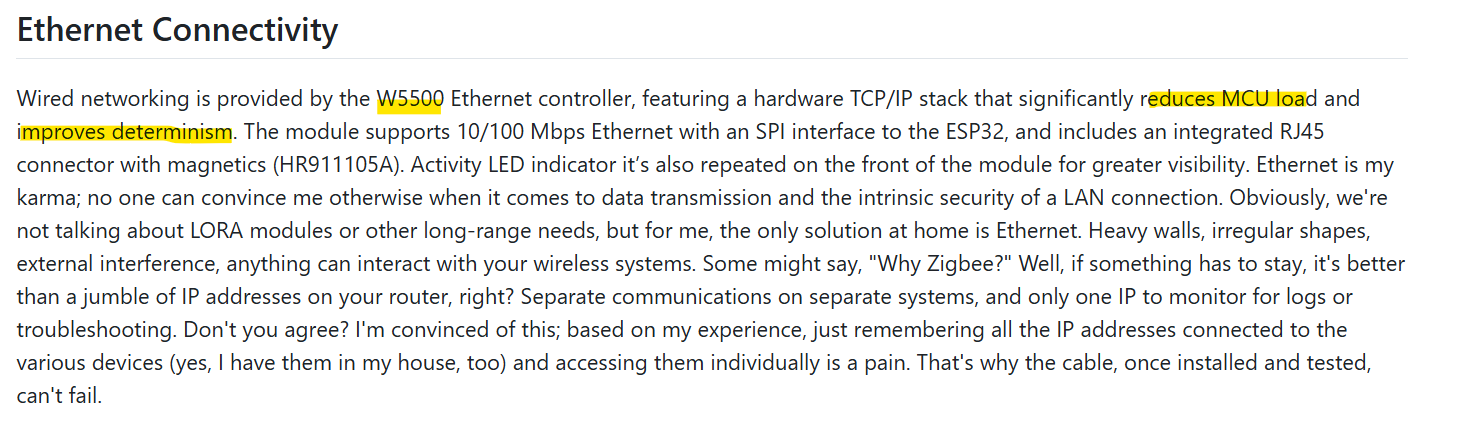
- M1 모듈에는 ESP32-S3와 W5500이 사용되었습니다.
ESP32-S3는 충분한 연산 성능과 다양한 인터페이스 지원을 통해 Ethernet, Zigbee, RS485, I²C를 통합 제어해야 하는 중앙 애플리케이션 프로세서 역할에 적합하기 때문에 선택되었습니다.
W5500은 하드웨어 TCP/IP 스택을 기반으로 MCU의 통신 부하를 줄이고, Wi-Fi 대비 안정적인 유선 네트워크 환경을 제공할 수 있어 스마트홈 제어 시스템의 신뢰성과 실시간성을 확보하기 위해 적용되었습니다.
내부 모듈 연결
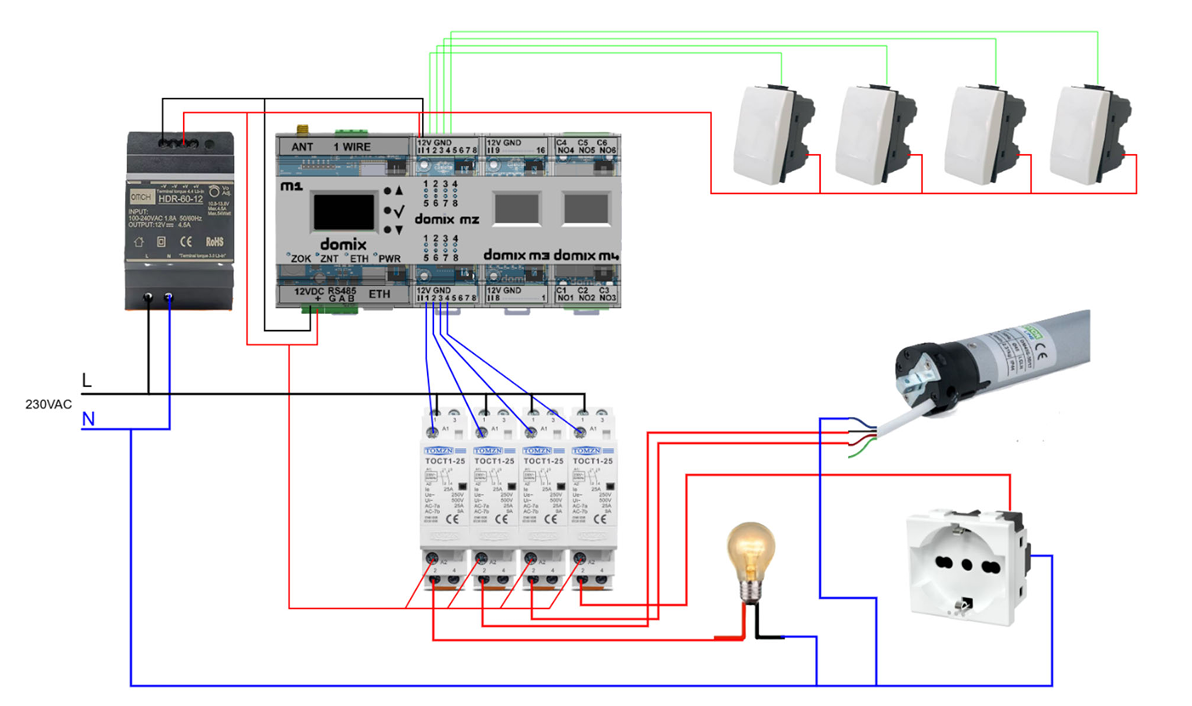
- M2~M9 모듈은 M1에 멀티드롭 I²C 버스로 연결됩니다. 주소 충돌을 피하기 위한 버스 점유 규칙이 문서에 명확히 정의되어 있고, 확장형 보드에서는 TCA9548A 계열 I²C 스위치로 버스를 더 늘립니다.
외부 플랫폼 연동 흐름
- 상위 시스템은 Ethernet을 통해 M1에 접속하고, M1은 MQTT, Home Assistant, Zigbee2MQTT, 웹 인터페이스 등으로 상태를 노출합니다. 문서상 MQTT와 Home Assistant 자동 발견(discovery)도 고려되어 있습니다.
센서 확장 흐름
- 룸 센서 S 계열은 RP2040 기반 노드로 구성되며, RS485/Modbus RTU를 통해 M1과 연결됩니다. 즉, 캐비닛 내부 모듈은 I²C, 룸 센서는 RS485로 역할을 분리한 구조입니다.
데이터 흐름 요약
- 외부 플랫폼/센서/무선 디바이스 → M1(Ethernet·Zigbee·RS485) → 내부 I²C 모듈 제어 → 상태/측정값 회수 → MQTT/Home Assistant/OpenHAB 등으로 재노출하는 구조입니다. 이 설계는 “중앙 집중형 지능 + 기능별 분산 모듈”이라는 문서의 설명과 일치합니다.
📌 Role and Application of the WIZnet's Chip
사용 칩 모델명: W5500
네트워크에서의 역할
- DOMIX의 M1 코어에서 W5500은 유선 Ethernet 인터페이스를 담당합니다.
- 이 Ethernet 링크를 통해 MQTT 통신, ESPHome 기반 네이티브 연동, OTA 업데이트, 로컬 네트워크 접속이 이뤄집니다.
왜 W5500이 중요한가
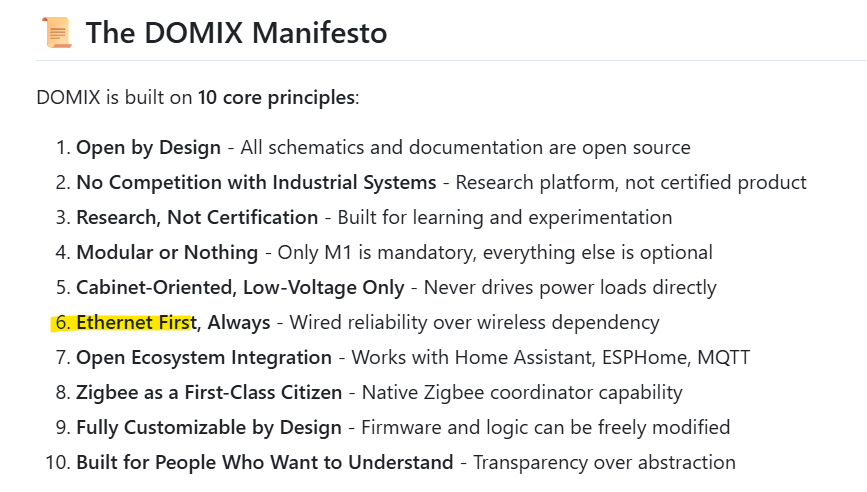
- 이 프로젝트는 Wi-Fi 중심 DIY 스마트홈의 불안정성 대신 항상 연결되는 유선망을 핵심 가치로 둡니다. README에서도 “Ethernet first, always”를 선언하고 있어, W5500은 단순 부품이 아니라 이 프로젝트의 설계 철학을 구현하는 핵심 부품이라고 볼 수 있습니다.
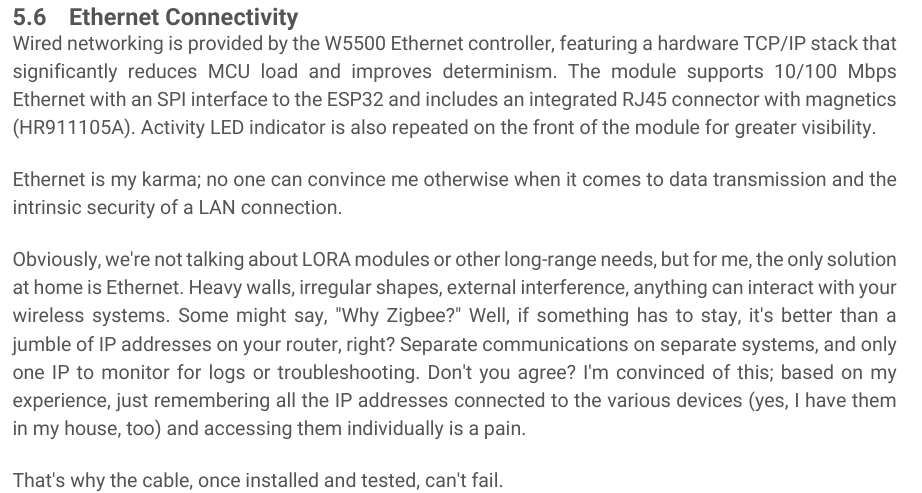
- 작성자는 개인적인 경험을 바탕으로, 데이터 전송과 보안 측면에서 이더넷이 가장 신뢰할 수 있는 방식이라고 주장합니다. 특히 가정 환경에서는 벽 구조나 외부 간섭 등으로 인해 무선 통신이 불안정해질 수 있기 때문에 유선 연결이 더 적합하다고 보고 있습니다.
- 또한 여러 기기를 사용할 때 발생하는 IP 관리의 복잡성도 문제로 지적합니다. Zigbee와 같은 별도의 통신 방식을 활용하면 네트워크를 분리해 관리할 수 있어, 라우터에 많은 IP를 할당하는 것보다 효율적이라는 의견을 제시합니다.
- 결론적으로, 한 번 설치하고 나면 안정적으로 동작하는 유선 이더넷이 가정 내 네트워크 구성에서 가장 확실하고 관리하기 쉬운 선택이라고 강조합니다.
기술적 장점
- W5500을 적용함으로써 ESP32-S3 기반 시스템이 비교적 간단하게 10/100 유선망에 연결되고, 캐비닛형 제어반에서 필요한 안정적 네트워크 백본을 확보할 수 있습니다.
- 특히 이 프로젝트처럼 MQTT, Home Assistant, OTA, 원격 진단을 동시에 고려하는 구조에서는, W5500의 적용이 “Wi-Fi 대체” 수준이 아니라 시스템 신뢰성 확보 수단으로 작동합니다. 이는 WIZnet 칩이 단순 TCP 서버 예제를 넘어 구조적 스마트홈 백본으로 쓰일 수 있음을 보여주는 사례입니다.
📌 Market & Application Value
적용 가능한 시장과 산업
- 가장 직접적인 시장은 주거용 스마트홈, 소형 빌딩 자동화, 맞춤형 전기 캐비닛 제작, 메이커·프로슈머용 고급 DIY 자동화입니다.
- 기능 구성상 조명, 셔터, 접점 감시, 에너지 계측, 스프링클러, 실내 공기질·존재 감지까지 다뤄, 소형 상업공간이나 기술형 주택 프로젝트에도 응용 가능합니다.
시장성 평가
- B2C 대중형 완제품보다는 B2B 경계형 시장 또는 전문 설치형 프로슈머 시장에 더 적합합니다.
- 실제 구매 주체는 일반 소비자보다는, 스마트홈 인테그레이터, 전기 패널 제작업체, 홈랩 고급 사용자, 소규모 자동화 솔루션 업체가 될 가능성이 높습니다. 이 판단은 공개 자료의 시스템 복잡도와 배선 구조를 근거로 한 전문가 해석입니다.
경쟁력
- KNX·PLC 같은 상용 시스템 대비 장점은 낮은 진입비용, 오픈소스, 커스터마이징 가능성입니다.
- 반대로 Zigbee/Wi-Fi DIY 단품 조합 대비 장점은 중앙 집중형 구조, 유지보수 편의성, 배선 명확성, 확장 모듈화입니다. 이 구조적 차별성은 분명하지만, 인증·설치 책임·안전 규정 대응은 상용 제품 대비 약점입니다.
제품화 가능성
- 구조적으로는 제품 발전 가능성이 있습니다. BOM, 3D 파일, 회로, 펌웨어가 공개되어 있고 모듈 분리가 잘 되어 있기 때문입니다.
- 다만 작성자 본인이 README에서 “not certified for production use”, Hackster에서 “This is not a product. It's a research platform.”이라고 명시하고 있어, 현재 단계는 상용 제품보다는 고도화된 연구·실험 플랫폼에 가깝습니다.
📌 External Indicators
GitHub (Link)
- 공개 저장소 기준 Star 5, Fork 0, Issues 0, Pull request 0, 그리고 242 commits가 확인됩니다. 이는 아직 대규모 외부 확산 단계는 아니지만, 단기간에 올린 정리성 프로젝트가 아니라 실제로 상당한 개발 누적이 있었음을 보여줍니다.
Hackster (Link)
- Hackster 프로젝트 페이지에는 1,500 조회수와 댓글 0개가 표시됩니다. 게시일은 2026년 4월 9일로 매우 최근이므로, 현재 수치는 초기 반응으로 보는 것이 타당합니다. 즉, 공개 직후 기준으로는 관심 유입은 있었지만 토론 참여까지는 아직 확산되지 않은 상태입니다.
YouTube (Link)
- 해당 YouTube 영상은 DOMIX 시스템을 직접 구축하는 과정을 중심으로 설명하는 기술 레퍼런스형 콘텐츠로 확인됩니다. 조회수, 좋아요, 댓글 등 정량 지표는 현재 기준으로 명확히 확인되지 않지만, “from scratch” 기반 제작 과정을 강조하고 있어 일반 홍보가 아닌 학습 및 구현 참고 목적의 영상 성격이 강합니다. 따라서 단기적인 대중 확산보다는 ESPHome, Home Assistant, DIY 자동화 커뮤니티 내에서 장기적으로 활용될 가능성이 높은 콘텐츠로 평가됩니다.
OSHWLab (Link)
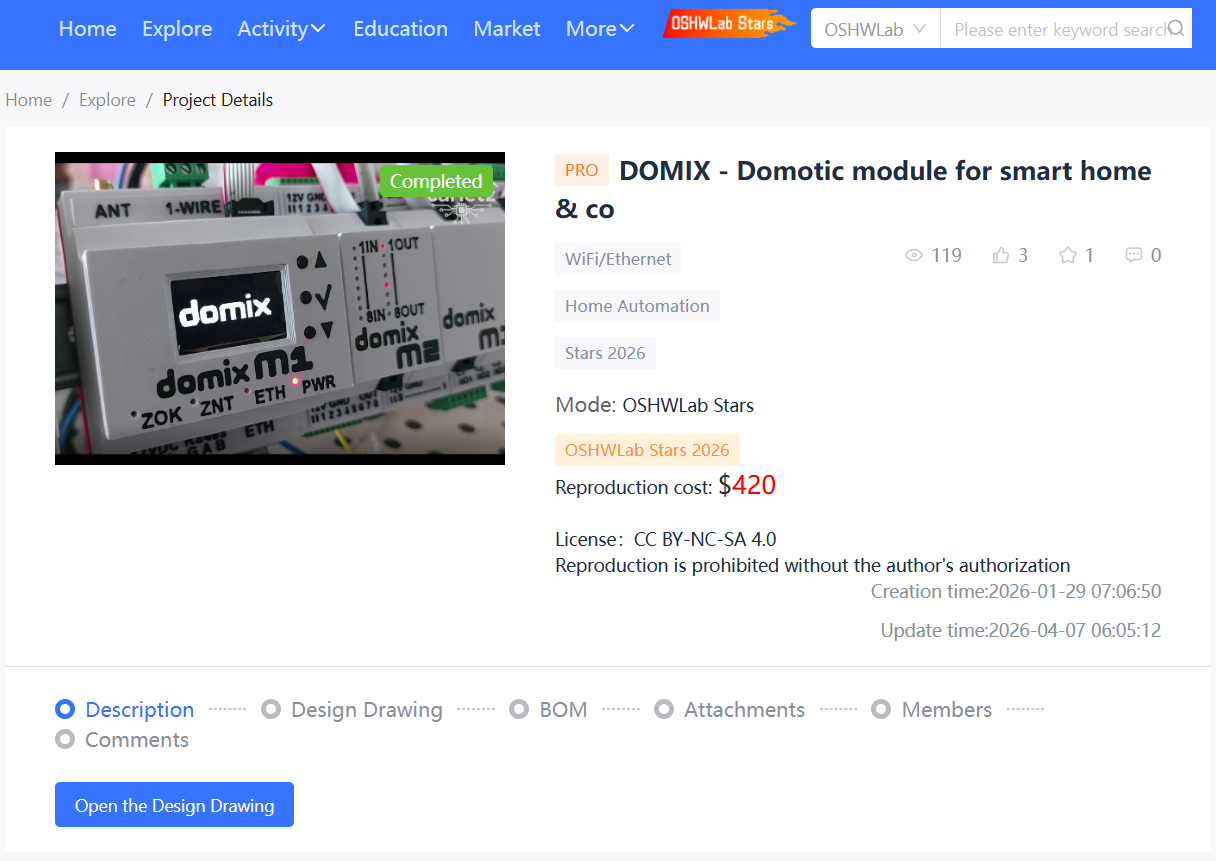
- DOMIX는 OSHWLab에 회로도와 PCB 설계가 함께 공개된 프로젝트로, 실제 제작 가능한 하드웨어 수준까지 완성된 구조를 갖추고 있습니다. 좋아요, 조회수, 복제 수 등의 정량 지표는 현재 공개 자료 기준으로 확인되지 않지만, 해당 플랫폼 특성상 설계 재사용 및 제조로 이어질 수 있는 실질적인 활용 기반을 제공합니다. 이는 단순 아이디어 공유를 넘어, 재현성과 확장성을 갖춘 오픈 하드웨어 레퍼런스 프로젝트로 평가할 수 있습니다.
📌 WIZnet Strategic Value
WIZnet Maker 생태계 관점의 의미
- DOMIX는 WIZnet 칩이 단순 네트워크 연결 부품이 아니라, 스마트홈 제어반의 핵심 유선 백본으로 쓰일 수 있음을 보여줍니다.
- 특히 W5500이 DIY 보드 한 장이 아니라, 캐비닛형 제어 시스템의 중심 통신 인터페이스로 채택되었다는 점이 중요합니다.
다른 고객·개발자에게 주는 메시지
- “WIZnet은 Wi-Fi가 불안정하거나 유지보수가 어려운 환경에서, 구조화된 유선 IoT 시스템을 만드는 데 적합하다”는 메시지를 줍니다.
- 또한 Home Assistant, MQTT, Zigbee, RS485와 함께 사용되는 실제 사례이므로, WIZnet 제품을 현장 자동화·빌딩 제어·센서 게이트웨이로 확장 제안하기 좋습니다.
유사 프로젝트 확장 가능성
- 이 구조는 주택 자동화 외에도 소형 공장 보조 제어반, 서버룸 환경 모니터링, 원격 설비 I/O 집중화, 농업·관수 제어로 확장 가능합니다.
- 실제로 DOMIX 모듈 목록에 에너지 계측과 스프링클러 제어가 포함되어 있어, WIZnet 기반 유선 제어 아키텍처의 응용 범위가 넓다는 점을 시사합니다.
📌 Summary
DOMIX는 ESP32-S3 + W5500 + I2C 모듈 확장 + RS485 센서 네트워크 + ESPHome를 결합한, 매우 구조적인 오픈소스 홈 오토메이션 프로젝트입니다. 핵심은 “기능 몇 개”보다 유선 중심·캐비닛 중심·모듈 중심이라는 시스템 설계 철학에 있습니다.
📌 FAQ
Q1. DOMIX는 무엇인가요?
DOMIX는 ESP32-S3 기반 중앙 제어기와 모듈형 I/O 시스템을 결합한 오픈소스 스마트홈 자동화 플랫폼입니다.
Q2. 이 시스템은 어떤 문제를 해결하나요?
분산된 Wi-Fi 기반 스마트홈의 불안정성과 관리 어려움을 줄이고, 중앙 집중형 구조로 안정성과 유지보수성을 개선합니다.
Q3. WIZnet W5500은 어떤 역할을 하나요?
W5500은 유선 Ethernet 통신을 담당하며, MQTT 기반 스마트홈 연동과 안정적인 네트워크 연결을 제공합니다.
Q4. 왜 Wi-Fi 대신 Ethernet을 사용하나요?
Ethernet은 간섭이 적고 연결이 안정적이기 때문에 스마트홈 제어 시스템의 신뢰성과 실시간성을 높일 수 있습니다.
Q5. 이 프로젝트는 실제 제품인가요?
아니요, DOMIX는 현재 연구 및 오픈소스 기반 프로젝트이며 상용 제품으로 인증된 상태는 아닙니다.
Q6. 어떤 플랫폼과 연동되나요?
Home Assistant, Node-RED, OpenHAB 등 다양한 오픈소스 자동화 플랫폼과 MQTT 기반으로 연동됩니다.
Q7. 누가 이 시스템을 사용하기에 적합한가요?
스마트홈 인테그레이터, 전기 제어 전문가, 고급 DIY 메이커에게 적합합니다.
Q8. 확장성은 어느 정도인가요?
I²C 기반 모듈 구조와 RS485 센서 네트워크를 통해 기능을 유연하게 확장할 수 있습니다.
Q9. 양산이 가능한 구조인가요?
기술적으로는 가능하지만, 인증 및 안전 규격을 고려하면 현재는 프로토타입 또는 연구 플랫폼 수준입니다.
Q10. 이 프로젝트의 가장 큰 특징은 무엇인가요?
유선 Ethernet 기반의 중앙 집중형 구조와 모듈형 확장 설계를 결합한 점이 핵심 특징입니다.
📌 Overview
DOMIX is an open-source modular home automation system that integrates the core controller and I/O modules within a centralized control cabinet, and unifies buttons, switches, door sensors, relays, valves, and environmental sensors in the home into a single structure. Rather than scattering individual Wi-Fi devices like a typical DIY smart home setup, it aims for a structurally manageable approach by combining DIN rail-mounted hardware, wired Ethernet, I2C expansion, and an RS485 sensor network. Both the Hackster introduction and the GitHub README describe this project as an open system characterized by “no cloud, no vendor lock-in.”
📌 Features
Modular DIN Rail Structure
It is based on a system where expansion modules M2–M9 are added as needed around the M1 core. Functions that are not installed can be excluded, allowing flexible configuration ranging from simple relay control to energy metering, sprinklers, and I/O expansion.
Wired Ethernet-Centric Design
The M1 core uses W5500-based 10/100 Ethernet. The README explicitly states “Ethernet first,” and handles MQTT, OTA updates, and ESPHome integration over a wired network. The design prioritizes reliability and maintainability over wireless instability.
Separated Sensor Network Architecture
Indoor sensor nodes are separated into the RP2040-based S series, communicating with the M1 via RS485/Modbus RTU. In other words, cabinet-level control and distributed indoor sensors are separated by role, improving scalability and wiring stability.
Open-Source Ecosystem Compatibility
It officially supports integration with Home Assistant, Node-RED, OpenHAB, and MQTT platforms. The GitHub repository also includes BOM, 3D print files, software, and circuit documentation, ensuring high reproducibility and learning value.
High System Integration Relative to Cost
According to the Hackster description, the total system BOM is estimated at around €420. Compared to commercial building automation systems, it is low-cost, and offers a more structured control configuration than typical DIY setups. However, this figure is provided by the author and has not been validated as a mass-production cost.
📌 System Architecture
Central Control Unit (M1)
- The ESP32-S3 operates as the main application processor, managing the W5500 Ethernet controller, CC2652-based Zigbee module, MAX13487E RS485 transceiver, and the I²C expansion bus together.
- The M1 module uses the ESP32-S3 and W5500.
The ESP32-S3 was selected because it is well-suited as a central application processor that must integrate and control Ethernet, Zigbee, RS485, and I²C, thanks to its sufficient processing performance and support for various interfaces.
The W5500 was adopted to reduce the communication load on the MCU through its hardware TCP/IP stack and to provide a more stable wired network environment compared to Wi-Fi, thereby ensuring the reliability and real-time performance of the smart home control system.
Internal Module Connections
- Modules M2–M9 are connected to M1 via a multidrop I²C bus. The documentation clearly defines bus arbitration rules to avoid address conflicts, and in expansion boards, the bus is further extended using TCA9548A-series I²C switches.
External Platform Integration Flow
- Upper-level systems connect to M1 via Ethernet, and M1 exposes its status through MQTT, Home Assistant, Zigbee2MQTT, and a web interface. The documentation also considers MQTT and Home Assistant auto-discovery features.
Sensor Expansion Flow
- The S-series room sensors are built as RP2040-based nodes and connect to M1 via RS485/Modbus RTU. In other words, cabinet internal modules use I²C, while room sensors use RS485, separating roles by communication method.
Data Flow Summary
- External platforms/sensors/wireless devices → M1 (Ethernet, Zigbee, RS485) → internal I²C module control → status/data collection → re-exposed via MQTT, Home Assistant, OpenHAB, etc.
- This design aligns with the documentation’s description of “centralized intelligence + function-specific distributed modules.”
📌 Role and Application of the WIZnet's Chip
Chip Model Used: W5500
Role in the Network
- In the DOMIX M1 core, the W5500 is responsible for the wired Ethernet interface.
- Through this Ethernet link, MQTT communication, native integration based on ESPHome, OTA updates, and local network access are handled.
Why the W5500 is Important
- This project places a core value on an always-connected wired network instead of the instability of Wi-Fi-based DIY smart homes. The README also declares “Ethernet first, always,” indicating that the W5500 is not just a simple component but a key element that embodies the design philosophy of the project.
Technical Advantages
- By applying the W5500, an ESP32-S3-based system can be relatively easily connected to a 10/100 wired network, securing the stable network backbone required for a cabinet-based control system.
- Especially in a structure like this project—where MQTT, Home Assistant, OTA, and remote diagnostics are all considered simultaneously—the use of the W5500 goes beyond simply “replacing Wi-Fi” and functions as a means of ensuring overall system reliability. This demonstrates that WIZnet chips can be used not just for simple TCP server examples, but as a structural smart home backbone.
📌 Market & Application Value
Applicable Markets and Industries
- The most direct markets include residential smart homes, small building automation, custom electrical cabinet manufacturing, and advanced DIY automation for makers and prosumers.
- In terms of functionality, it covers lighting, shutters, contact monitoring, energy metering, sprinklers, and indoor air quality and occupancy detection, making it applicable to small commercial spaces and technology-oriented housing projects.
Market Evaluation
- It is more suitable for a B2B-adjacent market or a professionally installed prosumer segment rather than mass-market B2C products.
- The actual buyers are more likely to be smart home integrators, electrical panel manufacturers, advanced home lab users, and small automation solution providers rather than general consumers. This assessment is based on expert interpretation of the system complexity and wiring structure described in the available materials.
Competitiveness
- Compared to commercial systems such as KNX or PLC, its advantages include lower entry cost, open-source nature, and high customizability.
- On the other hand, compared to Zigbee/Wi-Fi-based DIY setups, it offers advantages in centralized architecture, ease of maintenance, clear wiring structure, and modular expandability. While this structural differentiation is clear, it has weaknesses in certification, installation responsibility, and compliance with safety regulations compared to commercial products.
Productization Potential
- Structurally, it has strong potential for product development. The BOM, 3D files, schematics, and firmware are publicly available, and the modular design is well-organized.
- However, the author explicitly states in the README “not certified for production use” and on Hackster “This is not a product. It's a research platform.” Therefore, at its current stage, it is closer to an advanced research and experimental platform than a commercial product.
📌 External Indicators
GitHub (Link)
- Based on the public repository, it has 5 stars, 0 forks, 0 issues, 0 pull requests, and 242 commits. This indicates that it has not yet reached a stage of broad external adoption, but it does show that it is not a short-term, neatly packaged project, and that a substantial amount of development has actually been accumulated.
Hackster (Link)
- The Hackster project page shows 1,500 views and 0 comments. Since the posting date is very recent (April 9, 2026), these figures should be considered an initial response. In other words, there has been some incoming interest right after publication, but it has not yet expanded to active discussion or engagement.
YouTube (Link)
- The YouTube video appears to be technical reference content focused on the process of building the DOMIX system from scratch. While quantitative metrics such as views, likes, and comments are not clearly confirmed at this time, it emphasizes a “from scratch” build process, indicating that it is intended more for learning and implementation reference rather than general promotion. Therefore, it is likely to have long-term value within ESPHome, Home Assistant, and DIY automation communities, rather than achieving short-term mass adoption.
OSHWLab (Link)
- DOMIX is a project with schematics and PCB designs publicly available on OSHWLab, featuring a structure completed to a level of actually manufacturable hardware. While quantitative metrics such as likes, views, and clones are not currently confirmed based on available data, the nature of the platform provides a practical foundation for design reuse and manufacturing. This goes beyond simple idea sharing and can be evaluated as an open hardware reference project with reproducibility and scalability.
📌 WIZnet Strategic Value
Implications from the WIZnet Maker Ecosystem Perspective
- DOMIX demonstrates that WIZnet chips are not just simple network connectivity components, but can serve as the core wired backbone of a smart home control cabinet.
- In particular, it is significant that the W5500 is used not as a standalone DIY board, but as the central communication interface in a cabinet-based control system.
Message to Other Customers and Developers
- It conveys the message that “WIZnet is well-suited for building structured wired IoT systems in environments where Wi-Fi is unstable or difficult to maintain.”
- Additionally, as a real-world use case integrated with Home Assistant, MQTT, Zigbee, and RS485, it serves as a strong reference for proposing WIZnet products in field automation, building control, and sensor gateway applications.
Potential for Expansion into Similar Projects
- This architecture can be extended beyond residential automation to small factory auxiliary control panels, server room environmental monitoring, remote facility I/O aggregation, and agricultural or irrigation control systems.
- In fact, the inclusion of energy metering and sprinkler control in the DOMIX module lineup suggests a broad application range for WIZnet-based wired control
📌 Summary
DOMIX is a highly structured open-source home automation project that combines ESP32-S3, W5500, I2C module expansion, an RS485 sensor network, and ESPHome. The core lies not in “a few features,” but in its system design philosophy centered on wired networking, cabinet-based architecture, and modular design.
📌 FAQ
Q1. What is DOMIX?
DOMIX is an open-source modular home automation system based on an ESP32-S3 central controller.
Q2. What problem does it solve?
It improves reliability and maintainability by replacing distributed Wi-Fi devices with a centralized control architecture.
Q3. What is the role of the WIZnet W5500?
The W5500 provides wired Ethernet connectivity for stable MQTT communication and system integration.
Q4. Why use Ethernet instead of Wi-Fi?
Ethernet offers more stable and interference-free communication, which is critical for reliable home automation systems.
Q5. Is this a commercial product?
No, DOMIX is currently an open-source research platform and not a certified commercial product.
Q6. Which platforms does it support?
It integrates with platforms like Home Assistant, Node-RED, and OpenHAB via MQTT.
Q7. Who is it designed for?
It is suitable for system integrators, advanced DIY users, and automation engineers.
Q8. How scalable is the system?
The system is highly scalable through modular I²C expansion and RS485-based sensor networks.
Q9. Is it ready for mass production?
The design is technically viable, but certification and safety compliance are required for commercialization.
Q10. What makes this project unique?
Its combination of wired Ethernet backbone and modular cabinet-based architecture sets it apart.
📌 Reference Link
https://github.com/carletz/DOMIX-Open-Source-Modular-Home-Automation-System/tree/main
https://github.com/carletz/DOMIX-Open-Source-Modular-Home-Automation-System/tree/main/Software
https://oshwlab.com/carletz.slug/domix-domotic-module-for-smart-home-co
https://www.youtube.com/watch?v=ElEC5RpgxQk