WIZnet Success Stories: Connected Kitchen Fire Prevention for Safer Commercial Operations
A solution-focused safety system that combines temperature-based prevention, air-quality management, and centralized monitoring for commercial kitchens.
Overview
In commercial kitchens, fire prevention is not only a safety issue but also an operational one. High-heat equipment, continuous cooking, gas use, and limited response time make it difficult to manage risk with standalone devices alone. Grib’s kitchen fire prevention solution is designed as a connected safety system that links field devices, monitoring functions, and response actions into one operational workflow.
Rather than relying only on local alarms, the solution supports real-time visibility into kitchen conditions and helps operators monitor abnormal signs earlier. This creates practical value for restaurants, group kitchens, and food service facilities that need stronger safety oversight and faster decision-making.
Background
Many conventional kitchen fire systems are still focused mainly on suppression after a fire has already started. In real operations, that approach can leave a gap between the first signs of overheating and the moment a serious incident occurs. Grib’s solution is positioned differently: it emphasizes prevention based on the actual temperature of cooking equipment, with air-quality management added as part of the broader safety workflow.
Another challenge is fragmented monitoring. When fire-related devices, air-quality equipment, and ventilation systems operate separately, managers have limited visibility into what is happening at each site. This makes it harder to respond consistently, track events, or manage multiple kitchens from a central point. A connected prevention system addresses this by bringing data, alerts, and control functions into one platform.
Solution
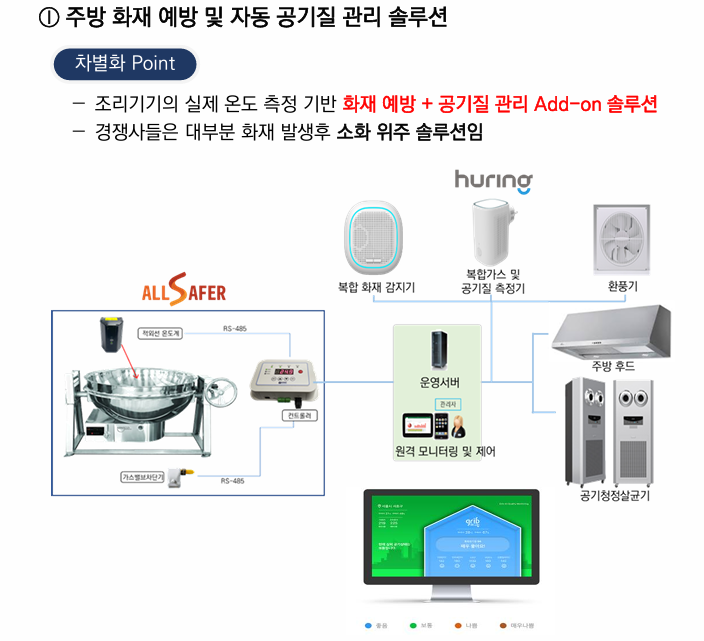
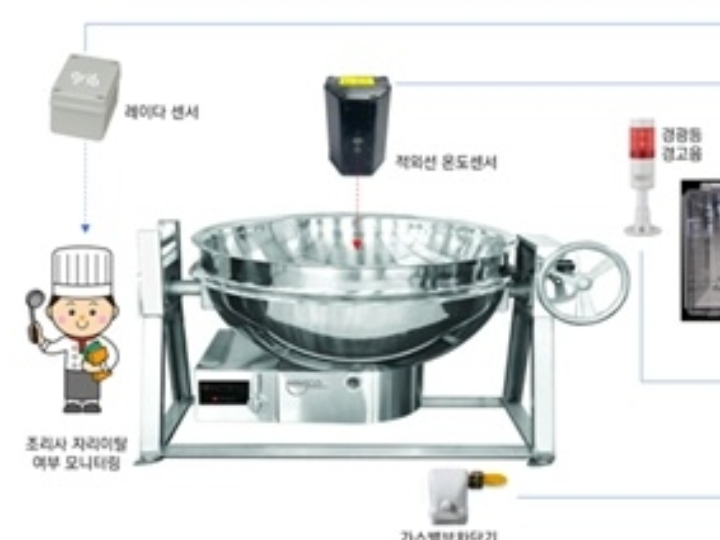
Grib’s kitchen fire prevention solution combines sensing, local control, and integrated monitoring to help reduce risk in commercial kitchen environments. At the field level, the system measures the actual temperature of cooking equipment and uses additional sensing devices such as composite fire detectors and air-quality measurement units. Based on the detected conditions, the system can support alerts, ventilation-related control, gas shutoff actions, and remote monitoring.
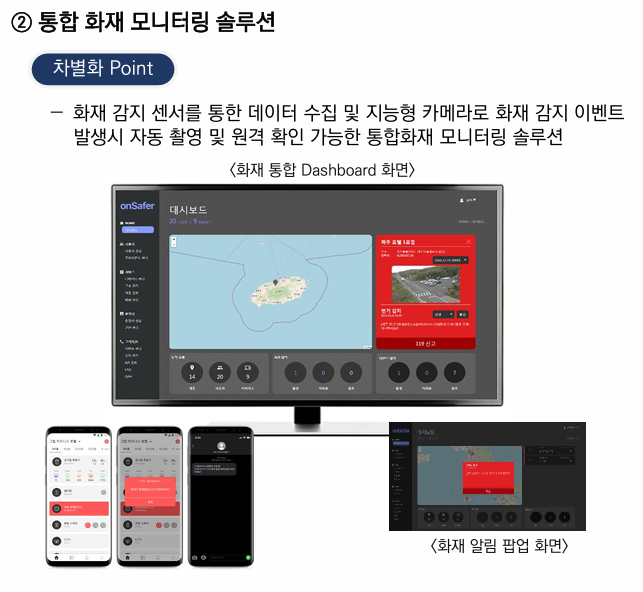
This is important because it shifts the solution from simple detection to practical prevention support. Instead of waiting for a fire event to escalate, the system helps identify abnormal heat and environmental conditions earlier. At the same time, the monitoring layer allows operators to review events, receive alert pop-ups, and manage site status from a server or dashboard. In expanded configurations, fire events can also be linked with intelligent camera-based confirmation for remote checking.
System Architecture
The overall system is built around a straightforward flow. Sensors installed near cooking equipment collect temperature, fire-related, and air-quality data. A local controller processes this information and coordinates field-level response devices such as alarms, ventilation equipment, and gas shutoff valves. The device layer is then connected to an operations server or dashboard for remote monitoring and control.
From the operator’s perspective, this means kitchen status can be monitored through a centralized interface rather than through isolated local devices. When abnormal conditions are detected, the platform can show event information, generate alert pop-ups, and support rapid review by managers or control personnel. This makes the architecture easier to understand not only for engineers, but also for facility managers and decision-makers responsible for safety operations across multiple kitchens.
Key Technologies
Integrated Prevention and Monitoring
The core strength of the solution is the way prevention and monitoring are combined. Grib highlights actual cooking-equipment temperature measurement as a key differentiator, along with air-quality management and integrated fire monitoring. The result is a system that supports both day-to-day safety management and event response through one connected workflow.
W5500-based Ethernet Connectivity
To support networked operation, the system can incorporate W5500-based communication at the gateway or module level. Grib’s IoT product portfolio includes the WIZ550S2E, a gateway module based on W5500 and a Cortex-M0 MCU, designed to convert serial data to TCP/IP and TCP/IP to serial data. In this solution context, that kind of Ethernet connectivity helps link field controllers and monitoring infrastructure in a simple and stable way.
Benefits
- Supports earlier fire-risk response by monitoring the actual temperature of cooking equipment, not only the final stage of a fire event.
- Improves operational visibility through centralized dashboards, remote monitoring, and alert pop-up notifications.
- Enables coordinated safety actions by connecting sensors, controllers, ventilation-related devices, and gas shutoff components in one workflow.
- Helps reduce management complexity for operators running multiple kitchens or food service sites.
- Provides a scalable platform approach by combining field devices, monitoring software, and connected infrastructure.
Conclusion
Grib’s kitchen fire prevention solution shows how commercial kitchen safety can move beyond standalone fire devices toward a more connected, prevention-oriented model. By combining actual temperature-based monitoring, air-quality management, centralized dashboards, and practical response functions, the system helps operators manage risk with better visibility and stronger operational control. W5500 can be part of that connected architecture as an enabling communication component, but the real value of the solution lies in how the entire prevention workflow is integrated for everyday use in commercial kitchens.