


How Does CamThink's NeoEyes NE301 PoE Use W5500 for Wired Ethernet?
NE301 PoE uses W5500 in MACRAW mode for wired Ethernet, while STM32N657 runs vision inference and lwIP and a separate circuit handles PoE power.

WIZnet - W5500
x 1

Wired Ethernet controller on the NeoEyes NE301 PoE expansion board, used in MACRAW mode as the frame interface to lwIP on the STM32N657
📌 Overview
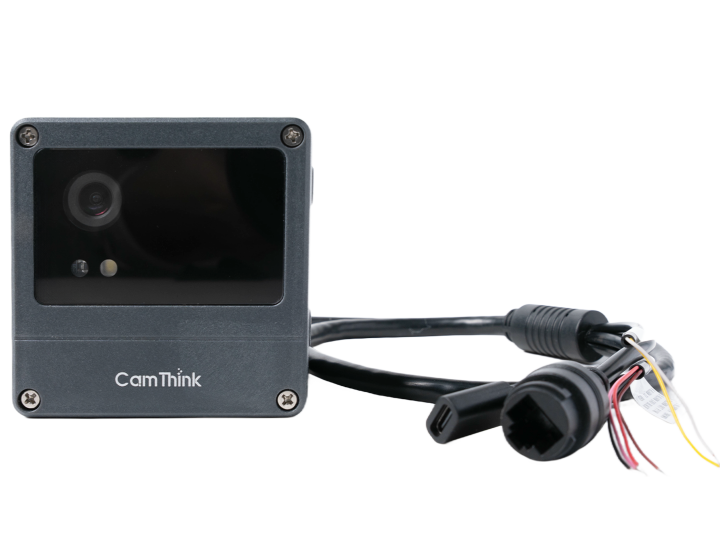
CamThink's NeoEyes NE301 PoE is a commercial edge AI camera that combines on-device vision inference with wired Ethernet and power over one cable. The STM32N657 runs the image pipeline and neural-network inference. WIZnet W5500 provides the wired Ethernet interface on the PoE expansion board. A separate PoE circuit converts cable power for the camera.
This division of work is the product's most useful design lesson. W5500 does not run object detection, and the camera does not need to send every frame to a cloud GPU before making a decision. The main MCU can process the scene locally, then use the wired network for inference results, configuration, telemetry, event images, or video streams.
NE301 PoE in one line: STM32N657 performs edge AI, W5500 moves Ethernet frames, lwIP provides the TCP/IP stack, and a separate PoE power stage lets the camera use one network cable for data and power.
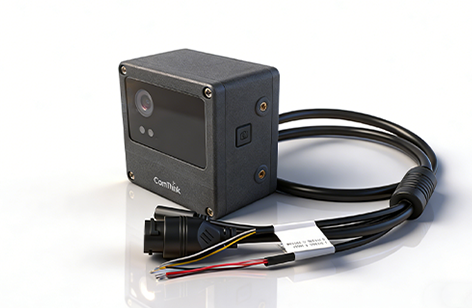
The evidence is unusually complete for a commercial design-in. CamThink publishes detailed PoE board photographs, a system schematic that names the W5500 SPI connection, and source-available firmware that includes the W5500 network interface. This makes NE301 PoE more than a product page mention: it is a traceable example of W5500 inside a shipping, IP67 edge AI camera.
One Camera Platform, Three Deployment Paths
NeoEyes NE301 is built around the same camera and AI platform but is sold with different connectivity options. Among the documented NE301 variants, the PoE edition is the verified W5500 design. The Wi-Fi and LTE editions use their own communication configurations.
| Variant | Main deployment connection | Power path | Typical placement described by CamThink |
|---|---|---|---|
| NE301 Wi-Fi | Wi-Fi 6 | Battery by default; USB-C configuration by inquiry | Indoor proof of concept and flexible testing |
| NE301 LTE Cat.1 | LTE Cat.1 plus local Wi-Fi | Battery by default; USB-C configuration by inquiry | Remote and distributed sites |
| NE301 PoE | Ethernet plus local Wi-Fi setup access | IEEE 802.3af PoE | Fixed infrastructure and 24/7 installation |
Across the variants, CamThink lists the same core AI capability. The connectivity module changes how the device is installed, not which processor runs the model. For the PoE edition, that means a fixed camera can receive power and exchange data through one Ethernet run while retaining a local Wi-Fi access point for initial Web UI setup.
The AI Runs on STM32N657
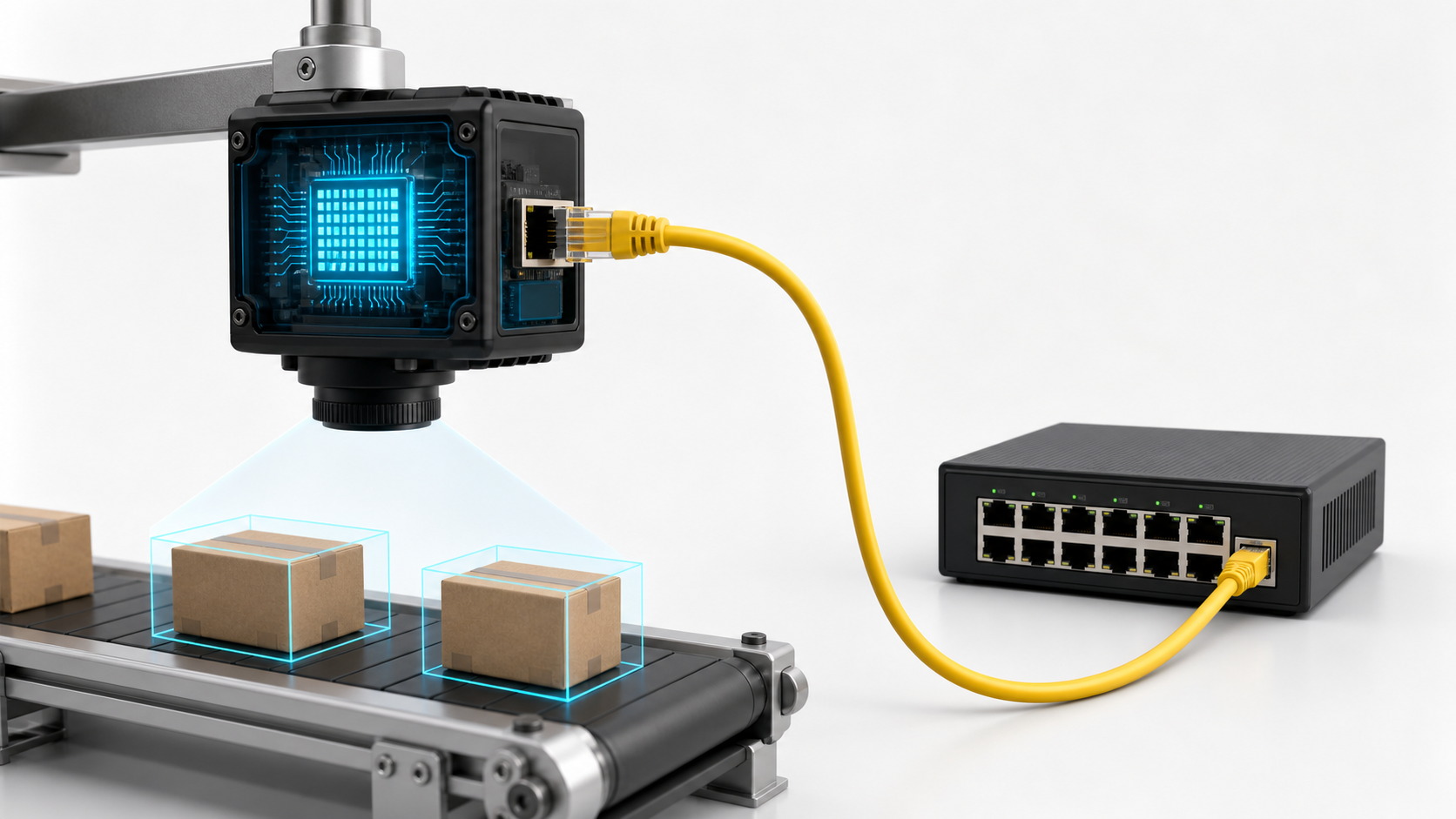
At the center of NE301 is an STM32N657L0H3 with an Arm Cortex-M55 core running up to 800 MHz. Its Neural-ART accelerator is specified at up to 0.6 TOPS. CamThink pairs it with 4.2MB of internal SRAM, 128MB HyperFlash, and 64MB PSRAM. A second STM32U073 microcontroller handles refined power management and wake control.
The camera uses a 4MP progressive-scan CMOS module and supports hardware H.264 encoding. CamThink documents INT8 TensorFlow Lite model deployment and compatibility with lightweight YOLO-family, MobileNet-class, ResNet-class, and other supported STM32N6 architectures. The Web UI can upload a model, validate its input and output, and display structured inference results.
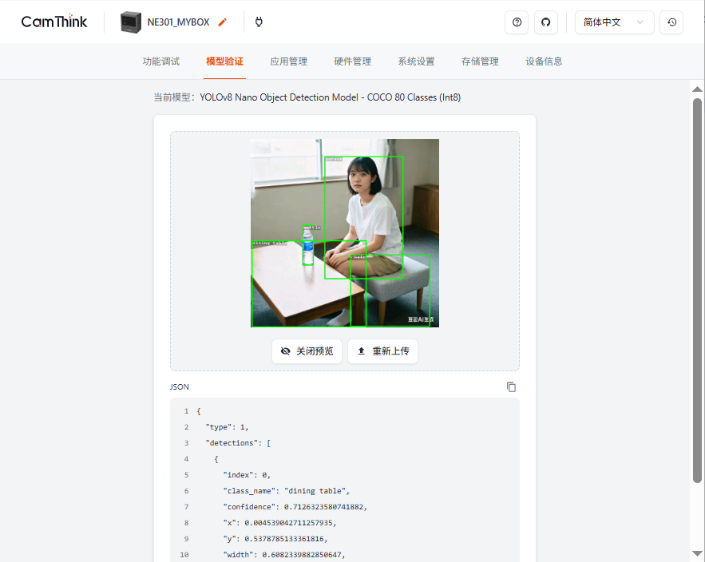
This produces a clear edge workflow:
- The image sensor captures a frame.
- STM32N657 performs image processing and neural-network inference.
- The application turns the result into an event, JSON payload, snapshot, or stream.
- The selected network interface transports that application data.
W5500 enters at step four. It is valuable precisely because the AI and network roles are separated. The camera can continue making local vision decisions while Ethernet connects those decisions to an NVR, MQTT broker, automation server, or monitoring application.
Three Evidence Layers Show the W5500 Design-In
1. The official board photograph
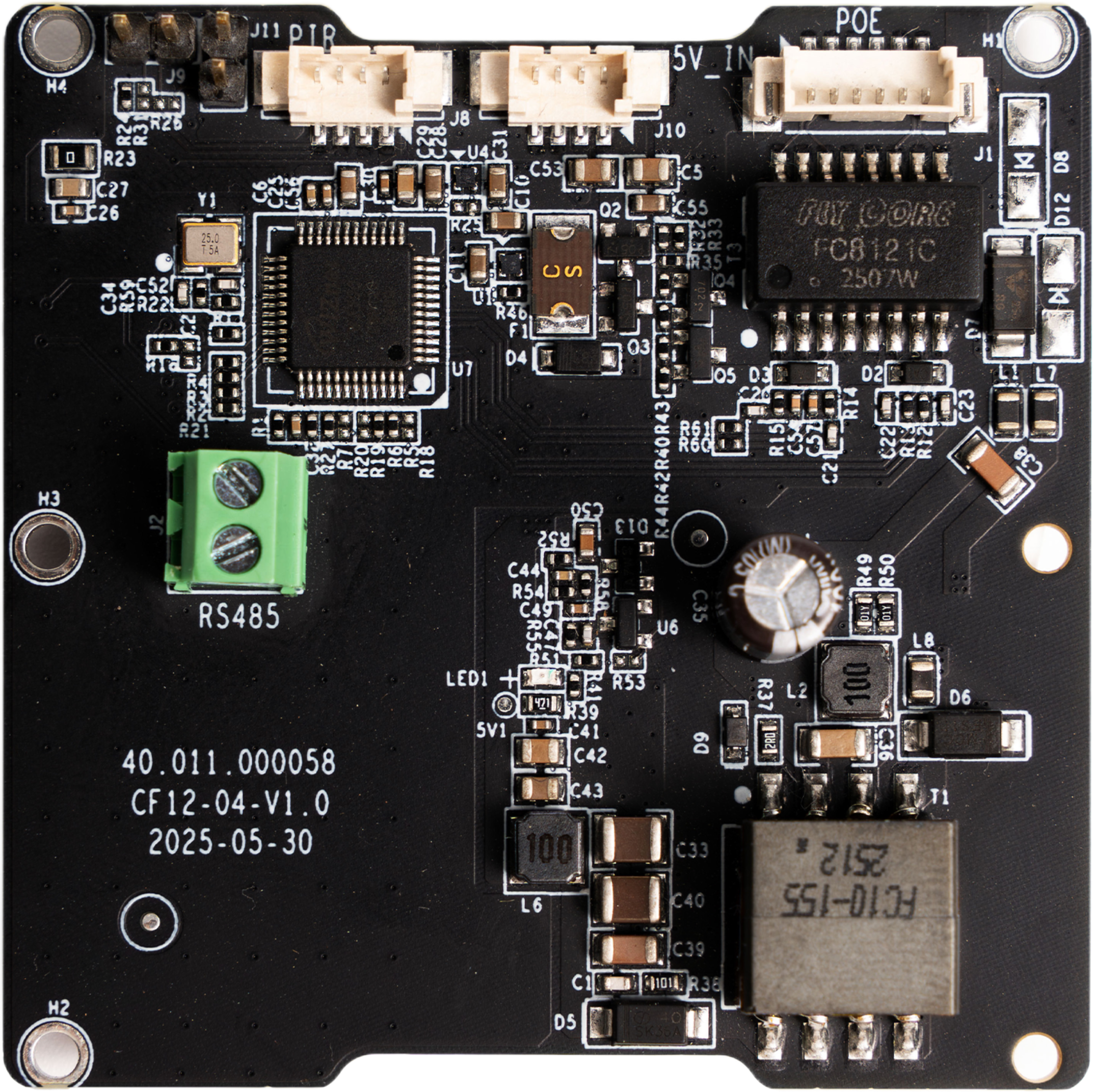
CamThink's PoE quick-start guide shows both sides of the actual expansion board used in the setup procedure. The photograph anchors the schematic and firmware evidence in physical product hardware. W5500 identification comes from the official schematic and source described in the next two sections.
2. The public schematic
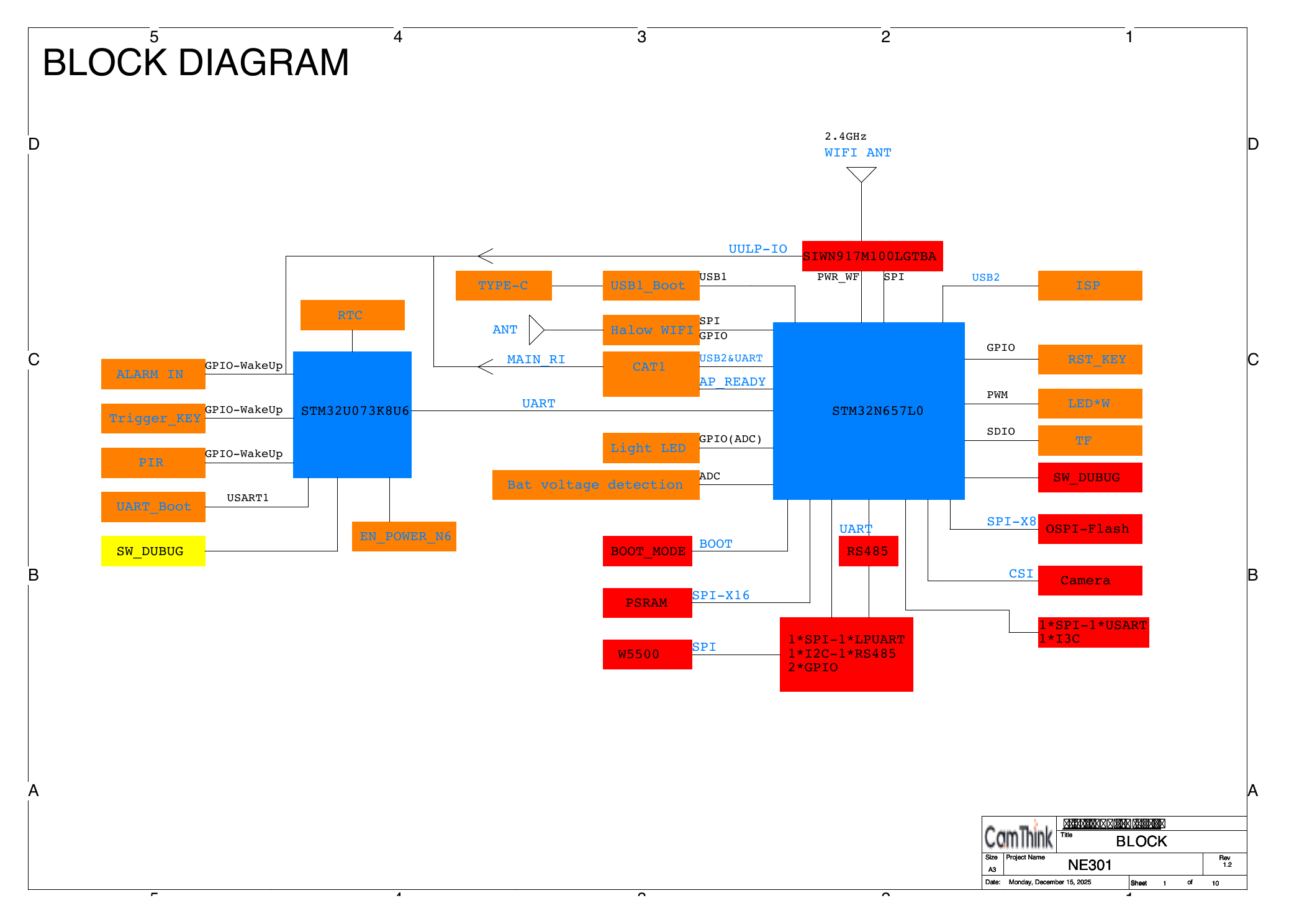
The official NE301 schematic, Rev 1.2, shows a W5500 SPI block connected to the STM32N657. The same system drawing separates the AI processor, communication modules, power-management MCU, camera sensor, and storage. It therefore confirms both component presence and architectural placement.
3. The firmware includes and configures the W5500 path
At the reviewed GitHub commit, the application makefile includes w5500.c, w5500_netif.c, and the supporting Ethernet tool source. The configuration maps the controller to SPI2, with chip select on PB12, interrupt on PD15, and reset on PF4. The source checks the W5500 VERSIONR chip identification value for 0x04, configures its memory, opens MACRAW operation, and registers the interface with lwIP.
Physical board, electrical design, and build-integrated firmware source all agree: W5500 is an implemented component of the NeoEyes NE301 PoE network path.
Why MACRAW and lwIP Matter
W5500 is well known for its hardwired TCP/IP sockets, but NE301 PoE uses a different valid operating model. Its firmware opens Socket 0 in MACRAW mode, assigns the full 16KB transmit memory and 16KB receive memory to that socket, and uses it to exchange complete Ethernet frames with the STM32.
Those frames are passed into lwIP 2.2.1 on the STM32N657. In this architecture, lwIP handles ARP, IPv4, ICMP, TCP, UDP, DHCP, and DNS. Mbed TLS supplies the security layer used by TLS-capable services. The public code uses a CamThink W5500 register driver over STM32 HAL rather than the callback structure of WIZnet ioLibrary.
| Layer or component | Responsibility in NE301 PoE |
|---|---|
| STM32N657 | Camera pipeline, AI inference, application services, lwIP, and Mbed TLS |
| W5500 | Ethernet MAC and PHY, MACRAW frame buffers, link and interrupt status, and SPI frame transfer |
| Separate PoE circuitry | IEEE 802.3af power reception and conversion for the camera |
| STM32U073 | Power management, low-power coordination, and wake control |
This distinction prevents two common misunderstandings. W5500 is not the AI processor, and it is also more than a bare PHY because its MAC, internal buffers, MACRAW socket engine, and SPI interface remain active. IP, TCP, UDP, and the application services remain in software on the main MCU.
The result is a conventional network interface from the perspective of the NE301 application. CamThink can run the same service architecture across multiple communication options while using W5500 as the wired frame path on the PoE edition.
One Cable Carries Several Useful Workflows
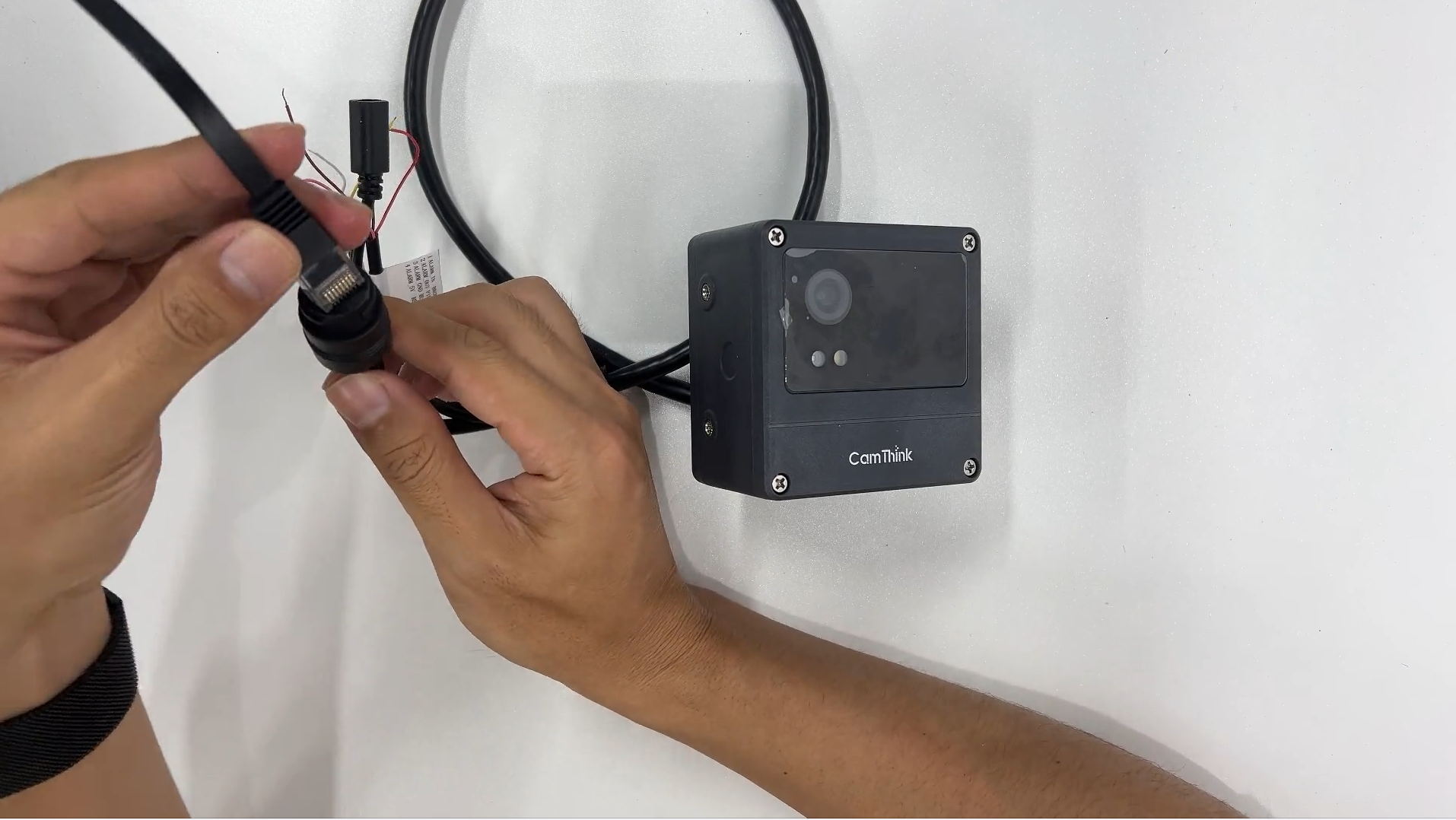
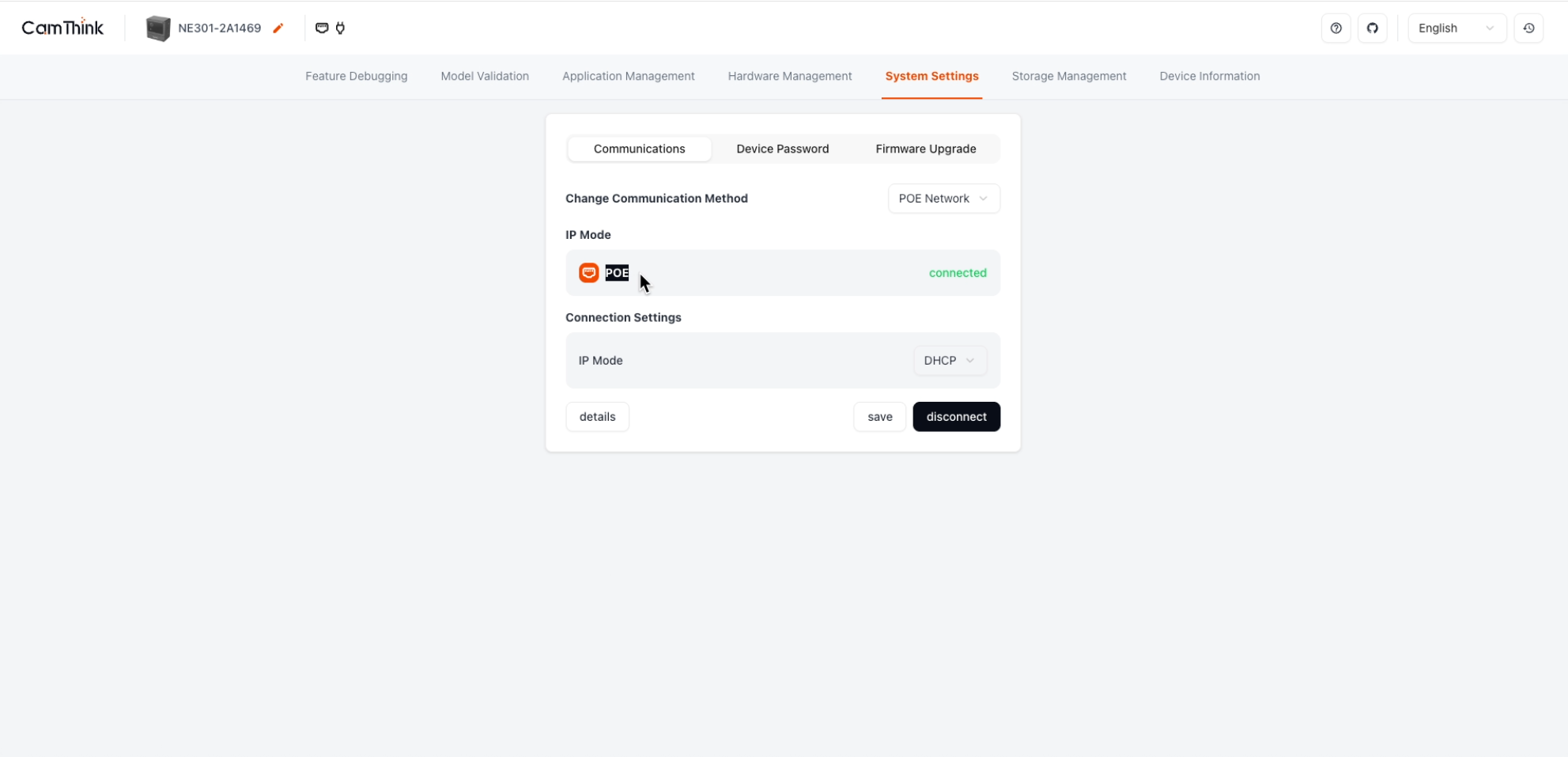
The PoE guide connects the camera to an IEEE 802.3af switch or injector and shows Ethernet status in the Web UI. DHCP is the default for the wired interface, and a static address can be configured. CamThink's setup flow first uses the camera's local Wi-Fi access point, normally at 192.168.10.10, then lets the installer move management onto the wired LAN.
Once connected, the software stack can use that path for several types of data:
- MQTT or MQTTS for compact inference events and telemetry
- HTTP and WebSocket for local management, plus HTTP(S) Webhooks for integration
- RTMP, RTSP, and RTP for video-oriented workflows
- Web UI for camera settings, model deployment, logs, and network configuration
- OTA services for supported firmware maintenance
When no explicit communication preference is configured, CamThink's source ranks wired Ethernet ahead of cellular and Wi-Fi. This indicates an intentional fixed-installation path, although each deployment should still define its own network recovery, security, and service-continuity policy.
The network carries the useful output of the edge model: local inference can reduce a continuous scene to an event or structured result, while the same camera can still provide images or streams when the application needs them.
A Source-Available Development Path
CamThink provides more engineering material than a typical finished-camera listing. The public package includes STM32N657 firmware, the companion power-controller code, a Web frontend, Docker-based build instructions, hardware documents, wiki guides, and releases. The AI workflow also aligns with ST's STM32 model tools and INT8 TFLite deployment.
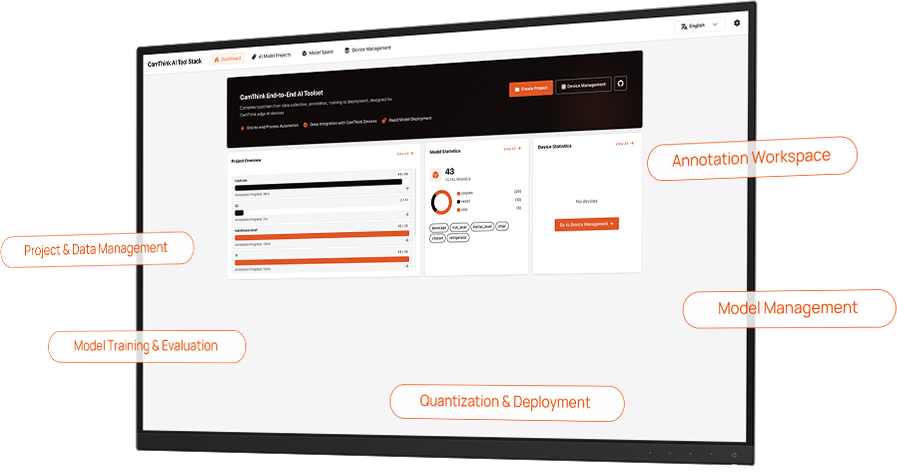
The source is offered under CamThink's Community Edition and commercial dual-licensing model. The repository license allows Community Edition use on CamThink hardware for non-commercial purposes; commercial use or use on third-party hardware requires the applicable CamThink agreement. Developers should review those terms before incorporating the code into a product.
For WIZnet engineers, the repository is especially useful as a detailed STM32N6 MACRAW source-level architecture reference. It shows W5500 register access through STM32 HAL, RTOS-aware interrupt and communication tasks, lwIP netif registration, DHCP, link checking, and frame movement between W5500 memory and lwIP packet buffers.
Product, Price, and Installation Details
CamThink Technology Co., Ltd. is based in Xiamen, Fujian, China and describes CamThink as a Milesight sub-brand. The NE301 product family entered presale in November 2025. The official PoE guide was updated in April 2026.
The following commercial information was checked on July 24, 2026:
| Item | Official store information |
|---|---|
| NE301 PoE price | US$258 regular listing price, not a sale price |
| Lens choices | 2.5mm, 137° HFOV; 3.0mm, 88° HFOV; 6.0mm, 51° HFOV |
| Order status | All three lens choices were selectable and shown as available |
| Enclosure | IP67, 77 x 77 x 48mm |
| Operating range | -20°C to +50°C |
| PoE | IEEE 802.3af; the current PoE guide states device consumption below 10W |
| Local storage | microSD/SDHC/SDXC, up to 2TB according to the datasheet |
| Warranty | 24-month limited warranty for complete devices |
Standard NE301 PoE units can be ordered directly from the CamThink official store. Volume, OEM/ODM, and integration inquiries are handled through CamThink sales.
The purchase does not include the separate PoE switch or injector, Ethernet cable, microSD card, backend service, or site-specific mounting materials. CamThink ships from China, lists South Korea among supported destinations, and uses DAP terms. Product price excludes shipping, destination taxes, VAT, duties, and clearance charges. Its published processing estimate is one to three working days, followed by 7 to 21 days for standard shipping or 3 to 14 days for DHL Express.
The 24-month limited warranty applies to the original purchaser of a complete device bought through the official website and begins on the delivery date. CamThink's policy allows an authorized RMA for unused, unopened products in original packaging within 30 days of delivery and asks buyers to report dead-on-arrival products within 14 days. Damage caused by custom firmware flashing or unauthorized modification may be excluded from warranty coverage.
For field deployment, buyers should choose a lens by required scene width and target distance, confirm the PoE budget and cable path, define the MQTT or video backend, and test the selected model under the actual lighting and mounting angle. IP67 helps with environmental protection, but it does not replace site-specific sealing, surge protection, cybersecurity, or acceptance testing.
Why This Is a Strong W5500 Product Case
NeoEyes NE301 PoE shows W5500 in a high-value product where connectivity supports a much larger system function. The camera combines a 4MP imaging pipeline, MCU-class neural acceleration, local model deployment, outdoor packaging, event protocols, streaming, and PoE installation. W5500 is not presented as the intelligence of the product. It is the wired boundary that lets the intelligence become deployable infrastructure.
That role is important in fixed AI vision systems. A camera may make its decision locally, but it still needs a practical way to receive configuration, publish results, stream selected video, and fit an existing LAN. The NE301 PoE design places W5500 between a modern STM32N6 AI workload and that physical Ethernet network.
An STMicroelectronics case study also features NE301 for on-device beverage detection and MQTT result delivery in smart retail. This is useful ecosystem evidence for the STM32N6 application path. CamThink's schematic and build-integrated source directly identify W5500, while the official photographs show the physical PoE hardware.
Related WIZnet Maker Projects
How to Run lwIP with WIZnet W5500 MACRAW Mode on FreeRTOS MCU Platforms is the closest implementation companion. It explains the same core boundary used by NE301 PoE: W5500 exchanges raw Ethernet frames while lwIP runs on the host MCU.
ESP32-S3 PoE Camera Board with W5500 provides a camera-focused comparison. It combines a microcontroller camera, W5500, and active PoE at board level, while NE301 packages those ideas into an IP67 STM32N6 edge AI product.
How Does Greenox DeltaVision Use W5500 Ethernet for AI Vision Delta Robots? shows the same system-level lesson in industrial robotics: the AI workload and the W5500 network interface have different jobs, but the Ethernet path is essential to the complete commercial system.
Source-Backed Summary
CamThink NeoEyes NE301 PoE is a commercially available, STM32N6-based edge AI camera with a verified W5500 design-in. STM32N657 runs vision inference and lwIP, W5500 operates in MACRAW mode as the wired Ethernet frame interface, and separate circuitry supplies PoE power conversion. Official photographs document the physical PoE hardware, while the Rev 1.2 schematic and build-integrated firmware source identify the W5500 architecture.
For product teams, the value is the complete separation of concerns: local AI for timely decisions, standards-based application protocols for integration, and W5500 Ethernet for a practical fixed-installation link. It is a strong example of W5500 entering a real, higher-value AI product without being mistaken for the AI engine itself.
❓ FAQ
Q. Does W5500 run the NE301's object-detection model? No. STM32N657 and its Neural-ART accelerator run the image pipeline and AI inference. W5500 provides the wired Ethernet frame path.
Q. Does this design use W5500's hardwired TCP and UDP sockets? The reviewed firmware uses Socket 0 in MACRAW mode. TCP and UDP run in lwIP on STM32N657 rather than through W5500's hardwired TCP/UDP socket modes.
Q. Is W5500 only a PHY in this camera? No. It provides the Ethernet MAC and PHY, internal frame buffers, MACRAW operation, link handling, interrupts, and SPI frame transfer. It simply does not own the upper TCP/IP stack in this implementation.
Q. Does W5500 perform the PoE power conversion? No. W5500 handles Ethernet communication. Separate circuitry on the PoE expansion board negotiates and converts cable power.
Q. Which NE301 should a W5500 developer study or purchase? The NE301 PoE edition is the verified W5500 variant. Select the lens for the target scene, provide an 802.3af switch or injector and cable, and review the CamThink license and deployment requirements before integration.
한국어 (Korean)
📌 개요
CamThink의 NeoEyes NE301 PoE는 카메라 내부에서 비전 추론을 실행하면서 Ethernet 케이블 한 가닥으로 유선 통신과 전원을 연결하는 상용 엣지 AI 카메라입니다. STM32N657이 영상 처리와 신경망 추론을 수행하고, PoE 확장 보드의 WIZnet W5500이 유선 Ethernet 인터페이스를 담당합니다. 케이블에서 들어온 전력을 카메라용 전압으로 변환하는 일은 별도의 PoE 회로가 맡습니다.
이 제품에서 가장 살펴볼 만한 부분은 역할 분리입니다. W5500이 객체 감지를 실행하는 것은 아니며, 카메라가 판단을 내리기 위해 모든 영상을 먼저 클라우드 GPU로 보낼 필요도 없습니다. 메인 MCU가 현장에서 영상을 분석하고, 유선망은 추론 결과, 설정, 텔레메트리, 이벤트 이미지 또는 영상 스트림을 필요한 시스템으로 전달합니다.
한 문장으로 보는 NE301 PoE: STM32N657이 엣지 AI를 실행하고, W5500이 Ethernet 프레임을 전달하며, lwIP가 TCP/IP 스택을 제공하고, 별도 PoE 전원부가 하나의 네트워크 케이블로 데이터와 전원을 연결합니다.
상용 design-in 사례로서 적용 근거도 매우 분명합니다. CamThink는 상세한 PoE 보드 사진, W5500 SPI 연결을 표시한 시스템 회로도, W5500 네트워크 인터페이스가 실제 빌드에 포함된 펌웨어를 공개했습니다. 따라서 NE301 PoE는 제품 설명에 부품 이름만 적은 사례가 아니라, IP67 엣지 AI 카메라 내부의 W5500 적용을 여러 자료로 추적할 수 있는 제품입니다.
하나의 카메라 플랫폼과 세 가지 배포 방식
NeoEyes NE301은 같은 카메라와 AI 플랫폼을 바탕으로 연결 방식이 다른 모델을 판매합니다. 이 가운데 W5500 적용이 공식 자료로 확인되는 모델은 PoE 버전입니다. Wi-Fi와 LTE 모델은 각각 별도의 통신 구성을 사용합니다.
| 모델 | 주요 현장 연결 | 전원 방식 | CamThink가 제시하는 대표 배치 |
|---|---|---|---|
| NE301 Wi-Fi | Wi-Fi 6 | 배터리 기본, USB-C 구성은 별도 문의 | 실내 PoC와 유연한 테스트 |
| NE301 LTE Cat.1 | LTE Cat.1과 로컬 Wi-Fi | 배터리 기본, USB-C 구성은 별도 문의 | 원격 또는 분산 현장 |
| NE301 PoE | Ethernet과 초기 설정용 로컬 Wi-Fi | IEEE 802.3af PoE | 고정형 인프라와 24시간 설치 |
세 모델은 핵심 AI 처리 능력을 공유합니다. 통신 모듈은 설치 방식을 바꾸지만 모델을 실행하는 프로세서를 바꾸지 않습니다. PoE 버전은 고정형 카메라에 전원과 데이터를 하나의 Ethernet 케이블로 제공하면서, 처음 Web UI를 설정할 때 사용할 로컬 Wi-Fi AP도 유지합니다.
AI는 STM32N657에서 실행된다
NE301의 중심에는 최대 800 MHz Arm Cortex-M55 코어를 탑재한 STM32N657L0H3가 있습니다. Neural-ART 가속기는 최대 0.6 TOPS 사양이며, CamThink는 4.2MB 내부 SRAM, 128MB HyperFlash, 64MB PSRAM을 함께 구성했습니다. 별도의 STM32U073 마이크로컨트롤러는 세밀한 전력 관리와 깨우기 제어를 담당합니다.
카메라는 4MP progressive-scan CMOS 모듈과 H.264 하드웨어 인코딩을 지원합니다. CamThink 문서에는 INT8 TensorFlow Lite 모델 배포와 경량 YOLO 계열, MobileNet 계열, ResNet 계열을 비롯한 STM32N6 지원 아키텍처와의 호환성이 안내돼 있습니다. Web UI에서는 모델을 올리고 입출력 조건을 검증하며 구조화된 추론 결과를 확인할 수 있습니다.
엣지 처리 과정은 다음처럼 이해할 수 있습니다.
- 이미지 센서가 프레임을 촬영합니다.
- STM32N657이 영상 처리와 신경망 추론을 실행합니다.
- 애플리케이션이 결과를 이벤트, JSON 메시지, 스냅샷 또는 영상 스트림으로 만듭니다.
- 선택한 네트워크 인터페이스가 이 애플리케이션 데이터를 전송합니다.
W5500은 네 번째 단계에서 역할을 합니다. AI와 네트워크가 분리돼 있기 때문에 오히려 W5500의 가치가 분명합니다. 카메라는 현장에서 비전 판단을 계속 수행하고, Ethernet은 그 판단을 NVR, MQTT broker, 자동화 서버 또는 모니터링 애플리케이션으로 연결합니다.
세 가지 근거로 보는 W5500 적용
1. 공식 보드 사진
CamThink의 PoE 빠른 시작 가이드는 실제 설정 과정에 사용되는 확장 보드의 앞면과 뒷면을 공개합니다. 이 사진은 뒤에서 살펴볼 회로도와 펌웨어 근거가 실제 제품 하드웨어에 연결된다는 것을 보여줍니다. W5500 식별은 다음 두 절의 공식 회로도와 소스에서 확인할 수 있습니다.
2. 공개 회로도
공식 NE301 회로도 Rev 1.2에는 STM32N657과 연결된 W5500 SPI 블록이 표시돼 있습니다. 같은 시스템 그림에서 AI 프로세서, 통신 모듈, 전원 관리 MCU, 이미지 센서, 저장 장치가 구분됩니다. 따라서 W5500의 존재뿐 아니라 전체 아키텍처에서의 위치도 확인할 수 있습니다.
3. 펌웨어에 W5500 네트워크 경로가 포함돼 있다
검토한 GitHub 고정 커밋의 application makefile에는 w5500.c, w5500_netif.c, 관련 Ethernet tool source가 포함돼 있습니다. 설정에서는 컨트롤러를 SPI2에 연결하고 CS는 PB12, INT는 PD15, RESET은 PF4로 지정합니다. 소스는 W5500 VERSIONR 칩 식별값 0x04를 확인하고, 메모리를 설정하며, MACRAW 동작을 연 뒤 lwIP에 네트워크 인터페이스를 등록합니다.
실물 보드, 전기 설계, 빌드에 포함된 펌웨어 소스가 같은 결론을 보여줍니다. W5500은 NeoEyes NE301 PoE의 유선 네트워크 경로에 실제로 적용된 부품입니다.
MACRAW와 lwIP가 중요한 이유
W5500은 Hardwired TCP/IP socket으로 잘 알려져 있지만 NE301 PoE는 다른 유효한 사용 방식을 선택했습니다. 펌웨어는 Socket 0을 MACRAW 모드로 열고, 전체 16KB 송신 메모리와 16KB 수신 메모리를 이 socket에 할당해 STM32와 완성된 Ethernet frame을 주고받습니다.
이 frame은 STM32N657에서 실행되는 lwIP 2.2.1로 전달됩니다. 이 구조에서는 lwIP가 ARP, IPv4, ICMP, TCP, UDP, DHCP, DNS를 처리하고, Mbed TLS가 TLS 기반 서비스에 필요한 보안 계층을 제공합니다. 공개 코드는 WIZnet ioLibrary의 callback 구조 대신 CamThink가 만든 W5500 register driver와 STM32 HAL을 사용합니다.
| 계층 또는 부품 | NE301 PoE에서 담당하는 역할 |
|---|---|
| STM32N657 | 카메라 처리 파이프라인, AI 추론, 애플리케이션 서비스, lwIP, Mbed TLS |
| W5500 | Ethernet MAC과 PHY, MACRAW 프레임 버퍼, 링크 상태와 인터럽트 신호, SPI 프레임 전송 |
| 별도 PoE 회로 | IEEE 802.3af 전력 수전과 카메라용 전력 변환 |
| STM32U073 | 전력 관리, 저전력 동작 조정, 깨우기 제어 |
이 구분은 두 가지 오해를 막아줍니다. W5500은 AI 프로세서가 아니며, 동시에 MAC, 내부 buffer, MACRAW socket engine, SPI interface가 동작하므로 단순 PHY만으로 설명할 수도 없습니다. IP, TCP, UDP와 application service는 메인 MCU의 소프트웨어에서 실행됩니다.
NE301 애플리케이션 입장에서는 일반적인 네트워크 인터페이스처럼 사용할 수 있습니다. CamThink는 여러 통신 옵션에 공통 service 구조를 적용하고, PoE 모델에서는 W5500을 유선 frame 경로로 연결했습니다.
한 가닥의 케이블로 연결되는 여러 워크플로
PoE 가이드는 카메라를 IEEE 802.3af 스위치 또는 인젝터에 연결하고 Web UI에서 Ethernet 상태를 확인하는 과정을 보여줍니다. 유선 인터페이스는 DHCP가 기본이며 고정 IP도 설정할 수 있습니다. 초기 설정에서는 보통 192.168.10.10인 카메라의 로컬 Wi-Fi AP에 먼저 접속하고, 이후 관리 경로를 유선 LAN으로 옮길 수 있습니다.
연결이 완료되면 소프트웨어는 이 유선 경로로 여러 형태의 데이터를 전달할 수 있습니다.
- MQTT 또는 MQTTS: 작은 추론 이벤트와 텔레메트리
- HTTP와 WebSocket: 로컬 관리, HTTP(S) Webhook: 외부 연동
- RTMP, RTSP, RTP: 영상 중심 워크플로
- Web UI: 카메라 설정, 모델 배포, 로그, 네트워크 구성
- OTA service: 지원되는 펌웨어 유지보수
명시적인 통신 방식 선호값이 없을 때, 공개 소스는 유선 Ethernet, cellular, Wi-Fi 순으로 선택 우선순위를 둡니다. 고정 설치용 유선 경로를 의도한 설계라는 점을 보여주지만, 실제 프로젝트에서는 네트워크 복구, 보안, 서비스 연속성 정책을 별도로 정의하는 것이 좋습니다.
네트워크는 엣지 모델이 만든 유용한 결과를 전달합니다. 로컬 추론으로 연속 영상을 이벤트나 구조화된 결과로 줄일 수 있고, 필요한 경우 같은 카메라가 이미지와 영상 스트림도 제공할 수 있습니다.
소스를 확인할 수 있는 개발 경로
CamThink는 일반적인 완제품 카메라 페이지보다 많은 엔지니어링 자료를 제공합니다. 공개 패키지에는 STM32N657 펌웨어, 전원 관리 컨트롤러 코드, Web frontend, Docker 기반 빌드 안내, 하드웨어 문서, wiki guide, release가 포함됩니다. AI 워크플로는 ST의 STM32 model tool과 INT8 TFLite 배포 과정에도 연결됩니다.
소스는 CamThink의 Community Edition과 commercial dual-license 방식으로 제공됩니다. 저장소의 Community Edition 조항은 CamThink 하드웨어에서의 비상업적 사용을 허용하며, 상업적 사용 또는 제3자 하드웨어 사용에는 해당 CamThink 계약이 필요합니다. 제품에 코드를 포함하려는 개발자는 먼저 라이선스 조건을 확인해야 합니다.
WIZnet 개발자 관점에서는 상세한 STM32N6 MACRAW 소스 수준 아키텍처 참고 사례로 특히 유용합니다. STM32 HAL을 통한 W5500 register 접근, RTOS 기반 interrupt와 communication task, lwIP netif 등록, DHCP, link 확인, W5500 memory와 lwIP packet buffer 사이의 frame 이동을 살펴볼 수 있습니다.
제품, 가격, 설치 정보
CamThink Technology Co., Ltd.는 중국 푸젠성 샤먼에 있으며 CamThink를 Milesight의 sub-brand로 소개합니다. NE301 제품군은 2025년 11월 presale로 공개됐고, 공식 PoE guide는 2026년 4월에 업데이트됐습니다.
다음 판매 정보는 2026년 7월 24일 공식 페이지에서 확인했습니다.
| 항목 | 공식 스토어 정보 |
|---|---|
| NE301 PoE 가격 | 할인 전 정가 US$258 |
| 렌즈 선택 | 2.5mm, 137° HFOV; 3.0mm, 88° HFOV; 6.0mm, 51° HFOV |
| 주문 상태 | 세 렌즈 옵션 모두 선택 가능하고 판매 가능 상태로 표시 |
| 하우징 | IP67, 77 x 77 x 48mm |
| 동작 온도 | -20°C부터 +50°C |
| PoE | IEEE 802.3af, 최신 PoE 가이드 기준 장치 소비전력 10W 미만 |
| 로컬 저장 | 데이터시트 기준 microSD/SDHC/SDXC 최대 2TB |
| 보증 | 완제품 24개월 제한 보증 |
일반 NE301 PoE 제품은 CamThink 공식 스토어에서 바로 주문할 수 있습니다. 수량 구매, OEM/ODM, 통합 문의는 CamThink 영업 창구를 이용할 수 있습니다.
구매 제품에는 별도 PoE 스위치 또는 인젝터, Ethernet 케이블, microSD 카드, 백엔드 서비스, 현장별 설치 자재가 포함되지 않습니다. CamThink는 중국에서 발송하며 배송 가능 국가에 대한민국을 표시합니다. 조건은 DAP이며 제품 가격에 배송료, 도착지 세금, VAT, 관세, 통관 비용은 포함되지 않습니다. 출고 처리는 영업일 기준 1일에서 3일, 이후 일반 배송은 7일에서 21일, DHL Express는 3일에서 14일로 안내됩니다.
24개월 제한 보증은 공식 웹사이트에서 완제품을 구매한 최초 구매자에게 적용되며 배송일부터 시작합니다. 반품 정책은 미사용, 미개봉, 원포장 제품을 배송 후 30일 이내 승인된 RMA로 접수하도록 안내하고, 초기 불량은 14일 이내 신고하도록 요구합니다. 커스텀 펌웨어 flashing이나 비승인 개조로 발생한 손상은 보증에서 제외될 수 있습니다.
현장 도입 시에는 필요한 화각과 거리로 렌즈를 선택하고, PoE 전력 예산과 케이블 경로를 확인하며, MQTT 또는 영상 백엔드를 정하고, 실제 조명과 설치 각도에서 선택한 모델을 시험해야 합니다. IP67은 환경 보호에 도움이 되지만 현장 밀봉, 서지 보호, 사이버 보안, 인수 시험을 대신하지는 않습니다.
W5500 제품 사례로서 의미
NeoEyes NE301 PoE는 W5500이 더 큰 시스템 기능을 지원하는 고부가 제품 사례입니다. 이 카메라는 4MP 영상 처리, MCU급 신경망 가속, 로컬 모델 배포, 실외형 패키지, event protocol, streaming, PoE 설치를 결합합니다. W5500을 제품의 지능이라고 설명하지 않습니다. 대신 그 지능을 실제 인프라에 배포할 수 있게 만드는 유선 경계를 담당합니다.
고정형 AI vision system에서는 이 역할이 중요합니다. 카메라가 현장에서 판단하더라도 설정을 받고, 결과를 발행하고, 필요한 영상을 보내며, 기존 LAN에 연결될 방법이 필요합니다. NE301 PoE는 최신 STM32N6 AI workload와 물리적인 Ethernet network 사이에 W5500을 배치했습니다.
STMicroelectronics의 사례 연구도 NE301을 스마트 리테일의 음료 감지와 수량 계산, MQTT 결과 전송 사례로 소개합니다. 이는 STM32N6 애플리케이션 경로를 보여주는 생태계 근거입니다. CamThink의 회로도와 빌드에 포함된 소스는 W5500을 직접 식별하고, 공식 사진은 실제 PoE 하드웨어를 보여줍니다.
관련 WIZnet Maker 프로젝트
FreeRTOS MCU에서 WIZnet W5500 MACRAW와 lwIP를 실행하는 방법은 가장 가까운 구현 참고 자료입니다. W5500은 raw Ethernet frame을 교환하고 lwIP는 host MCU에서 실행되는, NE301 PoE와 같은 핵심 경계를 설명합니다.
W5500을 탑재한 ESP32-S3 PoE 카메라 보드는 카메라 중심의 비교 사례입니다. 마이크로컨트롤러 카메라, W5500, active PoE를 보드 수준에서 결합하며, NE301은 이를 IP67 STM32N6 엣지 AI 제품 형태로 구성했습니다.
Greenox DeltaVision은 AI Vision Delta Robot에 W5500 Ethernet을 어떻게 사용하는가?는 산업용 로봇에서 같은 시스템 설계 원칙을 보여줍니다. AI workload와 W5500 network interface의 역할은 다르지만, 완성된 상용 시스템에서는 Ethernet 경로가 꼭 필요합니다.
출처 기반 요약
CamThink NeoEyes NE301 PoE는 STM32N6 기반으로 판매되는 엣지 AI 카메라이며 W5500의 실제 적용이 확인된 제품입니다. STM32N657이 비전 추론과 lwIP를 실행하고, W5500은 MACRAW 모드의 유선 Ethernet 프레임 인터페이스로 동작하며, 별도 회로가 PoE 전력을 변환합니다. 공식 사진은 실제 PoE 하드웨어를 보여주고, Rev 1.2 회로도와 빌드에 포함된 펌웨어 소스가 W5500 아키텍처를 확인해 줍니다.
제품 개발팀 입장에서는 역할이 명확히 분리된 사례라는 점이 중요합니다. 로컬 AI가 빠르게 판단하고, 표준 application protocol이 다른 시스템과 연동하며, W5500 Ethernet이 고정 설치에 적합한 물리적 연결을 제공합니다. W5500을 AI engine으로 오해하지 않으면서 실제 고가 AI 제품에 들어간 좋은 design-in 사례입니다.
❓ FAQ
Q. W5500이 NE301의 객체 감지 모델을 실행하나요? 아닙니다. STM32N657과 Neural-ART 가속기가 영상 처리와 AI 추론을 실행합니다. W5500은 유선 Ethernet frame 경로를 제공합니다.
Q. 이 설계는 W5500의 Hardwired TCP와 UDP socket을 사용하나요? 검토한 펌웨어는 Socket 0을 MACRAW 모드로 사용합니다. TCP와 UDP는 W5500의 Hardwired TCP/UDP socket mode가 아니라 STM32N657의 lwIP에서 실행됩니다.
Q. 이 카메라에서 W5500은 단순 PHY인가요? 아닙니다. Ethernet MAC과 PHY, 내부 프레임 버퍼, MACRAW 동작, 링크 처리, 인터럽트, SPI 프레임 전송을 담당합니다. 이 구현에서 상위 TCP/IP 스택을 맡지 않을 뿐입니다.
Q. W5500이 PoE 전력도 변환하나요? 아닙니다. W5500은 Ethernet 통신을 담당합니다. PoE 확장 보드의 별도 회로가 cable power를 협상하고 카메라용 전압으로 변환합니다.
Q. W5500 개발자는 어떤 NE301 모델을 살펴봐야 하나요? W5500 적용이 확인된 모델은 NE301 PoE입니다. 현장에 맞는 렌즈를 선택하고, 802.3af switch 또는 injector와 cable을 준비하며, 통합 전에 CamThink license와 배포 조건을 확인해야 합니다.
-
CamThink NeoEyes NE301 product page
Main product overview, specifications, AI workflow, and connectivity variants

-
NeoEyes NE301 PoE store page
PoE variant price, lens selection, stock state, and included items
-
NeoEyes NE301 PoE quick-start guide
Official PoE board photographs, cabling, Ethernet configuration, and first-use instructions
-
NeoEyes NE301 datasheet
Camera, processor, memory, AI, protocol, environmental, and interface specifications
-
NeoEyes NE301 open schematic Rev 1.2
Official system block diagram showing the W5500 SPI connection to STM32N657
-
NeoEyes NE301 firmware at reviewed commit
Source snapshot used to verify the W5500 MACRAW, STM32 HAL, and lwIP implementation
-
STMicroelectronics NE301 smart-retail case study
External ecosystem example of STM32N6 on-device vision and MQTT result delivery
-
WIZnet W5500 product page
Official reference for the Ethernet controller used on the NE301 PoE board


