



WIZnet Success Stories: Railway Sensing Data Communication System Powered by W55RP20
Railway Sensing Data Communication System Powered by W55RP20
Overview
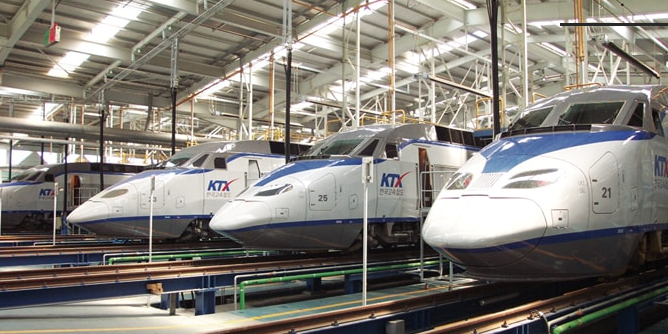
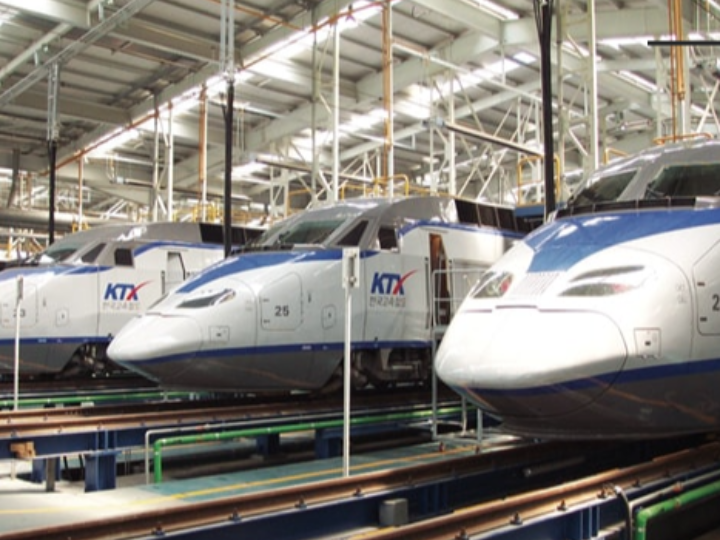
S-Transport is a company specializing in railway and transportation infrastructure, with capabilities in signaling, communications, and system integration. In this project, the company adopted WIZnet’s W55RP20 for an onboard railway sensing data communication system, enabling sensor data collected inside a train to be reliably connected to Ethernet and transmitted to the Cloud.
The core of this system is the implementation of a Serial-to-Ethernet function. Sensor values are received through a single Serial interface, then converted and monitored continuously over Ethernet. A key feature of the product is its dual Ethernet port design, while only one Serial channel is used for sensor data input. Installed inside the train, the system collects sensing data whenever the train passes a station and sends that data to the Cloud through Ethernet.
Background
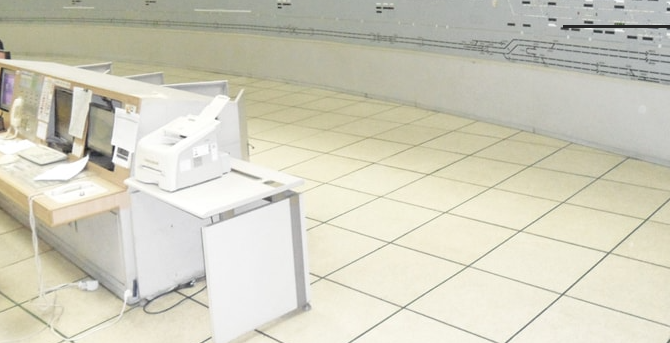
In railway environments, sensing data generated inside train cars is critical for operational safety, condition monitoring, and maintenance efficiency. However, many field devices still rely on Serial-based interfaces, which makes it difficult to directly connect collected data to external networks or Cloud platforms.
This creates several technical requirements:
- Reliable acquisition of Serial-based sensing data
- Stable wired communication inside railway vehicles
- Continuous real-time or near real-time monitoring
- Event-based data transmission when passing stations
- Easy integration with upper-level servers or Cloud systems
To address these needs, S-Transport designed a system that could reliably bridge Serial sensor data to Ethernet, with WIZnet’s W55RP20 at the center of the solution.
Solution
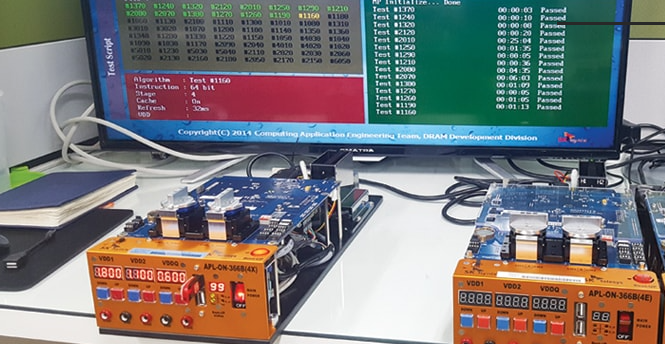
In this system, the W55RP20 was used to implement the core Serial-to-Ethernet communication function. The W55RP20 integrates WIZnet’s W5500 Ethernet controller and the RP2040 MCU into a single SiP, making it well suited for compact and efficient embedded Ethernet applications.
For this project:
- One Serial interface is used to receive sensing data
- The received data is converted and delivered through Ethernet
- The product architecture features two Ethernet ports
- The system allows sensed data to be monitored continuously and transmitted to the Cloud
This approach makes it possible to extend legacy Serial-based sensing systems into modern network-based infrastructures without redesigning the sensing side itself.
System Architecture
The system can be understood as follows:
1. Sensor Interface
Sensors installed inside the train generate various operational and environmental values.
2. Serial Input
These sensing values are collected through a single Serial interface.
3. W55RP20-based Communication Module
The W55RP20 receives the Serial data and converts it into Ethernet data for network transmission.
4. Dual Ethernet Connectivity
A distinctive feature of the applied product is its two Ethernet ports, allowing flexible integration with onboard network structures and upper-level communication systems.
5. Cloud Transmission
Whenever the train passes a station, the sensed data is collected and transmitted through Ethernet to the Cloud, where it can be monitored and managed continuously.
Key Technologies
W55RP20
The W55RP20 combines Ethernet connectivity and MCU functionality in a single chip package, helping simplify embedded system design. It is an effective solution for applications requiring stable Ethernet communication in constrained environments.
Serial-to-Ethernet
Many railway subsystems still output data through Serial communication. By using the W55RP20, these existing Serial signals can be converted into Ethernet data and integrated into modern network-based systems.
Cloud Connectivity
Once sensing data is available over Ethernet, it becomes much easier to forward it to Cloud platforms for centralized monitoring, storage, and further analysis.
Benefits
This W55RP20-based system provides several advantages:
- Legacy sensor integration
Existing Serial-based sensing devices can be connected to Ethernet without major redesign. - Reliable wired communication
Ethernet provides stable and predictable communication, which is especially important in railway environments. - Continuous visibility of sensing data
Sensor values can be monitored continuously over the network. - Easy Cloud integration
Data collected when the train passes stations can be transmitted to Cloud systems for centralized management and analytics. - Simplified embedded design
By integrating Ethernet and MCU functionality, the W55RP20 helps reduce system complexity.
Conclusion
This project by S-Transport is a strong example of how Serial-based sensing data inside railway vehicles can be extended into Ethernet and Cloud-connected systems. In many railway applications, sensors and field devices still use Serial communication, but operational efficiency and data utilization increasingly require network-based access.
By adopting WIZnet’s W55RP20, S-Transport successfully implemented a practical Serial-to-Ethernet solution that enables reliable onboard data collection, continuous Ethernet monitoring, and Cloud transmission. In particular, the combination of a single Serial input and dual Ethernet ports makes this system a highly practical choice for railway sensing data applications.